Imaginary dialogue between Gustave Flaubert and Guy de Maupassant
by Charactorium · Guy de Maupassant (1850 — 1893) · Literature · 4 min read
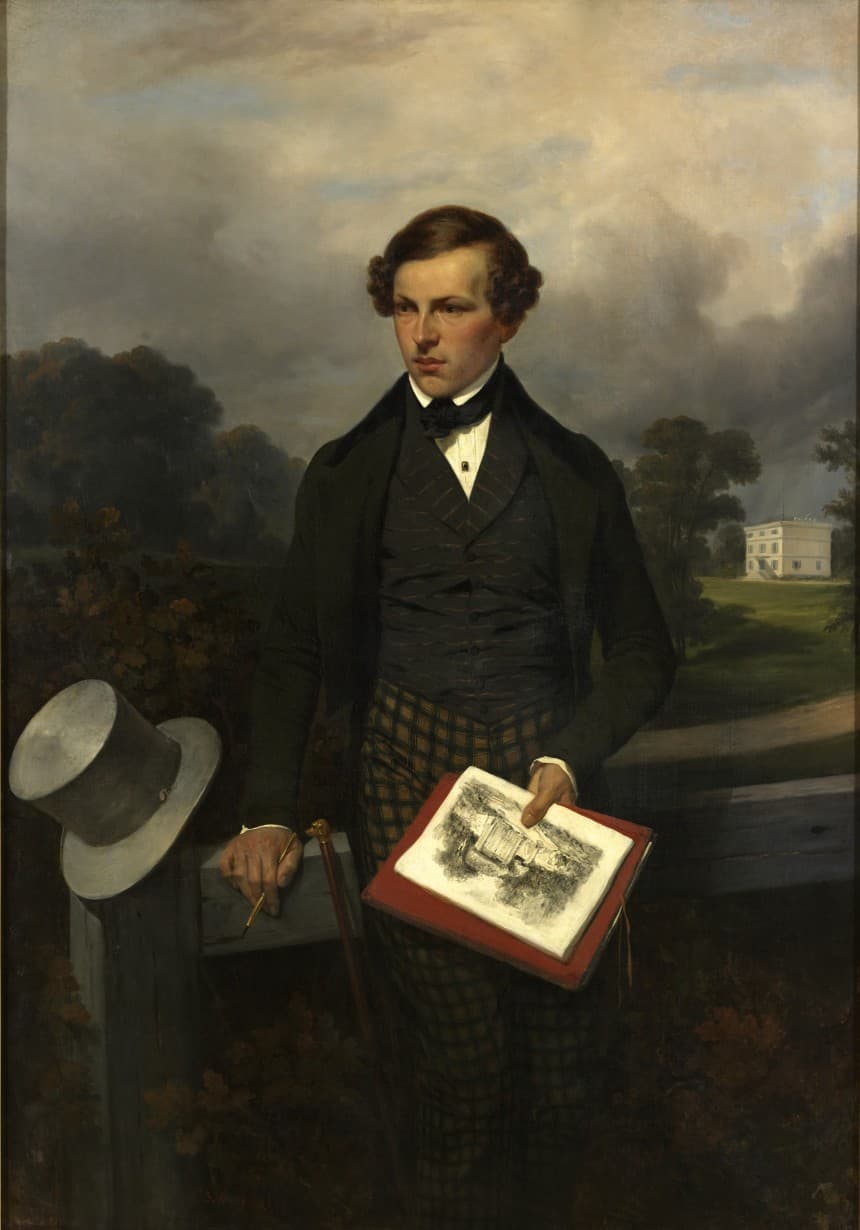
It is in the study at Croisset, near Rouen, that this imaginary interview takes place on an autumn Sunday in 1880, a few months after the triumph of Boule de Suif. Through the half-open window, the Seine can be heard gliding at the foot of the garden, and the lamp illuminates the crossed-out pages lying on the large table. Gustave Flaubert and Guy de Maupassant have known each other for seven years: the master has read every page of the pupil, corrected him without mercy, forbidden him to publish too soon. The master now questions the disciple turned writer.
—My dear Guy, for seven years you have come up to Croisset every Sunday to submit your pages to me. What did you come here to find that no one else offered you?
I came to find patience, my master — the patience I lacked. When I arrived, I wrote too much, too poorly, and too fast. You read my verses, my stories, and you sent them back bleeding from your corrections. You forbade me to publish, do you remember? For years on end. I chafed at the bit, thought I was ready, and you sent me back to my desk. Today I understand that you were teaching me to see: to look at a carriage, a clerk, a servant until they had no secrets left. What others call talent is your Sundays.
What others call talent is your Sundays.
—You have often seen me blacken a sentence for an entire week. That slowness I imposed on you, did you ever curse it in secret?
Curse it, yes, many times! I would leave here furious, convinced that you were destroying what was best in me. Then I would return to Paris, reread, and realize you were right. You made me hate the easy sentence, the almost-right word. You said that between the exact word and its neighbor lies the distance that separates the writer from the amateur. That slowness, I still carry it. Even when I work quickly now, it is your voice weighing every syllable over my shoulder.
You made me hate the easy sentence, the almost-right word.
—This spring, you sent me Boule de Suif before the others. When you were writing it, did you know that this stagecoach of 1870 would carry you so high?
Not for a moment. I had lived through the rout, mobilized, fleeing like everyone else on the roads of Normandy, and I only wanted to tell its raw truth — those respectable bourgeois who sacrifice a girl to save their own skin. I gave it to Les Soirées de Médan expecting nothing. And then your letter arrived. You wrote that it was a masterpiece, a masterpiece of composition and observation. I am thirty years old, and it was your word alone that made me believe I might have something. The rest of the world followed, but it was you I believed first.
The rest of the world followed, but it was you I believed first.
—You denounced the hypocrisy of respectable people there. Are you not afraid of paying for it, as I was dragged through the mud for Madame Bovary?
I almost expect it. But you, who experienced the dock, taught me not to flatter the reader. I saw the defeat of 1870 with my own eyes: the fine gentlemen who pontificate and the poor girl who is scorned after being used. I invented nothing; I watched. If they recognize themselves and rage, it is because they know they are painted accurately. You said one must say everything with the sincerity of art. I only obeyed you, and too bad for the stagecoaches full of good people.
I invented nothing; I watched.
—I hear that in Paris you neglect your desk for the Seine, around Chatou. Does this rowing distract you from work, or does it feed it?
It feeds it, I swear! On Sundays, I put down the pen and jump into my boat. I row until my hands burn, between Chatou and Argenteuil, under the sun, with the guinguettes full of laughter and light dresses. There I no longer think about the sentence; I live. But everything I see — the rowing girl who sings, the clerk in his Sunday best, the girl who gives herself an afternoon — it all comes back on paper afterward. My best stories were born on the water. The body that exhausts itself frees the eye that observes.
My best stories were born on the water.
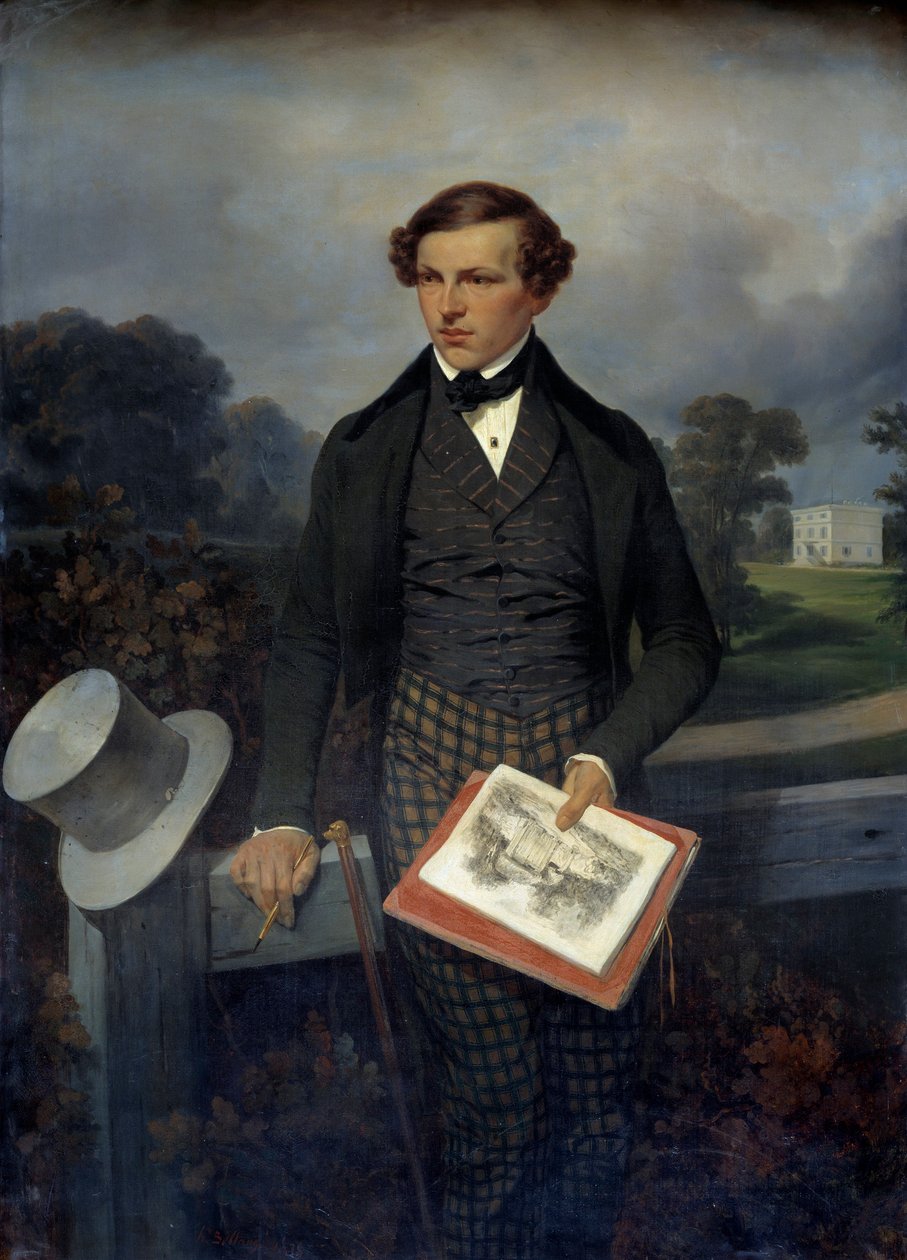
—You once described to me those outings in the countryside by the water. What attracts you so much to these Sundays of ordinary people?
Their truth, precisely. The rich compose a face; the lowly clerk who treats himself to a day in the country gives himself entirely. He eats too much, he drinks, he falls in love for an afternoon, and in the evening he returns to his office, heavy-hearted, for fifty years. There is all the melancholy of the world under the straw hat and the guinguette. These people do not know they are tragic, and that is why they are. You taught me that the humble subject, properly observed, is worth all the kings of history.
They do not know they are tragic, and that is why they are.
—You now write for the Gil Blas, the Gaulois, endless columns. Does this press that supports you not devour your true work?
I work like a galley slave, that's the truth — I wrote it the other day to my mother. In the morning, from six to noon, I advance my stories and my novel; in the afternoon, I run to the newsrooms to deliver my column. The press pays, and well; it has given me a freedom that you never had, you who ruined yourself over your pages. But I know the danger: the column wears you down, it teaches you to please. I force myself never to let my language slacken there. The newspaper feeds the man, but it is the short story that saves the writer.
I work like a galley slave, that's the truth.
—This sudden ease, these earnings from your pen — you who were only a minor clerk at the ministry, what do you truly do with them?
I make my freedom with them, my master. Remember the clerk at the Ministry of the Navy that I was, hunched over files, stealing hours to write. Today my pen supports me, and handsomely. I dream of a boat, a real one, to flee Paris and sail in the sun — I would name it after one of my novels, just to defy fate. Money interests me only for that: no longer to depend on anyone, to write what I want. You who always despised the commerce of letters may scold me. But I do not forget where I come from.
Money interests me only for that: no longer to depend on anyone.
—I find you looking unwell tonight, and your eyes tired. You complain of migraines, vision problems. What do the doctors tell you?
Nothing good, and I hardly like to talk about it. I have migraines that nail me down, hours when the letters dance before my eyes and I must put on my pince-nez just to write my name. An old disease from my youth is eating away at me, you can guess. I sometimes use ether to hold on, to calm that fire in my head. It frightens me, I admit to you alone: at times I no longer recognize myself. But I work anyway, every morning. As long as the sentence stands, I stand with it.
As long as the sentence stands, I stand with it.
—You told me of a night when you thought you felt an invisible presence near you. Does this idea haunt you enough to turn it into a book?
It haunts me, yes. Imagine a man alone, in the evening, convinced that a being he cannot see is there, drinking his water, breathing his air, gradually stealing his will. That man is me on some evenings. Reason wavers, and you no longer know whether it is the room that is haunted or the mind. I want to write this one day, in diary form, as close to fear as possible — not the ghost of tales, but the madness that rises from within. You painted the boredom of a woman; I will paint the terror of a man before what he is becoming.
You no longer know whether it is the room that is haunted or the mind.
This imaginary interview was generated by artificial intelligence from sources documented in Guy de Maupassant's profile. It dramatises what the figure might have said based on what we know about them, but does not constitute attested historical testimony. For primary sources and factual documentation, refer to the full profile.