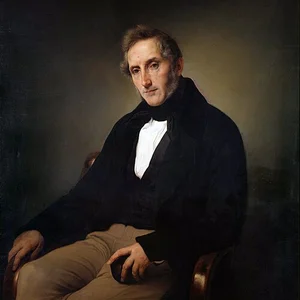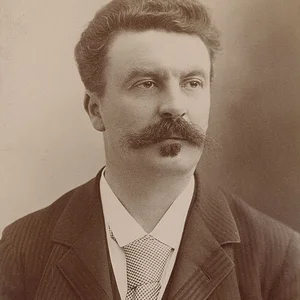

French writer and journalist (1850-1893), Maupassant is one of the masters of the realist short story of the 19th century. A student of Flaubert, he wrote hundreds of tales and short stories characterized by their spare style and critical view of society.
Frequently asked questions
Famous Quotes
« Life is a slope.»
« Women are useful pieces of furniture that add comfort to a home.»
« I do not love nature.»
« One does not kill oneself over things one understands.»
Key Facts
- 1880: Publication of 'Boule de Suif', the short story that made him famous
- 1884: Publication of 'Bel-Ami', a naturalist novel criticizing Parisian corruption
- 1884: Publication of 'The Necklace' ('La Parure'), one of his most celebrated short stories
- 1886: Publication of 'Monsieur Parent' and consolidation of his status as a master of the short story
- 1892: Mental breakdown and institutionalization; died in 1893 at the age of 43
Works & Achievements
Short story published in Les Soirées de Médan, considered a masterpiece of the genre. It denounces bourgeois hypocrisy during the Franco-Prussian War of 1870.
Short story collection whose title piece recounts the countryside outing of a brothel's staff. The text blends humor and tenderness with consummate storytelling craft.
Maupassant's first novel, tracing the disillusions of a young Norman woman. A naturalist novel influenced by Flaubert, it was a great success.
One of Maupassant's most celebrated short story collections, depicting Norman rural life with realism and irony.
Novel following the social rise of an opportunist in the world of Parisian journalism. It is one of the most widely read novels in French literature.
Fantastical short story written as a personal diary, in which the narrator is haunted by an invisible presence. An emblematic text reflecting Maupassant's own anxieties about madness.
Psychological novel accompanied by a major theoretical preface on the realist novel. The story explores jealousy between two brothers in a family from Le Havre.
Novel exploring the themes of aging and a painter's impossible love for the daughter of his former mistress. A more intimate and melancholic work.
Anecdotes
Maupassant was the pupil and protégé of Gustave Flaubert for seven years. Every Sunday, he would visit the master at Croisset, near Rouen, to submit his texts for review. Flaubert corrected them mercilessly and forbade him from publishing until he was ready.
The publication of "Boule de Suif" in 1880, in the collective anthology Les Soirées de Médan, was an immediate triumph. Flaubert himself declared it a masterpiece. This short story definitively launched Maupassant's literary career — he was thirty years old at the time.
An avid boating enthusiast, Maupassant spent his Sundays on the Seine between Chatou and Argenteuil. He rowed with passion and owned several boats. This life by the water directly inspired many of his short stories, such as "Sur l'eau" and "Une partie de campagne".
Maupassant suffered from syphilis contracted in his youth, a disease that was incurable at the time. The final years of his life were marked by increasing nervous disorders, hallucinations, and growing paranoia. In January 1892, he attempted suicide by slashing his throat and was committed to Dr. Blanche's clinic in Passy, where he died on July 6, 1893.
Maupassant was a writer of remarkable productivity: over ten years of intense literary activity (1880–1890), he published six novels, more than three hundred short stories and tales, three travel narratives, and numerous journalistic columns. He earned such a good living from his pen that he owned a yacht he had named "Bel-Ami", after his famous novel.
Primary Sources
Your story Boule de Suif is a masterpiece! I stand by the word: a masterpiece of composition, comedy, and observation.
The realist, if he is an artist, will seek, not to show us the commonplace photograph of life, but to give us a vision of it that is fuller, more striking, and more compelling than reality itself.
We must content ourselves with looking, understanding, and saying everything with the genius of sincerity and art.
I work like a galley slave. I write short stories, columns, and I press on with my novel. Literary life in Paris is a daily battle.
Key Places
Maupassant spent part of his childhood and many stays in this Norman seaside resort. The cliffs and the sea left a deep mark on his literary imagination.
Gustave Flaubert's residence, which Maupassant visited every Sunday for his literary apprenticeship. It was in this place that he honed his art of the short story.
Maupassant lived in several Parisian apartments, notably on rue Montchanin (now rue Jacques-Bingen). Paris serves as the setting for many of his novels and short stories about the bourgeoisie.
Maupassant's favourite boating spots, these riverside taverns and banks of the Seine inspired his short stories about popular life and Sunday pleasures.
Maupassant was committed here in January 1892 following his suicide attempt. He spent the last eighteen months of his life there and died on July 6, 1893.
Maupassant's burial place. His grave is regularly adorned with flowers and visited by admirers of his work.
Typical Objects

Maupassant's everyday writing instrument. He wrote every morning at his desk, producing his short stories and columns with a methodical regularity inherited from Flaubert.

Maupassant was an avid rower on the Seine. His boats were the setting for his Sunday leisure and inspired many of his short stories.

Maupassant suffered from eye problems related to his illness. He frequently wore a pince-nez, a typical accessory among men of letters of his era.

As a journalist at Gil Blas and Le Gaulois, Maupassant jotted down observations and story ideas in his notebooks, the raw material of his work.
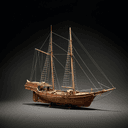
A symbol of his literary success, this yacht named after his novel allowed him to sail the Mediterranean. He would sometimes write on board during his cruises.

Maupassant practiced fencing regularly to keep fit. It was a sport favored by Parisian gentlemen of the late 19th century.
School Curriculum
Vocabulary & Tags
Key Vocabulary
Tags
Mouvement
Daily Life
Morning
Maupassant rose early and devoted his mornings to writing, generally from six o'clock until noon. He worked with method and discipline, a legacy of Flaubert's teaching. He could produce several pages of a short story or a novel in a single morning.
Afternoon
The afternoon was dedicated to his activities as a journalist — visits to the editorial offices of Gil Blas or Le Gaulois, submitting columns — or to physical exercise. He practiced rowing on the Seine, fencing at the salle d'armes, or walking through Paris to observe urban life.
Evening
In the evenings, Maupassant frequented Parisian literary salons, society dinners, and suppers at the homes of writer friends such as Zola or Daudet. He also enjoyed the theatre and live performances. In his later years, evenings were often overshadowed by his migraines and nervous disorders.
Food
Maupassant appreciated fine Norman cuisine: cream, butter, seafood, and cider. In Paris, he frequented restaurants along the grands boulevards and enjoyed refined dinners. He also consumed ether, a substance then used as a stimulant, which worsened his health problems.
Clothing
Maupassant dressed as a Parisian gentleman of the Belle Époque: dark frock coat, waistcoat, top hat or bowler hat, carefully knotted cravat. For rowing, he wore a striped jersey and a boater hat. His neat appearance reflected his social success.
Housing
Maupassant lived in several well-appointed Parisian apartments, notably on rue Montchanin in the Plaine Monceau neighbourhood. His interior was furnished with taste, decorated with trinkets and works of art. He also owned a villa in Étretat, 'La Guillette', where he stayed regularly.
Historical Timeline
Period Vocabulary
Visual Style
Style visuel naturaliste et impressionniste évoquant la France des années 1880, entre boulevards parisiens, bords de Seine lumineux et paysages normands aux ciels changeants.
Sound Ambience
Atmosphère sonore mêlant les bruits de la Seine et du canotage, l'animation des boulevards parisiens et le calme des campagnes normandes chers à Maupassant.
Liens externes & ressources
Références
Œuvres
Boule de Suif
1880
La Maison Tellier
1881
Contes de la bécasse
1883
Le Horla
1887
Pierre et Jean
1888