Kids interview Guy de Maupassant
by Charactorium · Guy de Maupassant (1850 — 1893) · Literature · 4 min read
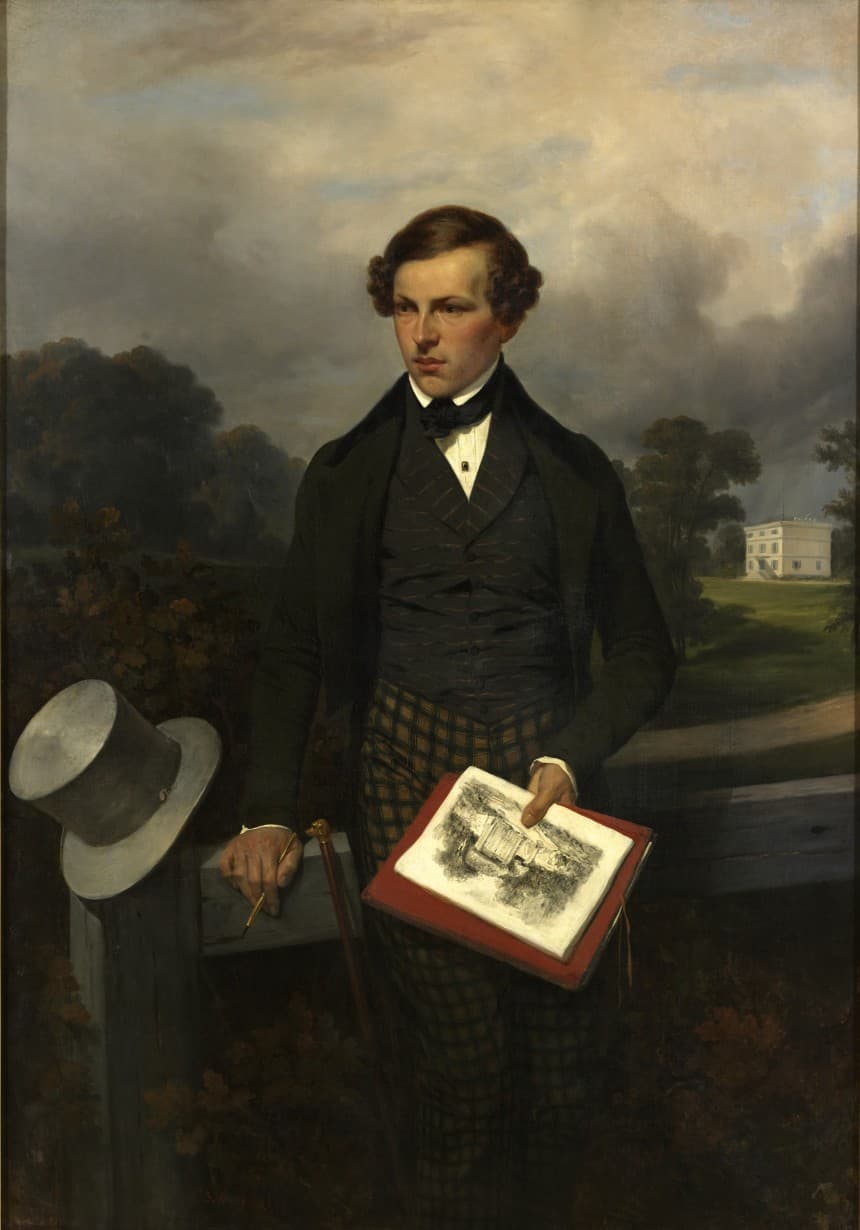
Two 5th-grade students visit an old Norman house during a field trip. In the study, a gentleman with a thick mustache is arranging his notebooks. His name is Guy de Maupassant, and he agrees to answer their questions.
—What were your Sundays like when you were a young writer?
You know, my Sundays were not days of rest. I would take the road to Croisset, near Rouen, to my master Gustave Flaubert's house. Imagine a big house by the Seine, full of books. There, I would hand him my texts, my heart pounding. And he would correct them mercilessly! He would cross out entire sentences, correct me on a single word. For seven years, he forbade me to publish. Seven years, my child, waiting! At first, it annoyed me. Then I understood: he was forging me. A strict master teaches you more than a kind one.
A strict master teaches you more than a kind one.
—Did it make you sad that he prevented you from publishing your texts?
Sad, yes, sometimes! I wanted to show my work, like you want to show a successful drawing. But Flaubert told me that a writer must know how to look for a long time before writing. He would make me observe a tree, a coachman, a passerby, until I found the right word, the only one. It was training, like an athlete repeating a gesture a thousand times. When he died, in 1880, I cried as one cries for a father. Everything I wrote afterwards, I wrote a little to honor him.
A writer must know how to look for a long time before writing.
—How old were you when you suddenly became famous?
I was thirty years old. Imagine the scene: a small book appears, written by several authors, Les Soirées de Médan. Inside, my short story: Boule de Suif. It's the story of a woman scorned by well-dressed bourgeois during the war against Prussia, in 1870. I had lived through that war; I had seen people's fear and cowardice. And then, surprise: everyone is talking about my text! Even Flaubert writes to me that it is a masterpiece. Overnight, I had become a real writer. That day, I knew my life had changed.
Overnight, I had become a real writer.
—Why did you talk about war in your stories?
Because I had seen it with my own eyes, my child. In 1870, I was a young man mobilized. I saw soldiers flee, panicked families, roads full of people leaving everything behind. War does not look like the pretty pictures in history books. It is dirty, it is sad, it shows the worst in people. In Boule de Suif, I tell how respectable gentlemen show themselves to be selfish and cruel. I did not want to lie. I wanted to show men as they really are.
War shows the worst in people.
—What did you like to do for fun?
Ah, that was my great joy: boating! Do you know what that is? Rowing a small boat on the river. Every Sunday, I went on the Seine, between Chatou and Argenteuil. Imagine: the sun on the water, my arms pulling the oars, friends laughing. In the evening, we would stop at a guinguette, an open-air café where we danced by the water. I was strong, I loved physical effort. And all those days on the river, I put them into my short stories, like Une partie de campagne.
All my days on the river, I put them into my stories.
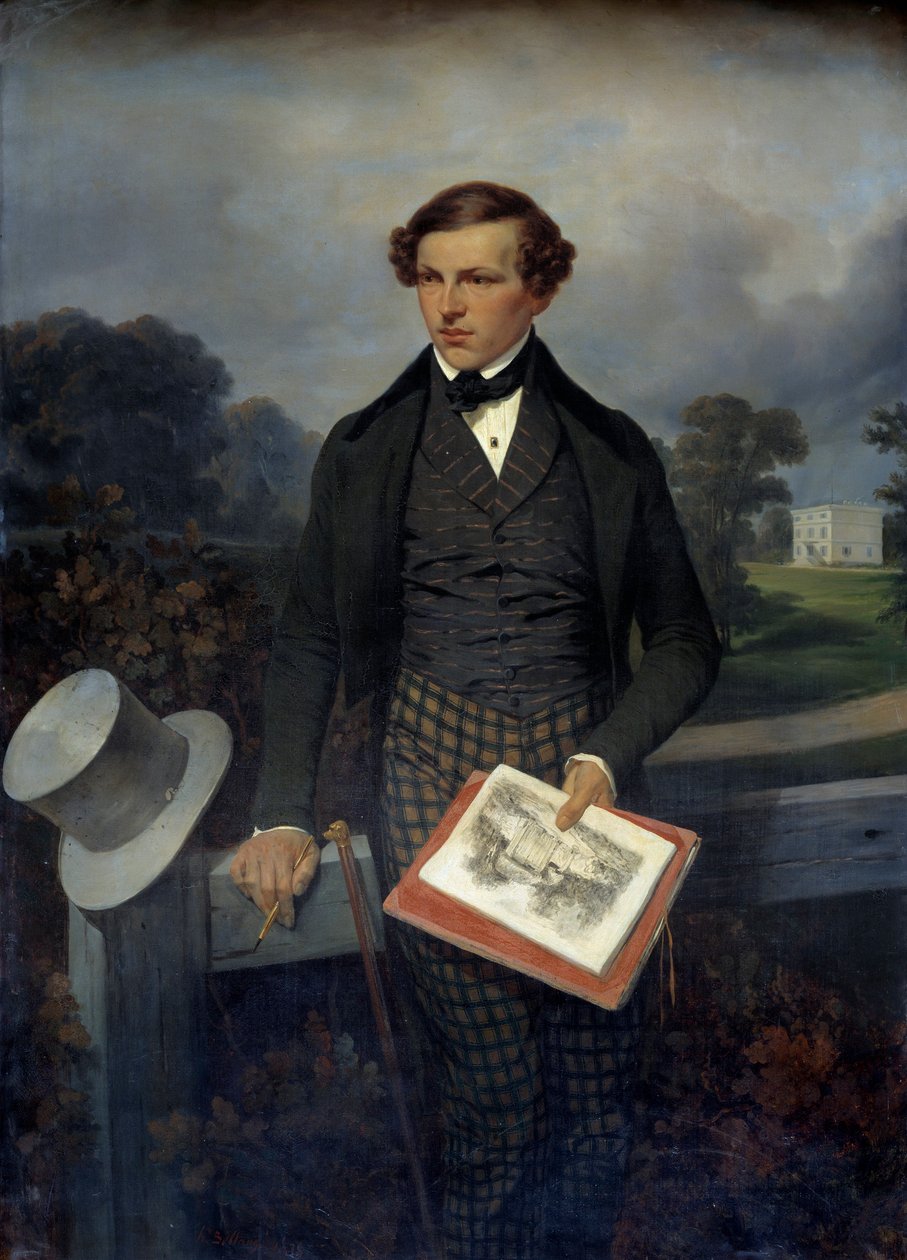
—How did you turn an ordinary day into a story?
That's the secret of the trade! I always kept a little notebook in my pocket. When I saw something funny or sad — an argument, a face, a rich man's foolishness — I would jot it down. On the Seine, I observed the boaters, the lovers, the Sunday families. Later, at my desk, I would take up those notes. A tiny scene would become a story. Flaubert had taught me that: see everything, forget nothing. The whole world is full of stories, my child. You just have to open your eyes and look carefully.
The whole world is full of stories, you just have to open your eyes.
—What was your daily routine like when you were writing?
I got up early, very early. From six in the morning until noon, I wrote without stopping. That was my work, like a worker going to the workshop. No waiting for inspiration, no! Discipline, every day, again the legacy of Flaubert. In the afternoon, I would take my articles to the newspapers, or I would do sports. In ten years, I wrote six novels and more than three hundred short stories! People think a writer dreams all day. Wrong. He works like a convict, pen in hand, every morning.
You don't become a writer by dreaming, but by working every morning.
—What is a story that tells the truth, for you?
Good question, my child! Many believe that writing truthfully means copying everything, like a drawing that copies every detail. I think the opposite. My job is to choose. I keep what matters, I remove the rest, so that you feel life even more strongly than in reality. In the preface to my novel Pierre and Jean, in 1888, I explained this. A good story does not show you everything: it shows you the essential. It is like a well-placed window. It does not give you the whole landscape, but it lets you see the most beautiful part.
A good story does not show everything: it shows the essential.
—Is it true that you wrote scary stories?
Yes, and one of them resembles me too much. It is called Le Horla. It is the diary of a man who feels an invisible presence in his house. A thing that follows him, drinks his water at night, that he can never see. He thinks he is going mad. Do you want me to tell you a secret? I was afraid, too. I was sick, very sick, and some nights I had hallucinations — I saw things that did not exist. Le Horla is my own anguish that I put on paper. Writing my fear was a way to resist it.
Writing my fear was a way to resist it.
—Were you afraid at night, in your house?
Yes, my child, I will not lie to you. Towards the end of my life, I was consumed by a disease that could not be cured in my time. It attacked my brain. In the evening, I had migraines, disorders, visions. I even ended up committed to a clinic at Passy, in Paris, in 1892. It is sad, I know. But I want you to remember something else: despite the fear and pain, I wrote hundreds of stories that still make people laugh, cry, and shiver. The disease took my body. It did not take my books.
The disease took my body, it did not take my books.
This imaginary interview was generated by artificial intelligence from sources documented in Guy de Maupassant's profile. It dramatises what the figure might have said based on what we know about them, but does not constitute attested historical testimony. For primary sources and factual documentation, refer to the full profile.