Imaginary interview with Guy de Maupassant
by Charactorium · Guy de Maupassant (1850 — 1893) · Literature · 5 min read
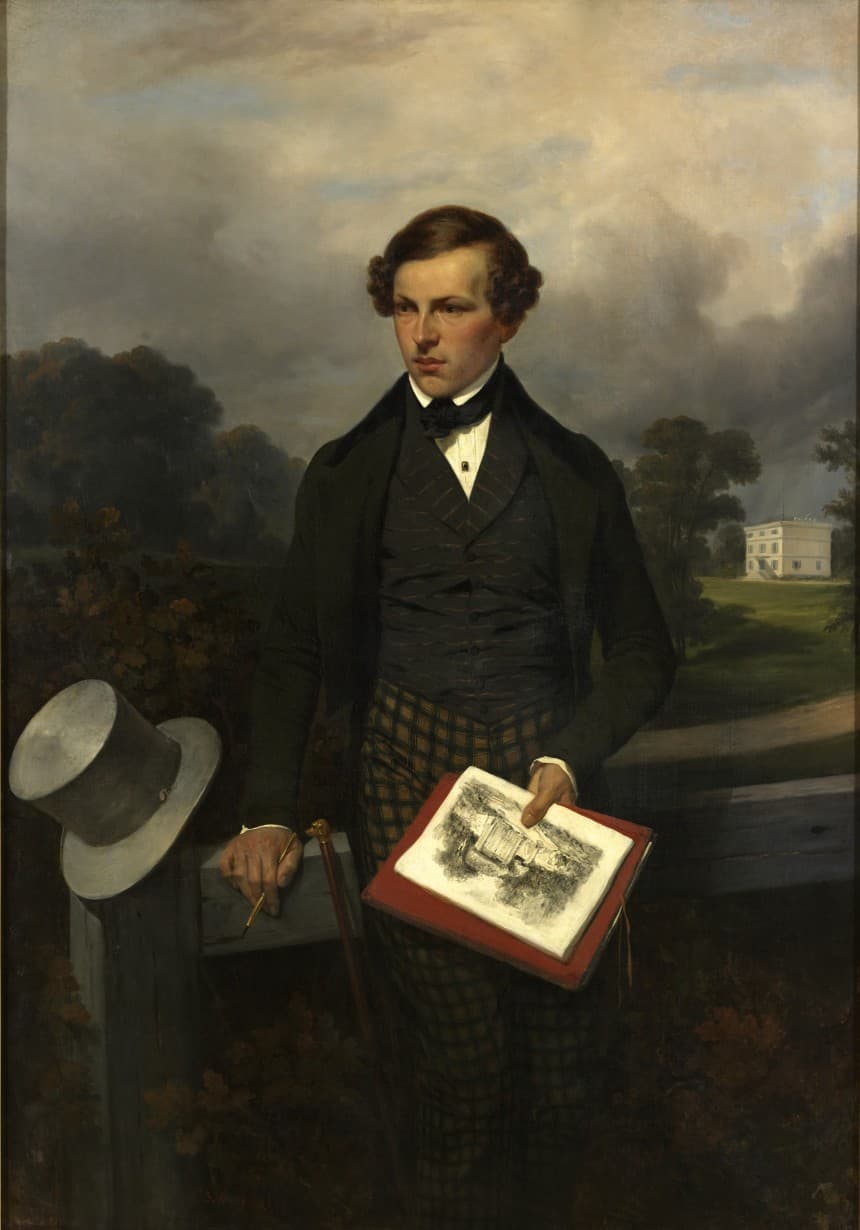
Autumn 1889. The villa 'La Guillette' in Étretat smells of polished wood and sea spray; through the window, one can make out the cliffs that the sea has been eroding forever. Guy de Maupassant, monocle on his nose and looking tired despite his thirty-nine years, agrees to talk between two columns he has to deliver.
—How did those famous Sundays at Flaubert's go?
Every Sunday, I took the road to Croisset, near Rouen, my pages rolled under my arm like a trembling schoolboy. The master sat me down, read aloud, and then his hand fell on my sentences like a guillotine. He crossed out, he scratched out, he explained that one right word is worth ten clever ones. For seven years, he forbade me to publish — seven years to learn that writing is not telling but seeing. Sometimes I cursed him as I rowed back up the Seine. Today I know that patient tyranny was the greatest gift a man ever gave me. One is not born a writer: one becomes one through erasures.
One is not born a writer: one becomes one through erasures.
—Do you remember the day Flaubert finally praised your work?
It was at the beginning of 1880, when 'Boule de Suif' appeared in Les Soirées de Médan. I awaited his verdict with more anxiety than a defendant awaits theirs. And then came his letter, which I treasure: 'Your story Boule de Suif is a masterpiece! I maintain the word: a masterpiece of composition, comedy, and observation.' Imagine: the man who forbade me to print for years bestowed that word upon me. I was thirty. A few weeks later, on May 8, he died. The master had time to bless me before leaving, and perhaps that is all I ever desired.
—What did rowing on the Seine mean to you?
Ah, the water! Give me a boat, a pair of oars, and Sunday between Chatou and Argenteuil, and you can take everything else. I owned several boats, I rowed until my shoulders ached, from the pure joy of cutting through the current. The riverside taverns, the girls in petticoats, the cool wine, the laughter rising in the light — that was my real school, after Croisset. Everything I wrote in 'Sur l'eau' or 'Une partie de campagne' came from those mornings. Literature, you see, is not always found in books: it is often found in the lapping water and sweat.
—Why do these popular Sunday pleasures appear so often in your writing?
Because there are no small subjects, only small gazes. A country outing, a clerk treating himself to a day of fresh air, a woman feeling the thrill of freedom under the trees for the first time — that is where human comedy reveals itself without disguise. The bourgeois in his Sunday best in a rower's hat thinks he is having fun; I watch him and see his desires, his cowardice, his hidden tendernesses. The Sunday crowd does not pose; it lives. And the writer who wants to paint mankind must go surprise them where they think they are alone, by the water's edge, rather than in salons where everyone recites their role.
—How would you define your conception of the novel?
I wrote it in black and white at the head of Pierre and Jean, in 1888, because I was too quickly classified among the copyists of reality. The realist, if he is an artist, does not seek 'to show us the banal photograph of life, but to give us a vision more complete, more striking, more compelling than reality itself.' That is my entire art. People think I belong to naturalism, and it is true that I share its seriousness; but I do not draw up a police report. I choose, I tighten, I prune until a scene strikes you more powerfully than if you had lived it. The illusion of truth, you see, requires more craft than truth itself.
The illusion of truth requires more craft than truth itself.
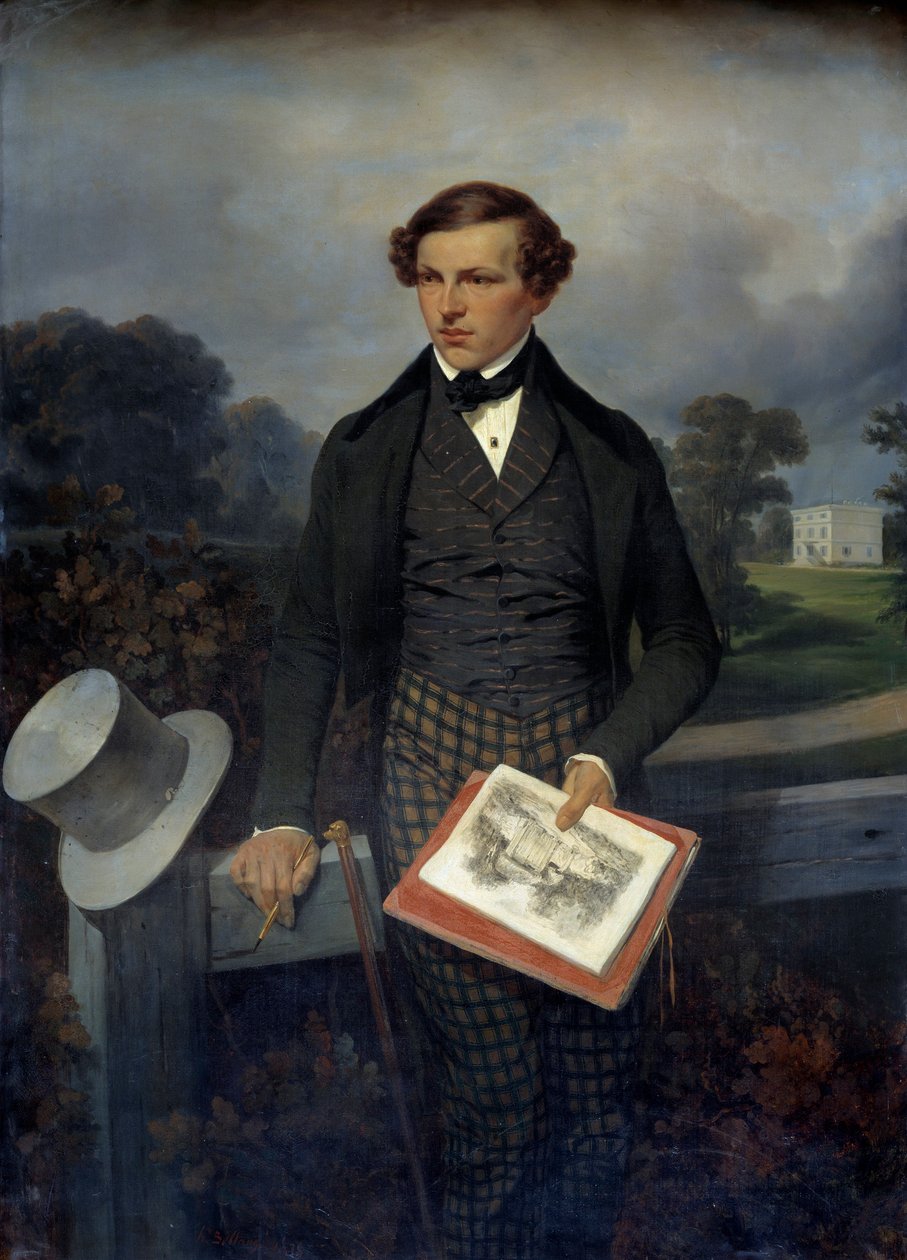
—What do you say to those who accuse you of merely copying life?
Let them try! Copying life means drowning it in a thousand useless details, confusing inventory with painting. I work like a carpenter: I plane. A well-made short story is a hundred pages of reality reduced to ten pages of necessity. In my columns for Gil Blas and Le Gaulois, I noted everything I saw in the streets, the omnibuses, the offices; but when I moved to the short story, I forgot nine-tenths of it. As I wrote, we must 'look, understand, and tell everything with the genius of sincerity and art.' Genius is not in accumulation. It is in selection, and selection is cruel.
—The Horla seems born from a very intimate anguish. Where does it come from?
You touch where it bleeds. The Horla, which I published in 1887, is not a storyteller's fantasy: it is a diary of my own fear. I carry within me a disease contracted in my youth, a disease that cannot be cured, and that gnaws at the body before rising to the head. There are nights when I feel an invisible presence leaning over my bed, when my monocle no longer saves me, because it is not my eyes that weaken, but my reason. Writing that terror was still a way to look it in the face, as Flaubert taught me to look at reality. But the invisible, it, does not let itself be erased.
The invisible, it, does not let itself be erased.
—How do you live with this threat hanging over your mind?
With a lucidity that is itself a torment. I see the thing coming like a sailor sees a storm brewing on the sea at Étretat. My migraines worsen, the hallucinations grow bolder, and I sense that one day Dr. Blanche's clinic in Passy will open its doors to me, never to reopen them. I sometimes use ether to ease the pain, and ether gives me strange, almost beautiful visions, which frighten me as much as they relieve me. The worst, you see, is not going mad: it is watching yourself go mad, still holding your pen steady while everything capsizes behind your forehead.
—You are said to be prodigiously productive. How do you work?
Like a galley slave, that is the word I wrote to my mother, and it is accurate. I get up early, and from six to noon, sergeant-major pen in hand, I fill my pages with the regularity of a clockmaker — a discipline inherited from Croisset. In ten years, I have produced six novels, over three hundred short stories, travelogues, and hundreds of columns. In the afternoon, I dash to editorial offices, I row, I fence; in the evening, salons. People think I am prodigal with my time: I am especially stingy with my mornings. Talent without labor is but an empty promise, and I have never liked promises.
—What would you say about that yacht you named after your novel?
My Bel-Ami! What a secret triumph to have earned, by the mere ink of my columns and books, enough to buy myself a boat that carries me across the Mediterranean. I named it after my novel from 1885, that story of an arriviste who climbs through Parisian journalism by dint of audacity and seduction. There is an irony there that pleases me: Georges Duroy scaled the steps of fortune, and it is he who paid for my freedom on the waves. On that deck, far from editorial offices, I breathe, I sometimes write, I gaze at the horizon. A man of letters who owns the sea — that is my sweetest revenge on the ministry offices where I wasted my youth.
A man of letters who owns the sea — that is my sweetest revenge.
This imaginary interview was generated by artificial intelligence from sources documented in Guy de Maupassant's profile. It dramatises what the figure might have said based on what we know about them, but does not constitute attested historical testimony. For primary sources and factual documentation, refer to the full profile.