Imaginary dialogue between Isao Takahata and Hayao Miyazaki
by Charactorium · Hayao Miyazaki (1941 — ?) · Performing Arts · Visual Arts · 6 min read
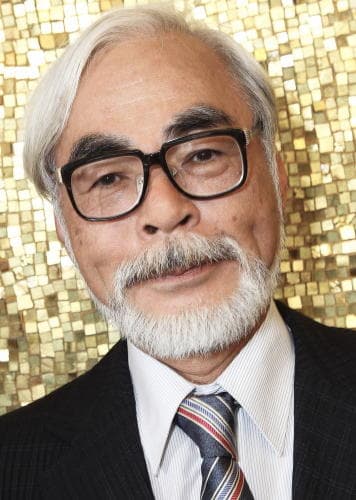
It is in the workshop of Studio Ghibli, in Koganei, that I find Hayao this September 2013, just days after the press conference where he announced, once again, his retirement. The light from the light tables still illuminates piles of storyboards that no one dares to put away. We have known each other since Horus, Prince of the Sun, in 1968 — almost half a century of arguments, shared ramen, and films made together. I come not as a journalist: I come as an old friend who wants to understand what he is fleeing, and what he truly believes he is abandoning.
—Hayao, The Wind Rises has just come out and here you are again with airplanes; your father made parts for the Zero — does it all start there?
You know me too well, Takahata. My father and uncle ran Miyazaki Airplane, which made rudders for Zero fighters. I grew up in a house where people talked about metal, wings, and engines, while bombs fell elsewhere. I hated that war, and yet I am madly in love with flying machines — that contradiction, I carry it into every film. From Nausicaä to Porco Rosso, my heroes cling to makeshift wings. The Wind Rises is just the culmination of that: a man who dreams of beautiful airplanes and discovers they will be made into instruments of death. Flying, for me, is always about wanting to escape the gravity of the adult world. You who have seen my childhood sketchbooks know that I drew cockpits before I drew faces.
—As a child, your family fled the bombings to Utsunomiya. What remains of those country roads in the way you film nature?
Almost everything remains, Takahata. We left Tokyo for the countryside of Tochigi, and I saw cities burn on the horizon from peaceful rice paddies. That double image has never left me: the beauty of the world and its destruction, side by side. Nature in my films is never a gentle backdrop; it is immense, indifferent, sometimes terrifying, and yet it is our only home. When I was a sickly child, those landscapes were my consolation. I think I spend my time redrawing what I felt then: a tiny child under a sky too vast. That is why my characters walk so much, climb, run through the grass — they are searching, like me, for a place where the world of men would stop making war.
—Since Horus, in 1968, I've seen you correct everyone's drawings. Why do you still redo thousands of images by hand today?
Because I don't know how to do otherwise, and you know that better than anyone, Takahata — we argued so much about it. When you were directing Horus, I learned that every gesture of a character must be true, otherwise the audience feels it immediately. A poorly felt hand movement, and the whole scene lies. So yes, I check the intervals one by one, I redraw, I correct late into the night. My young animators find me tyrannical; then I make them ramen to make amends. Animation is not magic, it is stubborn work, frame by frame. I believe a film is made image by image, like piling grains of rice. If I delegated that scrutiny, I would no longer sign anything truly my own.
—Everyone is going digital, Hayao. You stubbornly stick with your cels, your light table, and your watercolors. Does this obstinacy still make sense?
A vital sense, yes. The machine calculates perfect, smooth, dead images; my hand, on the other hand, trembles a little, and it is that tremor that makes a drawing alive. I love the weight of the pencil, the smell of paint, the cel held up to the light to check a color. A child watching Totoro should not sense a computer behind the screen, but a human hand that believed in what it was drawing. I do not despise new tools — I fear they make us forget effort, and without effort there is no soul. My watercolor backgrounds, I want them soft like a memory, not sharp like a windowpane. As long as my hand obeys, I will keep drawing the world rather than programming it.
—In Princess Mononoke and Spirited Away, you summon the kami, the yōkai. Why do these spirits haunt your films so much?
Because the Japanese long believed that every tree, every spring, every stone housed a kami, and I think we were wrong to forget it. In Mononoke, I did not want good guys versus bad guys: humans clear the land to live, and the forest spirits defend themselves to survive — both are right, and that is the tragedy. Shintō does not judge; it observes that we share the world with forces older than us. When little Chihiro enters the spirit world, she learns respect, work, and the memory of her own name. I am not doing religion, Takahata; I am giving back their place to the yōkai that modernity has driven away. A child who greets an old camphor tree has understood something I spent my whole life filming.
Humans clear the land to live, the spirits defend themselves to survive — both are right, and that is the tragedy.
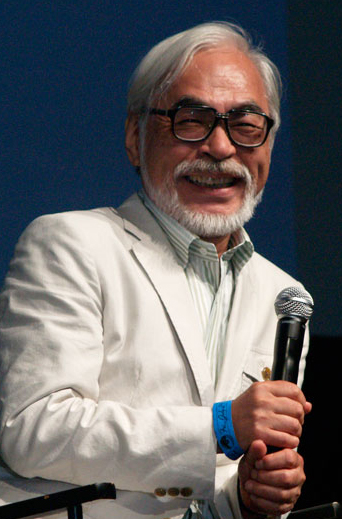
—The hills of Sayama, near Tokyo, inspired the landscape of Totoro. You are known to be committed to their preservation — how far does this attachment go?
It goes as far as anger, sometimes. Those hills, with their groves and rice paddies, are exactly the Japan I drew for Totoro: a country where you could still believe a spirit slept under the great trees. Developers wanted to concrete everything over, like everywhere else. I cannot stand the idea that a child grows up without a single place where mystery is possible. So I gave money, time, my name, to preserve those woods now called the Totoro Forest. It is not sentimental nostalgia: without living nature around them, children will have nothing left to dream about. Making films is not enough if the world we film disappears for good. A filmmaker who loves the forest must also, sometimes, put down his pencil and defend it.
—In 2003, your Spirited Away won the Oscar, and you refused to go collect it in Hollywood. Why this gesture that surprised so many?
Because at that time, the United States was bombing Iraq, and I could not step onto a stage to smile and thank a country at war. That would have felt like a betrayal of everything I put into my films. How can you talk to children about the value of life in the morning, and applaud bombs in the evening? I am not a man of political speeches, you know that, Takahata — but there are silences that speak. Staying home, at my drawing table, was my way of saying no. An award is worth nothing if, to receive it, you must silence what you think about war. Many thought it was an artist's whim; on the contrary, it was the most thoughtful thing I did that year.
How can you talk to children about the value of life in the morning, and applaud bombs in the evening?
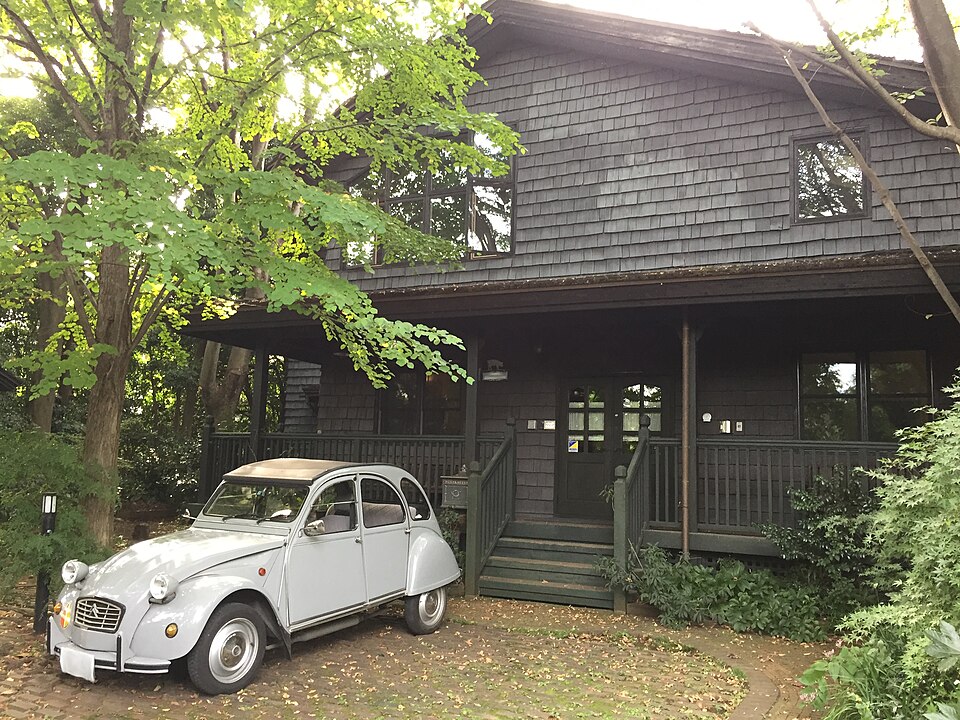
—You who as a child saw cities in flames, do you think an animated film can still say something against war?
I believe so, otherwise I would never have held a pencil. A film does not make weapons fall, I am not naive. But it can teach a child that the enemy on the other side also has a face, a fear, a mother waiting for him. In Nausicaä, no one is a monster: it is men who turn their neighbors into enemies. As a child, I saw what collective hatred produces, and I refuse to lull children with heroes who kill joyfully. True courage, in my films, is almost always understanding the other rather than striking them down. If even one viewer leaves the theater doubting that war is glorious, then the stubborn work was worth it. It is little, and it is already enormous.
—Here we are in September 2013. You have just announced your retirement after The Wind Rises. How many times, my friend, have you already promised me that?
Too often for you to believe me, Takahata, and you are right to smile. Yes, I have said it before, several times even, and here I am again in front of journalists swearing that this time it is serious. The problem is that I do not know how to live without drawing. When I stop, the world seems dull to me, and an image always comes back to torment me: a child's face, a bird, a flying machine. Making a film kills me slowly, at my age, but not making one would kill me faster. So I put away my pencils today in all sincerity — and I know myself well enough not to promise anything about tomorrow. You and I know that old animators never really retire: they die with a drawing board in their hand.
Old animators never really retire: they die with a drawing board in their hand.
—And if tomorrow an idea caught up with you, stronger than your fatigue — would you really have the courage to resist it, Hayao?
Honestly? No, and that scares me a little. An idea, when it is alive, does not ask permission; it settles in and does not leave. I should pass the torch, let the young ones at the studio invent their own world, open the Mitaka museum to children and content myself with watching them grow. That is what reason dictates. But you know me: I am incapable of remaining a spectator. If a child, one day, asks me for another story that helps them want to live, I fear I will pick up the pencil again despite all my promises. Do not tell the journalists, they would laugh. Let's say for today that I am resting, that I am letting the wind die down — and that, as always between us, the future will decide. We have made beautiful films, Takahata. That is already not so bad.
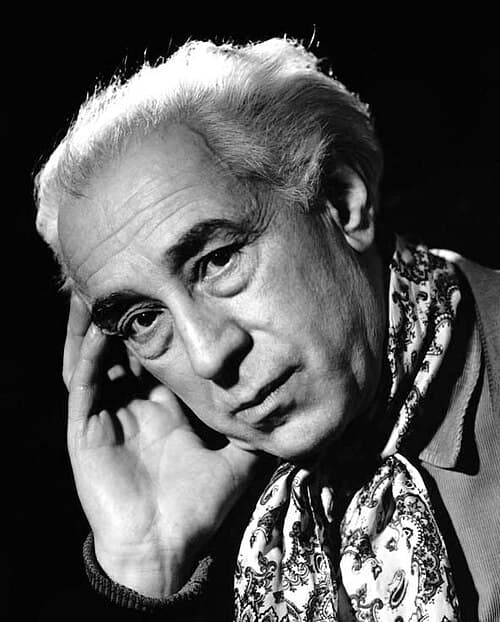
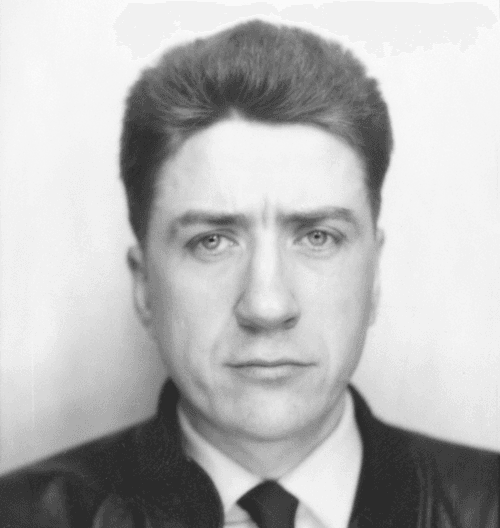
This imaginary interview was generated by artificial intelligence from sources documented in Hayao Miyazaki's profile. It dramatises what the figure might have said based on what we know about them, but does not constitute attested historical testimony. For primary sources and factual documentation, refer to the full profile.