Imaginary dialogue between Pierre Abélard and Héloïse d'Argenteuil
by Charactorium · Héloïse d'Argenteuil (1101 — 1164) · Literature · Philosophy · 6 min read
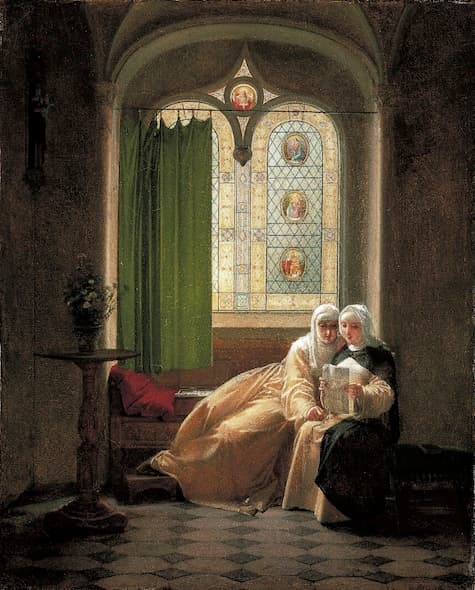
It is at the Paraclete, in the calm of a Champagne cloister, that Peter Abelard meets Heloise on a cold morning, shortly after the office of Terce. The light falls obliquely on a desk where a barely finished letter is drying, and the smell of wax from the abbatial seal still lingers in the chapter house. They have known each other for twenty years — the master, the pupil, the wife, the abbess — and Abelard comes less as a visitor than as a man seeking to understand the woman he loved. Between them, everything is said in half-words, and yet everything remains to be said.
—Heloise, when your uncle Fulbert opened his house to me so that I could teach you, what woman was already reading behind the pupil that was announced to me?
You know better than anyone, Peter: I was not some raw schoolgirl to be shaped. I had devoured authors, Latin first, then everything the convent of Argenteuil could offer me. What I sought in your teaching was not the alphabet of dialectic, but the joust itself, that art of turning a question until it yields its contradiction. In Paris, people marveled that a woman could handle scholasticism; I marveled that they marveled at it. I wanted you to see me not as a curiosity, but as a mind capable of holding its own against you. The Problemata I would later address to you — those forty-two exegetical questions — were born of that demand: to receive nothing without sifting it through the sieve of reason.
People marveled that a woman could handle dialectic; I marveled that they marveled at it.
—Those forty-two questions you submitted to me, the Problemata — did they seek the answer, or did they want to test the master as much as Scripture?
Both, and I do not hide it. A well-posed question is worth more than a convenient answer, and I have always refused to be placated with words. I read Scripture as one reads a difficult text: looking for where it contradicts itself, where meaning resists. When I question a certain Gospel passage or some obscurity of the Law, it is not anxious piety — it is method. The revival of the schools taught clerics to dispute; I merely brought that rigor into the silence of a cloister, where I was not expected. And if my questions sometimes embarrassed you, admit that they also forced you to think further. Faith loses nothing by being questioned — it gains by being held as living.
A well-posed question is worth more than a convenient answer.
—When I offered you marriage, after the child, you refused it violently. Even today, Heloise, do you hold that refusal as wisdom?
I hold it as the most lucid thing I have ever said. A wife would have chained you to a household, to money worries, to that domestic noise that kills philosophy. I wanted you free for the world of ideas, not riveted to me by a contract. Remember: I kept telling you that the name of friend, or even of concubine, was sweeter to me than that of wife. It was not disdain for the blood that bound us — it was a refusal to diminish you. I expected from you neither wedding nor dowry, nothing but yourself. People thought me mad to reject the honor that a woman seeks; but honor, in my eyes, was to owe nothing to self-interest. I loved gratuitously, or I did not love.
The name of friend was sweeter to me than that of wife: I wanted you free, not chained to me.
—Many saw in that refusal only girlish pride. You who lived it, what do you say now that time has passed?
Pride? Perhaps, but turned against myself. I knew the world expected marriage from us, respectability, order restored after the scandal. I preferred the disorder of a true love to the order of a social lie. What I refused was not to unite with you — it was to trade a passion for a convenience. Many women of my time had no such choice; they were married off without being consulted. I had that terrible luxury of choosing, and I chose not to possess you. I still believe today that loving without demanding is higher than loving to hold. The title of wife would have given me rights over you; I wanted none. I only wanted you to be, and to be great.
I preferred the disorder of a true love to the order of a social lie.
—You wrote to me recently, words of a frankness that moved me deeply. Did you not fear, abbess, to say too much?
Fear? I feared the opposite: to lie under the veil. In my letters, I confessed to you what no rule could take from me — that even in prayer, your memory comes to disturb my offices, that my body remembers what my soul would silence. People think me wholly given to God; I tell you that I first gave myself to a man, and that I have never quite untangled the two loves. Writing that risks scandal; but what would piety be worth that begins with self-deception? How much I lost in you, you know better than anyone. I prefer the naked truth of a letter to the decorum of a façade saint. These pages are my confession, and I own them entirely.
Even in prayer, your memory comes to disturb my offices.
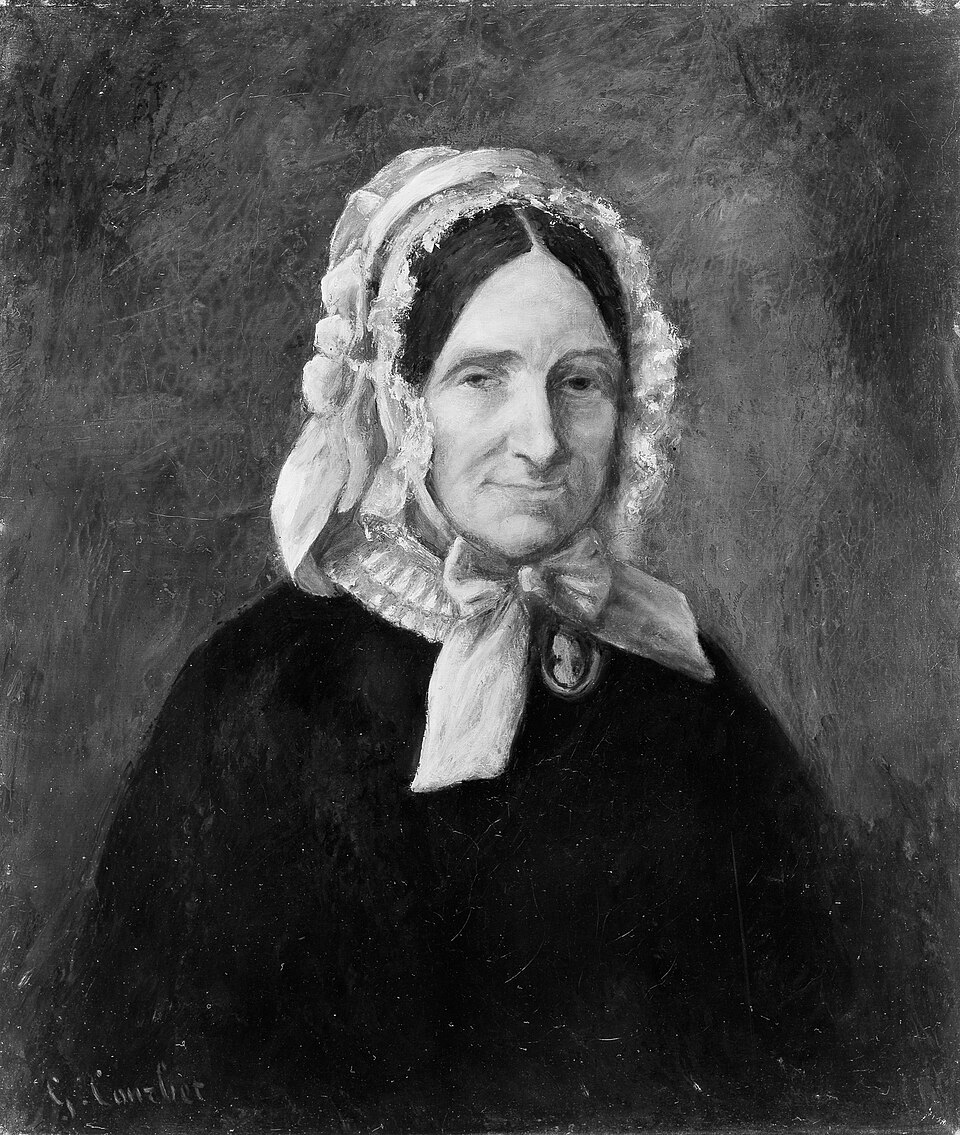
—When you take up the quill before the parchment, to write to me, is it the abbess who speaks, or the woman before the veil?
Both hold the same pen, and that is my whole torment. The hand that traces the charters of the Paraclete is the same that, at night, writes to you things no nun should form. I sharpen my own quill, I save parchment like a good steward — and then I pour into it what the rule condemns. Writing is the only place where I can be whole: neither quite wife nor quite nun, but Heloise, undivided. You taught me to reason; you did not teach me to stop feeling. What I send you is neither complaint nor prayer — it is the testimony of a woman who refuses to cut herself in two. The parchment, at least, does not judge me.
Writing is the only place where I can be whole, undivided.
—You urged me to draft a rule proper to your nuns, against that of Saint Benedict. Why was this rule of men not enough for you?
Because it was not written for us, and no just law can ignore those it binds. Benedict regulated the life of monks, with their strengths, their labors, their fasts. To impose that on women is to confuse equal dignity with identical bodies. Nature itself exempts us from certain burdens by the weakness of our sex — not by inferiority of the soul, but by difference of the flesh. I asked you for a rule founded on reason, not on servile imitation of what is done elsewhere. Let the fast, the clothing, the measure of wine be adapted to the real bodies of my nuns, rather than breaking them in the name of a male tradition. To govern a community is first to know it — the rest is only legislative pride.
No just law can ignore those it binds.
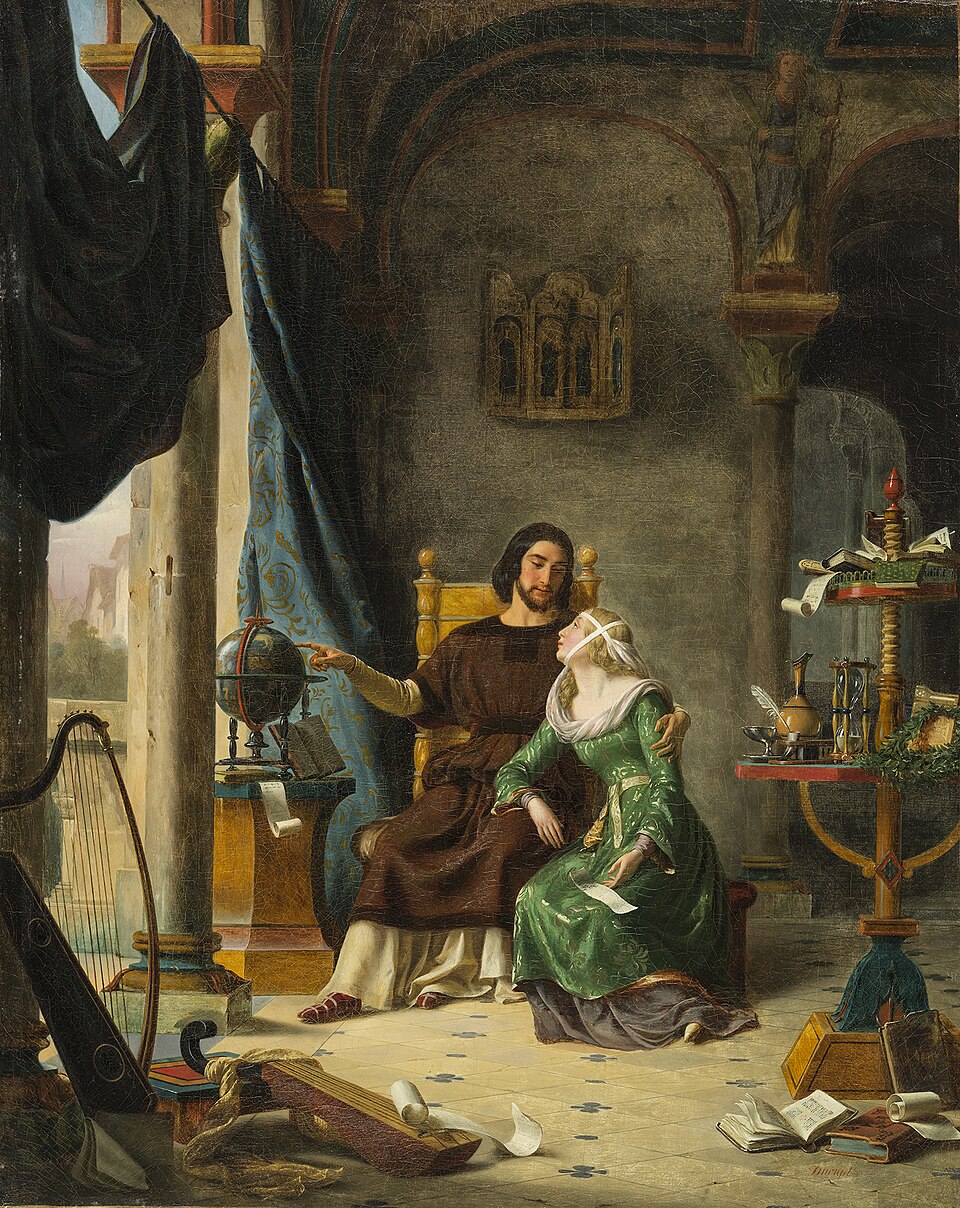
—Do you not fear being accused of relaxing discipline, by demanding for your daughters a rule gentler than that of the Fathers?
I do not demand gentleness, I demand measure — it is not the same thing. A rule that exhausts the body without nourishing the soul is no holier, it is merely crueler. True renunciation lies not in excessive burden, but in constancy; and one is more constant in what one can bear. I have seen fervor break on unreasonable fasts, vocations sink through excess of rigor. Better a sustained observance than a heroic one abandoned the next month. What I want for the Paraclete is a discipline that is thought through, where obedience is enlightened and not blind. The Fathers legislated for their time and their bodies; it is my office to adjust their wisdom to mine. That is not betraying the rule — it is understanding it.
A rule that exhausts the body without nourishing the soul is no holier, it is crueler.
—This oratory of the Paraclete that I gave you in 1129, it was nothing but ruins and brambles. How did you turn that desert into an abbey?
With hands, patience, and this seal you see. When you gave it to me, there was neither safe roof nor assured bread; everything had to be built — the church, the cloister, the refectory, a scriptorium where my nuns copy and pray. My days are no longer idle: I rise before dawn for Matins, I hold chapter in the morning to settle rule and affairs, then come the lands to administer, the charters to seal, the visitors to receive. This abbatial seal, which I affix to our acts, says better than anything what I have become: a woman who governs. You who founded this place can measure what it has become. I was made a wife against my will; the Paraclete, I wanted, and I made it my own.
I was made a wife against my will; the Paraclete, I wanted, and I made it my own.
—You preside over the chapter, you seal charters, you direct souls. Did you desire this authority, or only accept it out of necessity?
I received it without seeking it, then I loved it without saying so too loudly. Running the Paraclete gave me back what the cloister threatened to take away: the use of my mind. Reciting the entire psalter each week, overseeing the scriptorium, instructing novices, settling quarrels — all require the same rigor as the dialectic you taught me, except that here it deals with living beings. An abbess is not only a woman of prayer: she judges, she administers, she answers for everything before God and before men. I found in it, for lack of the happiness you know was denied me, a gravity that keeps me standing. Governing women according to reason is still a way of disputing — but with life itself as the matter.
The Paraclete gave me back what the cloister threatened to take away: the use of my mind.

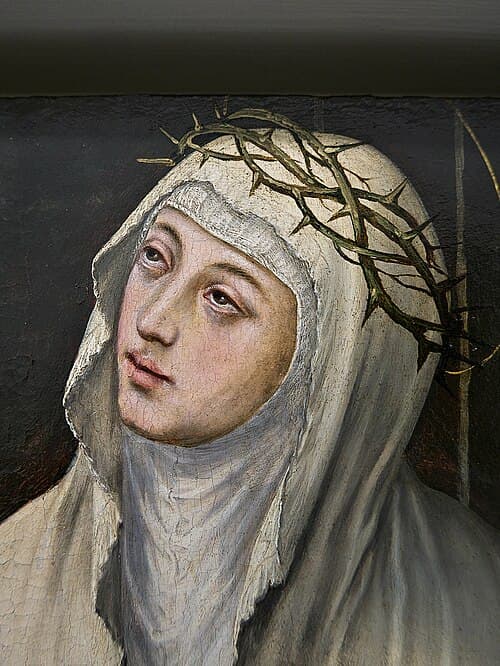
This imaginary interview was generated by artificial intelligence from sources documented in Héloïse d'Argenteuil's profile. It dramatises what the figure might have said based on what we know about them, but does not constitute attested historical testimony. For primary sources and factual documentation, refer to the full profile.