Imaginary dialogue between Bernard of Clairvaux and Hildegard of Bingen
by Charactorium · Hildegard of Bingen (1098 — 1179) · Literature · Music · Sciences · 6 min read
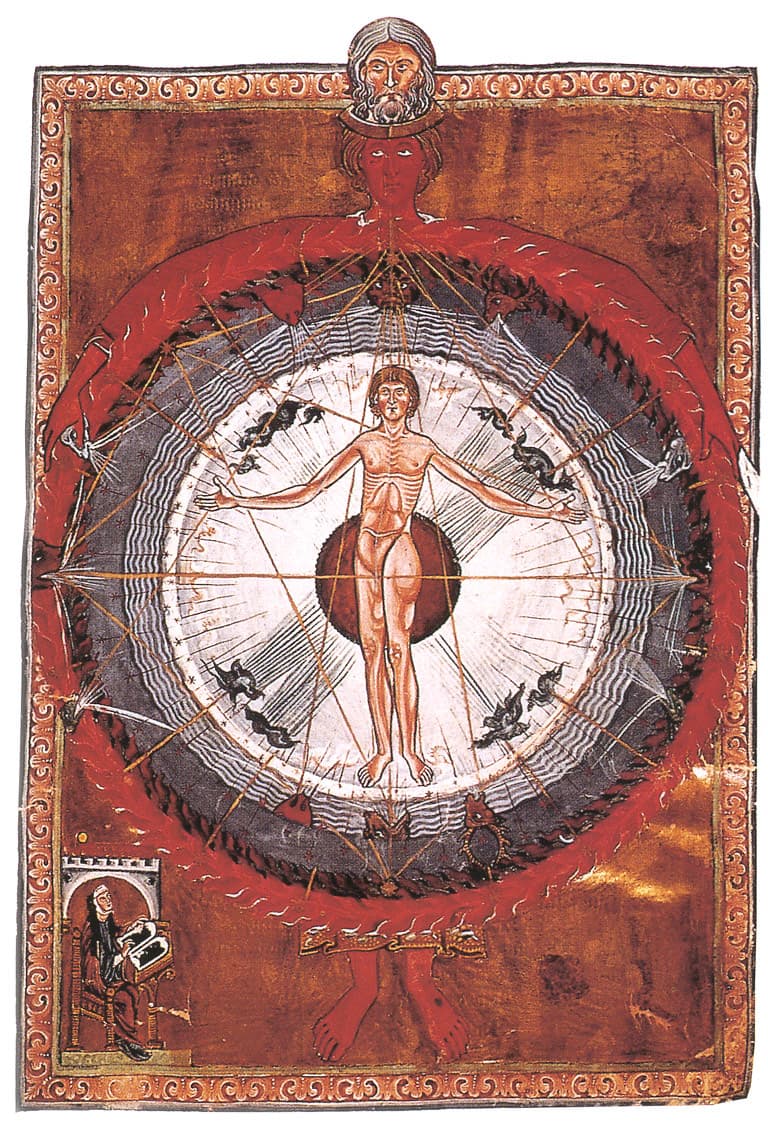
It is the summer of 1151, and the newly founded monastery of the Rupertsberg still carries the smell of fresh mortar and drying herbs along its cloister walk. Bernard of Clairvaux, pausing here on his way back from preaching engagements along the Rhine, sits with Hildegarde of Bingen in the garden of simples, where rows of officinal plants reach toward the afternoon light. They have exchanged letters for five years — it was Bernard's word at the Synod of Trier that helped bring her Scivias before Pope Eugene III — and today, in the hum of bees among the lavender, the abbot of Clairvaux comes with questions more direct than any letter had permitted.
—Hildegarde, in your letter of 1146 you described yourself as a poor little feminine form. Did you write that in faith, or in strategy?
I wrote it in both, Bernard, and I will not pretend otherwise. A woman who seeks the counsel of the most formidable abbot in Christendom does well to name what she is before her interlocutor names it for her — and less charitably. But the words were also true. I have never felt secure in my own authority; the visions overwhelm me as much as they compel me. What I knew by 1146 was that I could no longer keep silent, and that keeping silent had become its own kind of sin. When your letter arrived telling me to speak, it did not supply courage I had lacked — it confirmed what the living light had already demanded. I needed you not to give me the mandate, but to tell me that someone whose judgment I trusted had heard those words and found them genuine.
I needed you not to give me the mandate, but to tell me that someone I trusted had found it genuine.
—At Trier I read your words aloud before Pope Eugene himself. Was that approval truly necessary for you, or simply something the world required?
The living light does not wait for synods, Bernard — it spoke to me decades before Trier. But I live among people who require institutional confirmation before they will hear what God has already said. Without the sanction of Eugene III, my writings would have remained within these walls, known only to Volmar and my sisters. What the Church confirmed at Trier was not the truth of my visions — only God may confirm that — but the right of others to hear them without being warned away. I will not pretend the distinction is small. There are women whose voices died in silence for want of a single afternoon like that one. I took the approval gratefully, and I would take it again.
—Your melodies move beyond the usual modes — those who hear them cannot quite place where they belong. Where do they come from?
From the same source as the visions, which means I cannot fully explain them any more than I can explain the light itself. When I receive a vision I sometimes hear it as well — a harmony that seems to hold creation together from within. My task in composition is to transcribe what that harmony suggests, not to invent something of my own devising. You know how the Psalms carry lamentation and joy in a single breath — I reach for that quality in the Symphonia. The melodies are long, and they do not stay where the modes expect them to. But the divine voice does not confine itself to ordinary intervals. If my sisters struggle to sing what I have written, I consider that a feature rather than a flaw: the effort of the throat disciplines the wandering of the mind.
—You composed a full musical drama — virtues that sing, a devil permitted only to shout. Is music itself, for you, a form of theology?
Teaching, worship, and vision are the same act when done rightly. The Ordo Virtutum sets the soul's struggle in sound rather than argument, because sound moves through the body in ways that argument cannot reach. I gave the devil no singing voice deliberately — evil has no music in it; it can only interrupt, overpower, and distort. The virtues sing because their nature participates in the divine harmony that underlies creation. When my sisters perform the drama, they are not watching a lesson from a safe distance — they enact a truth with their own bodies, their own breath. That is why the liturgy matters more than the finest sermon: the body learns what the cautious mind might otherwise refuse.
Evil has no music in it — it can only interrupt, overpower, and distort.
—You have catalogued more than two hundred plants and their remedies. Is medicine, in your view, a spiritual discipline or a practical craft?
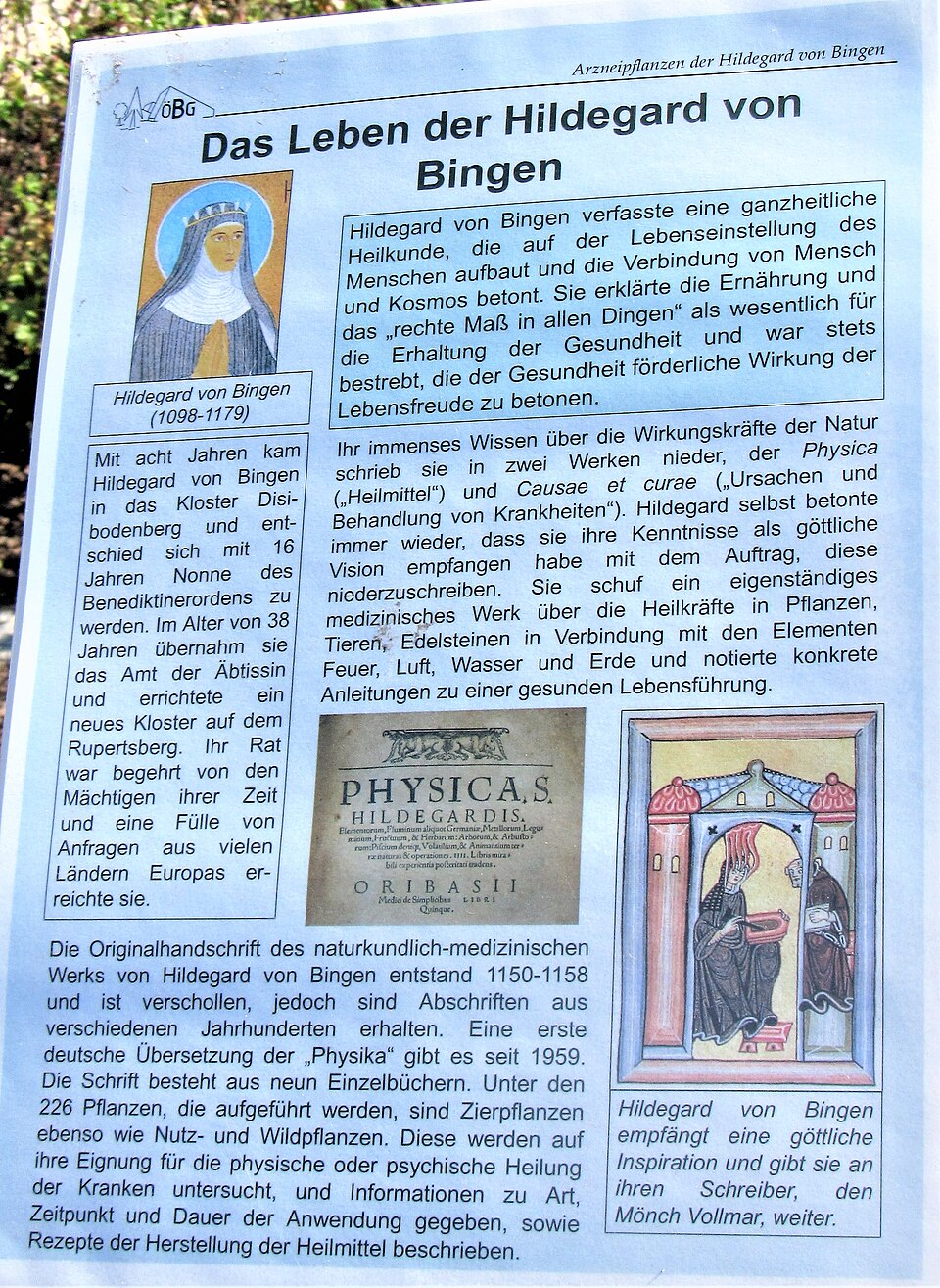
Brother Bernard, I suspect you already know my answer, since you too believe that creation speaks of its Creator. The body is not the soul's prison — it is its companion, and when the humors fall into disorder, the whole person grows opaque to grace. I documented the properties of plants in the Physica because God placed their virtues there as a second scripture, written not in letters but in root, leaf, and seed. The peasant woman who brings a feverish child to our gate does not need theology; she needs the right remedy at the right moment. But behind the remedy lies an order, and behind the order lies God's intelligence for what He made. I have never found reason to separate those two things, and I do not intend to start.
—The sick who come to your gate seeking cures — do you attend them yourself, or is that work left to your sisters?
Both, depending on the ailment and the hour. I have learned that some sufferings require the healer to be present in person — not because the remedy is beyond a sister's competence, but because the sick person needs to be seen before any herb will reach the root of what ails them. A man whose bile runs black and whose thoughts darken with it needs someone to name his condition before the medicine can work. My Causae et curae attempts to trace those connections between the body's inner weather and its outward disorders — including matters polite company tends to leave in silence, such as the causes of desire and the ailments particular to women. I chose plainness over delicacy in those pages. The patient is better served by honesty.
—Your letters to abbots and rulers grow bolder with each year. Does speaking so plainly to the powerful never bring you to your knees in fear?
It frightens me exactly as much as remaining silent would — and silence frightens me considerably more. I write to those in power when the living light compels it, not when political circumstance suggests it might be advantageous. You yourself, Bernard, did not hesitate to summon the princes of Europe to a crusade from a pulpit, not a throne. I write from a cell rather than a pulpit, but the obligation is the same: when a shepherd strays, someone must say so. Whether the shepherd is an abbot grown proud of his own learning or a lord who confuses his title for a divine appointment, the word must be spoken. The danger is woven into the calling, and I accepted the calling when I took the veil.
—You speak of conscience resisting authority — and yet the Rule of Saint Benedict commands obedience. How do you hold those two things together?
The Rule commands obedience first to God, and to the abbot only insofar as the abbot speaks in God's name. When those two authorities come apart — and they do come apart, sometimes catastrophically — a religious is not released from judgment; she is required to exercise it with greater care. I have never resisted a legitimate command lightly or out of pride. But there are moments when a command, however lawfully issued, asks a community to perform an act that violates its deepest obligations. In such moments, to obey without protest is not humility — it is abdication. Saint Benedict himself withdrew from a corrupt monastery rather than participate in its corruption. The Rule does not ask us to suspend conscience; it asks us to refine it.
—Word has reached even Clairvaux that you devised a language entirely your own, with its own alphabet. What drove you to it?
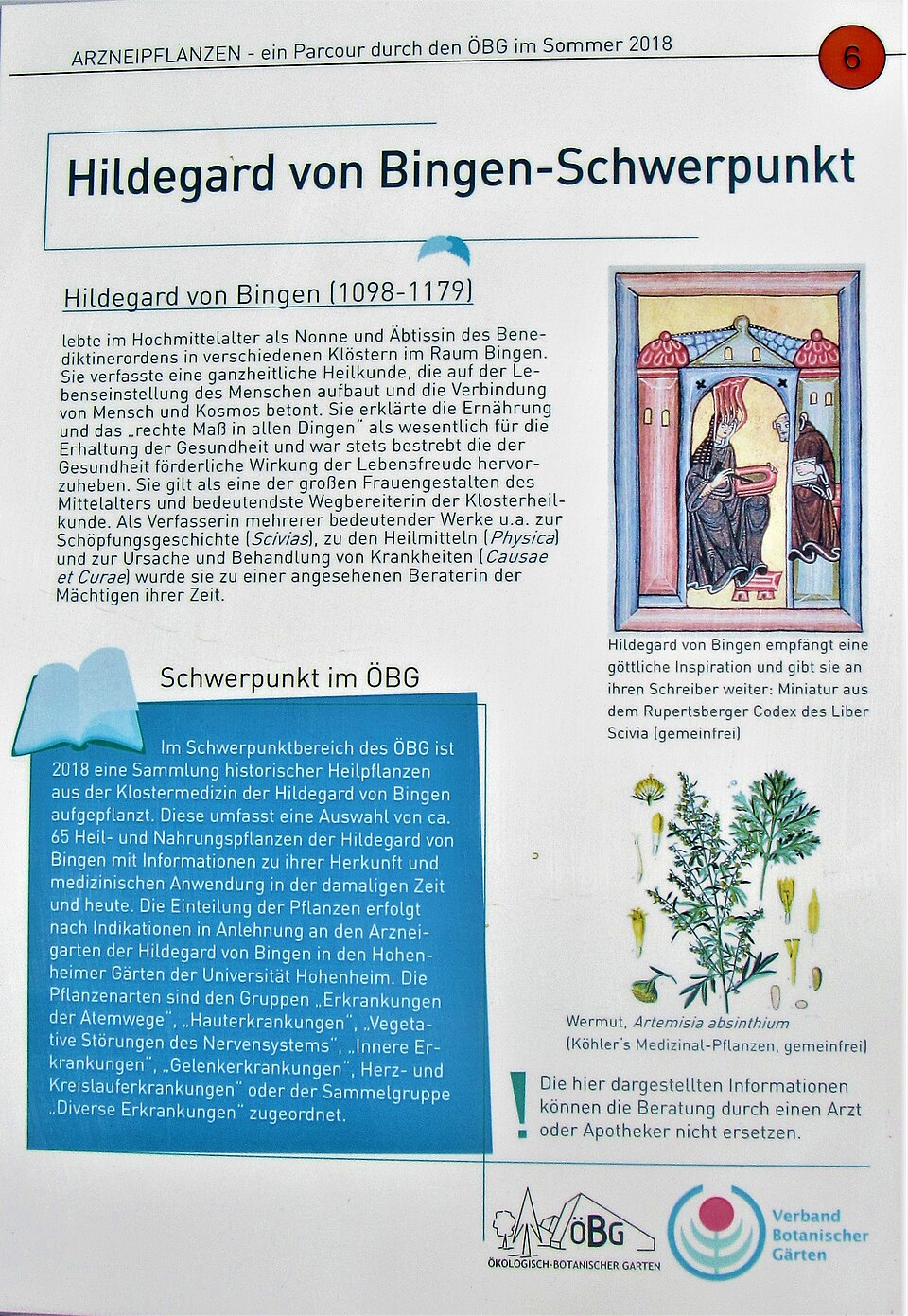
Not ambition — something more like a craftsman's dissatisfaction with imprecise tools. Common speech handles certain kinds of experience too roughly. When I tried to find words for what the community shares in its life of prayer — the textures of particular devotions, the qualities of individual souls — ordinary German and Latin seemed to slide off the surface of what I meant. The language I devised, the Lingua Ignota, and the alphabet that accompanies it, the Litterae Ignotae, grew from a desire to give my sisters words precise enough to hold what we actually experience within these walls. Whether it will be useful beyond this monastery I cannot say; its life may end with us. But the attempt was an act of careful love — the same impulse, I think, that drives a theologian to distinguish one word precisely from another.
—A language invented, music composed, visions transcribed, remedies catalogued — one woman, one monastery. How do you not break under the weight of it?
Honestly? I do not always manage not to break. There are seasons when the visions arrive with such force that I am bedridden for days afterward — light without form, weight without source, a prostration that no remedy in the Physica fully accounts for. My body has never been a reliable instrument. But I have found, over more than fifty years of this life, that the work itself is what sustains me — not despite its weight, but because of it. A woman occupied with transcribing what God places before her has very little space left in which to lose herself to fear. The task is the grace, Bernard. I do not know how to say it more plainly than that.
The task is the grace. I do not know how to say it more plainly.
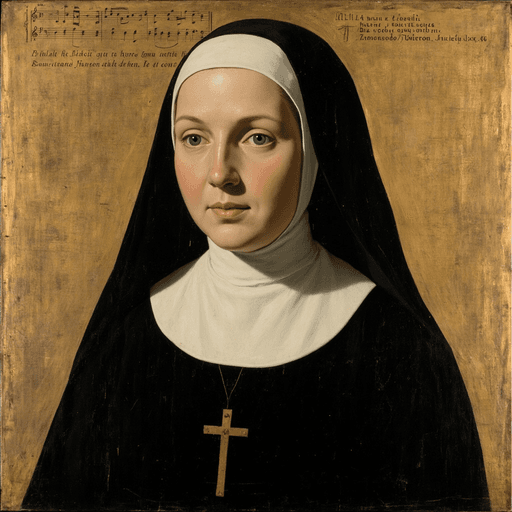
This imaginary interview was generated by artificial intelligence from sources documented in Hildegard of Bingen's profile. It dramatises what the figure might have said based on what we know about them, but does not constitute attested historical testimony. For primary sources and factual documentation, refer to the full profile.