Kids interview Hildegard of Bingen
by Charactorium · Hildegard of Bingen (1098 — 1179) · Literature · Music · Sciences · 5 min read
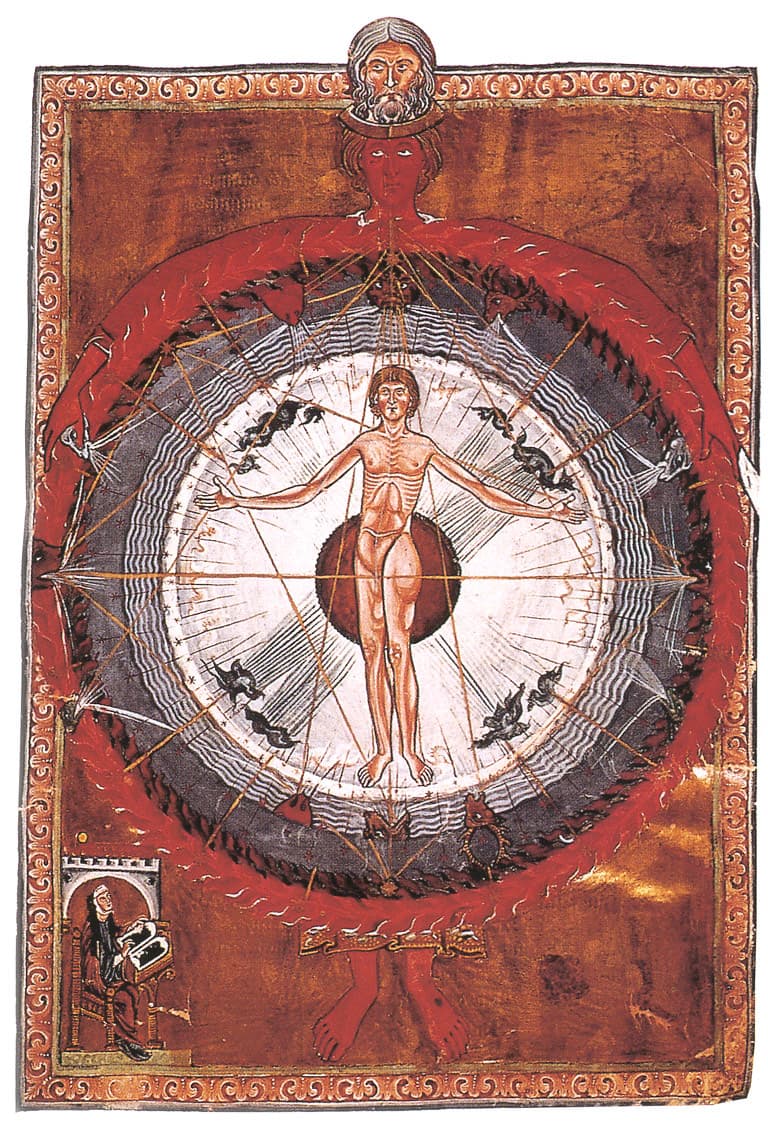
Two twelve-year-olds are on a school trip, exploring an exhibition about medieval history. A voice seems to rise from an illuminated manuscript at the end of the hall — it is Hildegarde de Bingen, abbess, composer, and healer, one of the most extraordinary minds of the twelfth century. She has agreed to answer their questions.
—How old were you when you saw your very first vision?
I was five years old. Five! A brightness came into my mind — not like the light from a candle, but something that seemed to shine from the inside. I called it the living light. I was terrified to say a word, so I stayed quiet about it for a very long time. Years passed. I grew up, entered the monastery at Disibodenberg, became a nun, then the leader of our little community — and still I kept it secret. It was only past the age of forty that I finally dared to write it all down. Imagine carrying such a secret your whole childhood. It made me feel both chosen and very alone.
—What happened when the Pope himself read your book out loud?
That was in 1148, at the great gathering at Trèves. Pope Eugène III had received my Scivias — the book where I described my visions of heaven and earth. He read passages from it aloud, in front of all the bishops and cardinals assembled there. And he approved it. Officially. A woman's words, read before all those powerful men, and accepted. I had written to the great theologian Bernard of Clairvaux beforehand, calling myself a poor little feminine form — those were my own words — asking humbly for his guidance. His support helped. But that approval at Trèves meant everything. It meant I had the right to speak. Not just whisper.
—Were you nervous speaking to big crowds in churches when you were sixty?
Nervous? Oh, very much so. I was old by then — more than sixty winters behind me — and my body was not always strong. But something kept pushing me forward. I traveled across the empire, to monasteries and cathedrals, and I spoke. Before priests, before crowds of ordinary people. That was simply not done. A woman did not stand in a cathedral and preach. Not ever. But I believed my words came from beyond myself. Think of it like this: imagine having a message so urgent that staying silent felt worse than any fear. That is how it was for me. So I set out. Four times, I made those long journeys. Four times.
—Did you really invent your own language? What was it for?
Yes — I called it the Lingua Ignota, the unknown tongue. It had its own alphabet, which I named the Litterae Ignotae, and nearly nine hundred words of its own. Why? Honestly, I am not entirely certain myself. Perhaps it was for prayers, for the nuns of my monastery to use in ceremonies. Perhaps it was simply a way of showing that language itself can be created, not only inherited. At a time when all serious writing was done in Latin — a language I had to learn, not one I was born speaking — building my own felt like a small act of freedom. A secret garden made entirely of words.
—How many songs did you write? Did you have a favorite?
Seventy-seven pieces — hymns, sequences, antiphons — all gathered in a collection I called the Symphonia armonie celestium revelationum: the symphony of the harmony of heavenly revelations. For me, music was not entertainment. It was a way of touching heaven. The voices of my nuns, rising through the stone church of Rupertsberg, sounded like a thread running between earth and sky. My favorite? Perhaps the Ordo Virtutum — a full musical drama about the soul's struggle against evil, with real characters and real voices. It is the oldest musical drama of its kind where both the words and the melodies have survived together. I am proud of that one.
Music, for me, was not entertainment. It was a way of touching heaven.
—What did your garden smell like in the morning?
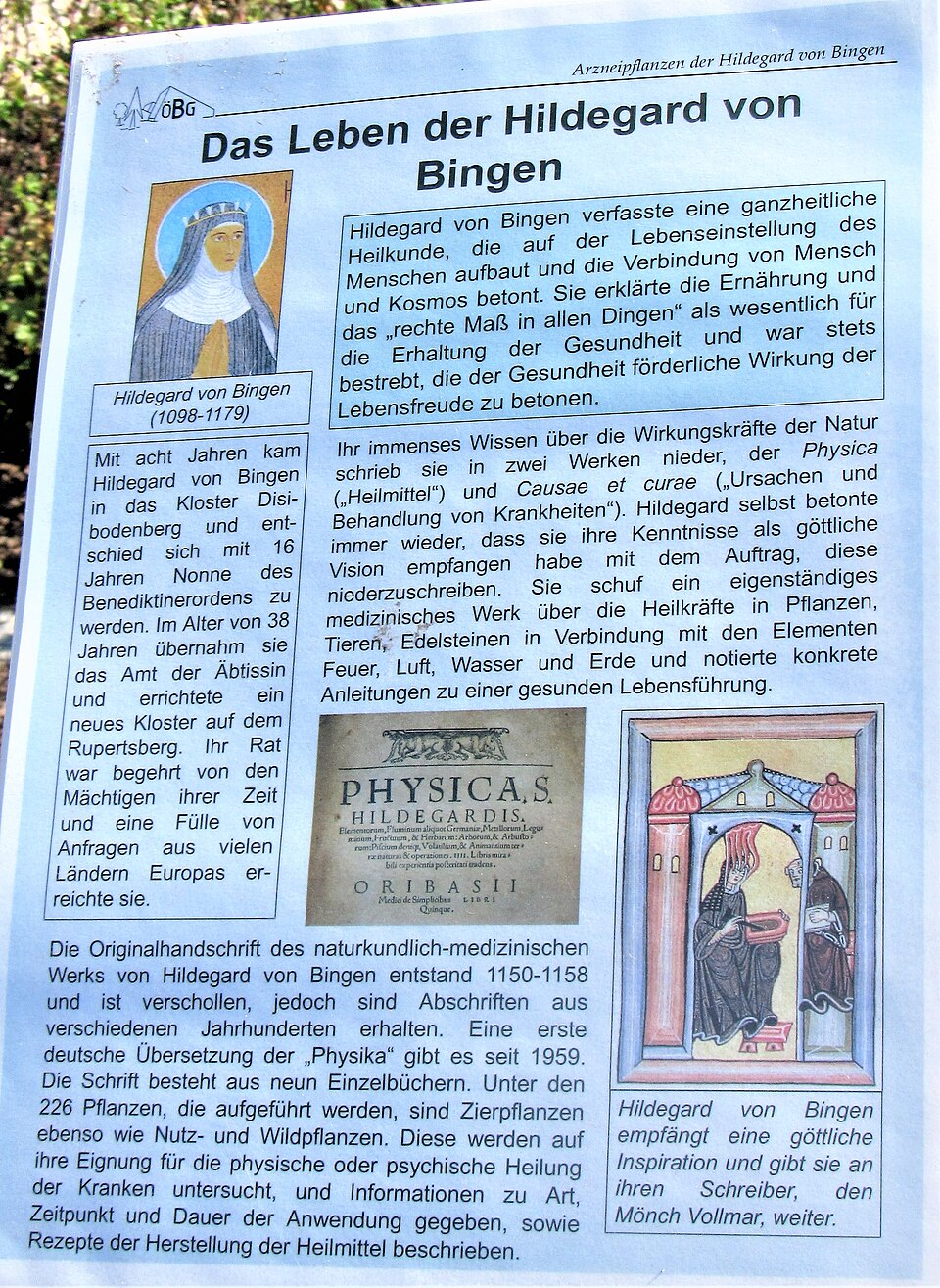
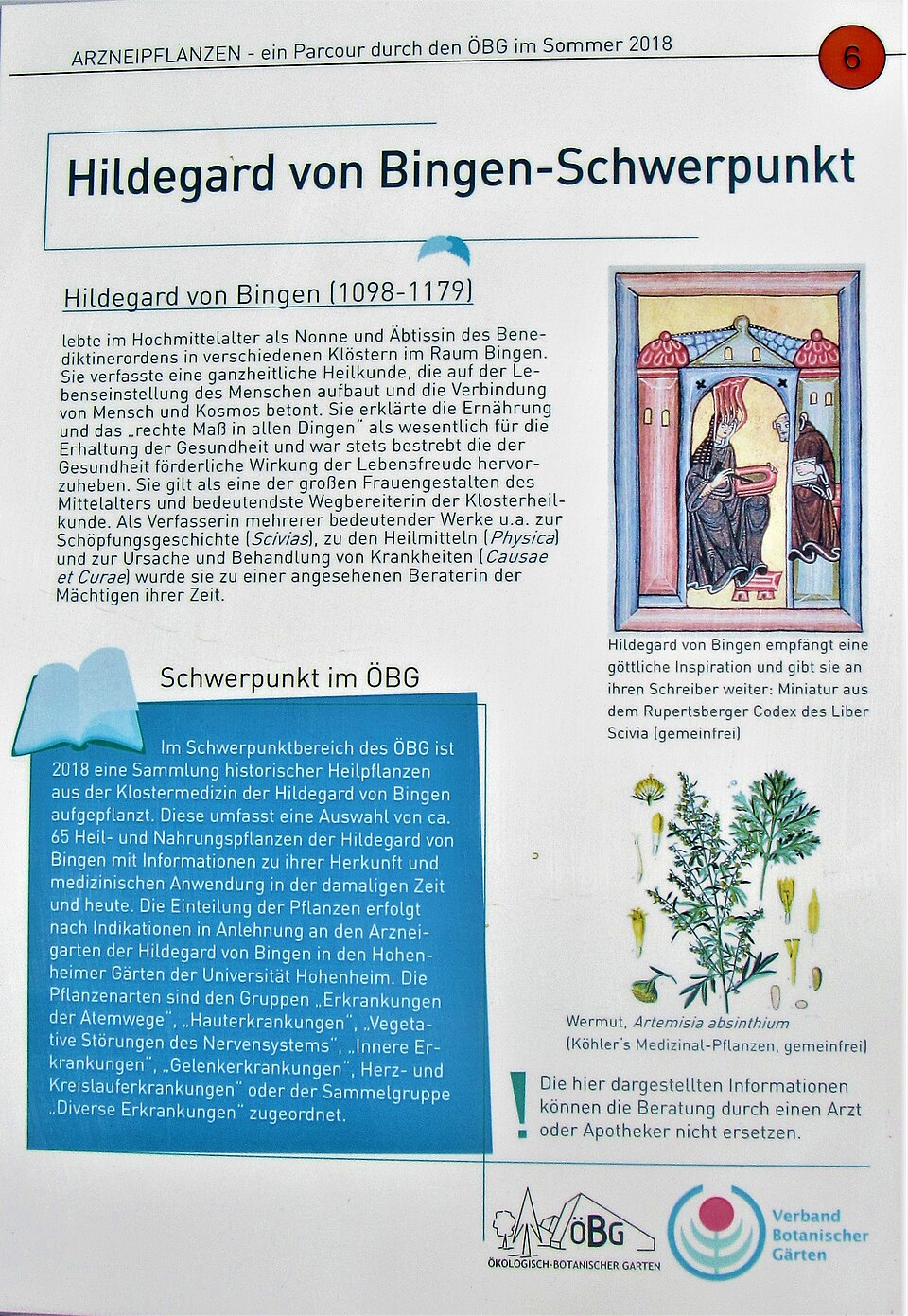
Before Prime — the first prayer after sunrise — I sometimes walked through the garden of simples. That is what we called medicinal plants used on their own, not mixed. The smell was green and damp, a little sharp. Lavender, sage, rue, peony. I described more than two hundred of these plants in my Physica — their warmth, their dryness, what they could do for the body. Some helped with fever, some with sadness, some with pain in the joints. The garden was not a pretty place for strolling. It was a workshop. Every plant was a question, and I spent thirty years trying to find the answers.
—How did you know which plant could heal which illness?
Part of it came from those who came before me — healers, monks, the old tradition of the monastery infirmary. Part of it I learned by watching carefully, by observing who recovered and who did not. We believed the body was governed by four humors — think of them as four rivers flowing inside you: blood, phlegm, yellow bile, black bile. When one river overflowed, you fell ill. A warming plant could correct a body that was too cold. A drying plant could help a body that was too damp. It sounds simple, but it took years of watching patients, of making mistakes. I recorded everything in Causae et curae so that healers after me would not have to start from nothing.
—Why did you refuse to obey the archbishop of Mainz?
In 1178, the Archbishop of Mainz ordered me to dig up the grave of a man buried within our monastery grounds. This man had died excommunicated — meaning the Church had formally cut him off from the community of believers. The archbishop said he had no right to rest on holy ground. But I knew this man had made his peace with God before dying. To dig him up, to cast his bones outside — that would be a cruelty, and an injustice. So I refused. The whole monastery was punished: we were placed under an interdict, forbidden to sing the liturgy aloud. Imagine a monastery with no music. It was like cutting out its heart.
Imagine a monastery with no music. It was like cutting out its heart.
—Were you afraid the archbishop could shut down your monastery for good?
I was nearly eighty years old, and yes — I was afraid. An interdict is a terrible punishment. No singing, no sacraments, no public prayer. My nuns depended on me. I had built Rupertsberg with so much effort, nearly thirty years before, fighting to leave Disibodenberg and found something of our own. The thought of losing it all was unbearable. But I sent letters — to the archbishop, to those above him. I argued, I pleaded, I did not surrender. A few months before I died, the interdict was finally lifted. I never regretted my refusal. Some things matter more than safety. Justice is one of them.
—What would you want children like us to remember about you?
That I was not born powerful. I was the tenth child of a noble family, handed over to a monastery as a little girl, in a world where women were expected to pray quietly and be forgotten. I was not forgotten. I wrote. I composed. I healed. I argued with archbishops and emperors alike. Not because I was fearless — I was often terrified — but because I believed what I had to say mattered. If you remember only one thing, let it be this: a voice that is silenced is not truly lost if it first had the courage to write. Everything I saw and felt, I turned into words. And here I am, still speaking — eight centuries later.
A voice that is silenced is not truly lost if it first had the courage to write.
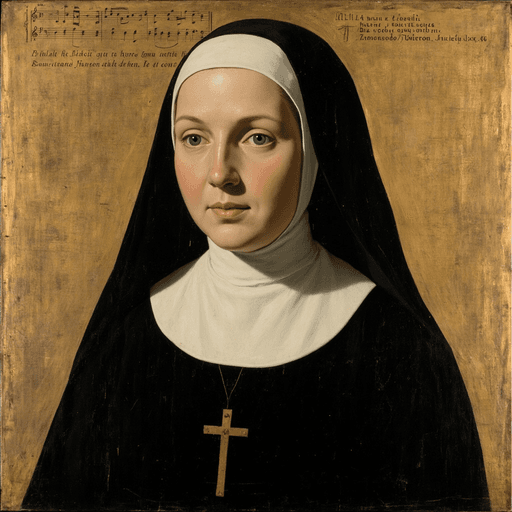
This imaginary interview was generated by artificial intelligence from sources documented in Hildegard of Bingen's profile. It dramatises what the figure might have said based on what we know about them, but does not constitute attested historical testimony. For primary sources and factual documentation, refer to the full profile.