Imaginary interview with Hubertine Auclert
by Charactorium · Hubertine Auclert (1848 — 1914) · Politics · Society · 6 min read
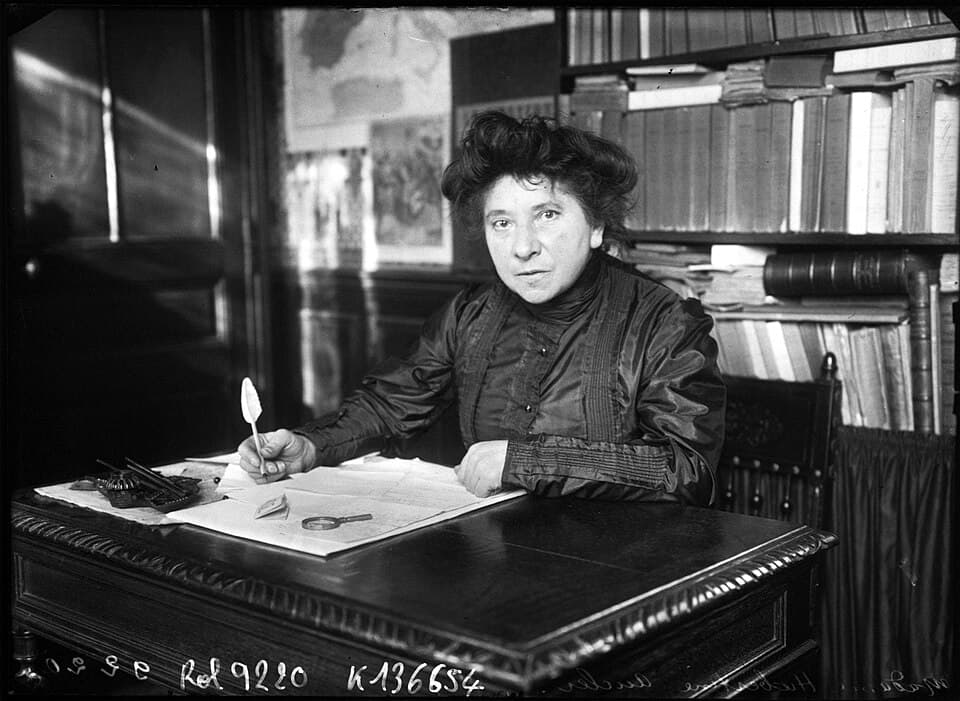
Paris, a spring morning in 1909. In a modest apartment in the city center, where stacks of La Citoyenne sit next to bundles of tied petitions, a woman in a black dress receives us standing, a pen still in hand. Hubertine Auclert has no time for pleasantries: she has letters to write and a Republic to call to account.
—What exactly happened on May 3, 1908, in that Paris polling station?
It was the municipal elections, and I walked straight toward that metal ballot box, the polished symbol of my exclusion. Around me, men were dropping in their ballots with that easy air of owners. So I seized the ballot box and overturned it on the floor, shouting “Down with the law of men!” The ballots rolled on the ground, people rushed, and I was arrested. Believe me, I knew perfectly well they would take me away: that was precisely the point. A polite speech in an empty hall changes nothing; a ballot box emptied onto the pavement—that, all the press talks about the next day. For thirty years I had knocked on the doors of the Palais Bourbon; that day, I brought my cause in through the broken window of scandal.
A polite speech in an empty hall changes nothing; a ballot box emptied onto the pavement—all the press talks about it.
—Weren't you afraid of being ridiculed by such an act?
Ridicule, sir, has been thrown at me since my first petitions. I've been called hysterical, old maid, suffragette—a word they thought hurtful and which I wear like a cockade. Overturning a ballot box is a theatrical gesture, I admit; but theater is sometimes the only platform left to those excluded from the ballot. When a country refuses to hear your reason, you must offer it its own spectacle. All my life I have practiced this: civil disobedience as a mirror held up to the Republic. It calls itself democratic yet excludes half the nation? Very well, I will make this absurdity visible, glaring, impossible to ignore. They will laugh, perhaps. But they will have seen, and seeing is already the beginning of change.
—Why did you obstinately refuse to pay your taxes?
Because logic compelled me. Our fathers of 1789 had laid down the principle: no taxation without representation. It was applied to men; I simply turned it around. If I am considered a perpetual minor, incapable of slipping a ballot into the box, then let them stop coming to collect my money. I wrote it in Le vote des femmes: “Women pay taxes, so they must have the right to control the use of their money; they obey the laws, so they must participate in making them. Any other principle is a contradiction of democracy.” So each year, my tax notice became a declaration of peaceful war. They seized my furniture? So much the better: another useful scandal.
They consider me a perpetual minor: then let them stop coming to collect my money.
—You also refused to be properly counted in the 1880 census. What was the idea?
The idea was to push their own reasoning to its limit. During the 1880 census, they came to count the souls of this country. I asked: but why count me? Politically, I do not exist. I do not vote, I am not eligible, I am civilly erased under my husband's authority by the Code Napoléon. Since I am a legal nonentity, let the State demand from me neither numbers, nor taxes, nor obedience. So I refused to fill out my form as required. It was a way of saying: choose. Either you fully acknowledge my existence, a citizen among citizens, or you renounce having any claim over me. You cannot erase a woman from the polling station and resurrect her at the tax counter.
—How was your newspaper, La Citoyenne, born in 1881?
It was born of patient rage. They refused my petitions, they silenced me in congresses deemed too timid; I needed a platform that no one could close. In 1881, I founded La Citoyenne, and I directed it for ten years. The title already said everything about my program: to name women with the word that was stolen from them. Almost every line came from my pen, right here, on this table that serves as my desk and editorial office. At dawn I answered mail from the provinces, then I wrote the editorial. The very first one began: “We want to vote, because voting is political existence; because without the right to vote, a woman cannot influence the law that governs her nor the tax she pays.”
The title already said everything about my program: to name women with the word that was stolen from them.
—What did this life as a militant journalist concretely involve on a daily basis?
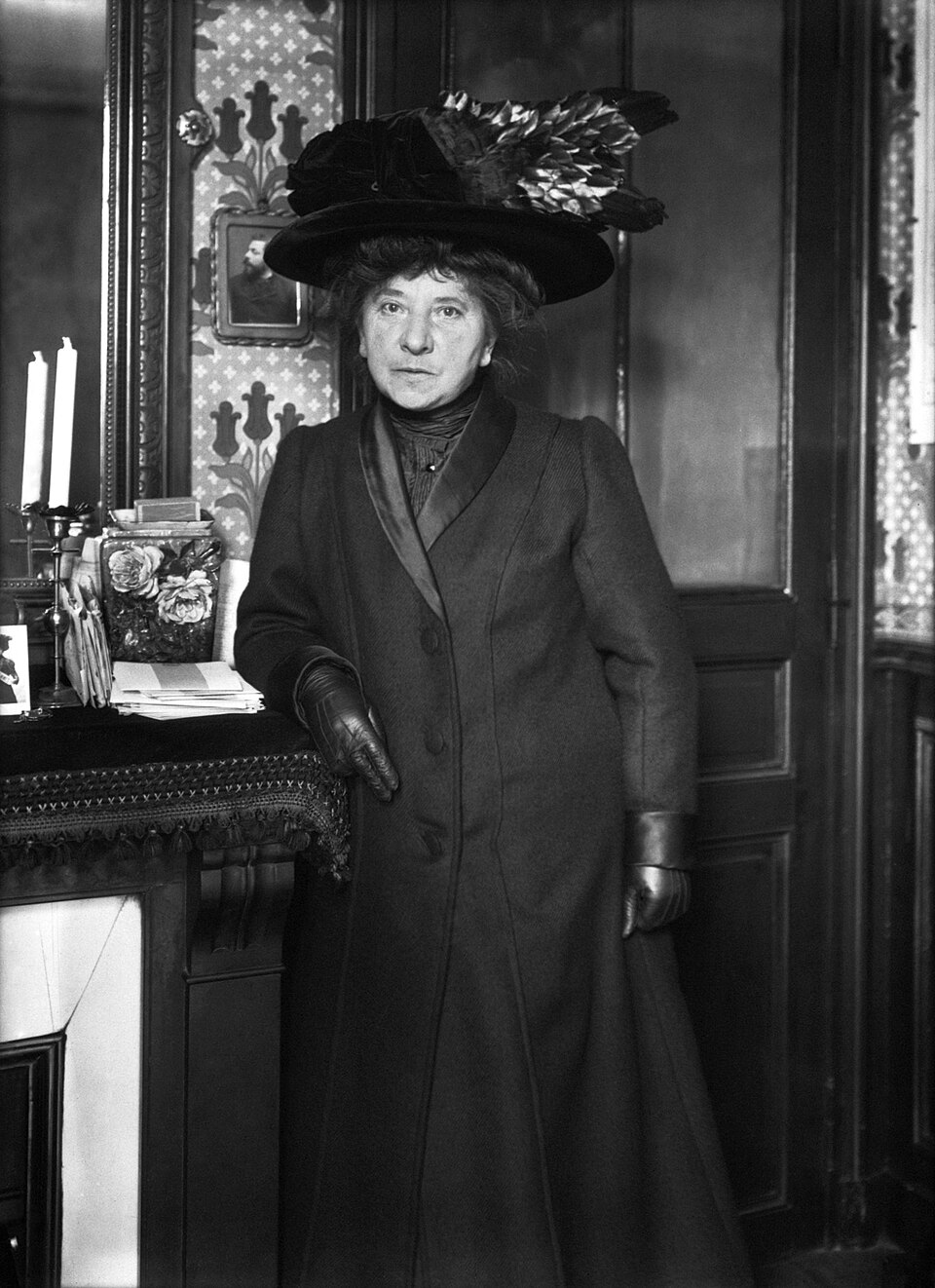
A monk's discipline and an always empty purse. My Paris apartment was both home and headquarters: we received activists there, debated strategy in the evenings, read the foreign press to see what was stirring elsewhere. I lived frugally—bread, vegetables, very little—because every available sou went into the newspaper. People imagine feminists as idle salonnières; the truth is duller and harder: hours bent over La Citoyenne, proofreading, chasing subscribers, answering opponents' insults. I always thought that writing was my surest weapon. A pen and an inkwell have taken me further than many a platform speech.
—You lived in Algiers from 1888 to 1892. What did you discover there?
I had followed Antonin Lévrier, my companion, and there I found an unexpected lesson. In Algiers, I saw women doubly chained: by patriarchy that confined them, and by colonization that claimed to civilize them while forgetting them. Our French administrators boasted of progress without lifting a finger for these women. I drew from it Les femmes arabes en Algérie, published in 1900. It was a difficult book, written against the current, because no one wanted to hear that the so-called civilizing mission left half a people in misery. My feminism, in Algiers, ceased to be a Parisian affair: it became a demand that could not stop at the Mediterranean or at the color of a skin.
My feminism, in Algiers, ceased to be a Parisian affair.
—How did your opponents receive this book on Algerian women?
With the polite deafness reserved for uncomfortable truths. They might forgive me for demanding the ballot for Parisian women; they resented my poking into the Republic's colonies. Yet I invented nothing. I wrote in black and white that these women lived in miserable conditions and that France, which calls itself civilizing, could not remain indifferent to this state of affairs. It disturbed two camps at once: colonial advocates, who found me meddlesome, and some feminists, who deemed the subject too remote. But I never believed that one could defend the emancipation of some while closing one's eyes to the servitude of others. An injustice tolerated far away always ends up corrupting you at home.
—You were the first to bring the issue of women's suffrage before Parliament. How did it begin?
In 1876, when I founded the society “Le Droit des femmes” and submitted my first petition to Parliament. Before me, feminists demanded education, civil rights, divorce—noble causes, but they dared not utter the word: suffrage. I dared. Before the Chamber of Deputies, my signatories demanded the application to their sex of the very principle of the republican Constitution: democracy cannot exclude half the nation. They thought me mad, premature, dangerous. At the Palais Bourbon, my texts ended up in a drawer. But a petition is never quite lost: it is a seed. I sowed them from 1876 to 1907, knowing full well that other hands would reap.
They demanded education, divorce—but no one dared the word: suffrage. I dared.
—Do you believe you will see French women enter the voting booth in your lifetime?
I harbor no illusions. New Zealand has been voting since 1893, Finland since 1906; I brandish these examples in the faces of deputies to show our shameful delay, and they shrug. No, I fear my generation will die before victory. In Le vote des femmes, I wanted to gather thirty years of arguments, so that when the day comes no one can say they didn't know. Perhaps I will be read in a century as one reads pioneers: with a mix of esteem and astonishment that such simple thing required so much struggle. I will have overturned a ballot box, refused taxes, blackened thousands of pages. Let others, after me, finally slip in the ballot—that will be my posthumous victory.
Let others, after me, finally slip in the ballot—that will be my posthumous victory.
Read further
This imaginary interview was generated by artificial intelligence from sources documented in Hubertine Auclert's profile. It dramatises what the figure might have said based on what we know about them, but does not constitute attested historical testimony. For primary sources and factual documentation, refer to the full profile.