Kids interview Hugh Capet
by Charactorium · Hugh Capet (940 — 996) · Politics · 4 min read
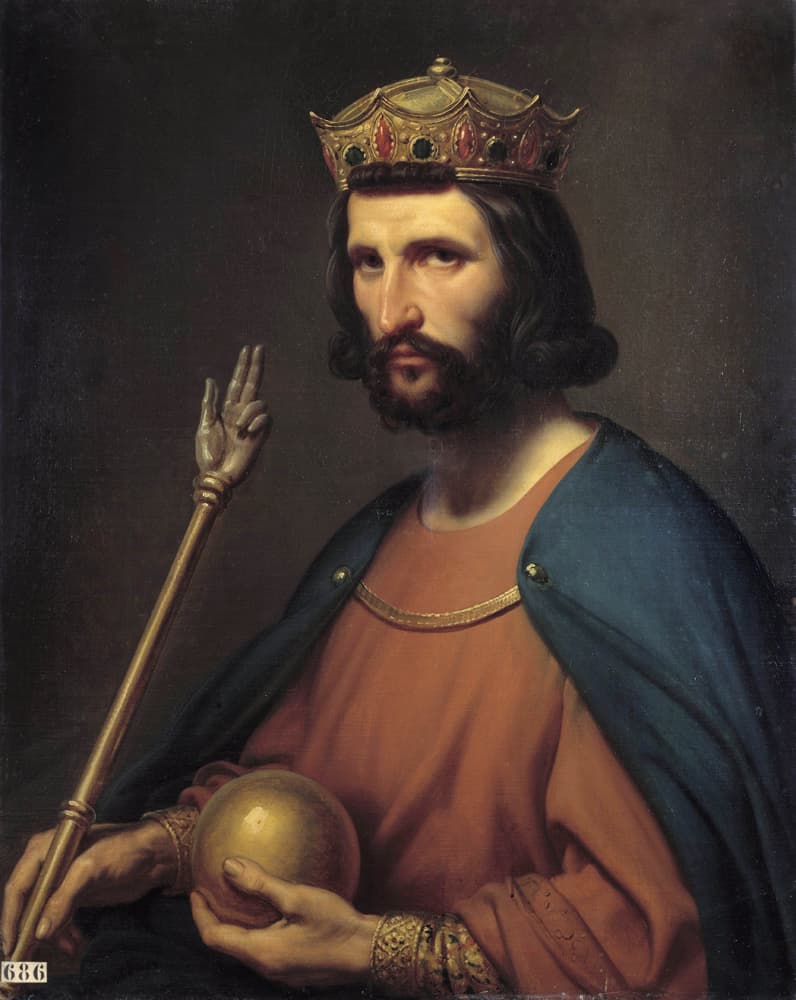
Two young visitors, on a school trip in the heart of the Île-de-France, push open the door of a large stone hall. An elderly man, a purple cloak fastened at his shoulder, greets them with a smile. It is Hugh Capet, the first king of his line, and he has agreed to tell them everything.
—What was it like, the night the great lords chose you as king?
You see, my child, in 987 the young king Louis V died without an heir. The Carolingian family was dying out like a candle. So the great lords and bishops gathered at Senlis, very close to here. Imagine a room full of powerful men debating, weighing every word. I was not born a king: I was elected. It was called an elective crown, a crown given by vote, not by birth. An archbishop, Adalbéron of Reims, supported me: he wanted a man capable of governing, not a child. That night, my life changed.
I was not born a king: I was elected.
—Were you afraid, just before becoming king for real?
Yes, a little. Becoming king is not just wearing a beautiful crown. After the election, I was taken to Noyon, and there, in July, I was anointed. The coronation is a ceremony where an archbishop pours holy oil on your head. It is called the unction. At that moment, you are no longer quite like other men. It is heavy to bear, you know. I received a sword, a scepter, a crown before God and all the great men. And I thought: now everything rests on my shoulders. I was eager, but my heart beat fast.
The coronation is the moment when you are no longer quite like other men.
—Why did you have your son crowned while you were still alive?
Ah, that was my cleverest trick! Think about it: if I had been elected, they could elect someone else after me. My line risked dying out quickly. So, the same year, in 987, I had my son Robert crowned during my lifetime. Imagine two kings at the same time, father and son! That way, upon my death, no one could say, 'let us choose another.' The throne passed directly to my child. This idea lasted more than three centuries. My descendants reigned long, long after me.
Two kings at the same time, father and son: that was my cleverest trick.
—What does it mean to found a dynasty? Is it that important?
A dynasty is a family that passes the crown from generation to generation, like passing a treasure. By being elected and crowned in 987, I founded mine. It is called the Capetian dynasty, after my name. And do you know the most amazing thing? All the kings who reigned after me were my direct descendants. My great-great-grandsons, and many more beyond. I, the count of Paris, had a modest domain. But I planted a seed. And from that small seed grew a huge tree, which grew for centuries.
I planted a seed, and from that seed grew a huge tree.
—If you were the king, you were the strongest of all, right?
One would think so, my child... but no! That is my secret. My real power was small. I mainly ruled around Paris, Senlis, Orléans, and Étampes: that was my direct domain. Next to me, some of my great lords were almost as strong as me! The duke of Normandy, the count of Anjou... They had their own armies, their own castles. A king, in my time, was a suzerain, the lord at the top of the ladder. But in truth, many obeyed me only when it suited them. Ruling was mostly negotiating, endlessly.
Many of my lords obeyed me only when it suited them.
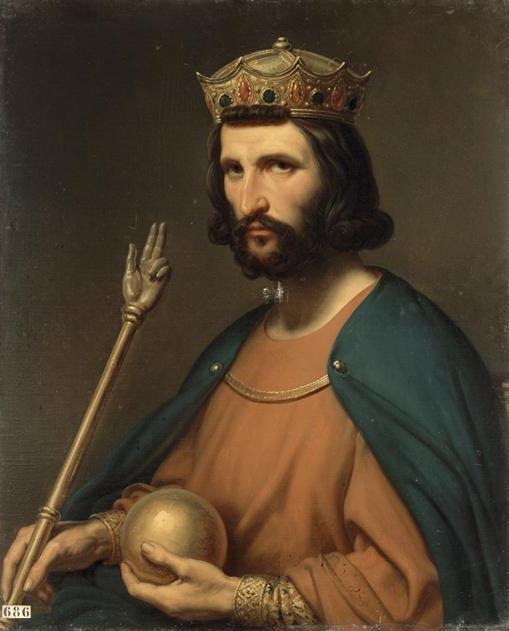
—And when a lord did not listen to you, what did you do?
Sometimes, you had to show your teeth! In 993, vassals in Burgundy were being stubborn. A vassal is a lord who has sworn loyalty to you in exchange for land, called a fief. But swearing loyalty and keeping it are two different things... So I mounted my horse, put on my hauberk — a long shirt made of thousands of iron rings — and left with my men. It was not for pleasure, believe me. It was tiring, dangerous. But a king who is never listened to is no longer truly a king.
Swearing loyalty and keeping it are two very different things.
—How did you get people to accept a new king like you?
Excellent question! When you do not have a large army, you need strong friends. My best allies were the bishops and abbeys. The Church, you see, was respected everywhere. If churchmen said I was the rightful king, people believed it. So I protected monasteries, like Saint-Denis or Fleury, and confirmed their rights with charters. One of my wisest advisors was Gerbert of Aurillac: a great scholar who even became pope! Thanks to the Church, my young dynasty stood firm, when it might have collapsed.
When you do not have a large army, you need strong friends.
—What is the Peace of God? It sounds like magic.
It is not magic, but it was very important. In my time, armed lords plundered villages, burned crops, struck defenseless peasants. It was terrible. So the Church invented the Peace of God. In 989, at the council of Charroux, a rule was decided: forbid attacking priests, peasants, merchants. Anyone who disobeyed risked being excommunicated. I supported this movement with all my heart. Imagine: for the first time, they tried to protect the weak. A king is not only there to wage war. He is also there to calm the violent.
A king is not only there to wage war, but also to calm the violent.
—Why are you called 'Capet'? It is a strange name!
Ah, you noticed! And do you know what? Even scholars still argue about it. This nickname was only given to me after my death, you see. It is said to come from the Latin word capa, meaning 'cape' or 'cloak,' a large mantle. My family, the Robertians, kept a precious relic: the cloak of Saint Martin of Tours, one of the most beloved saints in all Gaul. Watching over this holy garment was a great honor. Perhaps my name comes from that. But between us... no one is quite sure.
My nickname 'Capet' was given to me after my death, and no one is really sure about it.
—What was your day like, morning and evening?
A very busy day, my child! At daybreak, I went to pray in the chapel: matins, the very first office. Then I listened to my officers telling me about the affairs of the domain. In the afternoon, I dispensed justice at a plaid, a great assembly where disputes were settled. And sometimes, I hunted in the forests around Paris — it was a pleasure, but also training. In the evening, we feasted in the great hall: roasted meats, wheat bread, wine, and cervoise, that barley beer. Imagine the light of the great hearth, the voices, the laughter. Then we prayed again, and went to sleep.
From the first office of the morning to the last fire of the evening, a king never stops.

This imaginary interview was generated by artificial intelligence from sources documented in Hugh Capet's profile. It dramatises what the figure might have said based on what we know about them, but does not constitute attested historical testimony. For primary sources and factual documentation, refer to the full profile.