Kids interview Hypatia of Alexandria
by Charactorium · Hypatia of Alexandria (vers 355/370 — 415) · Sciences · Philosophy · 5 min read
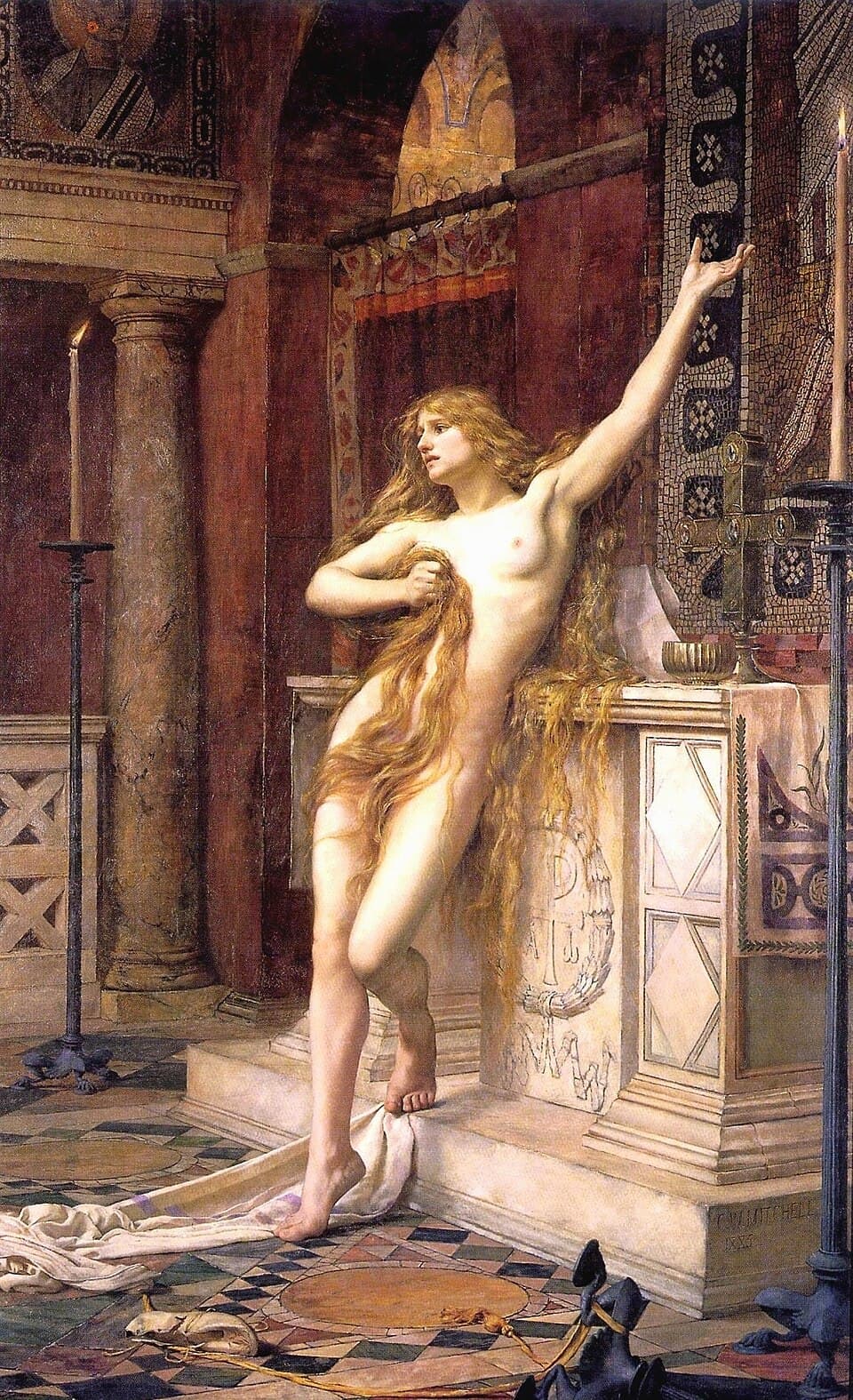
Two young visitors of twelve years cross the threshold of a large house in Alexandria. On a wooden table, a copper astrolabe gleams beside papyrus rolls. A woman in a woolen cloak greets them with a smile and invites them to ask all their questions.
—Hello! We saw your very simple cloak. Why do you dress like that?
Come closer, my child, don't be afraid. This coarse woolen cloak is called a tribon. It is the garment of people who love to think, whom we call philosophers. Imagine a rough fabric, without embroidery, without color, just thick wool. Many wealthy people wear precious cloth. I walk the streets of Alexandria dressed like this, and everyone immediately knows who I am. It is my way of saying: what matters to me is not money or fine objects. It is understanding the world. A garment can speak louder than a speech, you know.
A garment can speak louder than a speech.
—What did you eat in the morning, and what was your house like?
In the morning, I ate little: a piece of wheat bread, some olives, a fruit, sometimes a little wine mixed with plenty of water. Nothing heavy. To think clearly, a light stomach is better. My house? Imagine a large dwelling with a courtyard in the middle, open to the sky. Columns all around. In one room, hundreds of papyrus rolls stored like treasures. In another, my copper instruments for observing the stars. This house I inherited from my father Theon. It was a place where one studied from sunrise to sunset.
To think clearly, a light stomach is better.
—What is that shiny object on the table? What is it used for?
Ah, you have a sharp eye! It is an astrolabe. Take it, it is heavy, isn't it? It is an instrument for measuring the height of stars in the sky. With it, you can tell the time at night, and even where you are on Earth. One of my former students, Synesius, asked me for one in a letter. He wanted, he said, 'an astrolabe of the finest workmanship.' I built them myself, with my own hands, for those who learned with me. Reading the sky is not guessing: it is measuring, patiently, with good tools.
Reading the sky is not guessing: it is measuring.
—Did you get up very early to watch the stars? Weren't you sleepy?
Yes, sometimes! But the sky only shows itself to those who rise before day. I would go out into the cool night, while the city still slept. Imagine a silent street, no noise, just the distant lapping of the harbor. I would note the position of the stars on my papyri. I also had an armillary sphere, a kind of ball made of metal rings that imitates the movement of the stars. I used it to show my students how the planets travel through the sky. Observe, note, repeat every night: that is how you learn the secrets of the world.
The sky only shows itself to those who rise before day.
—We were told you wrote books. Did you invent mathematics?
Not exactly, and that is a good question. Before me, great scholars had written difficult books, very difficult. Like the Conics of Apollonius, about curves you get by cutting a cone. Or Diophantus's Arithmetic, full of complicated calculations. My work was to make them clear. I would reread these texts, add explanations, examples, so that my students could finally understand. Imagine a path covered with brambles: I cleared it so that others could pass. Transmitting ancient knowledge is as precious as inventing new knowledge.
Transmitting ancient knowledge is as valuable as inventing new knowledge.
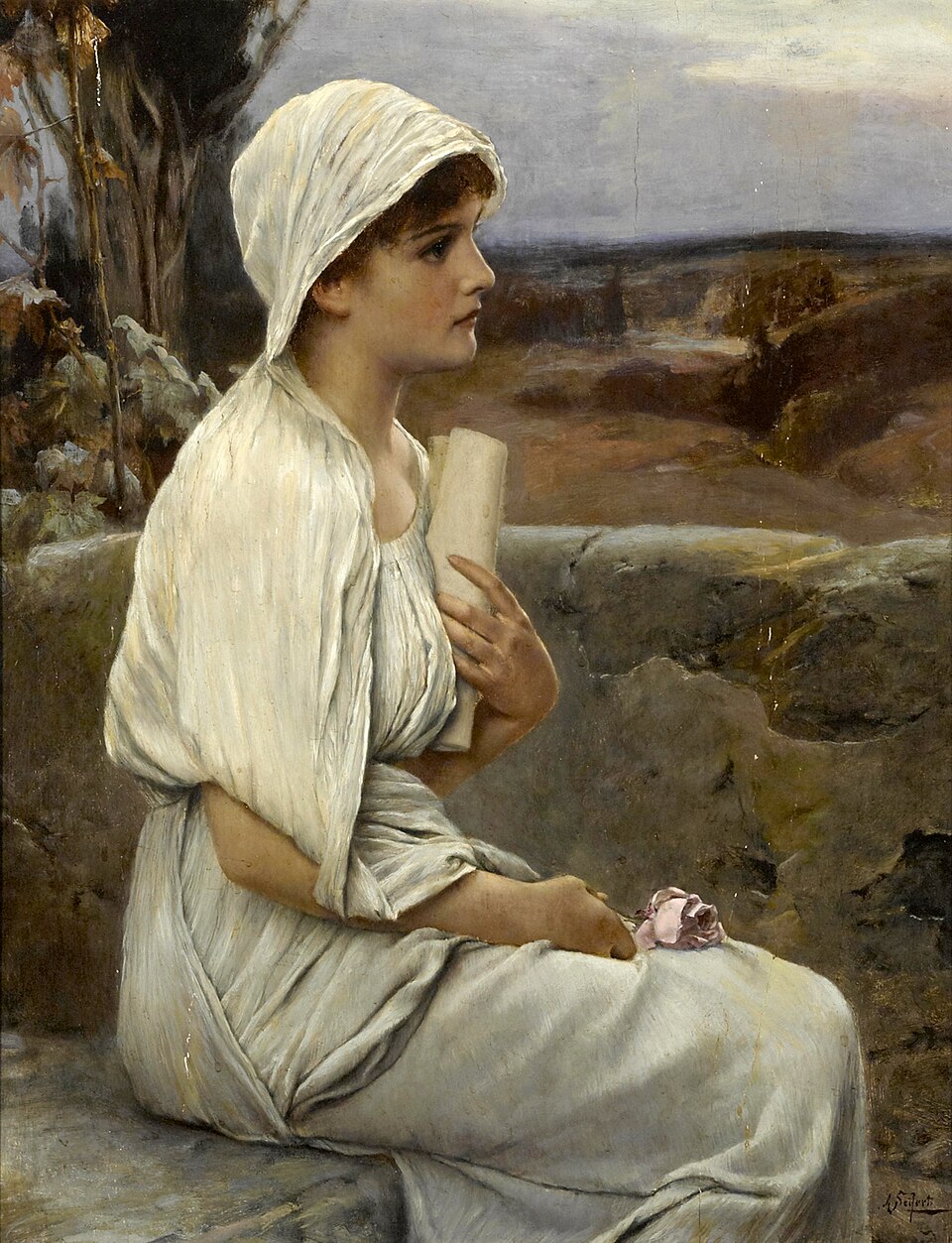
—Did you work alone, or did someone help you with those big books?
My father Theon taught me everything, and we worked together. On Ptolemy's Almagest, for example, a huge book that explains the motion of the planets. It is painstaking work: checking every calculation, correcting copyists' errors. Some say that certain parts of that commentary, in Book III, are from my hand. Imagine two people bent over the same scroll, by lamplight, discussing a number. My father was proud that his daughter surpassed him. Learning from someone you love—that is what makes knowledge alive.
Learning from someone you love makes knowledge alive.
—Who were your students? Could anyone come and listen to you?
Yes, and I was happy about that. My classes were open to all, to all who wished to listen. I cared little where they came from or what god they believed in. I taught Plato and Plotinus, great masters of thought. Young people arrived from all around the sea, sometimes from far away, like Synesius who came from Cyrene. Several of my students even became Christian bishops, while I followed the ancient philosophy. That did not prevent us from loving each other and thinking together. A true school has no door that closes.
A true school has no door that closes.
—And your students, did they love you? Did they write to you when they left?
Oh yes! That is one of my fondest memories. Synesius, who became a bishop, wrote me letters full of tenderness. He called me his mistress in philosophy, almost like a second mother. Those letters have crossed the centuries and still exist. Imagine: an important man, busy with a thousand affairs, who takes the trouble to dip his pen to thank his old teacher. That touched me deeply. A master does not only give lessons in calculation. He gives a part of himself. And when the student remembers it years later, that is the most beautiful reward.
A master does not only give lessons: he gives a part of himself.
—We heard there were disputes in your city. Were they serious?
Yes, my child, it was a difficult time. Alexandria was a magnificent city, but turbulent. Two powerful men quarreled: Orestes, the governor sent by the emperor, who was my friend, and Cyril, the head of the Church, who became bishop in 412. Imagine two giants facing each other in a street too narrow: everyone holds their breath. People took sides, tempers flared. These tensions were called the Alexandrian schism. I loved discussing philosophy and justice with Orestes. But being the friend of a hated man, in an angry city, was dangerous.
Imagine two giants face to face in a street too narrow.
—Were you afraid, with all these disputes around you?
I will not lie to you: times were dark. The whole city loved and respected me, it is true. But some Church leaders were jealous of me, because I often spoke with the governor Orestes, and that caused scandal in their eyes. Imagine being reproached for your friendships, having people whisper behind your back. A militia called the parabalani roamed the streets. In the spring of the year 415, these men stopped me as I was returning home. I do not want to frighten you with the details. But know that sometimes, knowledge and friendship disturb those who want to rule alone.
Sometimes, knowledge and friendship disturb those who want to rule alone.
—If you are remembered today, what would you like to leave us?
What a beautiful question to end with. You know, I left no great monuments or gold. I left students, letters, some commentaries on old mathematics books. And yet, centuries later, here you are, two children, questioning me! That moves me deeply. What I would like to leave you is simple: always keep your curiosity lit like a small lamp. Ask questions, observe the stars, read, doubt, start again. No one can ever take away what you have understood for yourself. Knowledge is the only wealth that grows when shared.
Knowledge is the only wealth that grows when shared.
Read further
This imaginary interview was generated by artificial intelligence from sources documented in Hypatia of Alexandria's profile. It dramatises what the figure might have said based on what we know about them, but does not constitute attested historical testimony. For primary sources and factual documentation, refer to the full profile.