Imaginary interview with Ina Ray Hutton
by Charactorium · Ina Ray Hutton (1916 — 1984) · Music · Performing Arts · 6 min read
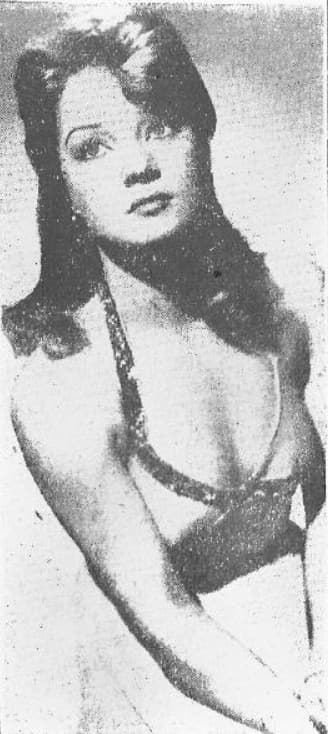
Backstage of a ballroom, somewhere between two cities, during the lull when the orchestra is packing up its stands. Ina Ray Hutton has just left the stage, a sequined dress still hanging on a rack, and sits down near a crate of 78 rpm records. She speaks quickly, with the rhythm of a woman who has spent her life setting the tempo.
—How was this idea of a big band made up entirely of women born?
It wasn't born from me, it was born from Irving Mills, in 1934 — the man who handled Duke Ellington. He had this almost scandalous intuition: to bring together twelve, fifteen female musicians and call them the Melodears. At the time, everyone kept saying that a woman couldn't swing, that rhythm, real rhythm, the kind that shakes your ribs, was still a man's affair. So imagine the room when the saxophone section stood up, four girls on their feet, reed between their lips, blasting a chorus that silenced the skeptics in the front row. You didn't lead an all-girl band just for show. You led it to prove, night after night, that a woman can hold a note as long as a man.
Everyone kept saying a woman couldn't swing — so we proved it, night after night.
—What did it mean for you to stand before female musicians rather than sing alongside a men's orchestra?
Everything, absolutely everything. A singer in front of a big band is a trinket on the piano; you look at her, you applaud her, then you forget her. Me, I held the baton. It's a tiny object, light as nothing, but when you raise it, eighteen women stop breathing and wait for your wrist. With the Melodears, between 1934 and 1939, I learned that conducting isn't commanding: it's listening before others, feeling the beat a fraction of a second ahead. We recorded at Brunswick, we cut those 78 rpm records that fixed our sound on wax, and I told myself that even when the hall was empty, that disc would keep the proof that we had played, together, without a single man keeping time for us.
Conducting isn't commanding: it's feeling the beat a fraction of a second before others.
—You were nicknamed 'The Blonde Bombshell of Rhythm.' How did you experience that stage image?
‘The Blonde Bombshell of Rhythm’ — the blonde bombshell of rhythm. They stuck it on me in the columns of Billboard and Down Beat, and I decided to use it rather than suffer it. On stage, I didn't just beat time with the tip of the baton: I danced, I twirled, the sequined dress reflected every spotlight in a thousand flashes. People came to see the blonde, fine — they left having heard real swing. It was my little trick. The sequins caught the eye, the music caught the ear. A shimmering dress weighs nothing against the prejudices of an era, but that night, under the lights, it was my armor.
The sequins caught the eye, the music caught the ear — it was my little trick.
—Do you remember one night when this blend of dance and conducting made full sense?
There were a hundred, all the same and all different. The overflowing ballroom, couples caught up in a frantic jitterbug, sweat, smoke, and me at the edge of the stage, baton in one hand, the other tracing the phrase in the air. We rarely finished before the wee hours; concerts faded out almost as day broke. I had to stay upright in that tight dress, keep smiling, above all keep the tempo, because a conductor who falters drags eighteen girls down with her. I think the audience no longer distinguished the dancer from the conductor — and that was exactly what I wanted. The show and the music were one single body, mine.
—In 1940, you dissolved the Melodears to take the lead of a men's orchestra. Why this turning point?
In 1940, the trend of women's orchestras was starting to fade, and I had something to prove to myself. Conducting women, they might grudgingly allow it was a pretty curiosity. But holding the baton in front of a men's big band, choosing the repertoire, imposing an arrangement on fellows who had been playing for twenty years — that, no woman did. So I did it. A bandleader, a real one, isn't measured by the sex of their musicians: it's measured by their ability to make them play higher than they thought they could. It took a few tense rehearsals, a few sidelong glances. Then one night the brass section followed my wrist without argument, and I knew the question was settled.
A bandleader isn't measured by the sex of their musicians, but by what they get out of them.
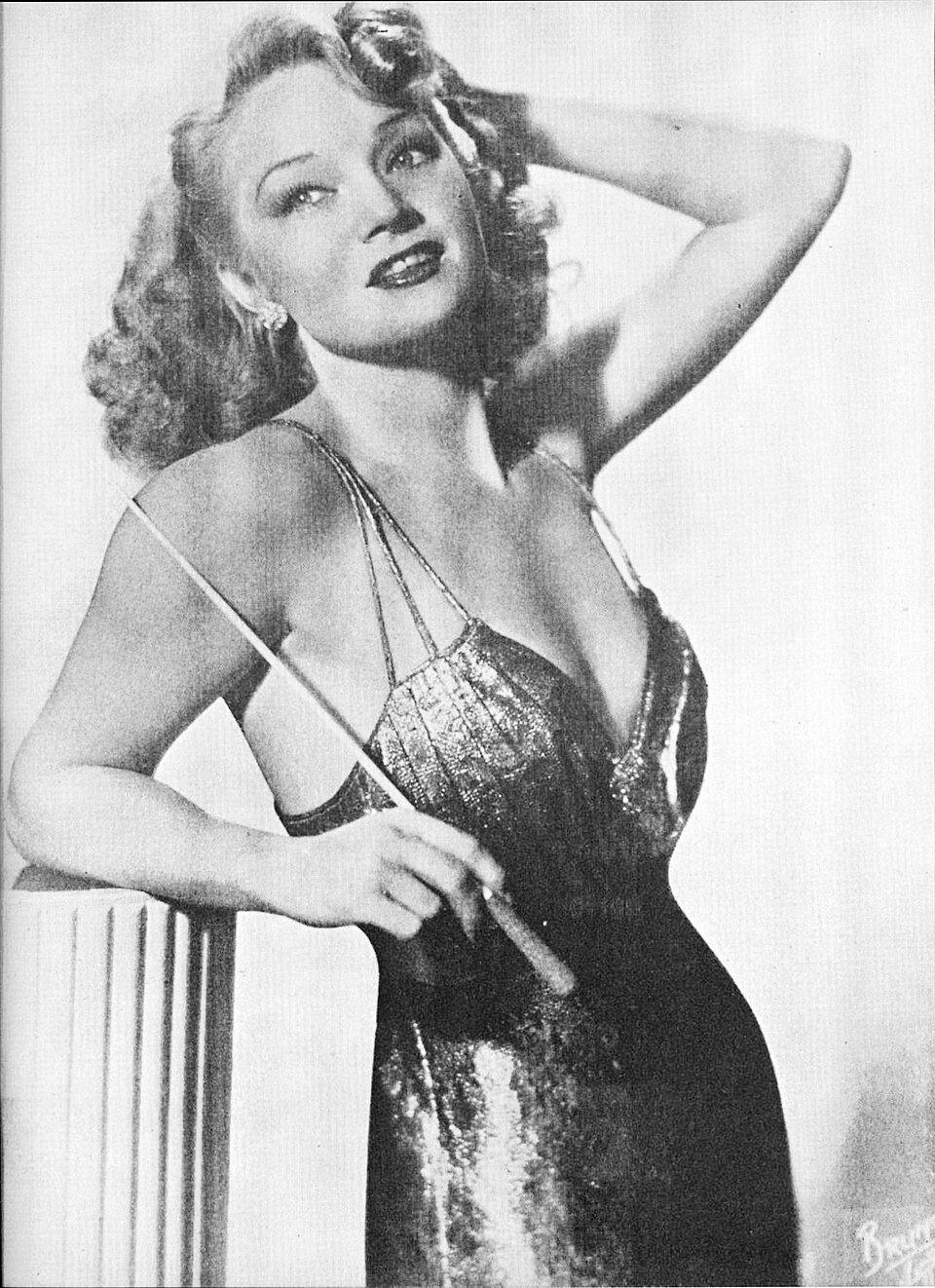
—Conducting men who weren't used to obeying a woman — how do you go about it?
You don't confront them head-on — you win them over through music. A musician, whoever they are, first respects a good ear. I knew every score, every arrangement, better than they did; when a trombone attacked a bar too early, I knew it before he had even finished blowing. Competence — that's the authority no one can take from you. Sure, at first there was that little smirk when I arrived with my baton. But in this business, you can't cheat for long: either the orchestra sounds good, or it doesn't. Mine sounded good. From then on, the fact that a woman was leading it became a detail nobody talked about anymore.
Competence — that's the authority no one can take from you.
—Your beginnings involved cinema. What did those short films for Paramount change?
Everything hinged on distance. A ballroom, even full, is only a few hundred faces. But those little musical films we shot around 1934-1935 for Paramount were shown as curtain-raisers, before the main feature, in every city across the country. Overnight, a small-town girl who had never set foot in a New York cabaret would see, on the big screen, a woman leading a big jazz band. The title card appeared: ‘Ina Ray Hutton and Her Melodears,’ and behind it, we were seen playing, dancing, existing. Cinema was a ballroom as big as America. I think many young girls put their fingers on a saxophone because of those few minutes.
Cinema was a ballroom as big as America.
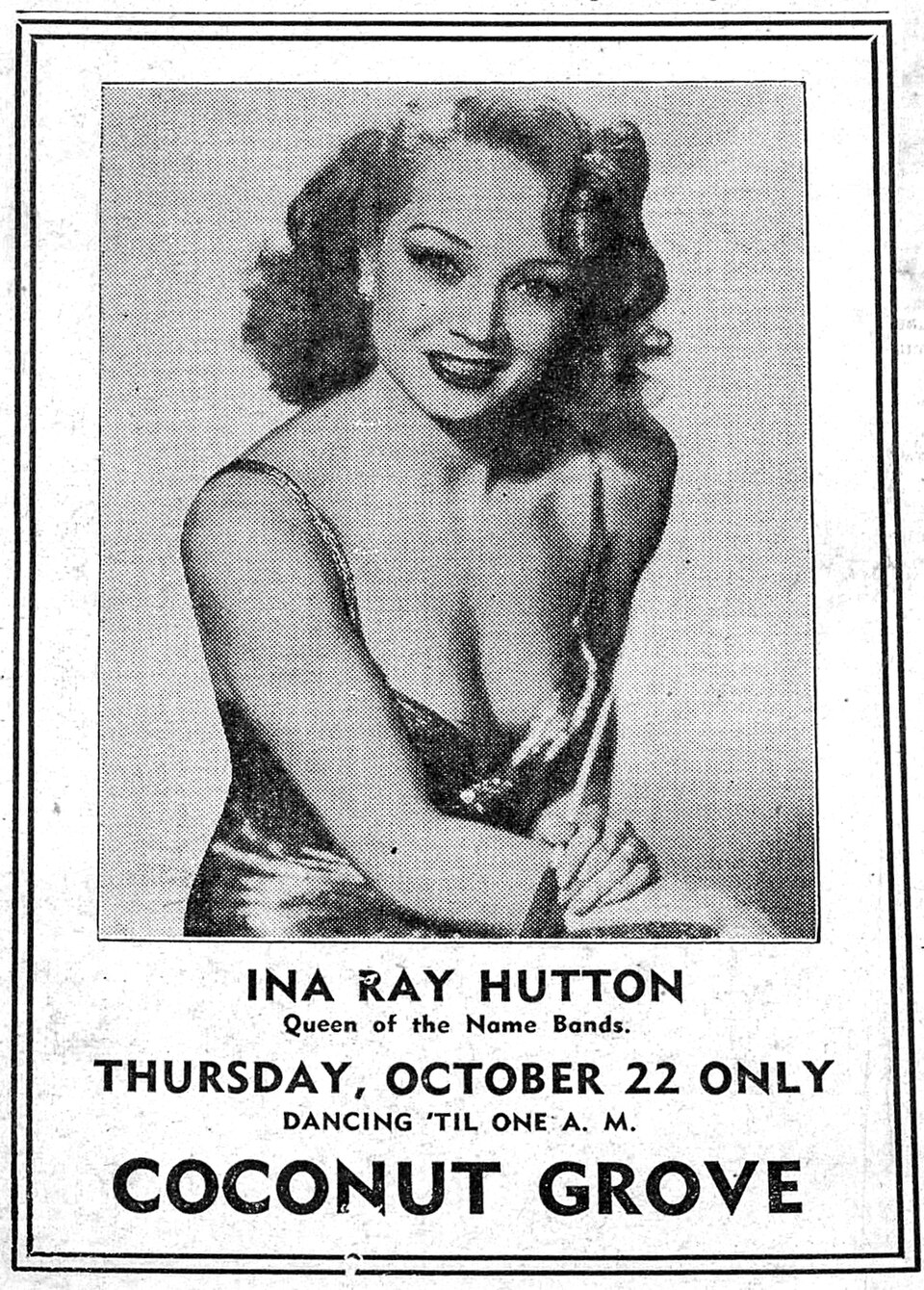
—Twenty years later, you hosted your own television show. What did that feel like?
In 1956, television was entering living rooms, and there I had my show, in Hollywood, with a new orchestra of women musicians. The big difference is the camera. On stage, you play for the crowd; in front of the lens, you play for a woman alone, in her kitchen, watching you while drying her dishes. I had to learn to smile smaller, to conduct without leaving the frame. Big band swing was already declining; small groups and vocal numbers were taking over, but I still held my baton in front of a stand full of women. It was perhaps the last time such a wide audience would see that — a female conductor surrounded by her musicians, live, every week.
—There's a part of your story the public didn't know. How did you carry that silence?
I was born in Chicago, in 1916, and I wasn't called Ina Ray Hutton — that name was tailor-made for me, like a stage dress. There was, in my family history, on my mother's side, a part I was taught very early never to show under the spotlight. In those days, in America, a career like mine was paid for with that silence; you were presented as blonde, white, smooth, and you learned not to contradict. I can't pretend I was proud of it. You do what you can with the world as it's given to you, and mine demanded that part of me stay backstage, invisible, while the other danced under the lights.
That name was tailor-made for me, like a stage dress.
—If you could imagine being read again in a century, what would you want people to understand about that hidden part?
If one day, far in the future, someone reopens these 78 rpm records and untangles what was carefully hidden, I would like them to remember not just the secret, but the cost. Every sequin I wore cost a piece of silenced truth. A woman who conducts — they barely forgave her that; so the rest had to be kept quiet to keep going on stage. I ask for neither medal nor pity. I just want them to understand that between the rhythm you give an orchestra and the silence you impose on yourself, sometimes it's the same hand that beats time. And that my real performance wasn't the dance — it was standing tall, whole, in a world that only wanted half of me.
Every sequin I wore cost a piece of silenced truth.
This imaginary interview was generated by artificial intelligence from sources documented in Ina Ray Hutton's profile. It dramatises what the figure might have said based on what we know about them, but does not constitute attested historical testimony. For primary sources and factual documentation, refer to the full profile.