Imaginary dialogue between Irving Mills and Ina Ray Hutton
by Charactorium · Ina Ray Hutton (1916 — 1984) · Music · Performing Arts · 5 min read
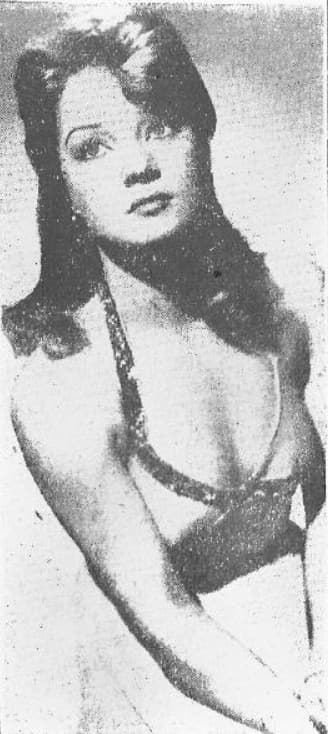
It is in a cluttered dressing room at the Paramount Theatre, one evening during a mid-1930s tour, that Irving Mills meets Ina Ray Hutton between two performances. The smell of foundation mingles with that of polished brass, and a sequined dress hangs, gleaming, over the back of a chair. It was he who, two years earlier, had assembled around her an orchestra of female musicians; he comes tonight, notebook in hand, to revisit that gamble. Between the impresario and his protégée, words are not wasted on pleasantries.
—Ina, do you remember when I came to you in 1934 with that crazy idea of an all-girl orchestra? What did you think that day?
I mostly remember how you sold the impossible, Irving — you, who already managed Duke Ellington, came to me about a women's big band as if it were the most obvious thing. Most people in the business swore a girl couldn't swing, let alone hold a brass section. I believed it because I knew wonderful female musicians who were never allowed on stage. The Melodears were just that: finally giving them their place. We rehearsed like mad so no one could call it a circus act. And when the audience heard what those girls had in their fingers, the bet was won.
They swore a girl couldn't swing; the Melodears proved them wrong.
—You're nicknamed 'The Blonde Bombshell of Rhythm.' You dance in front of the orchestra instead of standing still — tell me: where does the music end and the show begin?
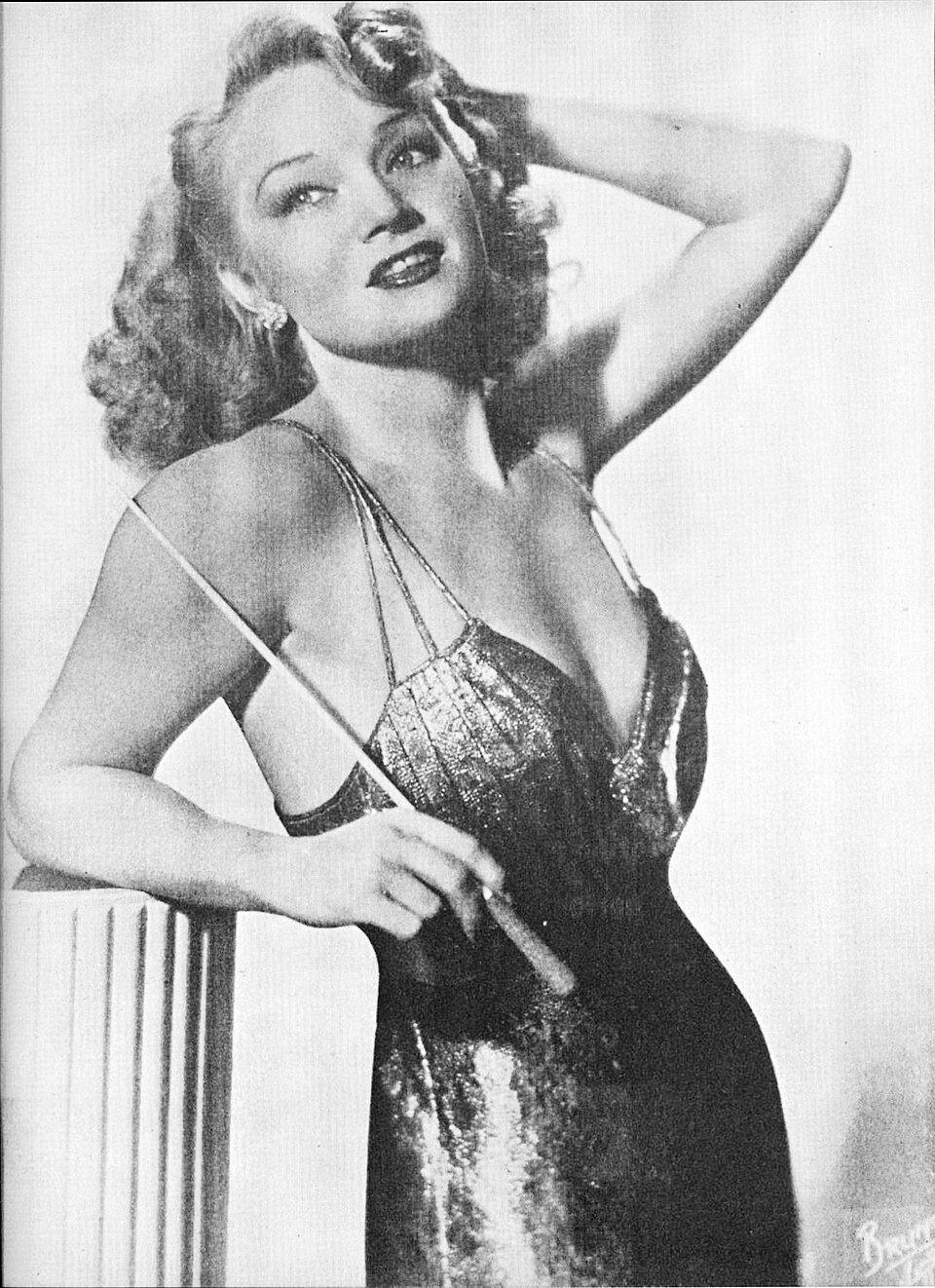
For me, the two don't separate, and you know that well since you hired me partly for that. When I raise the baton in that dress that catches the spotlights, I set the tempo as much with my hips as with my wrist. Some purists find it frivolous — they'd want a conductor stiff as a pole. But swing is movement, so I make it live in my whole body. The audience comes to see a big band, they leave having seen a woman conduct, sing, and dance all at once. It's not decoration: it's my way of leading the orchestra. Take away the dance and you take away half the beat.
I set the tempo as much with my hips as with my wrist.
—Backstage, before going on stage, what do you feel when you put on that sequined dress hanging there?
A mix of stage fright and armor, Irving. That dress isn't just rhinestones: it's what keeps me upright when the hall is packed and seventeen musicians await my first gesture. I spend the afternoon at fittings as much as at rehearsals, because a seam that bothers an arm means a ruined solo. When the light hits me, I know every sequin works for me: it draws the eye, it makes the conductor a figure no one forgets. Behind the glamour is a show worker who has counted her beats all day. The Blonde Bombshell is a role I put on along with the dress.
That dress isn't rhinestones: it's the armor that keeps me upright before the hall.
—People say you're thinking of dissolving the Melodears to lead a men's orchestra. After all we've built together, why this turn?
Don't take it as a denial, Irving — it's the logical next step of what you taught me. I've proven a woman can lead women; I still need to prove she can lead men. Leading a male big band, imposing my tempos, my arrangements, my choices on musicians who may not want to obey a female conductor — that's the real test. Many think a man will never follow a woman's baton. I want to show them that on the bandstand, it's not about gender, it's about authority and ear. The Melodears opened the door; this orchestra will make me recognized as a conductor, without qualifier.
I've proven a woman can lead women; I still need to prove she can lead men.
—You made those shorts for Paramount, shown before films. What difference does it make, in your opinion, that an entire country can SEE you conduct, not just hear you?
It changes everything, Irving, and you sensed it before me. A record you listen to without knowing who's keeping time; you might imagine a gentleman in tails. But when those short films play as curtain-raisers from a small Kansas town to New York, people see with their own eyes a woman, baton in hand, leading a big jazz orchestra. A girl sitting in the audience suddenly thinks it's possible. Cinema gives us visibility that no tour could offer — we no longer play for one hall, but for an entire country. That's why I care as much about image as sound: every shot is an argument.
A girl in the audience sees a woman leading the orchestra and suddenly thinks it's possible.
—And if one day music entered homes directly through those television sets people talk about, would you imagine conducting your own orchestra on it?
If that screen lives up to its promises, I'll be the first to set up there. Just think: people no longer have to go out; the hall comes to them, in their living room. I'd form an orchestra, perhaps all-female again, and conduct it every week for an audience I'd never see but who would see me. Cinema taught me to play for the camera; that machine would be the same lesson, more intimate. What I'd like is the regularity: no longer one city per night, but the whole country at the same moment. The question is whether they'll let a woman hold the baton in front of the lens as long as they've let me on stage.
The hall would come to them, in their living room — and the whole country would see me at the same moment.
—You who recruit so many artists, tell me honestly: how did you find those talented female musicians that were supposedly impossible to find?
They weren't impossible to find, Irving — they were invisible, which is not the same. There were trained saxophonists, trumpeters, drummers everywhere, but no bandleader dared hire them. The best played in ladies' ensembles relegated to tea dances. I listened, I poached, I built my horn section chair by chair. The hardest part wasn't finding them, it was trusting them fully and giving them arrangements worthy of their level. Once together, they had a fire that men's orchestras, spoiled by gigs, don't always have. What was taken for a lack of female musicians was only a lack of opportunity.
They weren't impossible to find — they were invisible, which is not the same.
—On the bandstand, facing male musicians, how do you impose your arrangements without a solo going off the rails?
Through ear and hard work, never through charm. A musician tests you from the first rehearsal: if you don't catch the wrong note or the offbeat, he immediately writes you off as a figurehead. So I arrive knowing the score better than him, and I pick up the measure exactly where it faltered. Once they understand the conductor hears EVERYTHING, respect comes naturally. I don't raise my voice; I correct, I ask again, I get results. In the afternoon, we fine-tune the arrangements together, and in the evening, everyone knows what to play. Conducting isn't commanding: it's being the one who, in the din, hears the one note that's out of place.
Conducting is being the one who, in the din, hears the one note that's out of place.
—Ina, between us — I launched you under the name Ina Ray Hutton, but you were born Odessa Cowan in Chicago. What do you keep of that little girl left backstage?
You're touching where it hurts most, Irving, and I wouldn't answer that to anyone but you. That child from Chicago, I packed her away in a trunk along with her name. The business wanted a dazzling blonde, a smooth image, and everything that could complicate it was erased. There are things about my origins that I was made to understand were better left unsaid to work. So I smile, I dance, I shine — and I carry that silence under the sequins. Odessa hasn't disappeared; she watches Ina Ray from the wings, and sometimes I wonder which one the audience is really applauding.
Odessa hasn't disappeared; she watches Ina Ray from the wings.
—That price paid to succeed in this business — that part of oneself kept quiet — do you think an artist could one day hide nothing?
I'd like to believe it, but I live in a world not ready for it. Today, a career like mine is built as much on what is shown as on what is hidden, and I didn't write those rules. They want me smiling, spectacular, without a shadow in the picture — the audience buys a dream, not an uncomfortable truth. Maybe one day a singer can go on stage as she is, without changing her name or erasing where she comes from. That day, we will have truly progressed. Until then, I do what so many of us do: I give my music in full light and keep the rest to myself.
The audience buys a dream, not an uncomfortable truth.
This imaginary interview was generated by artificial intelligence from sources documented in Ina Ray Hutton's profile. It dramatises what the figure might have said based on what we know about them, but does not constitute attested historical testimony. For primary sources and factual documentation, refer to the full profile.