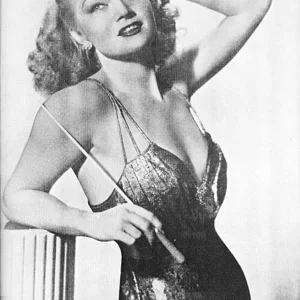

Ina Ray Hutton (1916-1984) was an American bandleader, singer, and dancer of the swing era. Nicknamed “The Blonde Bombshell of Rhythm,” she led the Melodears in the 1930s, one of the first all-female big bands, before hosting her own musical television show in the 1950s.
Ina Ray Hutton(1916 — 1984)
Ina Ray Hutton
États-Unis
5 min read
Frequently asked questions
Key Facts
- Born on March 13, 1916, in Chicago, she started out as a dancer and singer in Broadway revues.
- In 1934, she took over the leadership of the Melodears, one of the first big jazz orchestras made up entirely of women.
- Nicknamed “The Blonde Bombshell of Rhythm” for her highly spectacular stage presence.
- In the 1940s, she led an all-male big band, a rare feat for a woman at the time.
- From 1956 to 1960, she hosted The Ina Ray Hutton Show on American television, backed by an all-female orchestra. She died in 1984.
Works & Achievements
One of the very first all-female big bands, which she led and with which she made her name on the swing scene.
Short films featuring her all-female orchestra, shown in theaters and offering rare visibility to a woman bandleader.
78 rpm records by the Melodears that captured the band's swing repertoire on wax.
After the Melodears, she led an all-male big band, proving her standing as a bandleader.
A television show bearing her name, featuring a new all-female orchestra and introducing her to a wide audience.
Anecdotes
Nicknamed "The Blonde Bombshell of Rhythm
Ina Ray Hutton did far more than just keep the beat: dressed in sequined gowns, she danced and twirled in front of her orchestra. Her spectacular showmanship was as much a part of the act as the music itself.
In 1934, impresario Irving Mills — Duke Ellington's manager — assembled an all-female orchestra around her, the Melodears. At a time when many believed that women simply couldn't "swing
this big band of professional musicians was a bold novelty.
During the 1930s, Ina Ray Hutton and her Melodears made several musical short films for the cinema, screened as curtain-raisers before the main features. Thanks to these "shorts
audiences across the country could see, on the big screen, a woman leading a full jazz orchestra.
In 1940, she disbanded the Melodears and took the helm of an all-male orchestra. A respected bandleader, she directed male musicians and imposed her own musical choices — something very rare for a woman at the time.
In the 1950s, she hosted her own television show with a new all-female orchestra. Historians have since established that Ina Ray Hutton, of African American descent through her mother, was presented to the public as a white performer — a painful example of the "passing" forced by the racism of the era.
Primary Sources
On-screen title card: "Ina Ray Hutton and Her Melodears," showing the bandleader conducting and dancing in front of her all-female orchestra.
Sides of 78 rpm records credited to "Ina Ray Hutton and Her Melodears," attesting to the swing repertoire of the all-female orchestra.
Musical program hosted by Ina Ray Hutton leading an orchestra made up of women musicians, broadcast nationwide.
Reviews and advertisements presenting Ina Ray Hutton as "The Blonde Bombshell of Rhythm" and announcing her big band's concerts.
Key Places
Ina Ray Hutton's hometown, a major hub of American jazz in the 1920s and 1930s.
Center of Broadway revues, record labels, and the clubs where she made her name before leading the Melodears.
Home to the film and later television studios where her short films and her 1950s show were produced.
The city where Ina Ray Hutton spent her final years and died in 1984.
Typical Objects

Ina Ray Hutton led her musicians baton in hand, setting the tempo while dancing in front of the orchestra.

Her glamorous, sparkling outfits were an integral part of her “Blonde Bombshell” image on stage.

A singer as much as a bandleader, she used the microphone to perform swing standards in front of the audience.
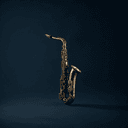
An iconic instrument of the Melodears' horn section, at the heart of the band's swing sound.

The Melodears' recordings were pressed on 78 rpm records, the main musical medium of the era.

Written arrangements allowed the big band to play complex swing pieces together.

In the 1950s, her show broadcast her all-female orchestra thanks to the cameras of television studios.
School Curriculum
Vocabulary & Tags
Key Vocabulary
Tags
Daily Life
Morning
On tour, Ina Ray Hutton's morning started late: concerts and dances ended in the middle of the night. Waking up mainly served to organize the orchestra's travel to the next town.
Afternoon
The afternoon was devoted to rehearsals, fine-tuning the arrangements with the musicians, and costume fittings. It was also the time for interviews and photo shoots for the press.
Evening
In the evening, it was showtime: Ina Ray conducted, sang, and danced in front of the big band in ballrooms, theaters, or hotels. The evenings often stretched on into the small hours of the morning.
Food
Life on tour meant meals grabbed on the go, in restaurants, cafés, or dining cars. The American food of the time mixed meats, sandwiches, and simple dishes wolfed down between two concerts.
Clothing
On stage, she wore long, form-fitting, sequined gowns, carefully chosen to shine under the spotlights. Backstage and while traveling, she adopted the elegant city outfits of the 1930s and 1940s.
Housing
Between tours, she stayed in apartments and hotels, with no real permanent residence. Life in a large touring orchestra was spent mostly on trains, buses, and in hotel rooms.