Kids interview Jean Jaurès
by Charactorium · Jean Jaurès (1859 — 1914) · Politics · 5 min read
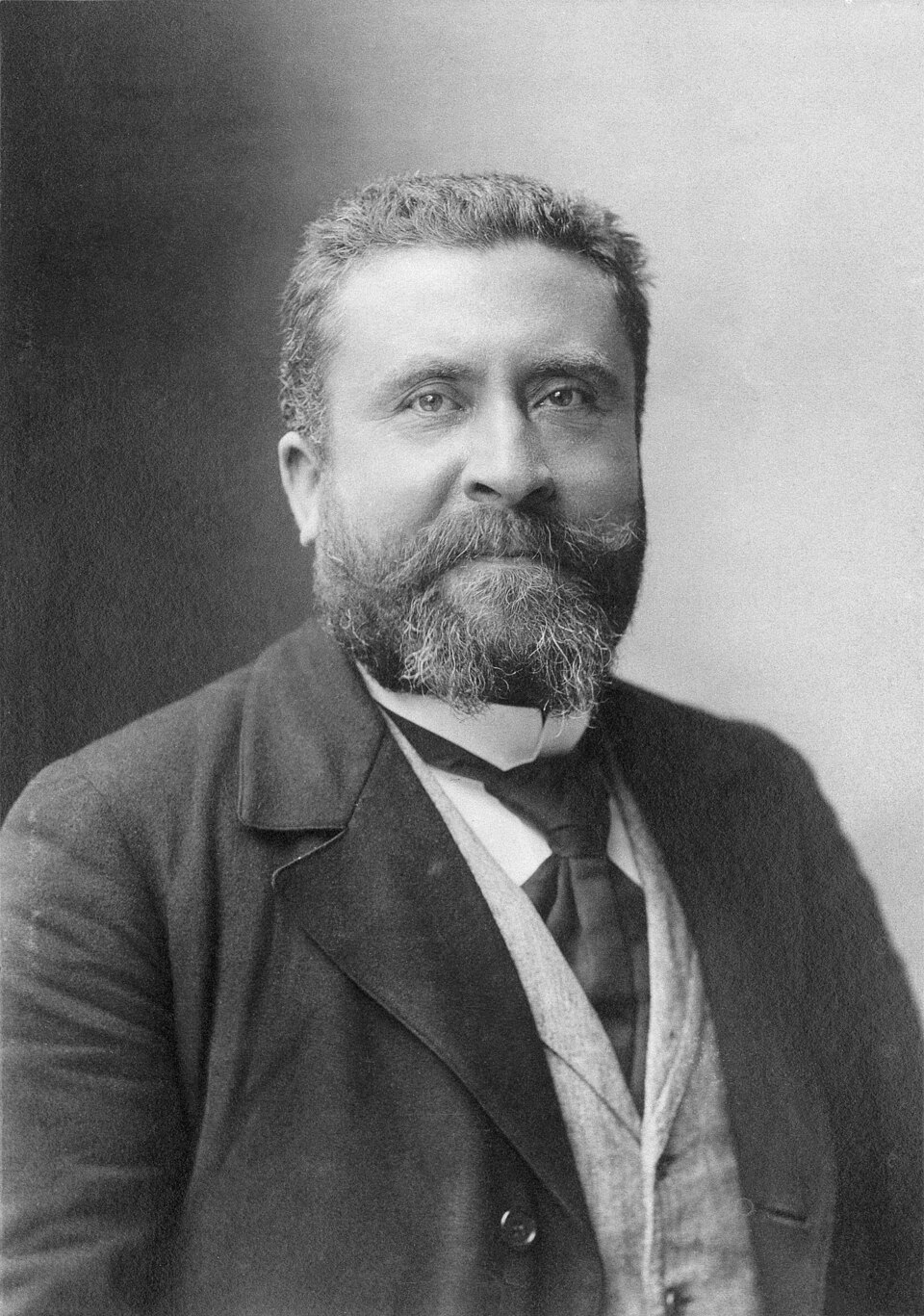
It is a school morning. Two twelve-year-old students have come to meet Jean Jaurès — the great socialist leader who fought for workers and peace more than a century ago. He sits down across from them, rolls up his sleeves slightly, and says with a warm smile: 'So — what do you want to know?'
—How old were you when you first became a teacher?
I was twenty-two years old when I first stood in front of a class, in Albi — that was 1881. Imagine a young man, barely older than his own students, nervously opening a philosophy book for the very first time. I loved it, you know. Teaching Plato, Kant — turning big ideas into stories people could actually follow. But I kept noticing something: while we talked about justice inside the classroom, real injustice was happening just outside the door — in the coal mines, the factories, the courtrooms. One day I thought: words locked inside a school are not enough. I had to take them out into the world. That is when I started to become something else.
—What was your apartment like — did you really have books everywhere?
Oh, books everywhere — stacked on chairs, piled on the floor, slipped between plates on the kitchen table. My apartment in Paris was small and modest. I never wanted luxury, you know — it would have felt wrong, given everything I believed in. On my shelves you would find Plato, old socialist pamphlets, stacks of newspapers, history books with pages folded over. Every morning I read the papers over my coffee and bread. Every evening I came back to the philosophers. Some people thought it strange: a socialist who loves ancient Greek ideas. But I always believed the two were connected. To fight for justice well, you first have to think clearly about what justice actually is.
—Were you scared when you said Captain Dreyfus was innocent?
Honestly? Yes. Captain Dreyfus had been condemned by the whole army, by most newspapers, by almost all of France. When I published my series of articles — Les Preuves, meaning The Proof — in La Petite République in 1898, showing step by step that he was innocent, I received threats. Real ones. People called me a traitor. But I kept thinking about Dreyfus himself, alone in a prison on Devil's Island, far out in the ocean, with no one to defend him. If I was frightened sitting at my desk in Paris, how must he have felt? That thought always gave me more strength than fear could take away.
—What does real courage mean to you — is it the same as being brave?
Not exactly. In 1903, I gave a speech to young students at the lycée in Albi — my old school. I told them: courage is not about carrying a sword or fighting a duel. Real courage is looking for the truth and saying it out loud — even when the lie is winning, even when the whole crowd is applauding the lie. To stand up and say 'this is wrong' when everyone around you says 'this is perfectly fine' — that takes more strength than any soldier needs. Remember that. You will need it more than you think, even at your age.
Real courage means looking for the truth and saying it — even when the lie seems to be winning.
—Why did you create L'Humanité — weren't there already enough newspapers?
There were plenty of newspapers, yes — but they all belonged to wealthy men with wealthy interests. I needed something different. In April 1904, I launched L'Humanité — imagine a daily paper where a miner in the north, a weaver in Lyon, a teacher in a village school could all read about their own struggles, written by people who actually cared. I wrote many of the editorials myself, sitting at my desk late at night, often after a long day in parliament. My dream was simple: a newspaper that belonged to everyone — not to anyone in particular.
—Was it hard to get all the different socialist groups to agree on one party?
Like trying to get ten arguing brothers to agree on dinner! Each group had its own ideas, its own leaders, its own pride. Some wanted revolution right away — tear everything down at once. Others, like me, believed you had to work through democracy: laws, elections, debate, patient persuasion. In 1905, at the Congress of the Globe in Paris, we finally found enough common ground and created the SFIO — a single united French socialist party. I shook hands with men I had argued with fiercely for years. It was one of the happiest days of my life. When people stop fighting each other and start building something together — that is when things actually change.
—You wanted regular citizens to be soldiers instead of a professional army — wasn't that dangerous?
I wrote a whole book about this idea — L'Armée nouvelle, The New Army, in 1911. My argument was this: a professional army, made up of soldiers paid to fight, is dangerous precisely because it can be turned against the people by those in power. I proposed something different — every citizen, trained to defend the country if it were truly threatened, like a shield rather than a sword. Some called me a dreamer. But think about it: if every family has a son who would go to war, every family has a reason to fight hard for peace first. That was the whole point.
—Were you afraid a big war was coming to Europe?
Terrified. As early as 1911, during the crisis over Morocco, I stood in the Chamber of Deputies and warned: these rivalries between the great powers are leading us straight toward disaster. Then in 1913 they passed the three-year law — young men would now have to serve three years in the army instead of two. I fought it as hard as I could. I traveled to Germany, to Belgium, meeting socialist leaders everywhere. I kept repeating the same thing: the workers of Europe have no reason to kill each other. They are not each other's enemies. They never were.
The workers of Europe were brothers — not enemies.
—That last evening in the café — what were you actually writing about?
It was the evening of July 31, 1914. I was at the Café du Croissant, on the rue Montmartre in Paris. Outside, the city felt strange — tense, like the air before a very bad storm. I was working on an article, trying one last time to find the right words for peace, one final appeal before it was too late. My colleagues from L'Humanité were sitting around the table. The window was open because the evening was warm. I could hear the noise of the street. I was writing... and then I was not anymore. I never got to finish that article.
I was writing — and then I was not anymore.
—If you had survived that night, what would you have done the very next day?
I think I would have taken the earliest train to Berlin, then to Vienna, to meet the socialist leaders one last time and beg them: hold your governments back. Do not let this happen. I had spent thirty years believing that ordinary people — miners, teachers, students just like you — could change the course of history if they stood together across borders. One more day might have made a difference. Perhaps not. But I would have tried. That is all any of us can do, really: keep trying, keep speaking, keep writing — for as long as we are given.
This imaginary interview was generated by artificial intelligence from sources documented in Jean Jaurès's profile. It dramatises what the figure might have said based on what we know about them, but does not constitute attested historical testimony. For primary sources and factual documentation, refer to the full profile.