Imaginary dialogue between Captain Alfred Dreyfus and Jean Jaurès
by Charactorium · Jean Jaurès (1859 — 1914) · Politics · 7 min read
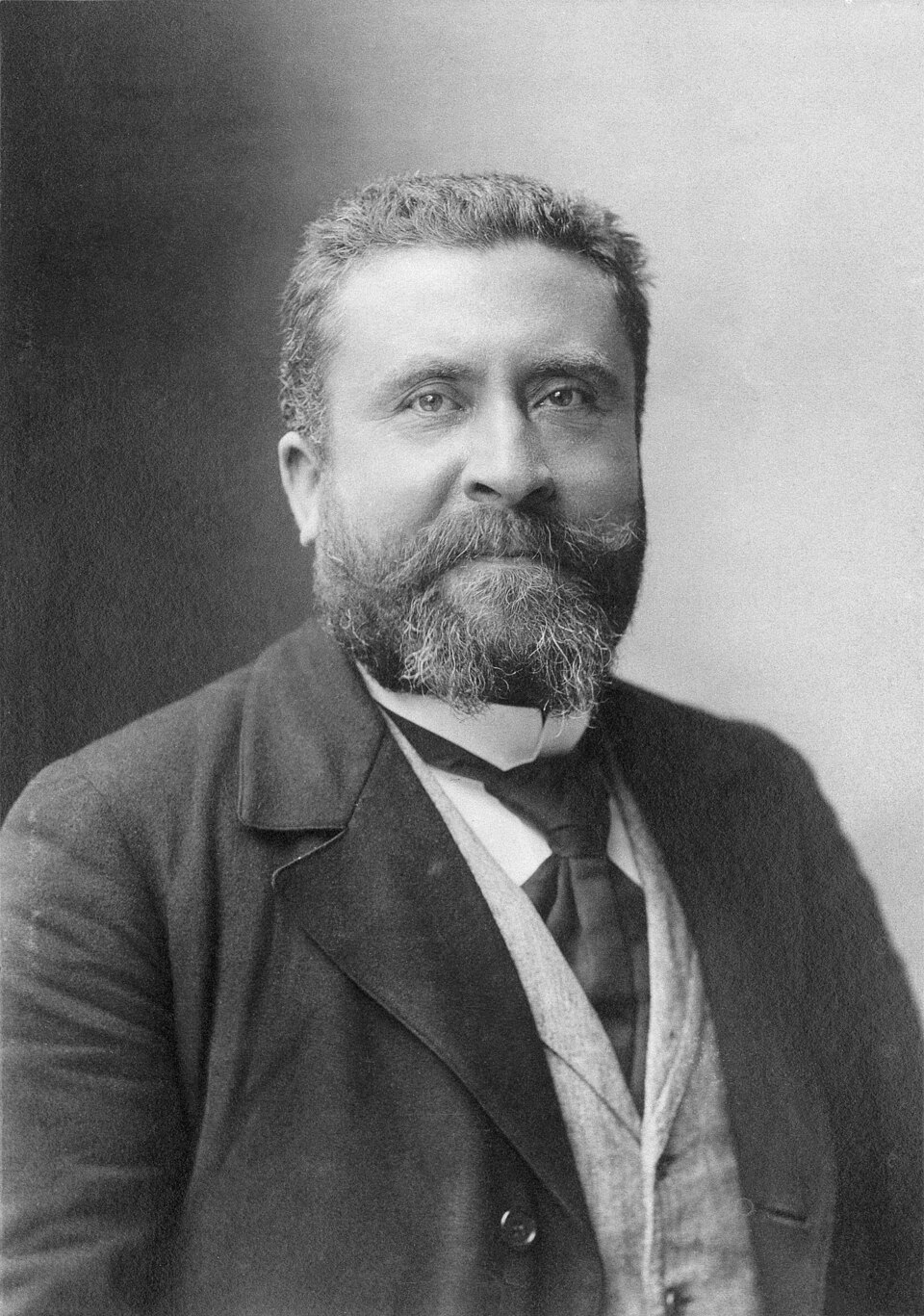
Paris, March 1912. In the cramped editorial offices of L'Humanité on the Rue Montmartre, the rhythmic thud of the printing presses on the floor below fills the room like a slow heartbeat, and the smell of fresh ink mingles with cold coffee. Captain Alfred Dreyfus — his rank restored, his Legion of Honour returned, his name cleared by the Supreme Court six years earlier — climbs the narrow stairs to meet the man who waged the most stubborn public battle for his vindication. Jaurès sets aside a half-written editorial and gestures to the chair across his cluttered desk; between these two men, born in the same year of 1859 and shaped by the same Republic, the afternoon light falls on a shared and unfinished history.
—Jaurès, I never thanked you properly after my return. When you first championed my cause in La Dépêche de Toulouse, what convinced you I was innocent?
My dear Dreyfus, certainty is perhaps too strong a word for what I felt in 1897. What I had was an accumulation of doubt — and I have always believed that a single well-grounded doubt, in a matter of a man's life and honour, is enough to demand the revision of everything. I read the documents. I questioned the logic of the accusation. And I found it collapsed under scrutiny. You were an artillery officer, a Jew, a convenient target at a moment when the army needed to protect itself from its own errors. What drove me publicly forward, at real personal risk, was not certainty — it was the indivisibility of justice. If justice is partial, it is nothing. I could not have defended the Republic's principles in Parliament while allowing one of its officers to rot on a rock in the Atlantic on manufactured evidence.
Justice is indivisible. I could not defend the Republic's principles while allowing one of its officers to rot on manufactured evidence.
—While I languished on Devil's Island, you published Les Preuves. How close did the threat of prosecution come to silencing you?
It came very close, I will not pretend otherwise. I received letters — some threatening, some obscene. There were colleagues in the Chamber who warned me that I was destroying my political future. The nationalist press called me a traitor to France, which is a peculiar accusation to level at a man defending a French officer against a lie. But once I had read the documents — once I understood the scale of the falsification — the risk of speaking seemed far smaller than the risk of remaining silent. Truth must be stated whole, not in fragments, not in whispers. The danger of silence is that it becomes complicity, and I had no intention of becoming complicit in an act of state that violated everything the Republic claimed to stand for. My family, my constituency, my seat — all of that weighed less than that single obligation.
—You founded L'Humanité in 1904, not long after the Affair concluded. Was the newspaper born from that same conviction — that truth needs its own voice?
In part, yes — but it was also born from a more practical need. The socialist movement in France had no national daily voice of its own. Each faction had its pamphlets, its local sheets, its meetings; but nothing that could speak with consistency across the whole country, every morning, on every question from workers' wages to foreign policy. I wanted a newspaper that a miner in Carmaux could read alongside a philosophy teacher in Toulouse — that would apply the same rigour I brought to the Dreyfus case to every injustice, every political manipulation, every international crisis. When I wrote the editorial for the first issue, I said that this paper would belong to all republicans, all socialists, all those who want social justice and peace between peoples. That was not a slogan. It was a contract with the reader.
—I hear you write your editorials each morning before Parliament sits. How do you hold together the desk and the tribune without losing coherence?
The morning is mine. I wake early, read the main papers, and then I write — it is how I think, really. The act of composing an argument on paper forces me to find its flaw, to shore up the weak point before an adversary in the Chamber does. By the time I arrive at the Palais Bourbon in the afternoon, I have already argued with myself for two hours. The desk and the tribune are not separate lives — they are the same labour in different forms. Journalism is a monologue that reaches thousands; Parliament is a dialogue in which one must hold ground against organised opposition, ridicule, and sometimes outright bad faith. Both demand that you know your subject better than the man trying to defeat you. I have always found that philosophical training — the rigour of the agrégation — is the best preparation for both.
—You earned an agrégation in philosophy, yet you move thousands with no notes. Is the scholar not in tension with the tribune?
People imagine philosophy as something cold and inward — a man alone with his books, turning ideas over in silence. But philosophy, at its origin, was an oral art: Socrates argued in the marketplace, not in a library. I have always felt that rigour and passion are not opposites. The philosophical formation taught me how to construct an argument step by step, how to anticipate an objection, how to make a necessary distinction feel natural rather than pedantic. The passion — the voice that carries, the gesture that punctuates — that comes from genuine conviction. You cannot counterfeit it. When I speak for the miners of Carmaux or against an unjust law, I am not performing emotion; I feel it. The crowd senses the difference. They have always sensed it. The body simply follows what the mind and the heart have already decided together.
You cannot counterfeit conviction. The crowd has always sensed the difference.
—They say you have torn your jacket open during speeches. As a military man, I find that striking — is the body part of your argument?
Ha — that story has been embellished, but it is not false. When I am fully engaged before a large assembly, I forget the jacket entirely. I forget everything that is not the idea I am trying to drive home and the faces before me. The physical energy is not an affectation; it is what happens when thought becomes urgent. I have spoken to crowds of several thousand in the open air, without any mechanical amplification, and the voice must carry not only the words but the weight behind them. I suppose a soldier understands this: the command given without conviction does not move the column. It is the same at a political rally or a parliamentary session. The difference is that I am trying to move the column away from war rather than toward it. You, of all people, might understand why that matters.
—The unification of the socialist factions into the SFIO in 1905 astonished even your opponents. What had to give — or break — to make it possible?
Vanity had to give, above all. Each faction had its history, its founders, its particular reading of Marx or Proudhon or Blanqui. Each leader believed, sincerely, that his tendency was the correct one and that unifying on other terms meant surrendering a principle. My argument was that the fragmentation was itself the betrayal — that a working-class movement divided into a dozen squabbling parties was a gift to the employers and to the state. I spent months — years, really — meeting each tendency separately, finding the common ground, negotiating formulations that no one found perfect but all found acceptable. What broke, in the end, was the illusion that purity of doctrine mattered more than actual political power. The Congrès du Globe in 1905 brought them all under one roof. Not without tensions. But under one roof.
—You speak of collective ownership. As a republican officer, I honour France but not your doctrine. How do you answer men like me?
I answer you honestly, Dreyfus: my socialism is not the negation of the Republic, it is its completion. The Revolution of 1789 declared the rights of Man — liberty, equality — but left economic inequality entirely untouched. The worker who is legally free but economically dependent on the factory owner is only half free. What I defend is not the abolition of the Republic's institutions but their deepening: extending the sovereignty of the citizen from the polling booth into the workshop. I have no interest in barricades or violent upheaval. The ballot, the tribune, the press — these are my weapons. And solidarity across borders is not a betrayal of France; it is the only guarantee that France will not be destroyed by the next European war. You served in one war already. You know what the next one will cost.
My socialism is not the negation of the Republic — it is its completion.
—You published L'Armée nouvelle last year. I read it as a soldier, with fascination. Can a citizen militia truly replace a professional army?
It could do something more important: it could change the relationship between a nation and the very idea of war. A professional army is a machine maintained for use — and machines are used. A citizen militia is a nation that has decided to defend itself, not to conquer. The distinction matters enormously. In L'Armée nouvelle I try to show that a defensive posture, built on trained citizens rather than career soldiers, makes aggressive war structurally harder to launch. The emperor or the general who dreams of a quick campaign against a neighbour faces a different calculation when every adult male knows how to fight but none are organised for rapid offensive action. War lies at the bottom of all things, as death lies at the bottom of life — but as life can still be long and beautiful, so societies can live long in peace if they are built for it.
—The three-year service law, the Agadir crisis, the arms race — are you afraid, Jaurès, that we are running out of time to prevent catastrophe?
Yes. I will not disguise it from you. Each month the situation grows more rigid, the diplomatic margins narrower, the nationalist press more clamorous in every capital simultaneously. The International meets; we pass resolutions; we issue appeals. But the logic of mobilisation, once set in motion, has its own momentum that political will struggles to arrest. I go on writing, speaking, travelling to congresses — because the alternative is to accept the catastrophe as inevitable, and I refuse that. Courage, I told the students at Albi years ago, is to seek the truth and speak it; not to echo the imbecile applause and the fanatical jeers. I still believe that. But I confess to you — privately, between two men who have already seen what injustice does when it organises itself — that I am afraid the voices calling for peace may be drowned before they are truly heard.

This imaginary interview was generated by artificial intelligence from sources documented in Jean Jaurès's profile. It dramatises what the figure might have said based on what we know about them, but does not constitute attested historical testimony. For primary sources and factual documentation, refer to the full profile.