Imaginary dialogue between Frederick II of Prussia and Johann Sebastian Bach
by Charactorium · Johann Sebastian Bach (1685 — 1750) · Music · 6 min read

It is May 1747, and the music room at Sans-Souci in Potsdam still glows with candlelight and the warm aftermath of a remarkable evening — a silver flute resting against the bench, the harpsichord lid still raised. Frederick II of Prussia has just watched Johann Sebastian Bach, the Leipzig Cantor he has long admired from a distance, take a royal theme and unfold it into a six-voice fugue that silenced the assembled court. They have known each other only through reputation until this night; now the king — himself a devoted flutist and composer — sets down his glass and turns to the old master, struck by the suspicion that he has only begun to understand what he heard.
—You asked for six voices on my theme tonight. My kapellmeister said it could not be done. What did you hear in those notes that he missed?
What I heard was simply what the theme itself contained, Your Majesty. Every well-constructed melodic line carries within it the seeds of its own inversion, its own mirror, its own answer in another voice — if one knows how to listen for them. I do not conjure counterpoint from nothing; I follow the logic the theme demands. When you offered me those notes, I heard several paths opening simultaneously: a fugue running forward, the same subject running in reverse, a canon tightening between bass and treble. The difficulty is never finding those paths. It is choosing which to take first, and in what order to reveal them. With six voices, the constraint itself becomes a pleasure. A theme worthy of a king could accept no less rigorous a treatment.
Every melodic line carries within it the seeds of its own inversion — if one knows how to listen.
—You promised me a written work on my theme before you leave Potsdam. What will this Musikalisches Opfer contain, and why the royal dedication?
The offering will be a collection of contrapuntal pieces — ricercars, canons, a trio sonata — all constructed upon the theme Your Majesty was pleased to propose. I use the word offering deliberately: the Latin ricercar means to seek, and the work will seek out every possibility the theme contains, turning it in the light as a scholar turns a difficult text. The dedication belongs to Your Majesty not as a mere courtesy but because the theme is genuinely yours — I received it; I did not invent it. A craftsman who builds a cabinet from timber another man provided owes acknowledgment of the wood. I hope the cabinet, when it reaches Potsdam, proves worthy of the material you gave me.
—You walked four hundred kilometers to hear Buxtehude in Lübeck and stayed four months instead of four weeks. What drove a young man to such extremes?
I was twenty years old and acutely aware of how much I did not yet know. Buxtehude had mastered a manner of writing for the organ — the stylus phantasticus, free, almost improvisatory — that I had encountered only on the page, and the page is never sufficient. To hear how a great player draws breath through an instrument, how he places a silence so it weighs more than any chord, how he moves a congregation from unease to consolation within a single prelude — none of that can be read. My employers at Arnstadt were rightly angry when I returned four months late. But I came back a different musician than the one who had left. What Buxtehude gave me, without meaning to give me anything, was the understanding that mastery is not a technique. It is a kind of listening.
Mastery is not a technique. It is a kind of listening.
—At Arnstadt, the consistory rebuked you for strange notes that unsettled the congregation. Did that wound you, or merely confirm your direction?
It confirmed a tension I have never been entirely free of — between what a congregation expects to hear and what the harmony requires to be true. I was harmonizing familiar Lutheran chorals and heard possibilities in them that the consistory found surprising. I was asked to confine myself to what was customary. I understand why church authorities must ask that of their musicians: a service is not a private experiment. But a harmony that never surprises has stopped thinking. What I took from that reprimand was not restraint but craft — I learned to lead a listener through an unexpected modulation rather than arriving there without preparation. I did not abandon the strange notes. I learned to accompany them more graciously.
—More than twenty years at the Thomaskirche, yet your quarrels with Leipzig's council are well known. Why remain where you are so little accommodated?
Because Leipzig, despite its city fathers, gives me the Thomasschule — a choir I can shape from boyhood, and a platform from which my music reaches a congregation every Sunday and feast day. I wrote to an old friend in 1730 and told him plainly that my salary was insufficient and the authorities little disposed toward music. I did not conceal the truth, and I did not leave. What Leipzig offers — the passions, the cantatas, the great liturgical calendar — no other post in Germany provides the same canvas. Difficulty with one's employers is not the same as difficulty with one's work. The work, at the Thomaskirche, has always been possible. That has been enough to keep me there.
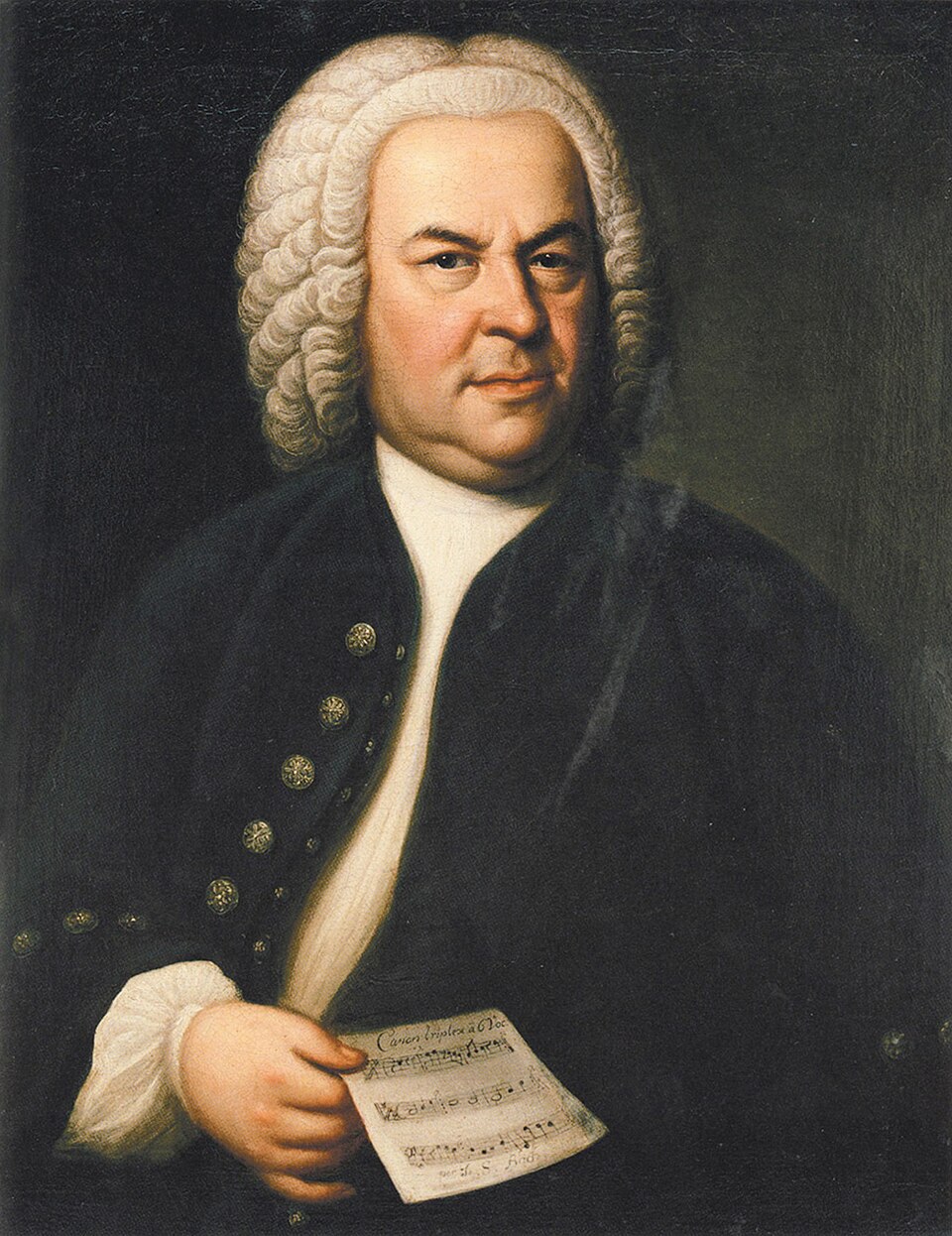
—Twenty children, students boarding under your roof — how does a man running a private music school compose a thousand works?
Your Majesty mistakes the household for an obstacle; it has always been part of the machinery. My sons learn counterpoint at the same table where I correct cantata parts. Students copy out scores that I then revise — which is itself a form of composition. Morning rehearsals at the Thomasschule begin before seven, and I am there before the boys; that early hour, when the city is still dark and the stoves just warming, is when the mind is sharpest. I have never composed by waiting for inspiration. I compose by working daily, as a carpenter works his timber. The household does not cost me time — it gives me students who push back, sons who ask questions, and a reason to write something new every Sunday.
—You trained your sons yourself, in your own home. Do you hope they continue what you have built, or find paths entirely their own?
Both, and I see no contradiction. What I have given them is craft — the ability to construct a line, to sustain an argument across four voices, to understand why a dissonance must resolve in precisely this direction and no other. That craft is not a chain; it is a foundation. What they build on it is their affair. Carl Philipp Emanuel already writes in a manner quite different from mine — lighter, more preoccupied with immediate feeling than with structural architecture. I find it interesting rather than troubling. The music of the next generation will not be the music of mine, nor should it be. If my teaching has given them the structural knowledge to depart from it freely, then I have done my work well. A good teacher prepares his students to exceed him.
A good teacher prepares his students to exceed him.
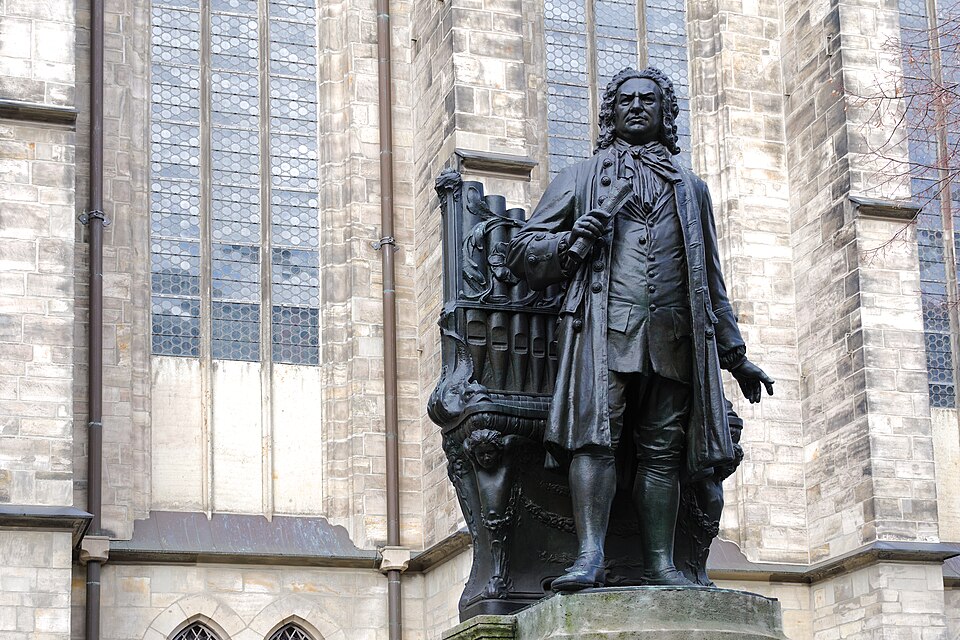
—I hear your new work builds an entire world of fugues from one theme alone. What are you seeking — a demonstration, or a testament?
Perhaps both, Your Majesty, and I will not pretend otherwise. The work I call Die Kunst der Fuge is built on a single subject, and I intend to show every species of fugue and canon that subject can sustain: simple, inverted, augmented, at the stretto, combined simultaneously with its own mirror image. In part it is a demonstration — evidence that polyphony is not a collection of tricks but a complete world with its own internal laws. But it is also something I can only describe as a reckoning. I am not young. There are things I want to say about the nature of musical architecture that I have not yet gathered into a single place. Whether I will complete what I intend — that I cannot promise. But the intention is there, and the work has already begun.
—Your eyesight troubles you, I am told. How do you continue composing when the page itself becomes difficult to read?
The page matters less than one might expect, Sire. After fifty years at the keyboard and the writing desk, much of the work takes place without it. I hear the voices in my mind before the hand sets them down; the hand follows the ear, not the eye. What the failing sight does take from me is the pleasure of reading — consulting an old score, checking a student's work, reading in the evenings. That I miss. I have been told that certain surgeons can restore sight through operations, and I do not dismiss the possibility. But I confess I am more concerned with finishing Die Kunst der Fuge than with preserving the instrument that writes it. The fugue is not yet complete. That weighs on me far more than the candles I must now place closer to the paper.
—You mark your scores Soli Deo Gloria — yet your music reaches beyond any single faith. For whom, truly, do you compose?
I have written those letters at the head of scores since I was young, and I meant them each time — to God alone the glory. But Your Majesty asks a deeper question, and you are a man who composes yourself, so I will answer honestly. The Lutheran liturgy gave me the occasion and the obligation; it did not give me the music. The music — the fact that certain intervals resolve while others do not, that a fugue subject answers itself across time, that a chorale harmonized in four voices can bring a congregation to tears — none of that is invented by any composer. It is discovered. I am, at best, a craftsman who has learned to find what was already present in the material. Whether one calls that presence God, Nature, or Mathematical Order, I have come to believe these are the same thing wearing different names.


This imaginary interview was generated by artificial intelligence from sources documented in Johann Sebastian Bach's profile. It dramatises what the figure might have said based on what we know about them, but does not constitute attested historical testimony. For primary sources and factual documentation, refer to the full profile.