Imaginary interview with Johann Sebastian Bach
by Charactorium · Johann Sebastian Bach (1685 — 1750) · Music · 6 min read

We meet Johann Sebastian Bach in his study at the Thomasschule in Leipzig, on an October afternoon in 1742. The room smells of candlewax and fresh ink; a half-finished manuscript lies open on the desk beside a quill and a glass of rye beer. Outside, the boys of the choir are rehearsing — their voices drifting through the stone walls like a rough draft of the music he is already hearing in his head.
—You left Arnstadt in 1705 on foot, heading north toward Lübeck — nearly four hundred kilometres. What drove a twenty-year-old organist to make that journey?
Buxtehude. There is no simpler explanation. I had heard accounts of his evening concerts at the Marienkirche in Lübeck — the great Abendmusik — and what I was told seemed to belong to a different order of creation than anything I had encountered in Arnstadt. I was given four weeks of leave. I confess I used them liberally. Four months passed before I returned. You ask what drove me: the same force that drives a river — it does not choose its course, it follows the gradient. I needed to hear, with my own ears, how a man could make an organ speak as though it possessed a soul of its own. The four hundred kilometres were nothing. The lesson was everything. My employers did not see it quite that way, which is understandable, but I cannot say I regret a single day of those four months.
—When you returned to Arnstadt, the consistory summoned you — displeased about your absence, but also, apparently, about your music itself. What was the nature of that second complaint?
They had two grievances, and the second was the more instructive. Their record noted that I had introduced into the chorale strange notes — their phrase — that caused confusion among the congregation. I found this observation worth keeping. The congregation was confused because they had never heard a chorale treated in that manner. But confusion and illumination are neighbours, and sometimes the only passage between them is a note the listener was not expecting. Buxtehude had shown me what the organ could contain, and I saw no good reason to conceal it from a parish in Thuringia. I accepted the reprimand about my absence; it was fair. The suggestion that the music itself was at fault I accepted less readily.
Confusion and illumination are neighbours, and sometimes the only passage between them is a note the listener was not expecting.
—When you accepted the post of Thomaskantor in Leipzig in 1723, what did you hope it would give you that your previous positions had not?
Leipzig was the most consequential city I had served — a university town, a merchant hub, four major churches, and a school whose musical tradition stretched back centuries. At Köthen I had worked for a Calvinist prince who cared nothing for elaborate liturgical music; I composed instrumental works there, which I do not regret, but the purpose I most wished to serve was not the purpose of a concerto. It was the purpose of a congregation, on a Good Friday, hearing the Passion of Christ rendered in music commensurate with the weight of the story. The contract I signed in May 1723 charged me with composing and directing music for the principal churches of the city. I took those words seriously. I thought Leipzig would take them seriously too.
—Yet by 1730 you wrote to your old friend Georg Erdmann in terms that suggest something had broken between that hope and the reality. What had gone wrong?
Everything that can go wrong when music is governed by committee. The council controlled my budget, my singers, my instrumentalists — and they were not music's most ardent servants. I needed a competent ensemble of at least eighteen players for the Sunday services; what I was provided fell persistently short of that. Boys arrived for training with no musical foundation whatsoever. In October 1730 I wrote to Erdmann — he had once been my schoolmate, he would understand — that my salary was insufficient and the authorities little inclined toward the art. I told him I was considering, with the help of God, seeking my fortune elsewhere. I was not writing for effect. There is a particular exhaustion in defending, year after year, the bare minimum that good music requires, in a house of God no less. But I stayed. Leipzig held me. The Thomaskirche held me.
There is a particular exhaustion in defending, year after year, the bare minimum that good music requires, in a house of God no less.
—Your household here at the Thomasschule was known to be remarkable — twenty children across two marriages, private pupils, musicians passing through. How did composition survive amid that constant motion?
I did not compose despite the motion — I composed through it. My clavichord was rarely silent; my children learned music the way other children learn to walk, by imitation and correction. In Wilhelm Friedemann and Carl Philipp Emanuel I heard possibilities I had not yet fully explored in my own work, which is a strange and useful thing to encounter in one's own sons. I wrote in the early mornings, before the school day began, or late at night when the house finally settled. A quill, black ink, ruled paper — the apparatus of composition is not elaborate. What is not simple is the concentration it demands. But a house full of music, even imperfect music, sharpens the inner ear rather than dulling it. Disorder on the surface does not require disorder at the centre.
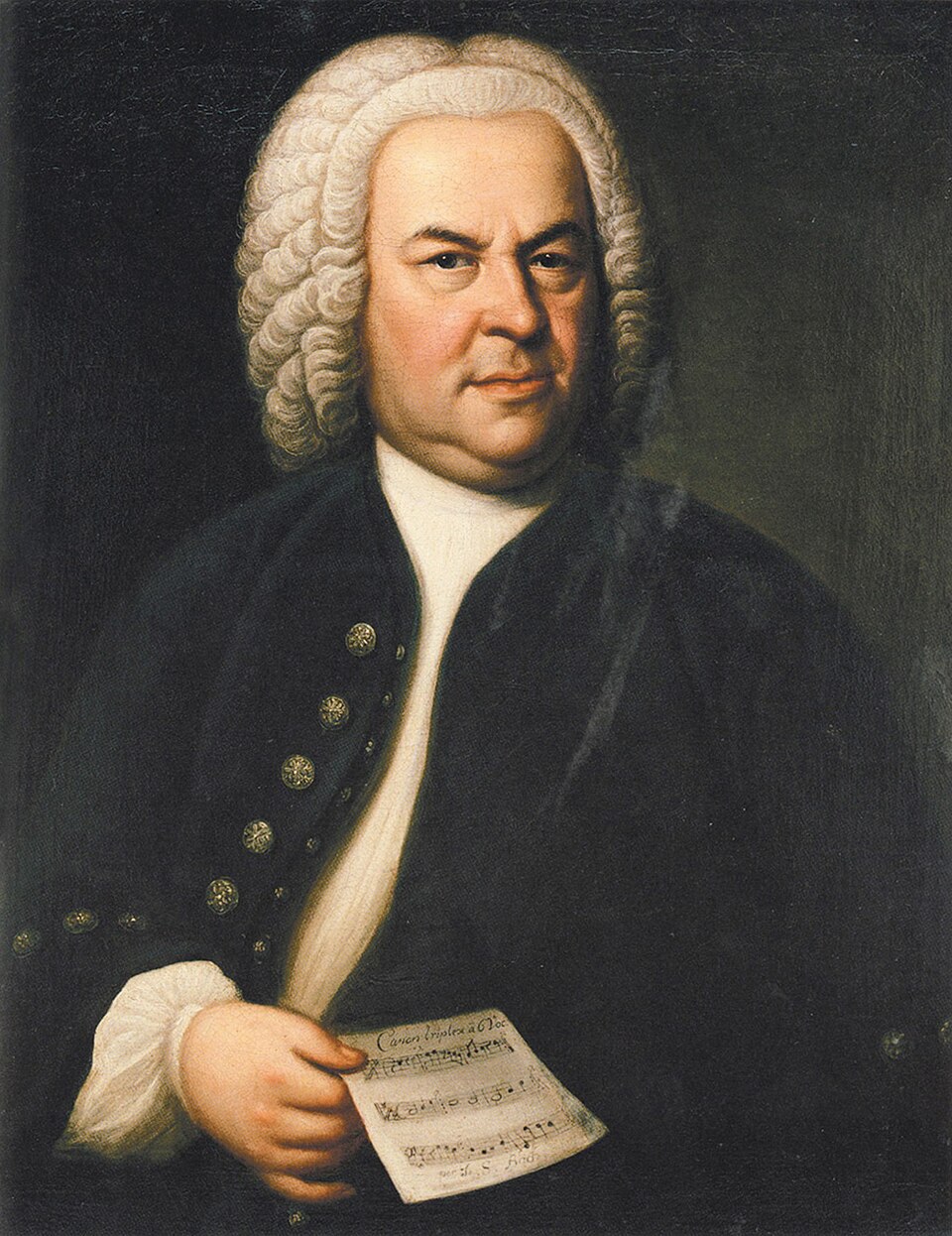
—You also directed the Collegium Musicum at Café Zimmermann across town — a rather different setting from the Thomaskirche. Did that work feel like relief, or simply more obligation?
A different kind of work, which amounts to relief. The Collegium Musicum — I assumed its direction in 1729 — drew students and professional musicians who came out of appetite rather than duty. There were no budget disputes, no council minutes to contest. We played concertos, cantatas, chamber pieces. The café setting itself was part of the pleasure: people arrived to drink coffee and converse, and then, gradually, they stopped conversing and only listened. I have always held that music does not require a church to be serious — it requires attention. Café Zimmermann offered me attention without ceremony, which, after years of ceremonial conflict at the Thomasschule, was not a small thing.
—The Well-Tempered Clavier moves through all twenty-four major and minor keys in sequence. What were you trying to establish — or discover — by mapping that entire harmonic territory?
Both, and the distinction matters less than one might suppose. The system of tempérament égal made it possible to travel through every key without the instrument losing its bearing — that was a practical fact I wished to demonstrate with the first book of 1722, but it was not the sole purpose. The purpose was to show, especially to students, that no region of musical space is barren. Every key carries its own character: a particular gravity, a particular brightness, a quality of motion. The craftsman who has mastered only three keys is like a carpenter who knows only one kind of wood. I wanted whoever worked through both volumes — the second followed in 1742 — to be able to think and feel in any tonal direction at all.
No region of musical space is barren.
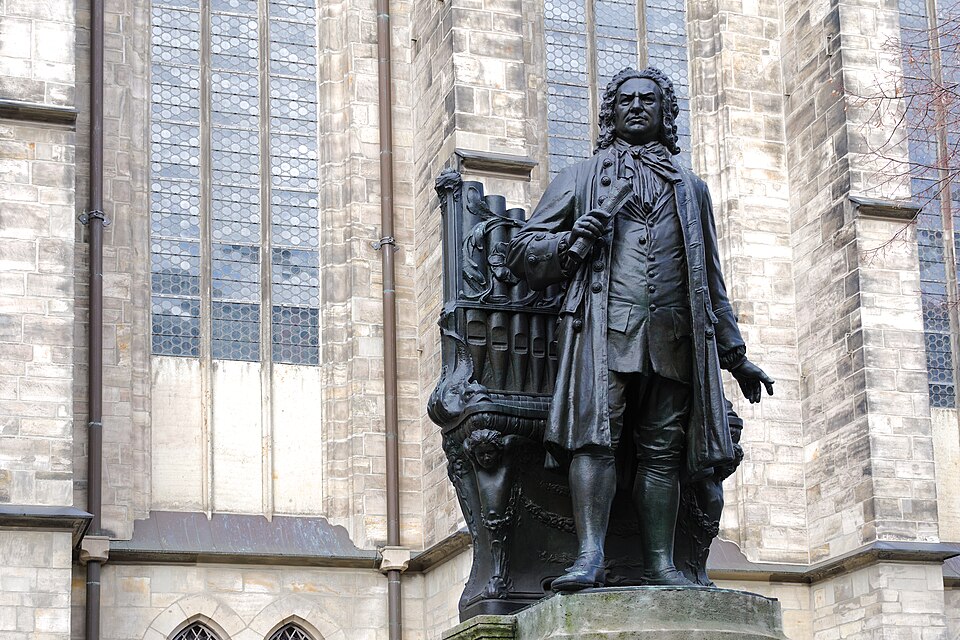
—The Art of the Fugue was left incomplete at your death — or appears to have been. Was that unfinished state a failure, or something inherent in what the work was attempting?
I will not name it failure. The Art of the Fugue — I was refining and extending it through the 1740s — was an attempt to lay the mechanism of counterpoint entirely bare: one theme, subjected to every contrapuntal form available to the craft. Whether any ensemble could perform the whole of it in an evening was a question I considered secondary to the architecture itself. What remains unfinished is the final contrapunctus, which reaches its densest complexity and stops. I cannot tell you with certainty whether the stopping was a choice or simply the last day my hand was equal to the task. But incompleteness does not trouble me. A building that stands four floors high and wants a roof is still a building — the walls bear weight, the proportions hold, and the student who examines the structure learns exactly what the roof would have required.
A building that stands four floors high and wants a roof is still a building.
—In 1747 you travelled to Potsdam to visit Frederick II of Prussia at Sans-Souci. How did that evening actually unfold?
Frederick was a man who played the flute with genuine skill and had surrounded himself with musicians of real distinction. His invitation was an honour I could not decline, and I brought my son Wilhelm Friedemann with me. The evening at Sans-Souci began with the king's customary concert; at some point he set aside his flute, turned toward me, and proposed a theme — a long, chromatic, rather winding construction — with the clear expectation that I should improvise upon it at once, at the keyboard. A king may do such things. I played. What passes between a theme and the hands in such a moment is difficult to account for: it is not quite thought, it is something faster than thought, a kind of falling into the internal logic of the material offered. I believe I satisfied him. I know I satisfied myself.
—You then transformed that royal theme into the Musical Offering and sent it to Frederick with a dedication letter. What were you communicating to him — beyond the formal courtesies — with that gesture?
That the theme he had offered deserved more than one evening. The Musical Offering — BWV 1079, completed in 1747 — contains ricercars, a sequence of canons, and a trio sonata: each a different mode of inhabiting that same theme, pressing into its implications from a different angle. In my dedication to His Majesty, I wrote that I was taking the humble liberty of offering back to him the theme he himself had proposed, now more fully developed. The language was appropriately courtly; the music was not courtly at all. A Thomaskantor from Leipzig demonstrating to a Prussian king the full depth of what his own theme contained — you may read what you wish into that gesture. I intended nothing impertinent. I did intend to be thorough.


This imaginary interview was generated by artificial intelligence from sources documented in Johann Sebastian Bach's profile. It dramatises what the figure might have said based on what we know about them, but does not constitute attested historical testimony. For primary sources and factual documentation, refer to the full profile.