Kids interview Johann Sebastian Bach
by Charactorium · Johann Sebastian Bach (1685 — 1750) · Music · 6 min read
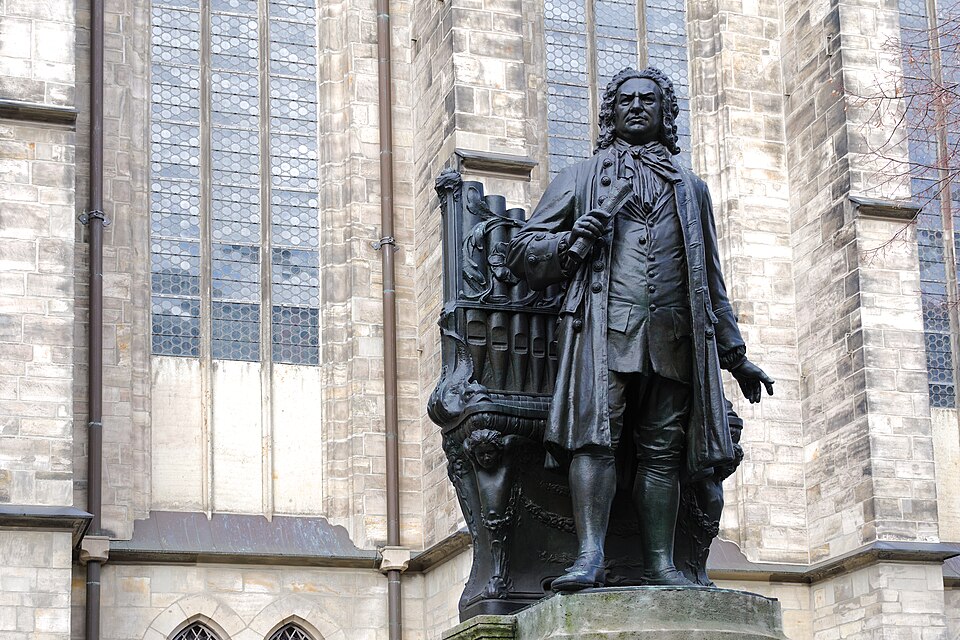
Two students on a school trip sit face to face with Johann Sebastian Bach inside the old schoolhouse attached to Saint Thomas Church in Leipzig. They have their notebooks open and a long list of questions ready. Bach leans forward with a warm smile — he seems genuinely pleased that young people are still curious about him.
—Was it hard working for the people in charge of the church?
Oh, you're asking right where it hurt! Imagine working hard every single week — writing music, teaching the boys to sing, leading rehearsals before sunrise — and then being told your choir isn't good enough. At Leipzig, the town council often refused to give me the musicians and the money I needed. In 1730, I wrote a letter to my old friend Georg Erdmann and told him plainly: my wages were too small and the authorities cared too little about music. I even thought about finding another job. It wasn't anger, you know. It was sadness. I just wanted to give God — and the congregation — the best music I could.
I just wanted to give God the best music I could.
—Did the church people ever say you were playing the wrong notes?
Ha — yes! Even before Leipzig, back when I was a young organist in Arnstadt, I got into trouble for exactly that. The church elders called me in and told me I had added strange notes into the hymns — notes that weren't expected, that surprised the congregation. They wrote it all down in an official report in 1706. Can you imagine? I was trying to make the music richer, more colourful. But the congregation was used to very simple harmonies. It's a bit like trying to teach someone a new game when they've already played the same old one for years. They prefer the familiar. I understood that — but I couldn't stop exploring. That's just who I was.
—Why did you walk 400 kilometres just to hear one musician play?
Ah, that walk! I was twenty years old. I had heard stories about Dietrich Buxtehude, the great organist at Lübeck. People said he made the organ sound like the voice of heaven itself. I had to hear that with my own ears. So yes — I walked, for weeks, in all weather. No carriage, no horse of my own. When I finally sat in the Marienkirche and heard him play, every aching step was worth it. I was supposed to stay four weeks. I stayed four months. That's what real music does to you: it makes time disappear. I forgot everything — my job, my duties, my worried employers back in Arnstadt.
That's what real music does to you: it makes time disappear.
—Were you in big trouble when you finally came back?
Oh, very much so! Back in Arnstadt, my employers were furious. I had been away far too long without permission. They called me before a committee — imagine sitting in a cold room while serious men in dark coats read you a list of your offences. I tried to explain. But how do you explain to someone who has never been stunned by music that you simply could not leave? I received a formal reprimand. Still — I have never regretted that journey. Buxtehude showed me things about the organ and about musical architecture that I carried inside me for the rest of my life. Some lessons are worth a scolding.
—What happened the day you met King Frederick the Great?
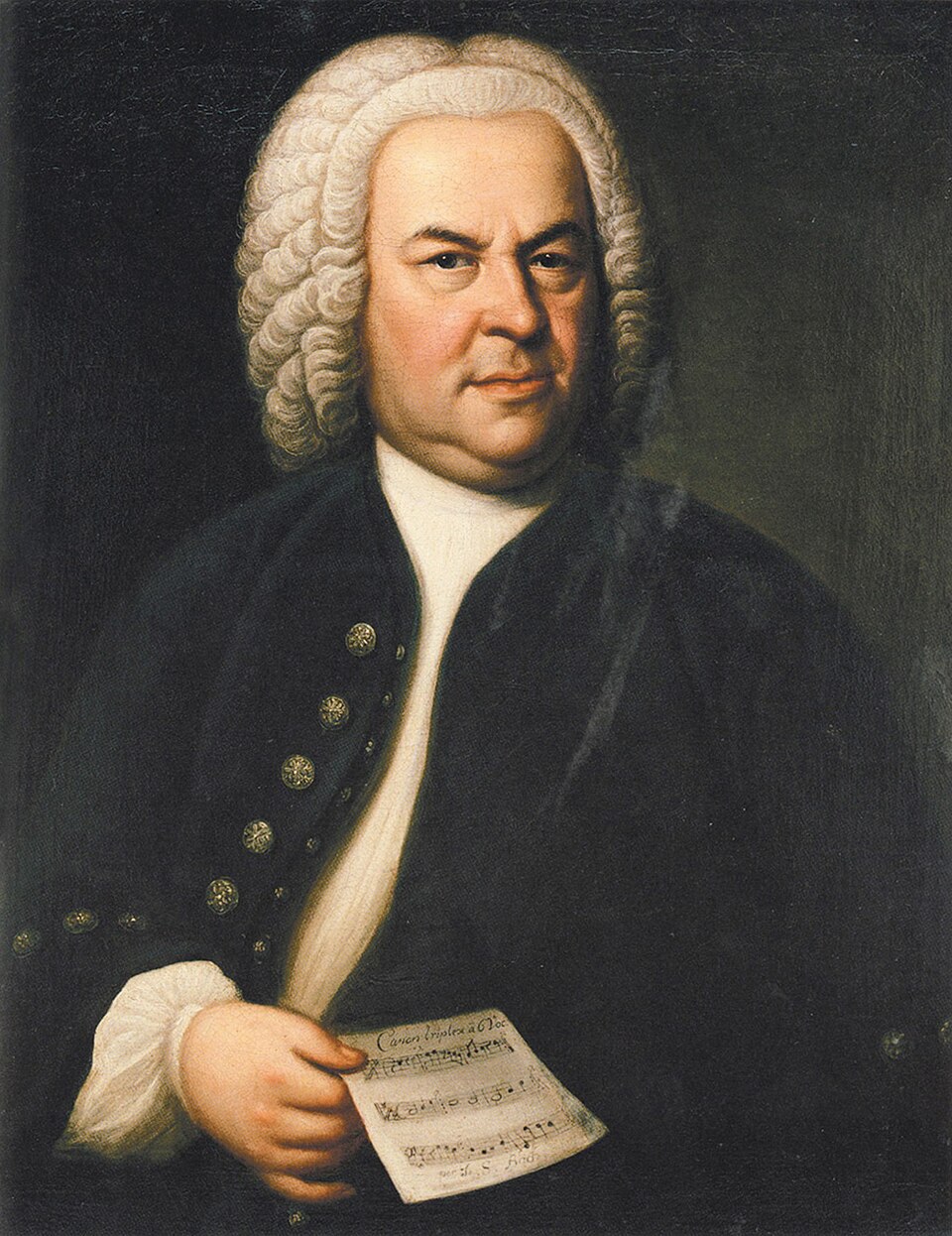
That was in 1747, when I was sixty-two years old. I travelled to the palace of Sans-Souci in Potsdam — a magnificent place, all golden candlelight and marble floors. King Frederick II played the flute himself, and he was proud of it. That evening, he handed me a long, twisting theme and said: improvise on this, Herr Bach. Just like that. Every musician in the room held their breath. I sat at one of his fortepianos — he had fifteen of them! — and I began to play. The theme was deliberately difficult. I think the king wanted to see me struggle. I did not struggle. I built a whole world from his little theme, right there on the spot.
—How did you turn the king's tune into a whole piece of music?
When I came home, I couldn't let that theme go. I worked on it for weeks and turned it into what I called The Musical Offering — a collection of pieces all built from that one royal theme. In the dedication, I wrote with all proper humility that I was returning to His Majesty the very theme he had given me, now fully developed. But inside, I was also showing something: that a single musical idea, if you look at it from every angle, can contain an entire universe. It's like a seed that holds a whole forest. I sent the finished work to Frederick in 1747. I hope it surprised him — pleasantly.
—What was it like living in a house with so many children and students?
It was glorious chaos! I had twenty children from my two marriages, several of my boys already playing instruments before they could read properly, and on top of that, live-in students from the Saint Thomas school. At any hour of the day, someone was singing scales, someone else was practising on the clavichord, and another was copying out a score by candlelight. My house was a school, a workshop, and a home all at once. Some of my sons — Wilhelm Friedemann, Carl Philipp Emanuel — grew up to become fine composers themselves. That makes me very proud. Music passed from hand to hand like a warm loaf of bread at supper.
Music passed from hand to hand like a warm loaf of bread.
—What did a normal morning look like for you?
I was up before sunrise, often in the dark. I would check on the choir boys at the Saint Thomas school — they needed to be ready for the morning church service by seven o'clock. Then there were rehearsals to run, parts to correct, sometimes a cantata to finish because Sunday was only two days away. In the afternoon I taught: my own children first, then private pupils. By evening, the whole household gathered — we would read through new music together, my sons taking different parts, my wife Anna Magdalena singing with us. The candles burned low. Somewhere in the house, a clavichord was still being played very softly. Those evenings were the best hours of my life.
—Why did you write music with so many voices all playing at the same time?
You're asking about polyphony — that's a wonderful question. Imagine four people telling four different stories at the same time, but the stories secretly fit together perfectly. That's what polyphony is: several melodies, each with its own life, combining into something greater than any one of them. I wrote that way because I believed music should reflect the order of God's creation — complex, layered, everything in its right place. A fugue works like this: one voice begins a theme, then a second voice joins with the same theme a little higher, then a third, then a fourth. They chase each other, intertwine, and land together at the end. When it works well, it truly feels like a small miracle.
—Did you ever worry you were making music too complicated for people to enjoy?
Honestly? Sometimes. When I was writing The Well-Tempered Clavier — two big books of twenty-four preludes and fugues, one for every key — I partly meant it as a teaching piece. Something students could practise and grow from. Not everyone in the congregation understood my harmonies — the authorities in Arnstadt certainly didn't, back in 1706! But I believed that even if you don't understand how a cathedral is built, you can still feel its beauty when you walk inside. Music is the same. You don't need to count the voices. You just need to let the sound fill the air around you. The mathematics serves the feeling. Never the other way around.
—Were you scared when you almost lost your sight at the end of your life?
It was frightening, yes. My eyes had been troubling me for some years. In 1749, a travelling surgeon named John Taylor operated on them — twice. Both times the surgery failed. I became nearly blind. I kept composing by dictating notes to my son-in-law, finishing The Art of Fugue — though the very last piece was never completed. That unfinished fugue still breaks off mid-thought. Some say that's exactly how you know when I stopped. But I don't think of it as something missing. A garden that's still growing when you leave it is not an unfinished garden — it's a living one. I hope the music kept growing after me. I believe it did.


This imaginary interview was generated by artificial intelligence from sources documented in Johann Sebastian Bach's profile. It dramatises what the figure might have said based on what we know about them, but does not constitute attested historical testimony. For primary sources and factual documentation, refer to the full profile.