Imaginary interview with Job
by Charactorium · Job · Mythology · 6 min read
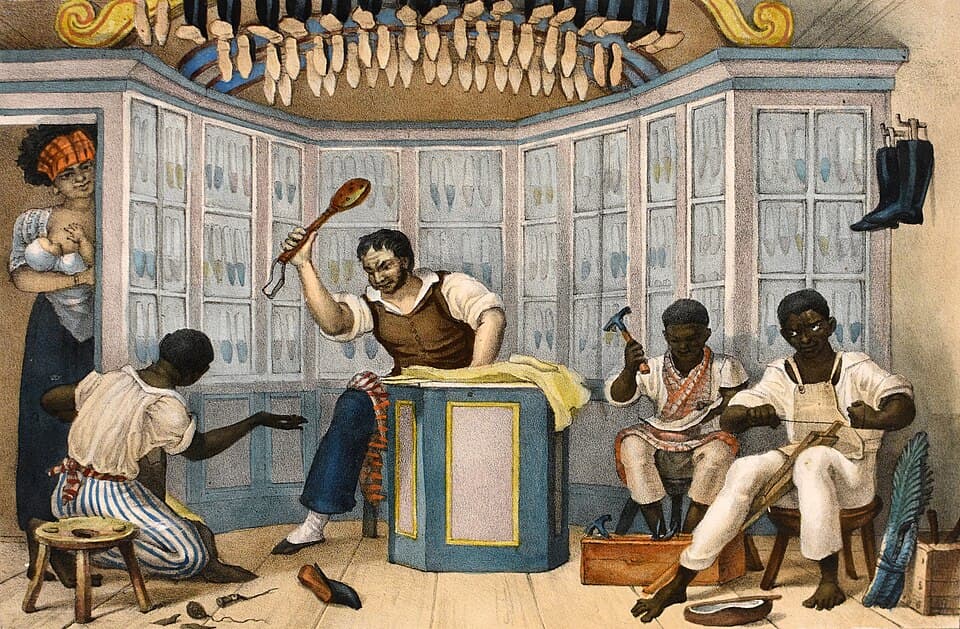
On the cracked soil of the land of Uz, where flocks once raised dust to the horizon, a man sits among ashes. His sores have dried, his fortune has returned, but his eyes bear the trace of a struggle that no gold can console. He agrees to speak of what he lost, of what he was accused, and of that voice that once came out of the storm.
—Before the disaster, what were your days like in the land of Uz?
I rose before light touched the hills, to count my animals — the sheep, the goats, the camels that covered my pastures like a second earth. In the morning I offered sacrifice, for I was always afraid that one of my ten children might have sinned in his heart without knowing it. In the afternoon, the men of the land came to sit before my door, and I dispensed justice between the strong and the widow, for a notable is nothing if he is not a shelter for the weak. In the evening, my house filled with my sons and daughters, and the whole land of Uz considered me the most blessed man in the East. I believed then that blessing was a due.
I believed then that blessing was a due.
—How did this world collapse?
In a single day. The messengers followed one another without even letting each other breathe: fire on the sheep, raiders on the camels, and the great desert wind that collapsed the house on the heads of my ten children while they were eating. I had not finished hearing the first when the last was already speaking. So I stood up, tore my cloak, shaved my head, and threw myself to the ground. And from that mouth full of dust came the only words I found right: 'Naked I came from my mother's womb, and naked I shall return. The Lord gave, the Lord has taken away; blessed be the name of the Lord!' I understood nothing, but I did not want to lie against Heaven.
I had not finished hearing the first when the last was already speaking.
—Then came the illness. What remains of a man at that point?
The affliction covered me from the sole of my foot to the crown of my head, sores so burning that I could not bear the touch of cloth. I left my house and went to sit in the ashes, outside the walls, where refuse is thrown. I had nothing left to relieve me but a piece of broken pottery, with which I scraped my skin to calm the itching that devoured me. Understand: the day before, I was greeted at the gate; and now here I am among the garbage, scraping my flesh like one scrapes a broken pot. The dust where I lay had become my throne and my bed. It was there, stripped to the bone, that the real question began to burn within me.
—Three friends then came and sat beside you. What did they expect from you?
Eliphaz, Bildad, and Zophar came from afar, and at first they were silent seven days and seven nights, because my pain shut their mouths — that, I will never forget. But when they spoke, their consolation turned into a trial. Bildad especially threw the old saying at me: Does God pervert justice? If your children sinned, He has delivered them to their transgression. Understand the horror of it: to console me, they explained that my sons died for their sins and that I myself must be hiding some crime. They defended retributive justice as one defends a collapsing wall. And I, on my ash heap, had only one thing to oppose them: I had done nothing to deserve this.
To console me, they explained that my sons died for their sins.
—Why not simply admit a fault, as they asked you to?
Because I was asked to lie in order to save an idea of God. Repentance, I know it, and I would have offered it a thousand times if my conscience had shown me a single hidden fault. But they wanted me to accuse myself so that their system would stand: the righteous prosper, the guilty suffer, therefore whoever suffers is guilty. I refused to bow my innocence before that reasoning. I told them they were pleading for God with lies, and that a God who needed my false confessions would not be worthy of fear. Better to cry out my incomprehension to Heaven than to disguise it as repentance before men. I preferred to argue with God than to reason falsely about Him.
I was asked to lie in order to save an idea of God.
—At the deepest point, what kept you from cursing Heaven?
Many thought I held on through virtue, through a tranquil faith. That is false. I cursed the day of my birth, I wished the night when my conception was announced were erased from the calendar. I spoke to God as one speaks to an adversary, I demanded a proper trial from Him. But to curse God — no, that I did not do, for then I would have lost even the One against whom I cried. Do you see the paradox: my very anger kept me turned toward Him. As long as I accused Him, I still held Him as someone to whom one could demand an account. Silence would have killed me far more surely than the ashes and the sores.
As long as I accused Him, I still held Him as someone to speak to.
—This question — why the righteous suffer — no one before you had asked it so bluntly. Were you aware of it?
Everyone around me recited the same wisdom: suffering is the wages of sin, prosperity the reward of virtue. It was providence neatly arranged, clear as a shepherd's account. But my flesh contradicted that account. I was upright, and I was crushed. I did not have the word that the wise of today use — that theodicy which seeks to justify God in the face of evil — but the thing itself burned my entrails. I understood, on my heap of ashes, that the world is not regulated like a merchant's scales, and that the misfortune of the righteous is not a calculation error to be corrected, but an abyss before which the old sayings fall silent.
I was upright, and I was crushed.
—And then the voice came. How did it answer you?
Not as I expected. I had prepared my plea, my arguments, my demand for justice. And the Lord answered me from the midst of the tempest, not with an explanation, but with an avalanche of questions: 'Who is this that darkens my counsel with words without knowledge? Gird up your loins like a man; I will question you, and you shall instruct me.' Where were you when I laid the earth's foundation? Do you know where light is born, who feeds the lion, who makes it rain on the desert where no man lives? He did not tell me why I had suffered. He unfolded immensity before me, and in that immensity my question, without receiving an answer, ceased to devour me. It was disconcerting, and yet it brought me peace.
He did not tell me why I had suffered. He unfolded immensity before me.
—How does one go from revolt to peace without having obtained an explanation?
One understands it only by living it. Before, I knew God by hearsay, as one knows a king whose power one has heard praised. There, my eye had seen Him. This humility is not a defeat: it is the recognition that there are, in the fabric of the world, measures that the hand of man will never hold. I retract my words, I repent in dust and ashes — not of a crime I did not commit, but of my presumption to judge what surpasses me. Strangely, it is by renouncing understanding that I found peace again. The trust I had lost no longer rested on an explanation, but on a presence.
It is by renouncing understanding that I found peace again.
—Everything was given back to you, and double, they say. Does that truly repair what was lost?
I was given back larger flocks than before, and again my house was filled with sons and daughters, and the finest land in the land of Uz bore me. But let me be clear: you do not replace ten children as you replace ten lost sheep. The first ones sleep under the wind that overturned their roof, and no flock brings them back. What I received is not reparation; it is grace upon a wound that remains. I now live with both: abundance regained in one hand, and in the other the memory of the ash heap where I learned what a man is worth once everything has been taken from him. Blessing, I never again take for a due.
You do not replace ten children as you replace ten lost sheep.
This imaginary interview was generated by artificial intelligence from sources documented in Job's profile. It dramatises what the figure might have said based on what we know about them, but does not constitute attested historical testimony. For primary sources and factual documentation, refer to the full profile.