Kids interview Judy Garland
by Charactorium · Judy Garland (1922 — 1969) · Music · Performing Arts · 5 min read
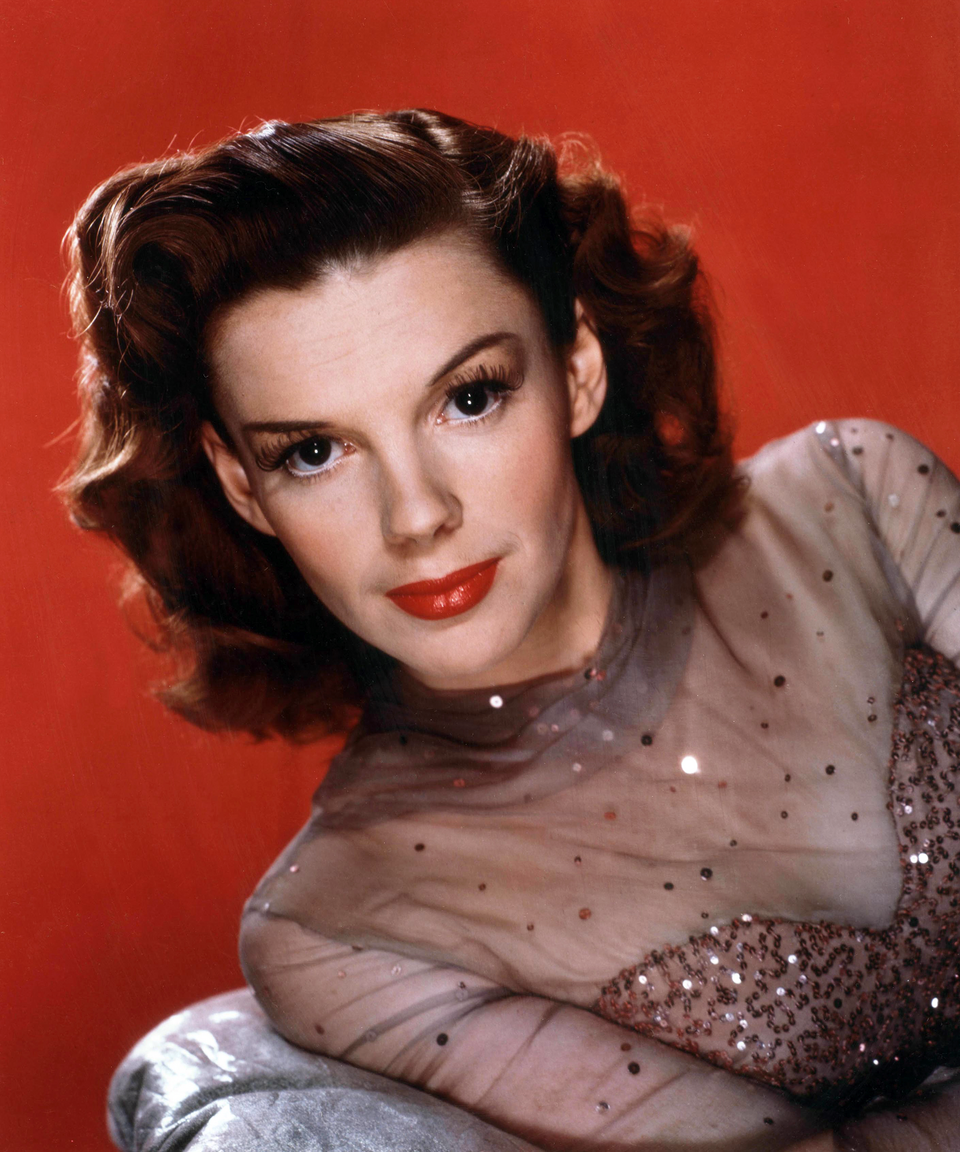
Two young visitors, each twelve years old, push open the door of a theater dressing room. Seated before a mirror lined with bulbs, a small woman with an immense voice greets them with a smile. She motions for them to sit down: Judy Garland is ready to tell them everything.
—How old were you when you started working at the big studios?
I was twelve years old, my child. Imagine: you're still playing hopscotch, and already you're signing a paper that decides your whole life. It was at MGM, a huge movie studio near Los Angeles. They gave me a new name, a new figure, a new face. In the morning, I got up at five o'clock. Two hours of makeup before even shooting. You know what they gave me for breakfast? Broth, black coffee, and a little pill to keep me going. They never asked me if I was hungry, or sleepy, or scared.
At twelve, they were already deciding my whole life for me.
—What were those pills they made you take? What did they do?
There were two kinds, you see. In the morning, a Benzedrine pill: a powder that keeps you from sleeping and cuts your appetite, like an invisible whip that drives you to work. At night, another pill to force me to sleep, because my body no longer knew how to stop on its own. Imagine a little watch wound too tightly every day: eventually, the spring breaks. No one protected me. There was no law for children like me. Long after, I said something I still believe: I wasn't a child star. I was an adult who happened to be a child.
They wound me up like a watch, a little too tightly every day.
—What was it like playing Dorothy in The Wizard of Oz?
I was seventeen years old, and it was my first major role. I wore a blue-and-white gingham dress, with two neat braids. And above all, those famous ruby slippers covered in rhinestones that shone like fire. The film was in color, which was rare and magical at the time—they called it Technicolor. You know, Dorothy is a little girl lost far from home, searching for the way back. Me too, somewhere, I was looking for my home. I think that's why people believed it. You never play as well as what you truly feel.
You never play as well as what you truly feel.
—Is it true they nearly cut your most famous song?
Yes, and it still gives me chills to think about it! The song is called Over the Rainbow. The studio bosses thought it was too slow. They wanted to remove it from the film to speed things up. Imagine: the song of a lifetime, thrown in the trash before it was even born! Fortunately, the composer Harold Arlen and the director fought to keep it. They were right. It won the Academy Award for Best Original Song in 1940. That taught me something: sometimes, what you want to cut because it's 'too sweet' or 'too slow' is exactly what touches people's hearts.
The song of a lifetime, nearly thrown away before it was even born.
—Why did the studio drop you, after all those years?
In 1950, MGM tore up my contract. I was often sick, exhausted, and sometimes I arrived late on set. So they threw me out, like a worn-out machine they replace. It hurt me a lot, you know. I had grown up there since I was twelve, at those Culver City studios. It was my whole family, and yet. Later, I said they had me on a treadmill, never letting me breathe. They wanted me a certain age, a certain voice, a certain thinness. They never let me just be myself.
They wanted me a certain way, never just myself.
—After being thrown out, how did you come back?
They call it a comeback, my child: when they think you're finished and you get back on stage. I made several! The most beautiful was at Carnegie Hall in New York, on April 23, 1961. Imagine a huge hall, packed to the rafters, and me alone in the middle with an orchestra. I sang for over two hours. People stood up and applauded again and again. A journalist wrote that it wasn't a concert, but a communion—as if we were all sharing the same emotion. I had lost everything, and that night, I found it all again.
They thought I was finished, and that night I found it all again.
—Were you nervous before going on that big stage?
Oh yes, always! Stage fright never left me, even after so many years. Before every concert, I rehearsed in the afternoon with my conductor, Mort Lindsey, to make sure every note was right. My heart pounded backstage. But you know what I learned? Stage fright isn't your enemy. It's a sign that what you're about to do really matters to you. When the lights came on and I saw all those faces, fear turned into energy. The album of that concert won five awards, five Grammy Awards. Not bad for a scaredy-cat!
Stage fright isn't your enemy: it's a sign that it matters to you.
—Why did so many people who felt different love you so much?
That's a question that touches me deeply. Everywhere, in New York and in London where I often sang, I saw in the audience people who were sometimes looked down upon in life. People who felt lonely, different, not quite in their place. And they told me: 'Judy, when you sing, we feel understood.' I think they heard in my voice my own wounds, my falls, my comebacks. Like Dorothy searching for her home, they too were looking for a place where they would be loved as they were. My stage was that place. I never judged them. I loved them.
When I sang, those who were looked down upon finally felt understood.
—What would you have wanted to say to your daughter to protect her?
My daughter's name is Liza, and she had singing in her blood, like me. I was so afraid they would do to her what they did to me! So I wrote her something that I repeat to you too: whatever you do, don't let them change who you are. The business will try. It will tell you to be thinner, younger, something else. But your true voice, the one that comes from deep inside you, is the only thing that truly belongs to you. No one can take it from you, if you hold it tight against your heart.
Your true voice is the only thing that truly belongs to you.
—If people remember you a long time from now, what would you like them to remember?
You know, my child, I was a little girl pushed too fast, too hard. I knew the spotlights of Hollywood, the big halls, the applause. But also many difficult nights. If you must remember one thing about me, let it be this: a true voice crosses time. Over the Rainbow was born from a tired little girl, and it still comforts people today. The studios wanted to make me a perfect machine. But what remained is not their machine. It's my heart, a little battered, that sang anyway. Always be yourself. That's what lasts.
What remains is not the perfect machine, but the heart that sang anyway.
This imaginary interview was generated by artificial intelligence from sources documented in Judy Garland's profile. It dramatises what the figure might have said based on what we know about them, but does not constitute attested historical testimony. For primary sources and factual documentation, refer to the full profile.