Imaginary interview with Julius Caesar
by Charactorium · Julius Caesar (99 av. J.-C. — 43 av. J.-C.) · Military · Politics · 6 min read
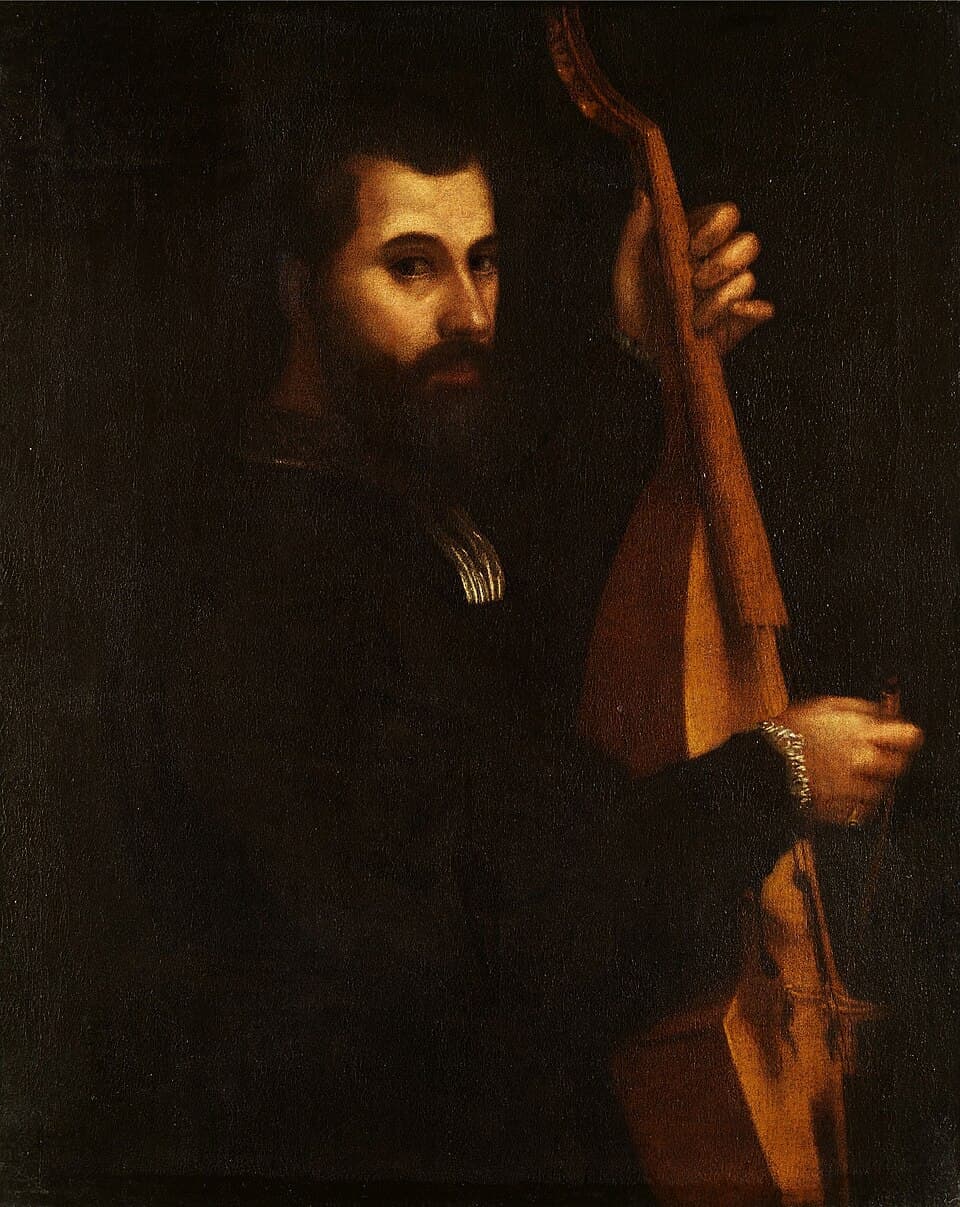
Rome, early 44 BCE. In a house on the Palatine, by the light of oil lamps, a man is still dictating while the city sleeps — his toga thrown over his shoulder, a laurel crown placed near the wax tablets. He consents, for one night, to speak of himself in the first person, he who has spent his life writing about himself in the third.
—People imagine you born master of the world. Yet your youth was violent — do you remember your capture by pirates?
People think I was born master of the world. False. As a young man, Cilician pirates kidnapped me at sea and demanded twenty talents for my ransom. I laughed: a man like me was worth fifty, I told them, and I forced them to raise their own price. For weeks I lived among them, reciting my verses, calling them ignorant when they did not applaud me, jokingly promising to return and crucify them. They laughed. They were wrong. Once freed, I armed ships, captured them all, and kept my word — as a final clemency, I had their throats cut before the crucifixion. One learns a thing there: a Roman who pardons never does so out of weakness. What others took for the insolence of a young man was already, in me, a way of governing.
A man like me was worth fifty talents — and I forced them to raise their own price.
—What, in you, transformed the ambition of a young patrician into that thirst for glory we know?
At Gades, in Hispania, I came upon a statue of Alexander. I was at the age when he had already conquered the world, and I had done nothing worthy of memory. I was seen overcome, almost in tears. That day, time became my most pressing enemy. The Greeks called my illness the sacred disease — those sudden seizures that struck without warning, especially toward the end. But I never let my body command my will: I slept on horseback to steal a night's march, I shared the hard bread of my legionaries. A man who knows his time is short does not waste it on complaints. Alexander died young, already great; I swore that evening not to die obscure.
A man who knows his time is short does not waste it on complaints.
—How would you describe the siege of Alesia, which many consider the peak of your military art?
Alesia, autumn 52 BCE. Vercingetorix had shut himself in the oppidum, and all Gaul was marching to relieve him. So I did the unthinkable: besiege a town while besieging myself. My legions dug two lines of fortifications, one facing the town, the other facing outward — leagues of ditches, sharpened stakes, wooden towers. Caught between hunger inside and the relief army outside, I held. When Vercingetorix came to throw his arms at my feet, all Gaul stopped breathing. I did not like destroying these peoples; I often admired them. But Rome could not tolerate a bleeding border. This siege, I later recounted in my Commentaries — never lying about facts, only choosing which ones to recall.
I did the unthinkable: besiege a town while besieging myself.
—Your legions defeated peoples often more numerous. What was your secret?
A legion is not six thousand men: it is a single body that thinks through my orders. The secret is not courage — all peoples are brave — but discipline and iron. The pilum, a javelin whose point twists on impact, nails the enemy's shield and renders it useless; then the gladius, the short sword, does the rest, up close, in the dust. I personally oversaw the equipment, I knew the password engraved each evening on the tessera that circulated in the camp. My men, I did not call them my soldiers but my commilitones, my comrades in arms. You do not lead Romans like a herd: they must know that their general sleeps under the same rain, eats the same grain, and risks the same death.
A legion is not six thousand men: it is a single body that thinks through my orders.
—Why did you insist, each winter, on writing the account of your campaigns yourself?
People think I wrote the Gallic War for scholars. No — I wrote it for Rome, which was far away and needed convincing. Gallia est omnis divisa in partes tres: thus begins the account, in a dry voice, almost like a report. That is deliberate. I speak of myself in the third person — Caesar did, Caesar ordered — as if an impartial witness were telling of my wars. What better way to appear truthful than to disappear behind the facts? Each winter, under the tent, I dictated these books on wax tablets while my legates slept. Seven books, one for each year of campaigning. My enemies in the Senate thought I was busy massacring barbarians; in truth I was shaping the image they would keep of me. A battle is won twice: on the field, then on the volumen.
A battle is won twice: on the field, then on the volumen.
—It is said you dictated several letters at once. What would you say to that reputation as a prodigy?
My secretaries have always feared me a little. I could dictate several letters at once, to different hands, on unrelated subjects — one to a legate in Gaul, one to the Senate, one to a creditor, one to an ally — without losing the thread of any. Some saw it as a prodigy; I, as a simple necessity. A man who wants everything has too little time to spend one thing after another. I read while walking, I signed while dining, I worked on my Commentaries late into the night when the camp slept. I am said to be sober in wine, and it is true — drunkenness steals hours. What others called my genius was often only that: the stubborn refusal to waste a single minute that death, already, was counting for me.
A man who wants everything has too little time to spend one thing after another.
—Do you remember the moment you crossed the Rubicon?
January, 49 BCE. The Rubicon is only a muddy stream a child could cross without wetting his knees. But on the other bank began Italy, and the law said that a general who crossed it in arms became an enemy of Rome. I hesitated on the bank — do not think I was unaware of what I risked. Behind me, ten years of Gaul; ahead, Pompey, the Senate, and accusation. To retreat was to die as an accused; to advance was civil war. So I said those words attributed to me and which I claim: Alea iacta est, the die is cast. And I spurred my horse into the water. A man is free only once or twice in his life — at the exact moment he chooses what he can no longer undo.
A man is free only once or twice — at the moment he chooses what he can no longer undo.
—When you marched on Rome, how did the city receive you?
When I marched on Rome, the city did not fight: it trembled. Cicero, that great orator who feared me more than he hated me, wrote then to his friend Atticus that no one knew what I truly wanted, and that my power had no equal left in the Republic. He was right to doubt — for I myself did not fully know. Pompey fled to the East rather than face me; I pursued him to Greece, to Pharsalus, where his legions, more numerous, yielded before mine, more seasoned. He was butchered in Egypt before my arrival, and his head was offered to me as a gift. I did not thank them. To weep for a defeated rival is still a way of showing that you have won.
To weep for a defeated rival is still a way of showing that you have won.
—Among all your dictator reforms, which do you believe will most surely outlive you?
I am celebrated for battles; I am almost prouder of having corrected the sky. The old Roman calendar drifted so badly that harvest festivals fell in winter — priests added months at their whim. I summoned Sosigenes, an astronomer from Alexandria, and we built a year of three hundred and sixty-five days, with an extra day every four years to catch up with the sun. The year 46 was so long it was called the year of confusion — it was necessary to restore order one last time before it lasted. Conquering Gaul, others would have done after me. But reconciling men with the passage of time — that is to rule even into centuries one will not see.
Conquering Gaul, others would have done. Reconciling men with time, that rules the centuries.
—You were made dictator for life. How do you experience the distrust this title arouses in Rome?
Dictator: in Rome, this word once designated a magistrate appointed for six months, the time of a crisis, who then returned power. I was made dictator for life, and I well feel how frightening this title is for men raised in hatred of kings. I enlarged the Senate, reformed the provinces, lightened debts, settled my veterans in colonies from Carthage to Arles. All this, believe me, prepares an order that Rome does not yet dare to name. But I know my Romans: they tolerate being dominated, not being told so. Men smile at me in the Forum whose dagger I sense under the toga. I am urged to take a guard; I refuse. Better to die once than to tremble every day.
Better to die once than to tremble every day.
This imaginary interview was generated by artificial intelligence from sources documented in Julius Caesar's profile. It dramatises what the figure might have said based on what we know about them, but does not constitute attested historical testimony. For primary sources and factual documentation, refer to the full profile.