Kids interview Julius Caesar
by Charactorium · Julius Caesar (99 av. J.-C. — 43 av. J.-C.) · Military · Politics · 5 min read
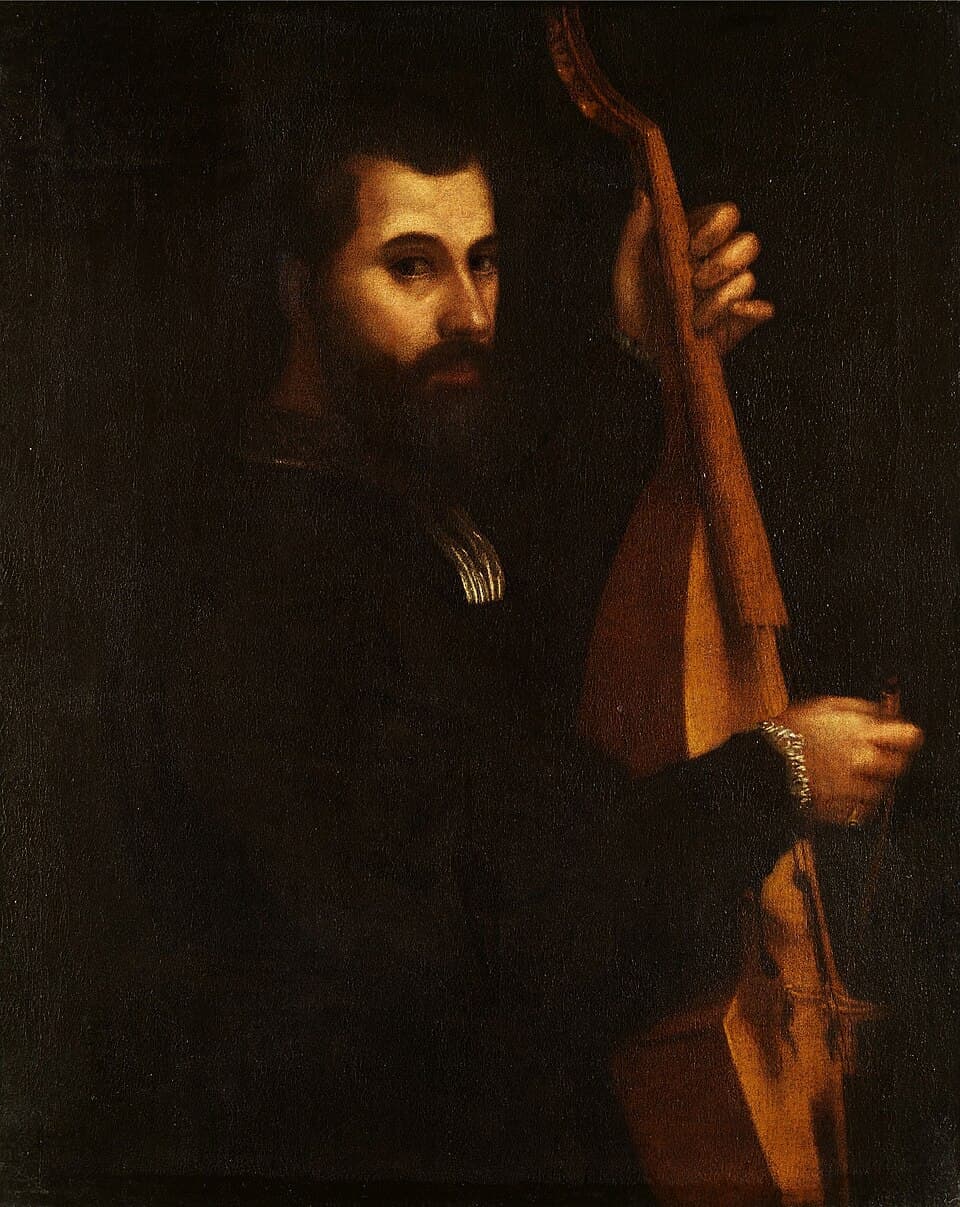
Two twelve-year-old visitors push open the heavy door of a house on the Palatine. A man in a purple-bordered toga awaits them, his gaze sharp, a laurel wreath on his brow. He smiles: he has so much to tell them.
—Is it true that pirates kidnapped you when you were young?
Yes, my child, and it's a funny story. I was young, and some Cilician pirates captured me at sea. They demanded a ransom of twenty talents of gold. A talent is a fortune, enough to feed a family for years. And me, do you know what I did? I burst out laughing. I told them: twenty talents? I'm worth fifty! Picture the scene: a prisoner boasting to his captors. During my captivity, I joked, I promised to come back and punish them. They thought I was joking.
Twenty talents? I'm worth fifty!
—And afterward, you really took revenge?
For real, yes. Once the ransom was paid and my freedom regained, I did not forget my promise. I gathered a fleet, ships, men, and I went back to them. I captured them one by one. And I had them crucified, exactly as I had announced while laughing. You see, my child, many people say strong things but never do them. I kept my word, even promises made in jest. That was my way of teaching a lesson to those who took me for a harmless young man.
Even my jokes, I saw them through to the end.
—Did you write a book about your own wars?
Yes! It's called De Bello Gallico, The Gallic War. Seven books where I recount my campaigns during the conquest of Gaul, between 58 and 51 BC. Imagine a general who, in the evening after battle, takes his stylus and engraves on wax tablets the story of his day. That's what I did. But careful: a story also serves to give a good image of oneself. In Rome, people read my words and admired me. Writing was almost as powerful as fighting. My soldiers won battles; my words won minds.
My soldiers won battles; my words won minds.
—They say you could dictate several letters at once, is that possible?
Many people talked about it in my time, and it amazed them. I had several secretaries around me, each with their wax tablets and stylus. I dictated a letter to one, then another to another, without stopping, sometimes while reading a report myself. Imagine your brain doing three things at once without getting tangled. It requires enormous concentration. On military campaign, I had to write to my legates, my officers, everywhere at once. Time, my child, was my most precious wealth. I even sometimes slept on horseback so as not to waste any.
—What was that moment when you crossed a river that changed everything?
Ah, the Rubicon. It was a very small river, my child, almost a stream. But it marked a sacred border: a general was not allowed to cross it with his army to enter Italy. That was the law. In 49 BC, I stood on the bank, my legions behind me. If I crossed, it was war against Pompey and the Senate. If I retreated, I was lost. So I said: Alea iacta est — the die is cast. And I crossed. Such a small water, and yet all my destiny was tipping into it.
Such a small river, and yet all my destiny was tipping into it.
—Did the people in Rome get scared when they found out?
Very scared, yes. Imagine an entire city learning that an army is approaching. An important man, Cicero, wrote to his friend Atticus that the Senate was trembling. He said no one really knew what I wanted, but that my power was unmatched. Can you feel the anguish in those words? People closed their houses, others fled the city. I advanced. It was not out of cruelty, my child: I thought I had been pushed to the limit, that they wanted to take away my honor. But when a man marches on his own city, even his friends hold their breath.
—And Vercingetorix, your greatest Gallic enemy, where did that happen?
At Alesia, in 52 BC. It was an oppidum, a fortified Gallic town perched on a height, surrounded by ramparts. Vercingetorix was trapped there with his warriors, the leader of the entire Gallic coalition. So I had two lines of fortifications built: one inward to blockade him, one outward to repel Gallic reinforcements. Imagine a wall of wood and earth encircling an entire mountain, built by my soldiers in a few weeks. The Gauls were trapped, starving. Vercingetorix finally surrendered. That day, all of Gaul came under Rome.
—Did your soldiers like you? How did you live with them?
They loved me, and I'll tell you why. I did not stay in the rear in cozy comfort. I shared their hard life: cold, fatigue, endless marches. I inspected the fortifications myself, I looked after their equipment, their sword, the gladius, that short legionary sword. You know, I suffered from an illness called the sacred disease, seizures that would strike me down. Yet I led exhausting campaigns without ever complaining. My men saw that. A leader who suffers like you, who sleeps in the mud like you, you follow him to the ends of the earth.
A leader who suffers like you, you follow him to the ends of the earth.
—Is it true that you changed the calendar? Why?
Yes, and it's one of my prides. In Rome, the old calendar had become a real mess: the months no longer aligned with the seasons, we celebrated harvests in winter, it was absurd. So in 46 BC, with the help of a scholar from Alexandria named Sosigenes, I established a solar calendar of 365 days. And every four years, we added a day: your leap year comes from that. Imagine putting order into time itself! This calendar served Europe for over fifteen centuries. A dictator in Rome was a leader with immense powers; I used it for that too.
—And did you know that people wanted to kill you on the Ides of March?
The Ides of March was March 15 in our calendar, in 44 BC. No, my child, I was not wary enough. I had accumulated so much power, dictator again and again, that some senators feared I would become a king. In Rome, the word king was hated. So a group led by Brutus and Cassius, men I thought close to me, decided to strike. They called themselves the Liberators. Imagine the betrayal: being surrounded by familiar faces hiding daggers. That is the price of too much power. When a man rises too high, those below tremble and eventually strike.
When a man rises too high, those below eventually strike.
This imaginary interview was generated by artificial intelligence from sources documented in Julius Caesar's profile. It dramatises what the figure might have said based on what we know about them, but does not constitute attested historical testimony. For primary sources and factual documentation, refer to the full profile.