Kids interview Julia Domna
by Charactorium · Julia Domna (165 — 217) · Politics · Philosophy · 4 min read
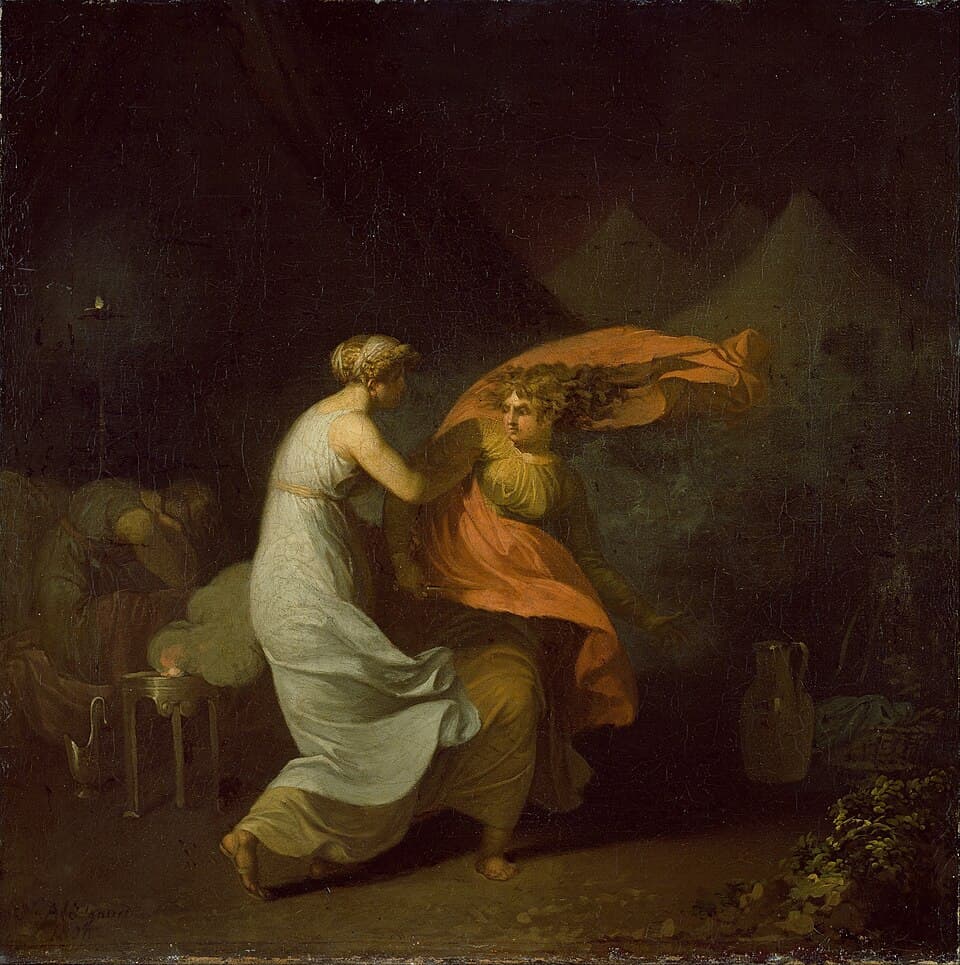
Two twelve-year-old visitors walk between the columns of the Palatine palace. A woman with a diadem greets them with a gentle smile and invites them to sit near her. She has ruled alongside the most powerful, but today, above all, she wants to speak to them as if they were her grandchildren.
—Where were you born? They say you came from very far from Rome.
Yes, my child. I was born in Emesa, a city in Syria that you would call Homs today. It was far from Rome, under a burning sun. My father was the high priest of the sun god Elagabalus — a god worshipped as a large black stone that fell from the sky. Imagine a city where incense burns from morning to night, where the air smells of resin and spices. As a little girl, I learned that my family was respected throughout the East. I never forgot that prestige, even seated on the throne of Rome.
I came from a black stone and a burning sun.
—How did a Roman general end up marrying you, so far away?
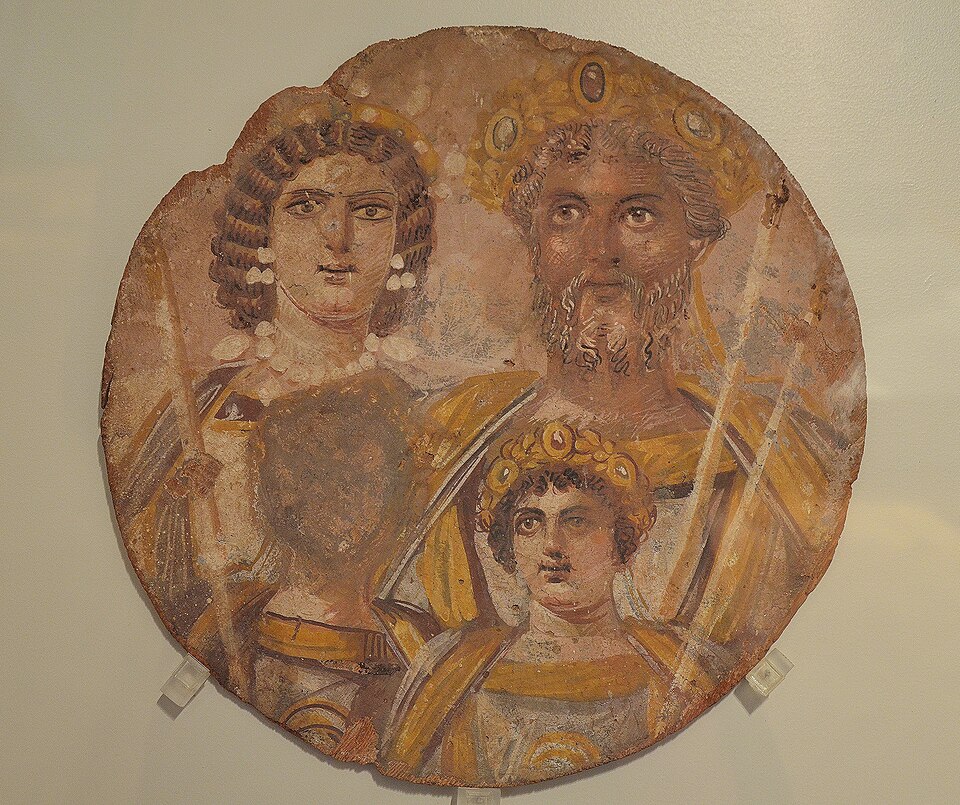
Ah, it's a funny story! It was said that a horoscope promised I would marry a king. Septimius Severus, an ambitious general, heard about it. And do you know what he did? He asked for my hand precisely because of that prophecy! He wanted to marry a woman of destiny. We married in 187, when he was governing Gaul. Six years later, he became emperor, and I Augusta — that is the empress's title, like a sacred queen. The prophecy came true, you see. Sometimes you marry someone because of the stars, and you discover a lifelong companion.
He married me because of a prophecy, and the heavens were right.
—Is it true you invited scholars to your home? What for?
Yes! It was my greatest pride. Here on the Palatine, I gathered a circle of scholars called a thiasos — imagine a salon filled with very intelligent people discussing for hours. I hosted doctors like Galen, jurists like Papinian, and masters of rhetoric. In my time, a woman who loved philosophy was rare, very rare. I was even nicknamed Augusta philosopha, the philosopher empress. We talked about wisdom, justice, how to live well. For me, thinking together was worth more than any banquet.
Thinking together was worth more than any banquet.
—Did you have a book written? What was it about?
Yes, and I am very proud of it. I asked a sophist — a great master of eloquence — named Philostratus to write the life of a Greek sage, Apollonius of Tyana. He was a philosopher said to be capable of miracles. I wanted to gather all the old memories about him, correct them, and make a beautiful book. In his dedication, Philostratus writes that he thanks me for deeming worthy of attention everything that touches on wisdom. Do you understand? An empress could command armies, but I wanted to command a book. Books, they never die.
One can command armies; I commanded a book.
—Did you have real power, or just fancy clothes?
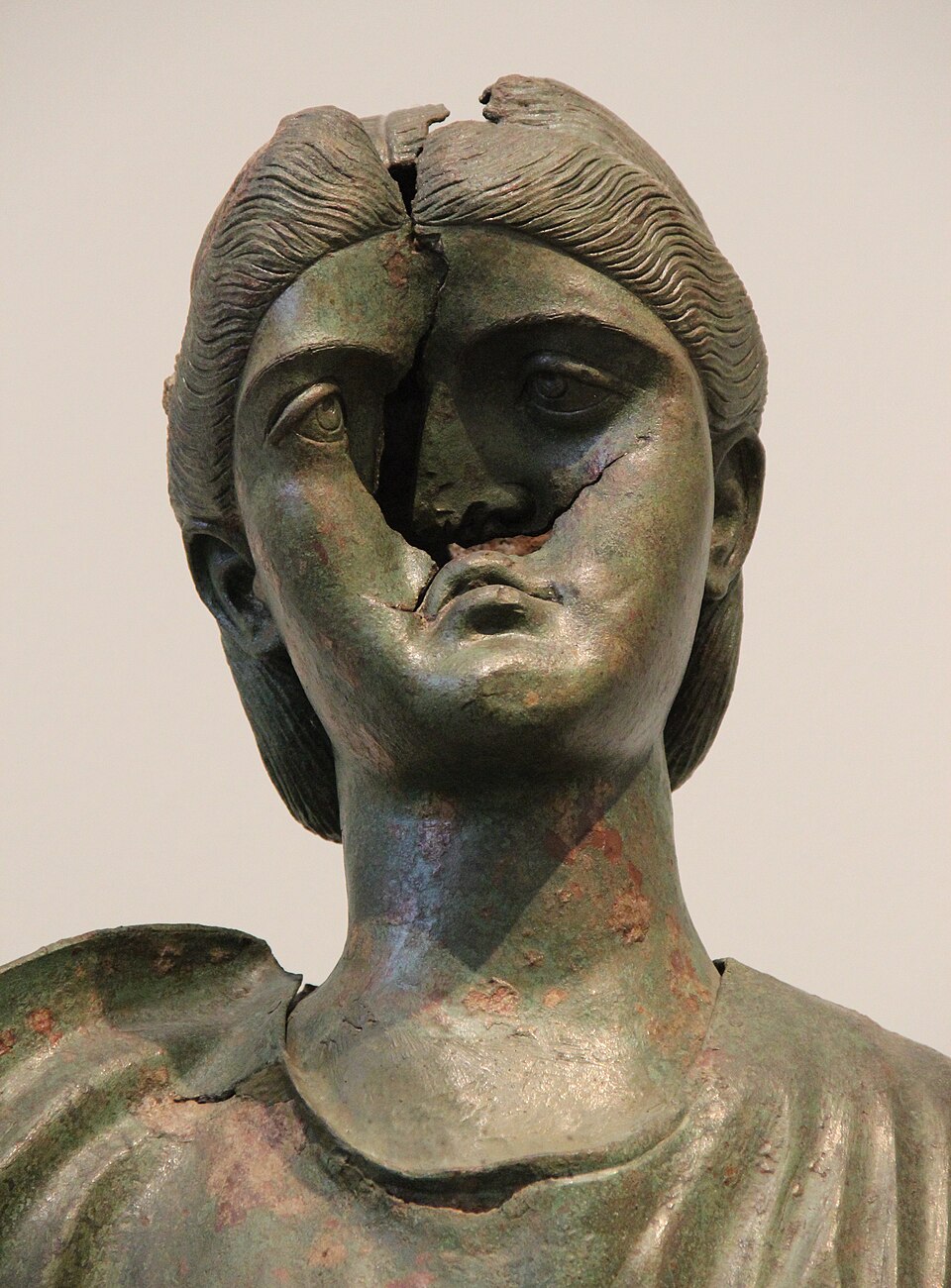
Oh, real power, my child! I was given an extraordinary title: Mater Castrorum, 'Mother of the camps.' That means even the soldiers recognized me as a protector. Look at a coin from my time: you will see my face and my titles engraved, circulated throughout the Empire. On a stone in Rome, it was inscribed that I was mother of the emperor, of the camps, of the senate, and of the fatherland. A woman, can you imagine? The diadem on my head was not just a jewel. It was the sign that I, too, decided the fate of Rome.
My diadem was not a jewel: it was a decision.
—What did you do on a typical day as empress?
My days were very full! In the morning, after my toilette, I would already receive high officials and begin processing the Empire's correspondence with my secretaries. In the afternoon, serious business: audiences, meetings with jurists, decisions to make. I dictated letters, sometimes in Greek, sometimes in Latin. Later, after the death of one of my sons, I managed all the imperial correspondence. Imagine piles of wax tablets to read and answer every day! Running an Empire is not wearing a crown. It is answering the mail, over and over.
Running an Empire is mostly answering the mail.
—What did it smell like and what did you eat in your palace?
What a lovely question! In the morning, they prepared baths scented with precious oils, and my hair was styled in waves, the fashion of my time. At table, there was wheat bread, fish from the Mediterranean, fresh fruit, and good Greek wine. But I kept the taste of my native Syria: dates, marinated olives, sauces full of Eastern spices. In the evening at banquets, I conversed in Latin, Greek, and even Aramaic, the language of my childhood. A part of me always remained that little girl from Emesa, you know.
At Rome's table, I kept the taste of Syrian dates.
—Is that horrible story about your two sons true? It must have been awful.
Yes... and it is my greatest wound. My two sons, Caracalla and Geta, were to rule together. But Caracalla was jealous. In 212, he had his brother killed — and the worst, my child, is that he struck him in my arms, as I tried to intervene. I was wounded in the hand, covered in my little one's blood. A historian, Cassius Dio, recounted that terrible scene. Afterwards, Geta's name was erased everywhere, and I had to pretend to approve. A mother who must hide her grief to survive... that is the price of power.
A mother who must hide her grief: that is the price of power.
—Why did you stay with the son who did that?
You ask the question I asked myself a thousand times. Staying with Caracalla after such a crime was heartbreaking. But think: if I left, I would lose all power to protect the Empire and calm anger. So I stayed. I continued to receive embassies, to manage state affairs. In public, I never showed my mourning, so as not to offend the emperor. It was not weakness, my child. It was a choice. Sometimes, standing beside your pain takes more courage than running away.
Standing beside your pain is also courage.
—How did it end for you, at the very end?
The end was bittersweet. In 217, I was in Antioch, a great city of the East, when I learned that Caracalla, my last son, had been assassinated by a certain Macrin. I was already ill for some time. Losing my son, I lost my reason for being: no more Empire to guide, no more destiny to carry. So I chose to stop eating, gently, with dignity. It was said to be a death worthy of a philosopher. All my life, I had loved wisdom. I wanted my last decision to resemble it: calm, thoughtful, and free.
I loved wisdom all my life; I wanted to resemble it in leaving.
This imaginary interview was generated by artificial intelligence from sources documented in Julia Domna's profile. It dramatises what the figure might have said based on what we know about them, but does not constitute attested historical testimony. For primary sources and factual documentation, refer to the full profile.