Imaginary interview with Julia Domna
by Charactorium · Julia Domna (165 — 217) · Politics · Philosophy · 5 min read
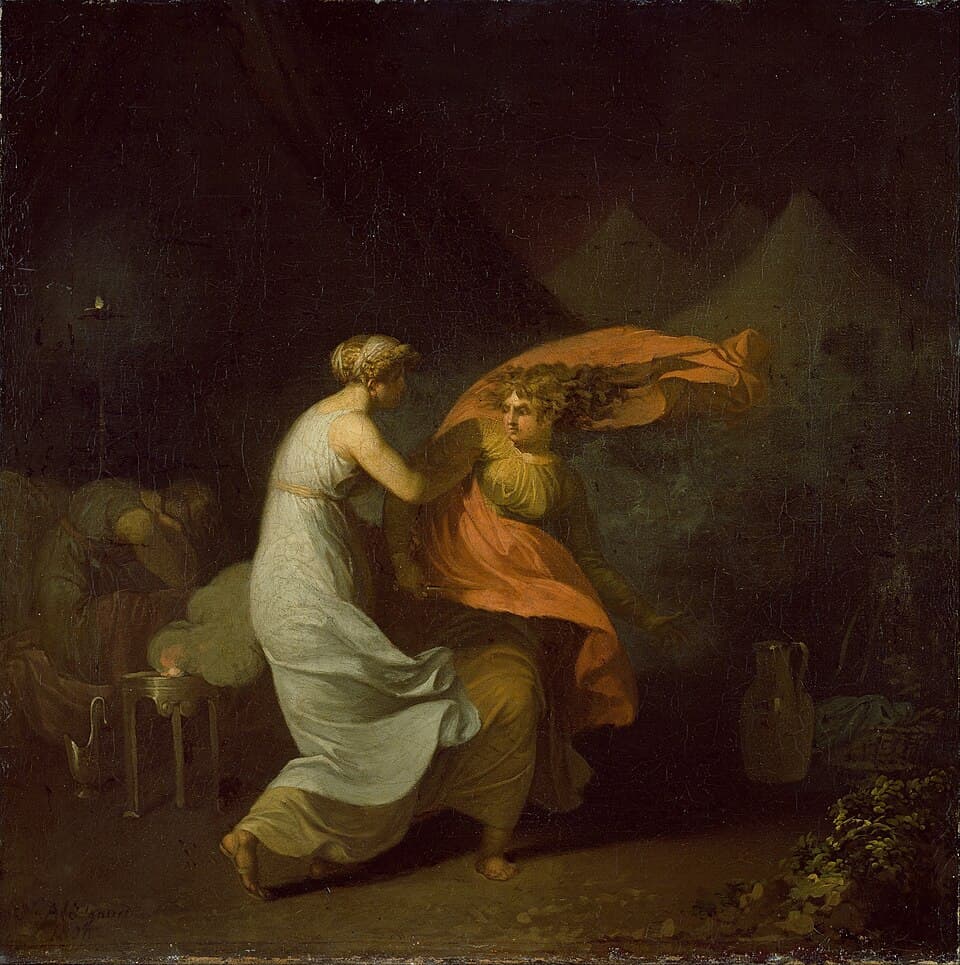
Antioch, spring 217. In the apartments that the Eastern court had prepared for the Augusta, a sick woman still receives visitors, surrounded by chests of correspondence and Greek scrolls. She reigned more by the pen than by the sword; she accepts, one last time, to speak with her face uncovered.
—Before becoming empress of Rome, who were you in your native Syria?
Before Rome, there was Emesa, on the Orontes, where my father served the sun-god. Among us, Elagabal has no face: he dwells in a black conical stone, a baetyl that the priests carry on a chariot drawn by white horses. As a child, I breathed the smoke of the censer long before I knew the smell of the Tiber. The Romans found me strange, this Eastern girl who prayed to a pebble and murmured Aramaic between two Latin prayers. I never blushed for that stone. A people who worship what they cannot sculpt keep the sense of mystery, and that mystery I carried all the way to the Palatine.
—How did a priestess from the East become the wife of a future master of the world?
Septimius Severus did not choose me for my eyes: he consulted the stars before listening to his heart. He was told that a Syrian girl carried in her horoscope a king for a husband — and he asked for me for that reason, and no other. I was barely a few years old, and he governed Lyon. I did not laugh at the prophecy: I fulfilled it. When he donned the purple in 193, I became Augusta, and the horoscope of my childhood ceased to be a rumor and became a burden. The gods promise; it is for the living to keep the promise to the end.
—You entrusted the sophist Philostratus with a singular task. Tell us about it.
I like men who know, and I like even more to make them write. Around me I had gathered rhetoricians, geometers, physicians like Galen — a thiasos, the Greeks would say, a circle. To Philostratus, the finest of my sophists, I handed old memoirs about Apollonius of Tyana, that wandering sage whom some took for a magician. He himself acknowledged it in his dedication, where he writes that I had ordered him 'to put in order and correct the memoirs about Apollonius of Tyana… for you deem worthy of attention everything that pertains to wisdom.' He spoke true. A well-filled volumen consoles me better than a throne.
—Why a thaumaturge, rather than an emperor or a god, as the hero of this book?
I was nicknamed Augusta philosopha, and that word pleases me more than Mater Castrorum that was engraved on the camps. Why Apollonius? Because a man who travels across empires without an army, who heals and prophesies, says more about power than ten victorious generals. Rome adores its conquerors; I wanted people to remember a sage. In my circle on the Palatine, between two audiences, we debated the soul as others debated the price of wheat. I knew that the purple fades. Wisdom, however, is copied from volumen to volumen, and travels farther than the legions.
—What did it mean to you to hold the official correspondence of the Empire?
After 212, my son Caracalla was running the frontiers, and someone had to hold the pen of the Empire. That someone was me. I received embassies, I answered Greek cities in their language and Latin governors in mine. My secretaries brought me the tabulae ceratae at daybreak, and I dictated until the wax was full. No woman before me had sat in the consilium principis alongside jurists like Papinian and Ulpian. They called me mother of the camps; I was also the mother of ink and seal.
I was also the mother of ink and seal.
—How did the men of the Empire tolerate a woman wielding this power?
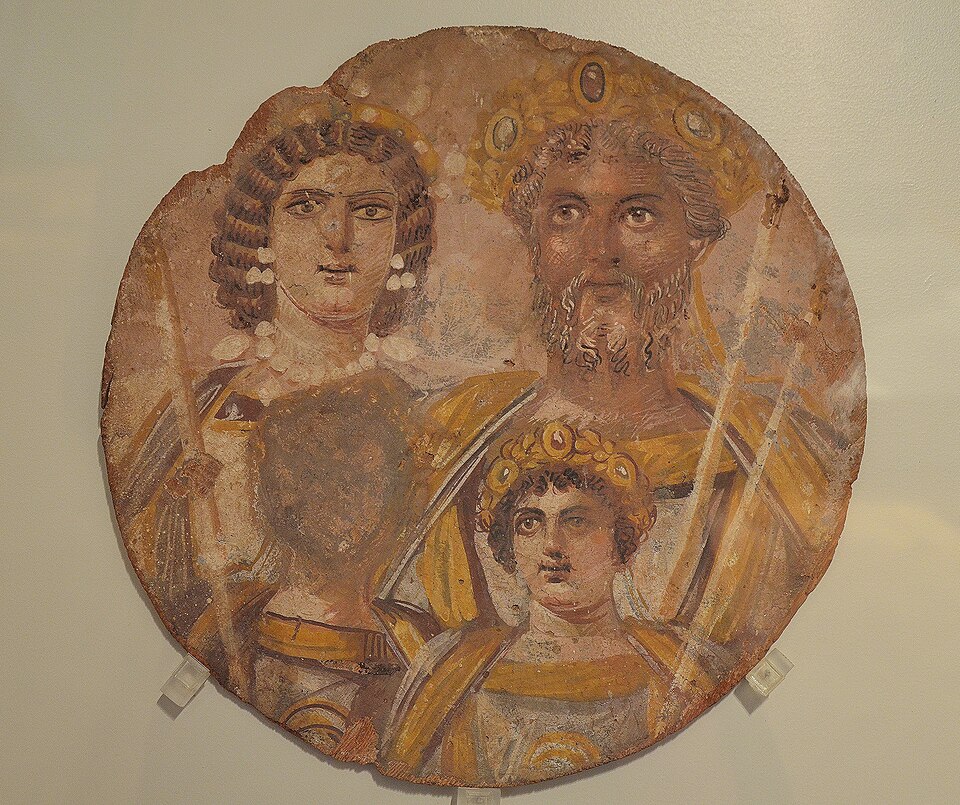
Badly, and well at the same time. Badly, because no senator likes to obey a letter sealed by a woman's hand. Well, because that hand wore the purple and my name ran on the coins — IVLIA AVGVSTA, struck in bronze as far as the borders of Britain. A stone in Rome still names me mater castrorum et senatus et patriae, mother of the camps, the senate, and the fatherland. What answer to that? A woman's power in Rome must be draped: I draped it in mourning, in filial piety, in the service of my sons. They tolerate in a mother what they refuse a queen. I governed as a mother, since they would not let me govern as an Augusta.
—Do you remember the day Caracalla killed his brother?
There is no longer day in a life. Geta had come to see me, believing my chamber a sanctuary. Caracalla entered with his centurions. I opened my arms to separate them — and it was in my arms that he struck him. Dio wrote it without softening anything: 'Julia, his mother, was with him when he struck Geta; she received a wound on her hand while trying to intervene, and was spattered with the blood of her dying son.' That is all. The blood of one son on a mother's hands, shed by the other son. I carried that stain with no cloth to wipe it away.
It was in my arms that he struck him.
—After that murder, Geta's name was erased everywhere. How did you get through that?
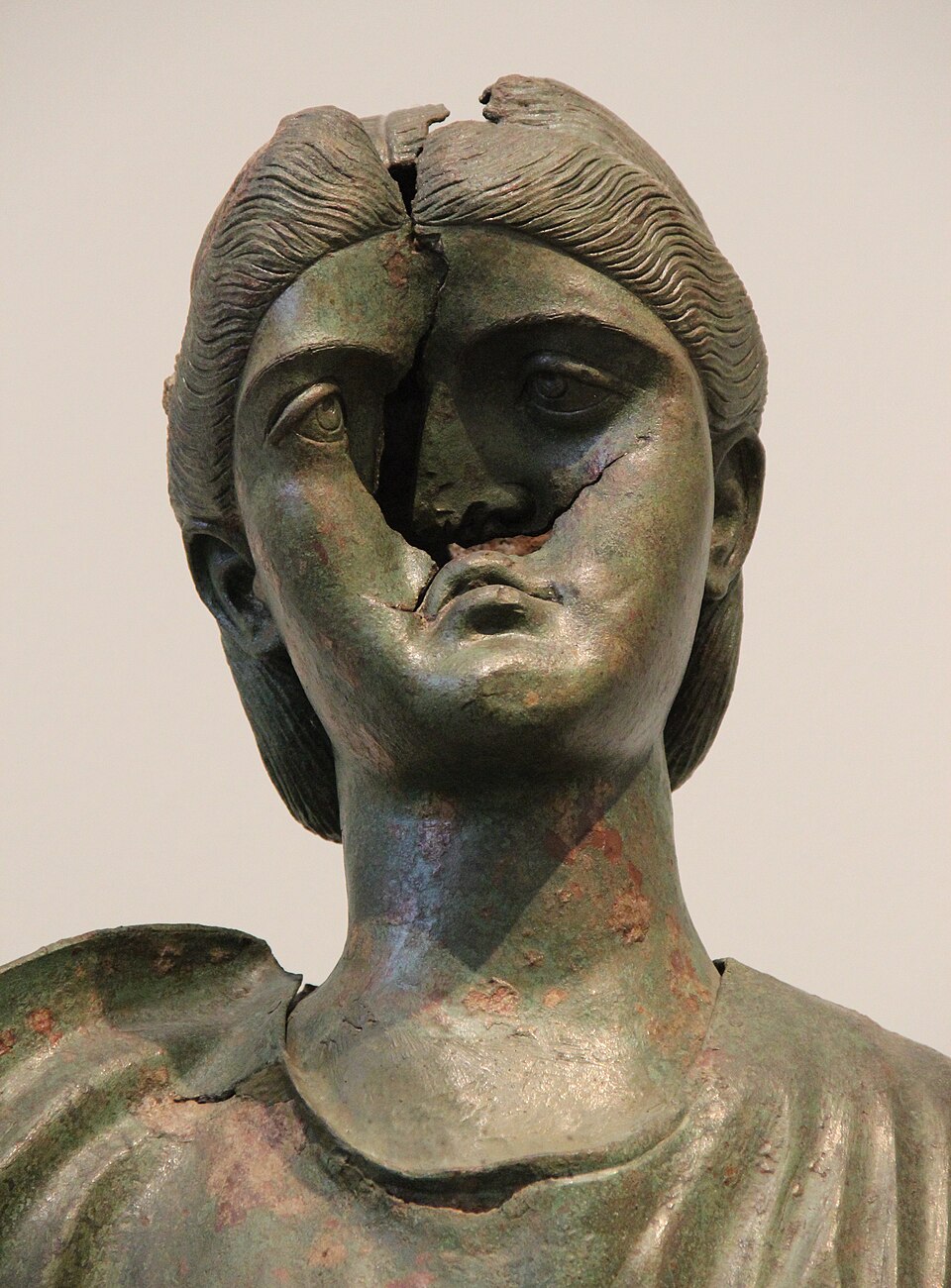
That was the second death of Geta, colder than the first. The Senate decreed the damnatio memoriae: his name was hammered off inscriptions, his face scraped from paintings, his effigies melted down. And I, his mother, had to smile. Caracalla forbade me mourning; to weep for my son would have been to accuse the other. So I received congratulations as one receives blows, face dry and throat tight. They thought they saw a serene empress; they saw a woman who forbade herself to die of grief in public. Power sometimes requires that you betray even your own pain.
—In Antioch, upon hearing of Caracalla's assassination, what was your first thought?
I was in Antioch, already consumed by a disease in my breast that no physician could cure. When I was told that Macrin, that prefect risen from nothing, had had my last son killed, I did not scream. I calculated. I was no longer mother of an emperor, Augusta of nothing; they would send me back among ordinary women, I who had held the ink of the Empire. That, I could not bear. So I stopped eating, gently, as one returns a charge. Since the disease was already taking my body, I simply opened the door to it. Dying was my last free decision.
Dying was my last free decision.
—Do you regret betting everything on power rather than a more peaceful existence?
Peaceful? A priestess of Emesa married to some obscure officer would have grown old quietly, no doubt. But I was not offered that bargain. I had the purple, two sons, a circle of sages, and the right to command Philostratus as I did my scribes — who, born a woman, could dream of more? The price was heavy: one child killed by the other, and the solitude of Antioch. If I could imagine being read in a century or two, I would want this to be remembered: not the mother who wept, but the one who held the pen while men held the sword. The volumen outlives the legions; that, perhaps, is my only lasting victory.

This imaginary interview was generated by artificial intelligence from sources documented in Julia Domna's profile. It dramatises what the figure might have said based on what we know about them, but does not constitute attested historical testimony. For primary sources and factual documentation, refer to the full profile.