Kids interview Julia Kristeva
by Charactorium · Julia Kristeva (1941 — ?) · Philosophy · Literature · 5 min read
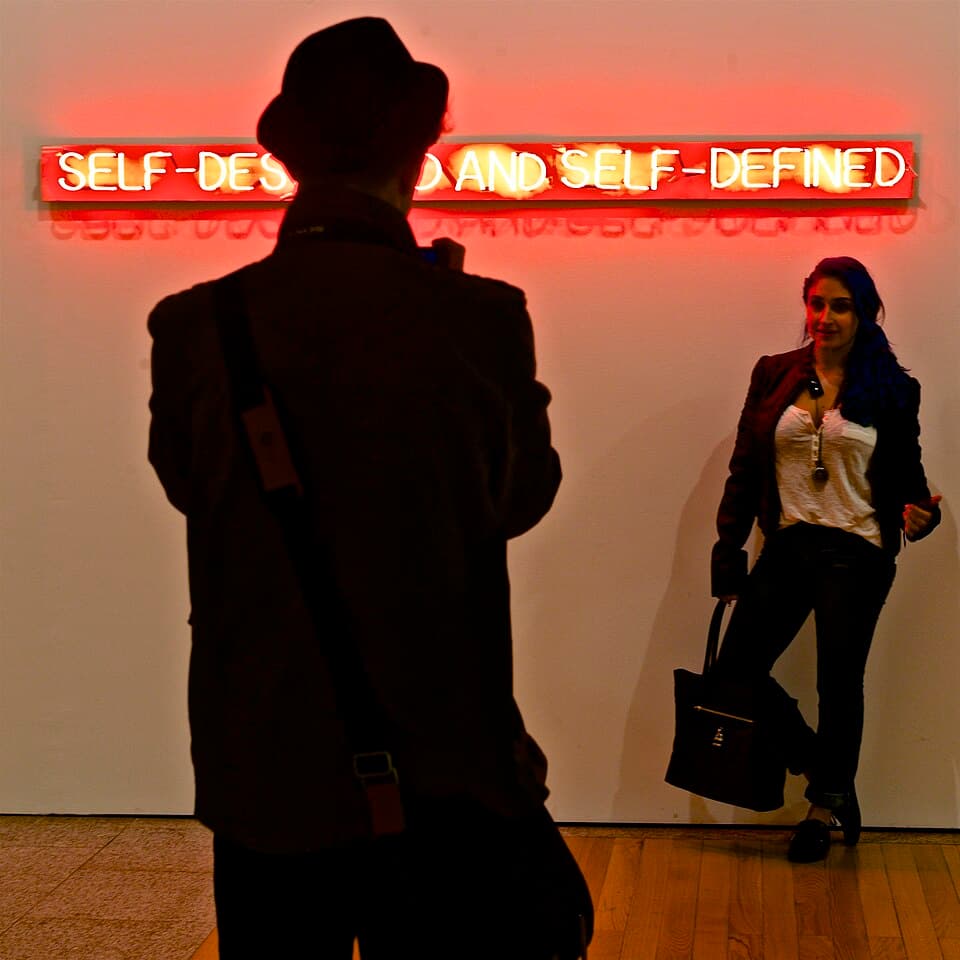
Two young visitors, on a school trip to Paris, push open the door of a lady's office with walls covered in books. She sets down her pen, smiles, and invites them to sit by the window. "Ask me all your questions," she says softly.
—How old were you when you arrived in Paris, all alone?
You know, my child, I was just 24 years old. It was December 1965, and it was cold. Imagine: I get off the train, I come from Sliven, a small town in Bulgaria, and I barely speak French. A French government scholarship had paid for my trip. I had in my pocket the address of a professor, Roland Barthes. I was going to sit in his seminar, rue de Tournon. My heart was pounding! Around me, everyone spoke fast, quoted books I didn't know. I gritted my teeth and listened. Listening is already learning.
Listening is already learning.
—Weren't you scared, being so new among such learned people?
Of course I was scared! Imagine a little girl from the provinces dropped in the middle of the greatest minds in the city. But I had a secret: at my school in Sliven, nuns had taught me French from childhood. So the words came, slowly. And you know, when you come from elsewhere, you look at everything with fresh eyes. Others no longer saw what surrounded them; I was discovering it. Within months, in the cafés of Saint-Germain, people began to listen to me. Fear doesn't disappear. You just learn to work with it beside you.
When you come from elsewhere, you look at everything with fresh eyes.
—What's your big idea, the one they teach in high school?
Ah, you mean intertextuality! It's a big word, but the idea is very simple. Listen carefully. When you write a story, you think you're inventing it all by yourself. But really, you're mixing up tales you've been read, songs, overheard phrases. A text is like a soup made from many other texts! That's what intertextuality means: no book is truly brand new. I found this around 1966, reading a Russian scholar, Bakhtin, almost unknown here. Today it's taught in all your classes. That makes me smile, you know.
A text is a soup made from many other texts.
—How did you discover this Mr. Bakhtin that nobody knew?
By luck, and through Russian! I grew up in the East; I read his books in their original language, which almost no one did here. Imagine: I held in my hands immense ideas, asleep in a language that Parisian scholars didn't read. Bakhtin said that a sentence always answers another sentence. That speaking is dialoguing, even alone. I wrote an article in a journal called Tel Quel, in 1967, to make his thought known. Transmitting another's idea is not stealing. It's passing a torch from hand to hand.
Transmitting another's idea is passing a torch.
—Is it true you had two jobs at the same time?
That's absolutely true, and it was exhausting! Listen to my day. I got up at six o'clock, in the dark, to write my books before the world woke up. Black coffee, and off to work. In the afternoon, I taught at the university, then I became something else: a psychoanalyst. Do you know what that is? Someone who listens to people tell their sorrows and dreams, lying on a couch. I listened to their words to help them feel better. And those words nourished my books. In the morning I thought, in the afternoon I listened to hearts. Two jobs, but one passion: language.
In the morning I thought, in the afternoon I listened to hearts.
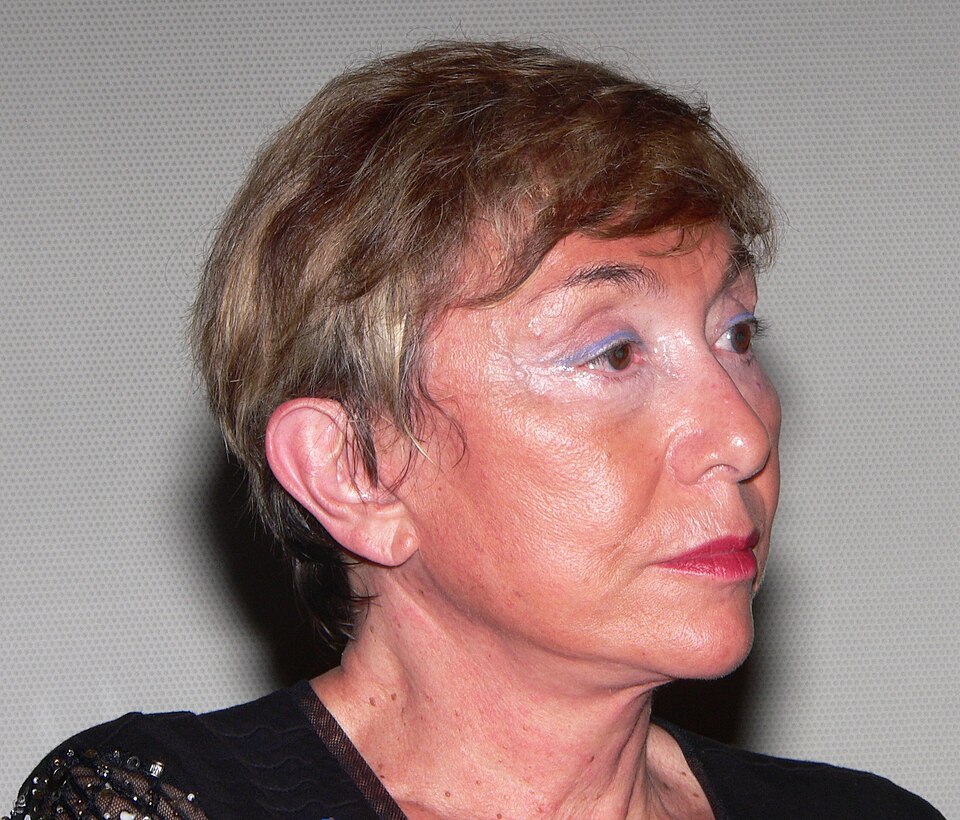
—What did it help you to do, listening to all those sad people?
Good question, my child. Listening to people suffer taught me how the inside of a person works. Some came so sad that they had no taste for anything anymore. I call that melancholia, a great sadness that clings to the skin. I wrote a book about it, Black Sun, in 1987 — a beautiful title for a dark thing, don't you think? I noticed that many artists, like the poet Nerval, transformed this pain into magnificent works. Pain doesn't disappear, but you can change it into something beautiful. That's what a poem or a drawing does. Or even a simple letter.
Pain doesn't disappear, but you can change it into beauty.
—Have you ever been to a very faraway country for your work?
Yes! In 1974, I went to China, very far to the East. We were a small group of friends from the journal Tel Quel: my husband Philippe Sollers, my old master Roland Barthes, and another. Imagine a vast country we barely knew, where everyone wore the same blue suit. We were full of hope; we thought we were seeing a better world being born. But we were wrong about many things. We only saw what we wanted to see. That's a lesson I keep: even intelligent people can tell themselves beautiful illusions.
Even intelligent people can tell themselves beautiful illusions.
—Why were you wrong, if you were so learned?
Because knowledge doesn't protect you from dreaming, you know. We wanted so much to believe in a more just world that we half-closed our eyes. It's like when you adore a friend so much that you no longer see their flaws. We, the Tel Quel journal, supported political ideas, then changed our minds, several times. It's no shame to be wrong. Shame is refusing to think about it afterward. I learned to distrust my own enthusiasm. Doubting yourself a little, my child, is the beginning of wisdom.
Doubting yourself a little is the beginning of wisdom.
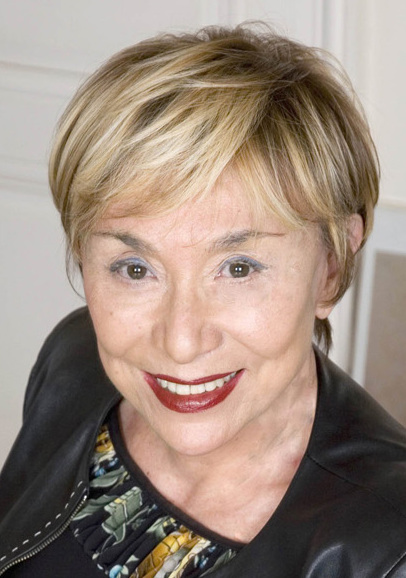
—Did you miss your country when you lived in France?
Always a little, yes. The taste of thick yogurt from my childhood, the pickled vegetables from Sliven... those flavors would sometimes come back in my Parisian kitchen. Being a foreigner means carrying two homes inside you. But you know, I wrote a book about it, Strangers to Ourselves, in 1988. In it I wrote a sentence I love: "The stranger is within us." That means deep inside each of us, even you, there is an unknown, mysterious part, a little hidden stranger. So when you're afraid of the one who comes from elsewhere, you're a little afraid of yourself. Understanding that makes you gentler.
When you're afraid of the foreigner, you're a little afraid of yourself.
—People said mean things about you, once. Was that hard?
Yes, it was very painful. In 2018, old secret papers from Bulgaria came out. They said that when I was young, I had helped the police of my country's communist regime. It's not true, and I said so loud and clear. Imagine a story being told about you that you don't recognize, and the whole world hears it. It's like seeing yourself in a distorted mirror. When you come from a country that knew fear and control, you always remain a little suspect in others' eyes. So I defended myself with my only weapons: words, and truth.
They held up a distorted mirror to me; I answered with truth.
—If you had one piece of advice for us, children, what would it be?
Love words, my little ones. Truly. A well-chosen word can console, awaken, change a life. All my life, from morning at the window to the afternoon couch, I did only that: listen to how words carry our joys and sorrows. I was a little Bulgarian girl who arrived with nothing, with only one wealth: the desire to learn. That desire led me further than I ever dared dream. Read a lot, even what you don't yet understand. One day, it will become clear. And always ask questions, like today. Questions, you see, are sometimes better than answers.
Questions are sometimes better than answers.
This imaginary interview was generated by artificial intelligence from sources documented in Julia Kristeva's profile. It dramatises what the figure might have said based on what we know about them, but does not constitute attested historical testimony. For primary sources and factual documentation, refer to the full profile.