Imaginary interview with Justinian
by Charactorium · Justinian (482 — 565) · Politics · 6 min read
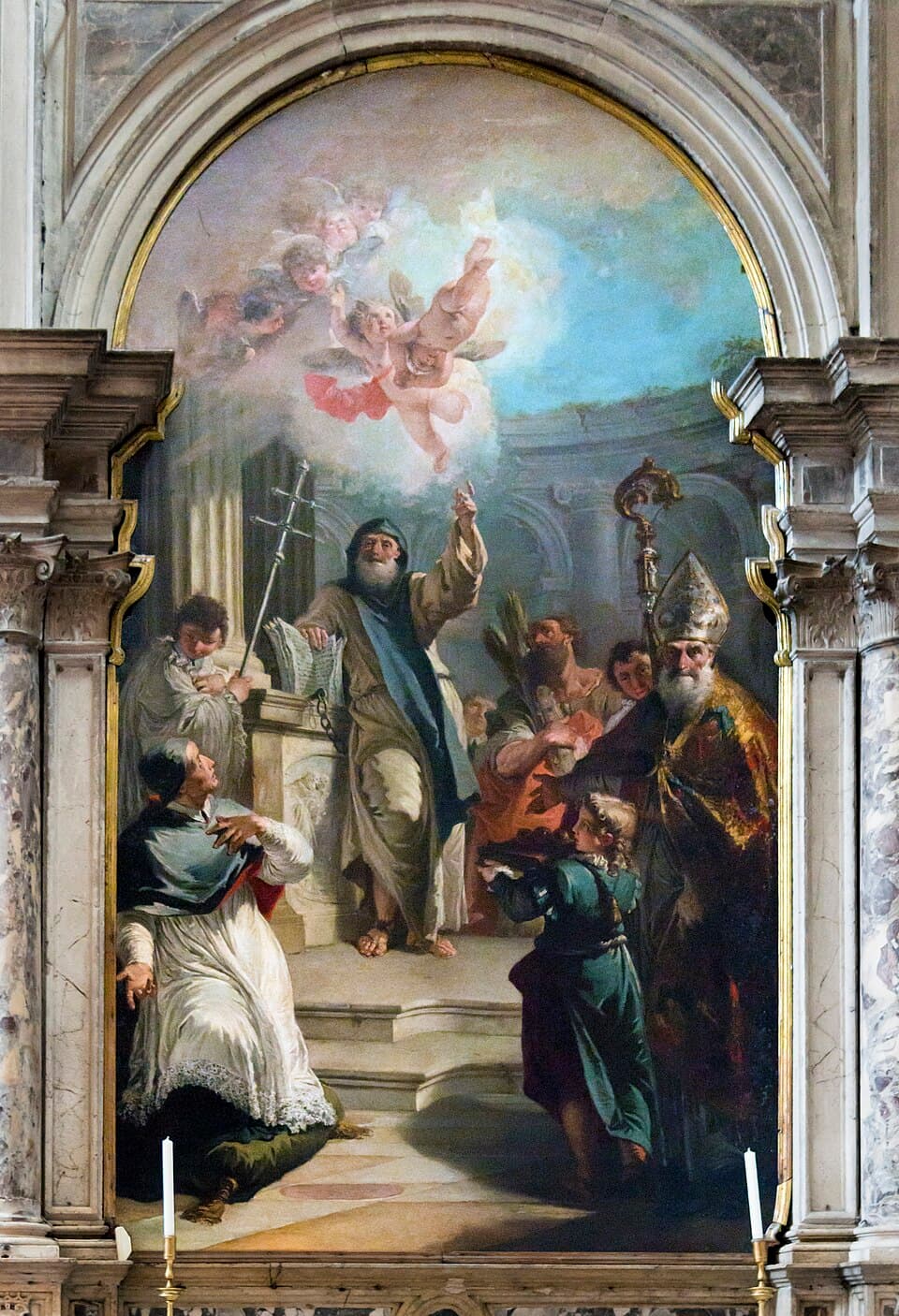
Constantinople, the Sacred Palace, under the dome of the Chrysotriklinos. Night falls over the Bosporus and a lamp still burns near the throne. Emperor Justinian, his gaze tired but sharp, agrees to answer — between two law files he has not finished annotating.
—Do you remember that night in January 532, when the entire city seemed to want your head?
I remember it like a fire that cannot be extinguished. The Blues and the Greens, my two demes that were opposed to each other at the Hippodrome, had united against me shouting the same word — Nika!, 'Conquer!'. The city was burning, my own Hagia Sophia was nothing but ashes, and I had already loaded a ship to flee to the other shore. It was Theodora who pinned me to the ground. She reminded me that an emperor who flees is nothing but a beggar in exile, and that purple makes a far better shroud than a fugitive's cloak. I stayed. That very evening, the Hippodrome was strewn with tens of thousands of dead. One does not consolidate a reign with holy water: that day, I learned that the throne stands on bones.
An emperor who flees is nothing but a beggar in exile.
—How did this woman, a former actress, become your most listened-to advisor?
I was reproached for it even in the hallways of the Senate. Theodora came from the theater, from mime, from those trades that our laws deemed infamous — a senator was not allowed to marry such a woman. So I changed the law. I am the man who gathers a thousand years of law into a few volumes: did they think I would let an old prohibition dictate my heart? She had the street intelligence that I would never have, born in the dust of the Hippodrome. When she died, in 548, I ruled for seventeen more years, but I never again had someone near me who dared to contradict me. An emperor surrounded by bowing courtiers ends up blind. She, she looked me straight in the eye.
An emperor surrounded by bowing courtiers ends up blind.
—Why devote so much effort to compiling the law, rather than ruling by the sword alone?
Because the sword cuts, but it does not order anything. At my accession, Roman law lay scattered in countless contradictory volumes: a judge could find ten rulings for the same case. I entrusted Tribonian and ten jurists with the task of reducing everything. The Digest, fifty books of age-old jurisprudence, was completed in only three years — a miracle of administration. My design was simple: that no free man would have to search through entire libraries to know his law. That is the Corpus Juris Civilis: not my whims, but the reason of a thousand years put in order. The Vandals and Goths I defeated will be forgotten. My laws, however, will still speak when my name is nothing but a chipped mosaic.
The sword cuts, but it does not order anything.
—What do you say to those who consider such a monument too ambitious for a single reign?
I answer them that I governed, in the very words of my preamble, striving to bring the empire to perfection in war and peace alike. Ambition is not a flaw in one whom God has placed above men. I saw my jurists pale before the mass of ancient texts; I pushed them day after night. They will say that I wanted to surpass all legislators: perhaps. But consider that a Code, once written, does not die with its author. The Novels that I still draft, often in Greek so that they are better understood, are my final stones. I will have left less territory than I dreamed — the plague and the Goths saw to that — but I will have left a law.
A Code, once written, does not die with its author.
—Tell us about Belisarius and this reconquest of the lost West.
Belisarius was the most brilliant of my strategoi, and the most loyal — which, in a victorious general, is rarer still than talent. In 533, I sent him beyond the strait, toward Africa. In less than a year, he had ended the kingdom of the Vandals that had lasted a century, and Carthage became Roman again. I had not seen such lightning since the old tales of the consuls. With his foederati, those barbarian allies launched like hunting dogs, he gave me back the Mediterranean. Then came Italy, and Ravenna, whose walls today bear my image in mosaic. The Gothic War, however, was a wound: twenty years, starving cities, my treasury drained. You win a kingdom in a year; you keep it at the cost of everything else.
You win a kingdom in a year; you keep it at the cost of everything else.
—Was this greatest extent of the empire worth its price, in your eyes?
Ask the peasants of Italy, not the emperor. Yes, I carried the eagle to the coasts of Hispania, in 554, taking advantage of the Visigoths' quarrels; never had Rome been so great since its fall. The mosaic of San Vitale, where I am shown holding the paten among my court, tells this glory better than my words. But I am no fool crowned with laurels: the Gothic War emptied my provinces of men and gold, and the plague did the rest. I stretched the empire like a bow drawn too tight. One day, perhaps, it will break where I stretched it too far. But an emperor does not rule for the accountants; he rules so that the name of Rome does not die out.
I stretched the empire like a bow drawn too tight.
—They say you almost never slept. Where does this reputation come from?
From my lamps, no doubt. When the palace falls asleep, I keep watch: I reread the files of my jurists, I annotate a draft of a Novel with my own reed pen, I weigh a theological controversy. My historian Procopius claims that I was seen wandering alone in the corridors, a lamp in hand, like a crowned specter. Let him say what he will. The night is the hour when the empire finally falls silent and one can think. I eat little — bread, vegetables, water, I often fast — because a heavy belly weighs down the mind. Sleep is a thief of time, and I have too much to do to let it rob me. Let others dream; I govern.
Sleep is a thief of time, and I have too much to do to let it rob me.
—And Hagia Sophia? What did you feel when you entered it for the first time?
The old basilica had burned in the revolt; I wanted a new one built such as the world had never seen. Five years, and in 537 it stood, its dome floating on light as if suspended from heaven by a golden chain. Entering it, I thought of the temple of Solomon in Jerusalem, and I told myself that I had surpassed it. Pride? Perhaps. But when you raise your eyes to that vault, you no longer see the man who commissioned it: you see God. That is all I wanted — that the empire and the priesthood, the two gifts that Heaven has made to men, should meet under a single dome. My laws will pass through schools; this church, however, will pass through souls.
Its dome floating on light as if suspended from heaven by a golden chain.
—You governed a city where chariot-racing factions could overthrow a throne. How did one live with such danger?
One does not understand unless one has heard the Hippodrome roar. The demes, Blues and Greens, were not mere horse fans: they were forces, armies without barracks, capable of making and unmaking a basileus. Their cry, Nika!, I heard it turn against me in 532, and I understood that day that the crowd that cheers you in the morning can burn you in the evening. Since then, I watch them as one watches the sea: you do not command it, you learn its moods. An emperor of Constantinople must rule over laws, armies, bishops — and over twenty thousand throats roaring around a sand track. Perhaps they are the most difficult of all.
The crowd that cheers you in the morning can burn you in the evening.
—Religious quarrels tore your reign apart. How does an emperor decide on the faith of men?
With prudence, and many sleepless nights. Monophysitism — that doctrine which sees in Christ only one nature, condemned long ago at Chalcedon — split my empire in two. Theodora herself leaned toward these Eastern faithful; I held the other shore. Together, we formed an empire that argued in whispers even in the imperial bedchamber. I convened councils, appointed patriarchs, legislated on the nature of God as on that of contracts — for the emperor, I believe, is responsible for the salvation of his subjects as much as for their borders. Decide on the faith of men? No. You do not cut a soul with a sword. You persuade it, you press it, and sometimes, I admit, you constrain it a little.
You do not cut a soul with a sword.
—At the twilight of your life, what would you like to be remembered of Justinian?
Not the battles. Conquests slip through the fingers like the sand of the Hippodrome — I have seen enough of the plague and the Goths undo in a year the work of ten. If I am read in a century, and an emperor has the right to dream, I would like them to open not a map of my provinces, but a volume of the Corpus Juris Civilis. That some unknown judge, under a sky I will never know, may seek justice there and find it. I built Hagia Sophia for God, codified law for men, and worked every night by lamplight for both. The rest — the purple, the pearl diadem, the acclamations — is just a beautiful shroud. Theodora knew that before me.
Conquests slip through the fingers like the sand of the Hippodrome.
This imaginary interview was generated by artificial intelligence from sources documented in Justinian's profile. It dramatises what the figure might have said based on what we know about them, but does not constitute attested historical testimony. For primary sources and factual documentation, refer to the full profile.