Imaginary dialogue between Procope de Césarée and Justinian
by Charactorium · Justinian (482 — 565) · Politics · 5 min read
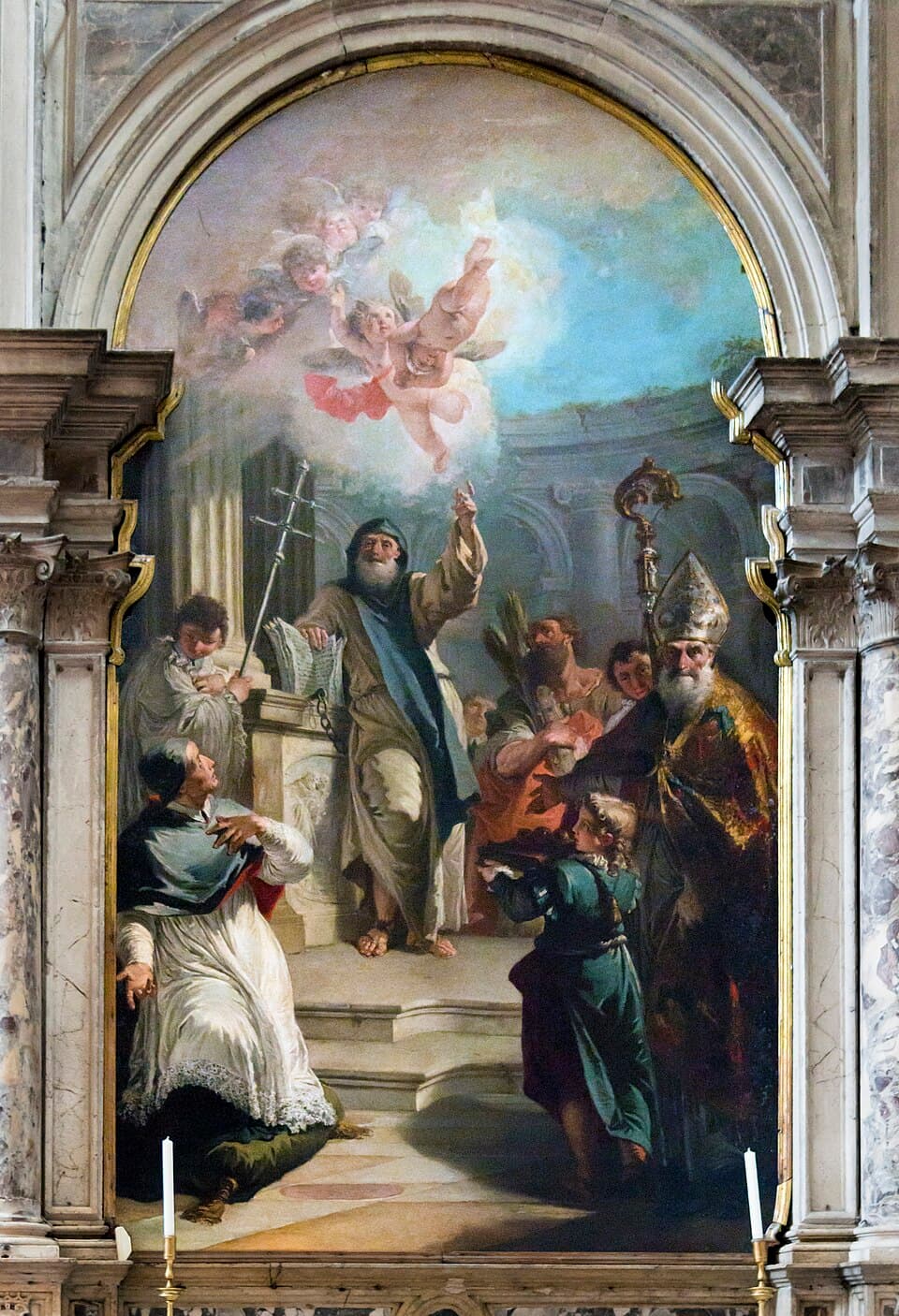
It is in a secluded hall of the Great Palace of Constantinople, by the light of an oil lamp that the servants have lit for the night, that I find Emperor Justinian in this year 560. The marble of the walls reflects the cold of the Bosphorus, and the smell of warm wax hangs between us. I have served his court for years and written his wars; he knows my pen without guessing all its ink. Tonight, I come to seek the man behind the purple, while he still keeps watch.
—Augustus, I was in Constantinople when the city burned, in 532. It was whispered that a ship awaited you in the harbor. What made you stay?
You were there, Procopius, so you know what the air was worth that day: the smoke, the cries of Nika! rising from the Hippodrome, the Demes — Blues and Greens — united against me for the first time. I had ordered a flight by sea prepared, I admit, for the throne trembled under thirty thousand rioters. It was Theodora who stopped me. She reminded me that an emperor does not trade the purple for the life of a fugitive. I felt shame, then I found courage — the one sometimes born of the other. Belisarius closed the Hippodrome, and I understood that night that my reign would only hold through will, never through fear.
I felt shame, then I found courage — the one sometimes born of the other.
—The old basilica had perished in that same fire. You rebuilt it in barely five years. What do you feel when you enter beneath its dome?
I feel first the silence, Procopius — that silence guarded by my silentiaries, and that Paul will one day put into verse. This dome of more than thirty meters seems suspended by a chain from heaven, with no visible support. When I entered for its dedication in 537, pride seized me despite myself: I thought of the Temple of Jerusalem and believed myself, for a breath, greater than Solomon. It is a sin, I know. But God lent me architects, Anthemius and Isidore, who tamed stone as one tames a wild beast. Hagia Sophia is not my work: it is my highest prayer, carved in marble for a thousand years.
Hagia Sophia is not my work: it is my highest prayer, carved in marble for a thousand years.
—You who annotate your laws until dawn, tell me: why lock all of Rome's law into a single body of texts?
Because justice had drowned, Procopius, in countless volumes where no judge could find his way. I entrusted Tribonian and ten jurists with the task of gathering everything: the Code by 529, then the Digest in only three years, the Institutes for students, and the Novels that I still draft. I wanted one no longer to have to seek law in a thousand scattered books. This inkwell you see, this worn reed pen, have served me more than my sword. An empire is conquered by arms, but it endures only through law. The Corpus Juris Civilis is my true frontier: the one that will stand when others have fallen.
An empire is conquered by arms, but it endures only through law.
—I followed your armies and chronicled your wars. Carthage, Ravenna, Italy reconquered… What did you entrust to Belisarius that you would have entrusted to no other?
I entrusted him with the lost West, Procopius — you who marched at his side and told the tale. In 533, he crossed the sea and crushed the Vandals in less than a year; Carthage became Roman again faster than I dared hope. Then Italy, wrested from the Ostrogoths at the cost of an endless war, and even the shores of Hispania. My strategoi led barbarian foederati, federates bound by treaty, for lack of enough soldiers. I brought the empire to its greatest extent since the fall of Rome. But I will not hide the downside: these conquests emptied my coffers and bled my provinces. Glory has a price, and it is always the people who pay it.
Glory has a price, and it is always the people who pay it.
—You are called the emperor who never sleeps. I who have seen you wander at night in these corridors, tell me: what do you seek when the whole palace has fallen silent?
I seek the time that day steals from me, Procopius. Audiences, ambassadors, councils devour me from dawn to dusk; the night alone is mine. So I reread dossiers, decide a point of theology, annotate a novel by the light of this lamp you know well. I eat little — bread, vegetables, water — and often fast, for a full body thinks poorly. You have seen me pass like a crowned shadow, and you are not wrong. I know what is whispered: that this affable emperor hides another face. Keep your judgment, my friend; a prince is rarely what one believes, neither the saint one hopes for, nor the tyrant one fears.
A full body thinks poorly — the night alone is mine.
—You speak of Theodora with rare devotion. How did this woman born so low become your co-regent?
They reproached her past, Procopius — the actress, the mime, those trades that the law held as infamous. I changed that law to marry her, for no decree could outweigh her intelligence. She was not only my wife: she sat, counseled, received ambassadors, even defended supporters of Monophysitism when I leaned toward Chalcedon. Without her, I would have fled in 532, and there would be no empire left to tell. The world may remember only her beauty; I know she had the most political soul in the whole palace. A low birth says nothing of the height of a mind.
A low birth says nothing of the height of a mind.
—Augustus, in 541, the plague struck you yourself. You survived. What did you see of your empire from that sickbed?
I saw, Procopius, how everything I built hung by a thread. The evil came from Egypt and spread like invisible fire; it mowed down multitudes — soldiers, peasants, tax collectors. I myself felt the fever take me and thought I touched the end. When I survived, the empire was no longer the same: the fields lacked hands, the army recruits, the treasury taxpayers. My reconquests, barely won, already wavered. A man may codify law and crush the Vandals, but he does not command the breath that decimates peoples. God reminded me, through this plague, that I am but a steward — never the master.
God reminded me, through this plague, that I am but a steward — never the master.
—You involve yourself in councils, you appoint patriarchs, you legislate on faith. Is this not encroaching on the domain of bishops?
The priesthood and the empire are the two gifts God gave to men, Procopius: one serves divine things, the other governs human affairs. How separate them, when a theological quarrel can inflame a province as quickly as a revolt? I summoned councils, settled disputes over the nature of Christ, because an empire divided in its faith breaks in its flesh. Some call it presumption; I see it as a duty. An emperor who would let the Church tear itself apart without acting would betray both God and his subjects. I answer for souls as much as for borders — and I will give account for both.
I answer for souls as much as for borders — and I will give account for both.
—I have seen the city of Dara and those fortresses you sow toward the east. Why so many walls facing the Persians, rather than attacking?
Because one does not reconquer the West, Procopius, by leaving the East open like a door without a bolt. The Sassanids watch for the slightest weakness; Dara and my whole network of fortifications are the dike that holds back that flood while Belisarius fights elsewhere. Building a wall costs less than a lost army, and protects longer. I preferred patient stone to glorious battle, for an empire too far-flung must choose where it bleeds. You who have walked these ramparts, you know they are worth entire legions. Defense does not have the glory of conquest, but it has its wisdom.
Building a wall costs less than a lost army, and protects longer.
—The day wanes, Augustus, and you still keep watch. When you think of what your reign will leave behind, what keeps you awake?
What keeps me awake, Procopius, is not glory — it crumbles like the rest. It is the fear that it will all come undone: laws poorly applied, provinces retaken, faith divided again. I have raised Hagia Sophia, codified Roman law, pushed the borders to Hispania; and yet I feel how fragile human matter is. An emperor builds not for his own time, but for those he will never see. If I am remembered, let it be for law more than for the sword — law alone outlives the men who wrote it. Go, my friend, and write what you have seen: the rest belongs to others.
An emperor builds not for his own time, but for those he will never see.
This imaginary interview was generated by artificial intelligence from sources documented in Justinian's profile. It dramatises what the figure might have said based on what we know about them, but does not constitute attested historical testimony. For primary sources and factual documentation, refer to the full profile.