Kids interview Kartini
by Charactorium · Kartini (1879 — 1904) · Literature · Society · 4 min read
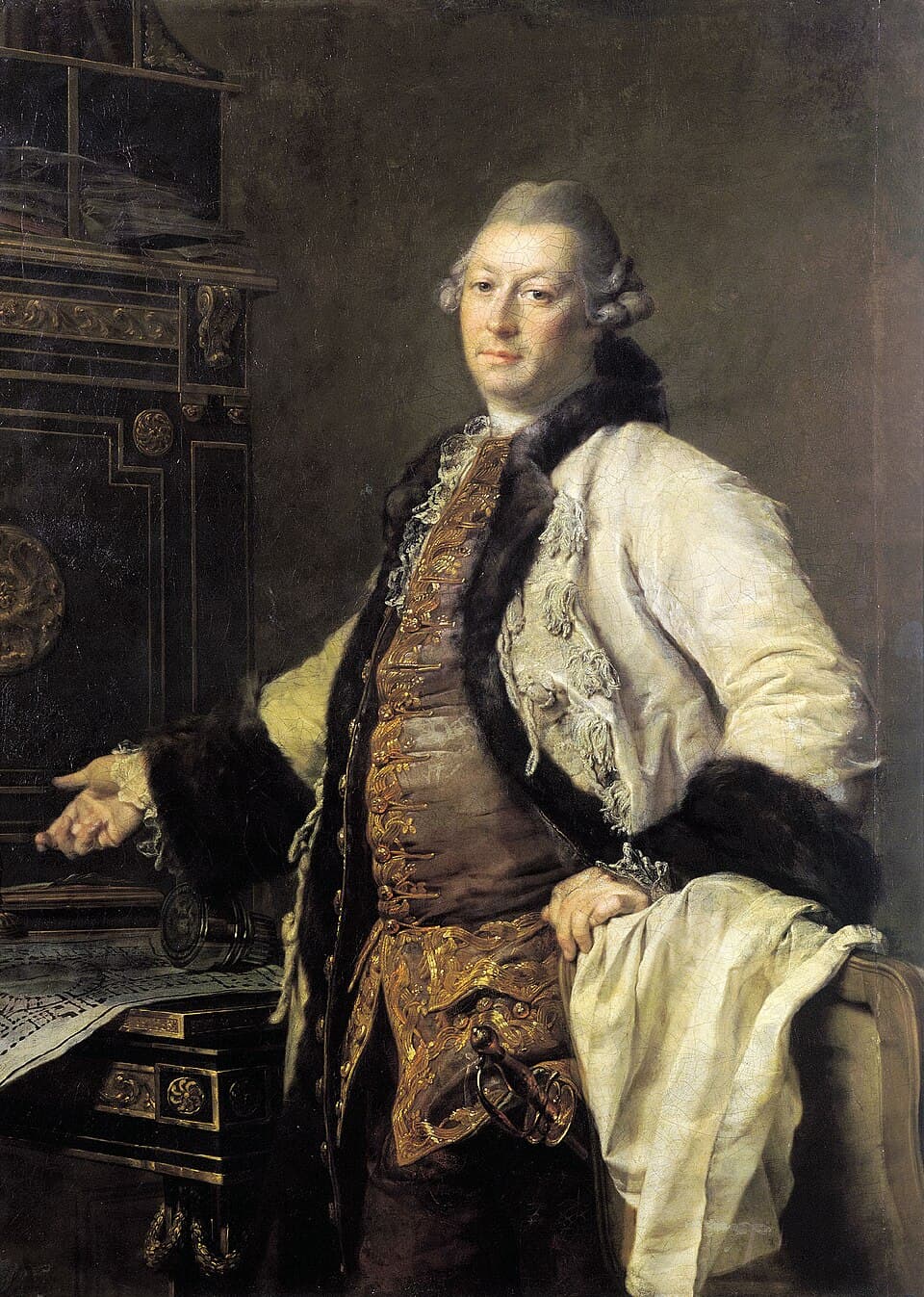
That morning, two middle-school students push open the door of an old house with shaded courtyards, somewhere on the island of Java. A young woman in an embroidered blouse awaits them, a bundle of letters beside her. She smiles: it's been a long time since anyone asked her questions.
—Who were you in your family when you were a little girl?
You know, my child, I was born into a very respected family. My father was the bupati of Jepara — that is, a regent, a kind of local governor who obeyed the Dutch. We belonged to the priyayi, the nobility of Java. Imagine a large house with open pavilions without walls, called pendopo, and in the evening the soft music of the gamelan, those percussion instruments. It was beautiful, but it was also a cage. I was called Raden Adjeng, a title for a noble young lady. That title opened doors for me… and closed many others. Being well-born is not always being free.
Being well-born is not always being free.
—How old were you when they locked you in the house?
I was twelve years old. Before that, I went to the Dutch school in the village, learned to read, laughed with other children. And then one day, everything stopped. In our culture, when a noble girl grew up, she was subjected to the pingitan: she was confined within the house until her marriage. No more outings, no more school, no more outdoors. Imagine being told: “from today, you will never cross this door again.” I felt as if a light inside me was extinguished. But you know what's strange? It was in that prison that my will to fight was born.
—Locked up like that, weren't you too lonely and sad?
Yes, often. But I had one precious thing: a friend far away, in the Netherlands, named Stella. We never met. We wrote each other letters, long, burning letters. From 1899, I opened my heart to her. One day I wrote: “I want to be free, I want to live independently, to depend on no one.” Writing those words was already breathing a little. My books and magazines from Holland were my window to the world. Confined, yes — but my spirit traveled everywhere.
Writing those words was already breathing a little.
—Why did you write in the language of the people who ruled you?
Good question, it troubled me for a long time. I wrote in Dutch, the language of the Dutch colonizers who ruled our islands. Some found it strange. But think: it was the only language in which I could read the great authors, discuss new ideas, express my anger. I turned their language against their injustice. With my pen and inkwell, I asked uncomfortable questions about this domination that crushed my people. I read their poets, their newspapers, and used them to think further. The master's tool can become the weapon of one who dreams of being free.
The master's tool can become the weapon of one who dreams of being free.
—What did you wear, and what did your home smell like in the morning?
In the morning, there was the smell of rice cooking — nasi — with tempeh, tofu, vegetables sautéed with chili and coconut milk. Fruits too: mangosteen, papaya. I wore the kebaya, an embroidered cotton or silk blouse, and a sarong made of batik with Javanese patterns. It is our beautiful traditional clothing. But I did not like excess, all those complicated rituals of politeness imposed by my rank. You see, I kept the fabric of my ancestors on my shoulders, while dreaming of new ideas in my head. Tradition outside, revolution inside.
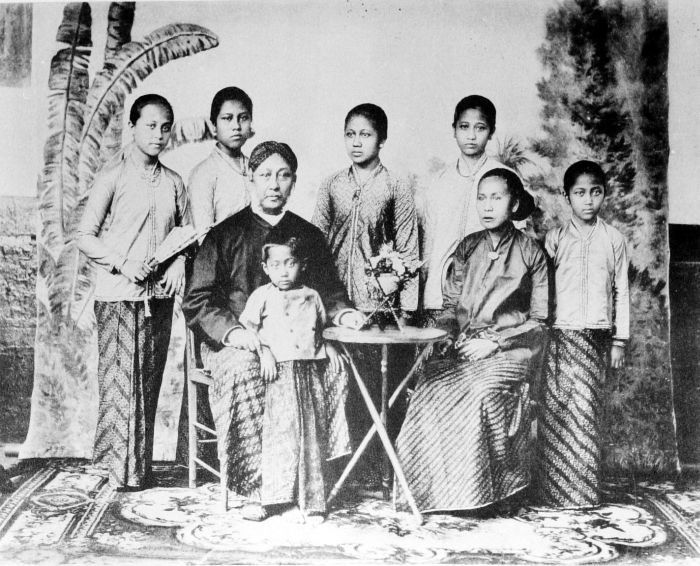
—What was your biggest dream at that time?
A school. Not just any school. In 1902, I wrote that I dreamed of “a school where our girls would learn to think for themselves.” You see, in our society, a girl learned almost nothing: she was married off, and that was it. I wanted girls who could think, who would no longer suffer without understanding. I often told my friends: we do not only want to talk and think, we want to act, to uplift the women of our country. Dreaming is good. But a dream that does not become an act remains a pretty prison.
A dream that does not become an act remains a pretty prison.
—And did you succeed in building your school?
Yes! In 1903, in my father's residence in Jepara, I opened a small school for the daughters of Javanese officials. They learned to read, write, and also needlework. It was tiny, only a few students. But it was one of the very first girls' schools run by a woman from our own people, not by the Dutch. Imagine the joy of seeing a child trace her first letters by the light of an oil lamp! I did not light a great fire. I lit a small flame. And a flame can be passed on.
I did not light a great fire, I lit a small flame.
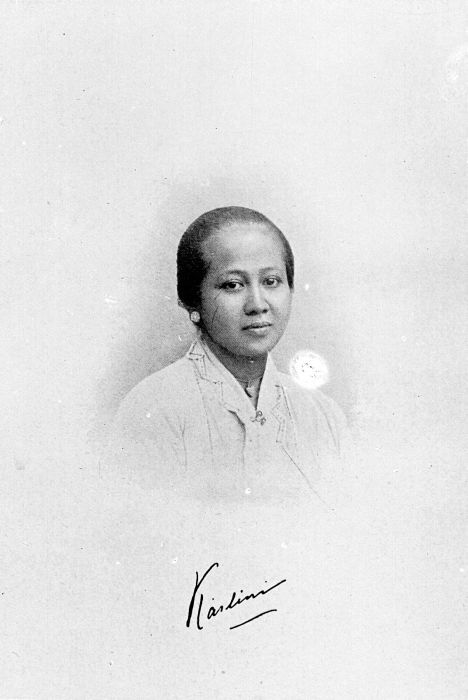
—Is it true that you also worked with fabrics and trade?
Yes, and that always surprises people! Around 1900, I became interested in the batik of Jepara — those wax-dyed fabrics with magnificent patterns. Our artisans worked by hand, with incredible talent. I wanted to organize their work and sell this batik far away, even to Holland. Why? So that a woman could earn her own money. A woman who has a few coins of her own no longer has to accept everything in silence. Education opens the mind; money earned oneself straightens the back. Together, they make a woman truly stand tall.
—Were you sad to have to marry when you wanted to be free?
I was afraid, I admit it. In 1903, I was married to the regent of Rembang, a man I did not know. Among the priyayi, marriages were arranged by families. I could have lost everything: my school, my letters, my dreams. But my husband allowed me to continue. I even opened a second school there. So I learned something: sometimes you cannot break down all doors at once. You open them a crack, patiently, one after another. I chose to move forward in the little space I was given, rather than stop.
—Are you still remembered today, after all this?
I never knew. I died very young, at twenty-five, four days after the birth of my son. But years later, in 1911, my letters were collected in a book, Door Duisternis tot Licht — “Through Darkness to Light.” I had written: “The light you gave me, I want to pass on to others. Education is the key that opens all doors.” Those words traveled much farther than I ever did. So if you too learn, if you pass it on in turn, a little bit of my flame still burns. Go toward the light, my child.
Education is the key that opens all doors.
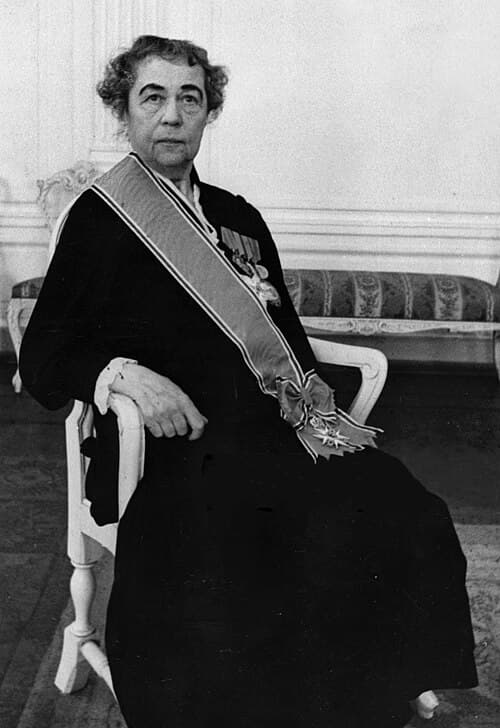
This imaginary interview was generated by artificial intelligence from sources documented in Kartini's profile. It dramatises what the figure might have said based on what we know about them, but does not constitute attested historical testimony. For primary sources and factual documentation, refer to the full profile.