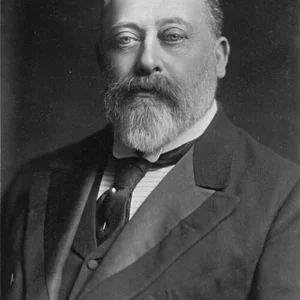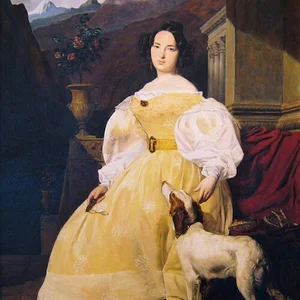

Anne Royall was an American writer and journalist, considered one of the first professional women reporters in the United States. The author of travel narratives, she founded newspapers that denounced corruption and championed the separation of Church and State.
Frequently asked questions
Key Facts
- Born in 1769 in Maryland (British colonies of America)
- Published her first travel narrative in 1826, 'Sketches of History, Life, and Manners in the United States'
- Founded the newspaper 'Paul Pry' in Washington in 1831, then 'The Huntress' in 1836
- Tried in 1829 as a 'common scold' (a quarrelsome woman), a trial that became famous
- Died in 1854 in Washington in great poverty
Works & Achievements
Anne Royall's first book, a travel narrative that revealed her as a sharp observer of American society and launched her literary career.
An adventure novel, Anne Royall's only work of fiction, reflecting her determination to make a living from her pen.
A three-volume series blending travel narratives with attacks on corruption and the influence of the clergy, which earned her some bitter enemies.
Travel volumes describing Pennsylvania and the South, valuable accounts of everyday life and the cities of the young Republic.
Letters describing the Alabama frontier, a historical source on the settlement of the South in the early nineteenth century.
A weekly newspaper founded and written by Anne Royall to expose corruption among public officials and defend the separation of church and state.
Anne Royall's second newspaper, which she ran until her death at the age of 85, making her one of the first women press editors in the United States.
Anecdotes
In 1829, Anne Royall was hauled before a Washington court and convicted of being a “common scold” — a quarrelsome, nagging woman — one of the last such convictions in American history. There was talk of dunking her in the Potomac strapped to a chair (the “ducking stool”), but the judge ultimately sentenced her to a fine, which was paid by two journalists who had come to support her.
Once widowed, Anne Royall believed she would inherit her husband's fortune, but his family contested the will for years. Ruined and over fifty years old, she took to traveling and writing travel accounts to survive: it was poverty that turned her into a professional writer.
A persistent legend claims that she interviewed President John Quincy Adams by sitting on his clothes while he bathed naked in the Potomac, refusing to return them until he had answered her questions. The story is almost certainly apocryphal, but it captures the bold reputation of the woman many consider to be the first female reporter in the United States.
Past the age of sixty, she launched and single-handedly ran two successive newspapers, “Paul Pry” and then “The Huntress,” out of Washington. In them she relentlessly denounced the corruption of public officials and fiercely defended the separation of Church and State, making many enemies among the evangelical movements of her time.
Anne Royall had a habit of going straight to the Capitol and to government offices to question senators and cabinet ministers without an appointment. Her outspokenness made her feared: it was said that politicians subscribed to her newspaper as much out of fear of being pilloried in it as out of genuine interest.
Primary Sources
An account of her travels through the young United States, blending descriptions of cities, portraits of notable figures, and sharp social observations on American society of the 1820s.
A multi-volume collection in which she continues her travel chronicles and attacks by name the corruption, religious hypocrisy, and missionaries she accuses of threatening republican liberty.
Letters describing life on the Alabama frontier, the landscapes, the settlers, and the customs of the South in the early nineteenth century.
A weekly newspaper founded and edited by Anne Royall in Washington, devoted to exposing corruption among public officials and defending the separation of church and state.
Anne Royall's second newspaper, which she ran until her death, continuing her fight against corruption and for civil liberties.
Key Places
Birth region of Anne Newport in 1769, into a humble family before her departure for the Pennsylvania frontier.
Estate of William Royall where the young Anne was first a servant and then his wife, and over which erupted the inheritance battle that ruined her.
A southern frontier town where Anne Royall stayed and which inspired her *Letters from Alabama*.
Capital where she settled, published *Paul Pry* and *The Huntress*, was tried as a “common scold,” and died in 1854.
Seat of Congress that Anne Royall roamed to question senators and representatives, as a pioneer of political journalism.
Typical Objects

A wood-and-cast-iron machine for printing one sheet at a time. It was the tool that made independent newspapers like Paul Pry and The Huntress possible.

Common writing instruments in the early 19th century. Anne Royall used them to write her travel accounts and her articles.
A large wood-and-leather chest carried aboard the stagecoach. It held Anne Royall's belongings during her long writing tours across the country.
📷 Domaine public · Wikimedia Commons ↗
A weekly sheet sold by subscription, carrying articles, opinions and exposés. Paul Pry and The Huntress were Anne Royall's weapons against corruption.

A horse-drawn carriage that carried travelers over the rough roads of the young Republic. Anne Royall rode thousands of miles in one.
📷 CC BY-SA 3.0 · Wikimedia Commons ↗
A book in which the newspaper's subscribers were recorded. Subscriptions paid in advance were the main source of income for an independent publisher like Anne Royall.
School Curriculum
Vocabulary & Tags
Key Vocabulary
Tags
Daily Life
Morning
Settled into her Washington lodging, Anne Royall began her day by reading the rival newspapers and the mail from her subscribers. She would then write her articles by pen, hunting for scandals to expose.
Afternoon
In the afternoon, she often went to the Capitol or the government departments to question politicians directly, without an appointment. She gathered information and confidences that would feed her next issue.
Evening
In the evening, she corrected the proofs of her newspaper and prepared its printing with her assistants. Old and poor, she lived modestly, surrounded by papers and books.
Food
Her diet was frugal, matching her meager income: bread, vegetables, a little meat or fish when she could afford it. Tea and coffee were among the common drinks of the era.
Clothing
She wore the simple, dark dresses typical of an elderly woman of the early 19th century, often worn thin by poverty, along with a bonnet or cap. Her modest appearance contrasted with her formidable reputation.
Housing
In her final years, she lived in a modest Washington lodging that also served as the office for her newspaper. The furnishings were spare and the space cluttered with papers and printing equipment.
Historical Timeline
Period Vocabulary
Liens externes & ressources
Références
Œuvres
Sketches of History, Life, and Manners in the United States
1826
The Tennessean
1827
The Black Book; or, A Continuation of Travels in the United States
1828-1829
Mrs. Royall's Pennsylvania / Southern Tour
1829-1831
Letters from Alabama
1830
Paul Pry (journal)
1831-1836
The Huntress (journal)
1836-1854