Imaginary interview with Kartini
by Charactorium · Kartini (1879 — 1904) · Literature · Society · 6 min read
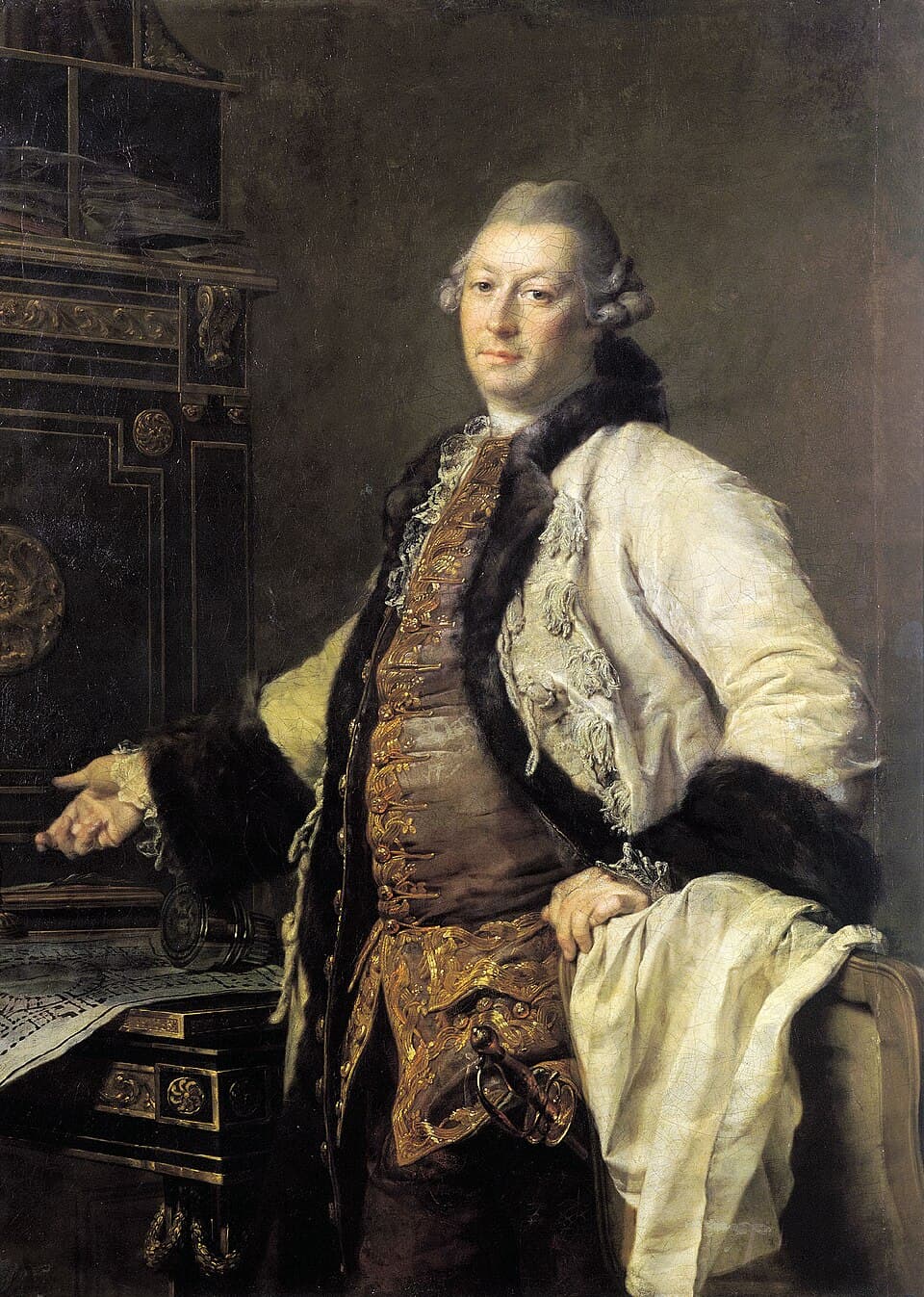
Jepara, the regent's residence, one evening during the rainy season around 1902. Behind the walls of the family compound, a twenty-three-year-old woman writes by the light of an oil lamp, surrounded by magazines from the Netherlands. She agrees to pause her correspondence to answer our questions.
—Do you remember the day your childhood ended?
I was twelve. One morning, I was told I would no longer step through the gate of the Dutch school in Jepara, where I had learned to read alongside European children. It was the pingitan: according to our family custom, a noble girl is confined to the compound until a husband frees her. I had tasted words, newspapers, a vast world — and they were closing a wooden door on all of it. I did not scream. I sat by the barred window, and I understood that day that my prison would have walls, but my mind would have none. It was in that seclusion that I began to write.
My prison would have walls, but my mind would have none.
—How did the pen become your weapon?
Confined, I had only the inkwell, a few books, and the silence of the afternoons. So I wrote to a stranger, Stella Zeehandelaar, an activist over there in Holland. In May 1899, I confessed to her what I dared not say to anyone around me: that I wanted to be free, independent, to depend on no one, not to do what my heart disapproves. In my rooms, among European magazines and the novels I devoured, each letter was an escape. They had taken the world from me; I rebuilt it phrase by phrase. The pen does not break the bars, but it slips between them where the body cannot.
—What does it mean to be a priyayi, a Javanese aristocrat, in this regent's house?
My father is the bupati of Jepara; we belong to the priyayi, that class which serves as intermediaries between the Dutch administration and our people. It brings privileges — the vast house, the gardens, the pendopo where we receive guests, the music of the gamelan that accompanies ceremonies. But it also imposes a thousand duties: visits, bows, the silence expected of women. They want me as an ornament in a residence where Dutch furniture mingles with Javanese hangings. I wear the kebaya with pride, but I refuse to be merely a beautiful façade. This rank that imprisons me is also the one that gives me the words to challenge it — that is the entire contradiction of my life.
They want me as an ornament; I refuse to be merely a beautiful façade.
—Why do you write in the colonizer's own language?
I am sometimes reproached for it: writing in Dutch, the language of those who oppress Java. But it is precisely through it that I can reach their consciences. I read Victor Hugo, I read their newspapers, and I discover the words to name what I see: the Cultuurstelsel that forced our peasants to cultivate for export, the misery at the foot of the plantations. Since 1901, we have been promised an Ethische Politiek, an Ethical Policy, more schools, more welfare. I believe in it and distrust it at the same time. Borrowing the other's language is to slip into his house and hold up a mirror. How can one refuse to hear a complaint phrased in your own grammar?
Borrowing the other's language is to slip into his house and hold up a mirror.
—What do you say to those in the Netherlands who read you with sympathy?
To Rosa Abendanon in The Hague, as to Stella, I write without mincing words. I tell them that we do not only want to think and speak, but to act, to work for our people, to uplift the women of our country. Dutch sympathy moves me, but I do not want a pity that keeps us on our knees. Let them help me open schools, yes; but let them never treat us as eternal children. My letters cross the sea and, I hope, disturb a little those salons where the Indies are spoken of as a distant domain. Distance makes one bold: I can tell a friend in Europe what the propriety of Jepara forbids me to shout here.
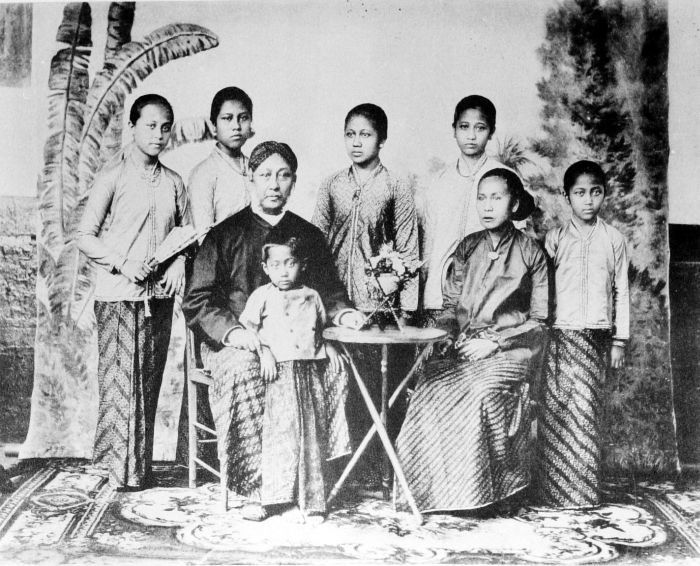
—Tell us about this school you founded in Jepara.
In 1903, in my father's own residence, I opened a small school for the daughters of Javanese officials. Nothing grand: a few mats, learning to read, write, and do needlework. But for these children, it was a door that no one had opened before them. I do not want to train young girls who endure without understanding: I dream of a school where our girls would learn to think for themselves, to become mothers capable of raising free and enlightened children. An educated woman educates an entire household, and an entire household eventually educates a people. One always begins with one room, a few students, and the stubborn refusal to believe that ignorance is our destiny.
An educated woman educates an entire household, and an entire household eventually educates a people.
—Why so much emphasis on women's education rather than other struggles?
Because the mother is the child's first school. As long as we, the women of Java, remain in darkness, our sons will be born into that same darkness. I have seen my sisters promised to marriages they did not choose, as I myself was in 1903 to the regent of Rembang. Educating a girl is not giving her another ornament; it is restoring her capacity to judge. In my letters, I repeat that education is the key that opens all doors — that of knowledge, but also that of dignity. One does not liberate a people by liberating only its men. One must begin with those who cradle the future.
—How does Jepara batik, in your view, contribute to women's emancipation?
Knowing how to read does not fill a bowl. Between 1900 and 1903, I encouraged the craftswomen of Jepara to produce and sell their batik, that wax-dyed fabric whose every pattern tells a region, a rank, a story. By organizing its export to Dutch commercial networks, I wanted these women to earn their own money, to no longer depend entirely on a father or husband. The needle and the wax can be tools of liberation as much as the pen. An embroidered kebaya, a batik sarong: what our hands have produced for centuries can also become the source of our autonomy, if only we stop despising it as mere women's work.
The needle and the wax can be tools of liberation as much as the pen.
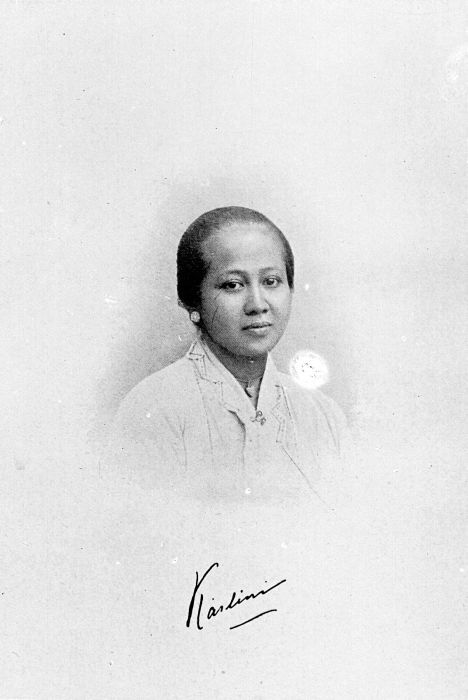
—How do you experience the tension between Javanese tradition and your aspirations?
I do not despise what I am. I love the music of the gamelan in the pendopo, the beauty of a batik sarong, the coolness of a shaded courtyard in the heat of the day. These things are my blood. But tradition, when it locks up a twelve-year-old child or marries a girl without her consent, ceases to be a heritage: it becomes a chain. I bear the title of Raden Adjeng, I respect my father, and yet I refuse that respect silence me. One can love one's home and want to open its windows. My whole life rests on this fragile balance: to remain Javanese to my fingertips, and to cease being a prisoner.
—What would you say to a young Javanese girl who hesitates between obeying and dreaming?
I would tell her not to choose too quickly between the two. I obeyed — the pingitan, the marriage — and yet I never stopped dreaming or acting. One can bow one's head and keep one's mind straight. Let her learn to read, at all costs; let her embroider her batik not as servitude but as a craft that will sustain her; let her write, if only to a distant friend, to discover what she truly thinks. The light that was given to me, I want to pass on to others. There are thousands of us behind these walls, and it takes only one to open a door for the others to glimpse the day.
One can bow one's head and keep one's mind straight.
—If your letters were to be read long after you, what would you like people to find in them?
That is a dizzying thought. If I could imagine being read a century from now, I would want them to see not a lament, but a path — from darkness to light, as I often name my hope. That they understand that a woman confined in Jepara, a mere Raden Adjeng with her oil lamp and inkwell, could believe in education more strongly than in her own cage. I do not know if my school will survive, nor if my name will be remembered. But if a single girl, somewhere, opens a book because another did so before her, then my nights of writing will not have been in vain.
From darkness to light: that was my entire hope.

This imaginary interview was generated by artificial intelligence from sources documented in Kartini's profile. It dramatises what the figure might have said based on what we know about them, but does not constitute attested historical testimony. For primary sources and factual documentation, refer to the full profile.