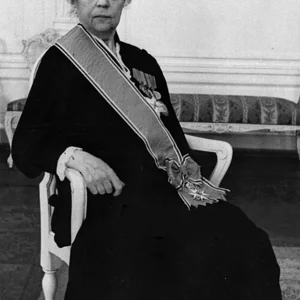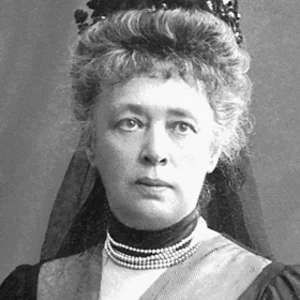

Austrian novelist and pacifist activist (1843–1914), Bertha von Suttner published in 1889 “Die Waffen nieder!” (Lay Down Your Arms!), a novel that shocked Europe with its realistic portrayal of the horrors of war. In 1905, she became the first woman to receive the Nobel Peace Prize.
Bertha von Suttner(1843 — 1914)
Bertha von Suttner
empire d'Autriche, Cisleithanie
9 min read
Frequently asked questions
Famous Quotes
« Die Waffen nieder! (Lay Down Your Arms!)»
« Peace is not a dream: it is a science.»
Key Facts
- 1843: Born in Prague (Austrian Empire) into an aristocratic family
- 1889: Publication of “Die Waffen nieder!”, a pacifist novel translated into many languages
- 1891: Founding of the Austrian Peace Society
- 1905: First woman to be awarded the Nobel Peace Prize
- 1914: Died in Vienna, eight days before the assassination of Archduke Franz Ferdinand and the outbreak of the Great War
Works & Achievements
Her most famous novel, narrated in the first person by an Austrian aristocrat who witnesses the horrors of several wars. Translated into a dozen languages, it shocked Europe with its realism and became the founding manifesto of the international pacifist movement.
Visionary essay on the social and technological transformations of industrial modernity, published under a pseudonym. Bertha analyzes the dangers of technical progress put at the service of war and advocates for international institutions capable of regulating conflicts.
Pacifist organization founded and chaired by Bertha von Suttner in Vienna, affiliated with the International Peace Bureau. It coordinated petitions, congresses, and awareness campaigns, becoming one of the most active pacifist associations in Central Europe.
Monthly pacifist journal founded and directed by Bertha von Suttner for seven years. She published articles on international law and disarmament, building a militant network on a European scale.
Autobiography in which Bertha von Suttner traces her journey, from Viennese aristocracy to the international pacifist movement. A valuable source for understanding the history of peace activism in the Belle Époque.
First Nobel Peace Prize awarded to a woman. Her acceptance speech in Christiania, “The Evolution of the Peace Movement”, remains a reference in pacifist thought and a synthesis of her entire philosophy.
Anecdotes
In 1876, Bertha Kinsky responded to a classified ad in a Parisian newspaper: Alfred Nobel, the inventor of dynamite, was looking for a multilingual secretary in Paris. She spent a few days with him, then hurried back to Austria to marry Arthur von Suttner. The two nonetheless maintained a long epistolary friendship until Nobel's death in 1896, and many historians believe it was she who convinced him to include a prize for peace in his famous will.
When Bertha von Suttner submitted her novel “Die Waffen nieder!” to a publisher in 1889, he hesitated: the subject — the horrors of war described by a woman — seemed too shocking to him. He finally agreed, on the condition that she commit to purchasing 1,500 copies herself. The book became an international bestseller, translated into a dozen languages. Leo Tolstoy compared it to “Uncle Tom's Cabin” and claimed it could change the history of Europe.
On June 21, 1914, Bertha von Suttner died in Vienna, exhausted after decades of fighting for peace. Seven days later, Archduke Franz Ferdinand was assassinated in Sarajevo. World War I, which she had spent her life trying to prevent, broke out just weeks after her death. This tragic coincidence deeply affected her contemporaries: the great prophetess of peace had not lived to see the catastrophe she had so often predicted.
Although born Countess Kinsky von Wchinitz und Tettau into the high Austrian aristocracy, Bertha von Suttner used her social standing to gain access to diplomatic conferences and royal courts where few women were admitted. She directly addressed emperors, presidents, and ministers, handing them petitions for disarmament. This audacity shocked parts of her original milieu, but allowed her to be taken seriously in places where a commoner would not have been received.
In 1905, when Bertha von Suttner learned she had been awarded the Nobel Peace Prize, she was 62 years old and already recognized worldwide as the “queen of peace.” She was the first woman to receive this distinction. At the ceremony in Christiania (now Oslo) in 1906, she delivered a speech on the evolution of the pacifist movement that would remain a reference for generations to come.
Primary Sources
War! Who has ever described it as it truly is? Not the statesmen in their dispatches, not the generals in their victory reports. It is the wounded lying in the mud, the widows on the doorstep, the fatherless children who could tell it — if only they were given a voice.
All my life, I have been convinced that war is not an inevitability, but an institution that men have created and that men can abolish. This conviction has guided me in every article, every speech, every letter addressed to the powerful of this world.
The peace movement is not the dream of a few isolated idealists: it is the rational and necessary response of a humanity that understands that modern warfare, with its new weapons, can only lead to the destruction of civilization itself.
You have placed in the hands of men a force capable of destroying entire nations. Could you not, with your fortune and your intelligence, devote a portion of your resources to making war impossible — or at least so terrifying that governments would renounce resorting to it?
Disarmament is not a utopia. Nations that have resorted to international arbitration have proven that serious conflicts can be resolved without shedding a single drop of blood. What a few states have achieved, all can do — provided they have the will.
Key Places
Bertha von Suttner was born on June 9, 1843, in Prague, then the capital of the Kingdom of Bohemia within the Austrian Empire, into a family of high nobility.
The von Suttner family estate in Lower Austria, where Bertha spent many years with her husband Arthur. It was in this residence that she wrote much of her literary and activist work.
Capital of the Austro-Hungarian Empire, Vienna was the center of Bertha von Suttner's activist work: she founded the Austrian Peace Society there in 1891, and died in the city on June 21, 1914, seven days before the assassination in Sarajevo.
In 1876, Bertha Kinsky traveled to Paris to work as Alfred Nobel's secretary. This brief but decisive stay marked the beginning of a pivotal epistolary friendship that would influence the creation of the Nobel Peace Prize.
Bertha von Suttner played an active role in the International Peace Conferences held at The Hague in 1899 and 1907, which represented the institutional realization of her campaign for international arbitration.
It was in the Norwegian capital that Bertha von Suttner delivered her Nobel lecture in 1906, becoming the first woman to formally receive the Nobel Peace Prize before an international audience.
Typical Objects
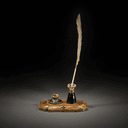
Bertha von Suttner was above all a woman of letters: she devoted several hours each day to writing — novels, press articles, diplomatic correspondence. Her pen was her primary weapon in the fight against war.
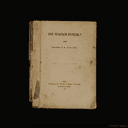
Her 1889 novel is the symbol of her entire body of work. She personally distributed copies at pacifist congresses and oversaw its translation into a dozen languages to reach the widest possible readership.
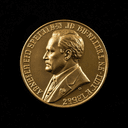
Received at the Christiania ceremony in 1906, this medal represents the international recognition of her lifelong struggle. She was the first woman to receive this prize, created in part thanks to her influence on Alfred Nobel.
Bertha von Suttner edited the journal *Die Waffen Nieder!* and diligently read the European press to follow parliamentary debates on armaments and diplomatic crises, which she publicly commented on in her articles.

She maintained a voluminous correspondence with Alfred Nobel, European political leaders, and pacifist activists from around the world, seeking to build an international network capable of influencing government decisions.
A tireless activist, Bertha von Suttner attended numerous pacifist congresses across Europe and the United States. Her agenda was constantly filled with train journeys, public speeches, and meetings with foreign pacifist associations.
School Curriculum
Vocabulary & Tags
Key Vocabulary
Daily Life
Morning
Bertha von Suttner rose early and devoted her mornings to writing: novels, articles for the pacifist press, or letters addressed to political figures. She carefully read several European newspapers to keep track of diplomatic tensions and parliamentary debates on armaments, drawing from them arguments for her next speeches.
Afternoon
Her afternoons were often devoted to meetings of the Austrian Peace Society, to receiving activist delegations, or to preparing public lectures. During international pacifist congresses, she spent hours drafting petitions and resolutions with activists from across Europe, which were then submitted to governments.
Evening
Evenings were sometimes social — Viennese salons allowed her to meet influential politicians and aristocrats — but often studious: proofreading, writing articles, or preparing speeches. Her social life remained in the service of her cause, as every dinner could become an opportunity to convince a minister or an ambassador.
Food
As was common in Austro-Hungarian aristocratic circles, Bertha von Suttner ate according to Viennese culinary traditions: soups, braised meats, seasonal vegetables, and pastries. Her many travels across Europe led her to sample a variety of cuisines, from Parisian brasseries to the buffets of international congresses in The Hague or Berne.
Clothing
As a woman of the Austrian high nobility, Bertha von Suttner wore elegant attire suited to her status: fitted bodices, long skirts, and veiled hats typical of the *Belle Époque*. Paradoxically, this conventional appearance served as her passport into the diplomatic and aristocratic circles where she sought support for her pacifist cause.
Housing
Bertha von Suttner lived mainly at Harmannsdorf Castle, the Suttner family estate in Lower Austria, and in several apartments in Vienna. Her aristocratic surroundings — well-stocked libraries, a reception salon — stood in contrast to the radicalism of her convictions, yet allowed her to receive diplomats, activists, and journalists in a manner befitting her standing.
Historical Timeline
Period Vocabulary
Liens externes & ressources
Références
Œuvres
Die Waffen nieder ! (Bas les armes !)
1889
Das Maschinenzeitalter (L'Ère des machines)
1889
Fondation de la Société autrichienne pour la paix
1891
Revue « Die Waffen Nieder ! »
1892-1899
Memoiren (Mémoires)
1909
Prix Nobel de la paix — discours de réception
1906