Kids interview Kate Gleason
by Charactorium · Kate Gleason (1865 — 1933) · Technology · Economics · 5 min read
That morning, two middle-school students on a field trip push open the door of a workshop that smells of oil and hot metal. An elegant lady in a suit welcomes them near a large machine: it's Kate Gleason, engineer and businesswoman. She has agreed to answer all their questions.
—How old were you when you entered university to become an engineer?
I was 19, my child, and overjoyed. In 1884, I enrolled at Sibley College, Cornell University, to study engineering. Do you know what an engineer is? Someone who designs and improves machines. And here's the surprise: I was the first girl to enter that program! Imagine a room full of boys, and me, alone in their midst. Some looked at me sideways. But my father had already put me in the workshop at age eleven. I wasn't afraid of gears or stares. Knowledge doesn't turn anyone away, neither girls nor boys.
Knowledge doesn't turn anyone away, neither girls nor boys.
—Were you sad to leave your studies without getting your degree?
Yes, a little sad, I won't lie. My father's company in Rochester was going through a major crisis. We made machines for cutting metal, and money was tight. So I left the university benches to help him. I never got my degree, you know. But imagine: I learned for real, hands-on in the grease, keeping accounts, selling. Sometimes life opens a door bigger than the one you were aiming for. I gave up the paper, but I became one of the most famous engineers of my time. Not bad, eh?
Sometimes life opens a door bigger than the one you were aiming for.
—What was it like traveling to Europe to sell your machines?
Ah, what an adventure! I crossed the ocean by ship, for days, to sell our bevel gear planer. That's a machine that cuts very precise gear teeth, the kind that turn other wheels at right angles. I was what they called a traveling saleswoman: I moved from city to city to present our machines to industrialists. Imagine a young woman alone, with her suitcases, in factories full of men in aprons. They found me quite bold! But I knew every gear by heart. When you really know what you're talking about, my child, no one can silence you.
When you really know what you're talking about, no one can silence you.
—Is it true that people thought you had invented the machine?
Absolutely true, and it made me smile! I explained the planer so well, every tooth, every adjustment, that many industrialists were convinced I had invented it myself. But I always set the record straight. The invention was the work of my father William and my brother. I made it known around the world. You see, there are two different talents: creating something, and knowing how to tell others about it. Both count equally. I never stole my family's credit, but I never blushed either at being the workshop's best saleswoman.
Creating something, and knowing how to tell others about it: both talents count equally.
—What was it like being the only woman in a male-dominated profession?
It was lonely, often. In 1914, I became the first woman admitted to the ASME, a great and respected society of mechanical engineers. Imagine a room of gray beards and dark suits, and me, the only lady. Then, in 1917, when the director of a bank left for war, I took his place: they say I was the first woman to run a national American bank. I straightened out its accounts before his return. You know, being the first isn't a comfortable honor. It's opening a door so that others can pass through behind you.
Being the first is opening a door so that others can pass through behind you.
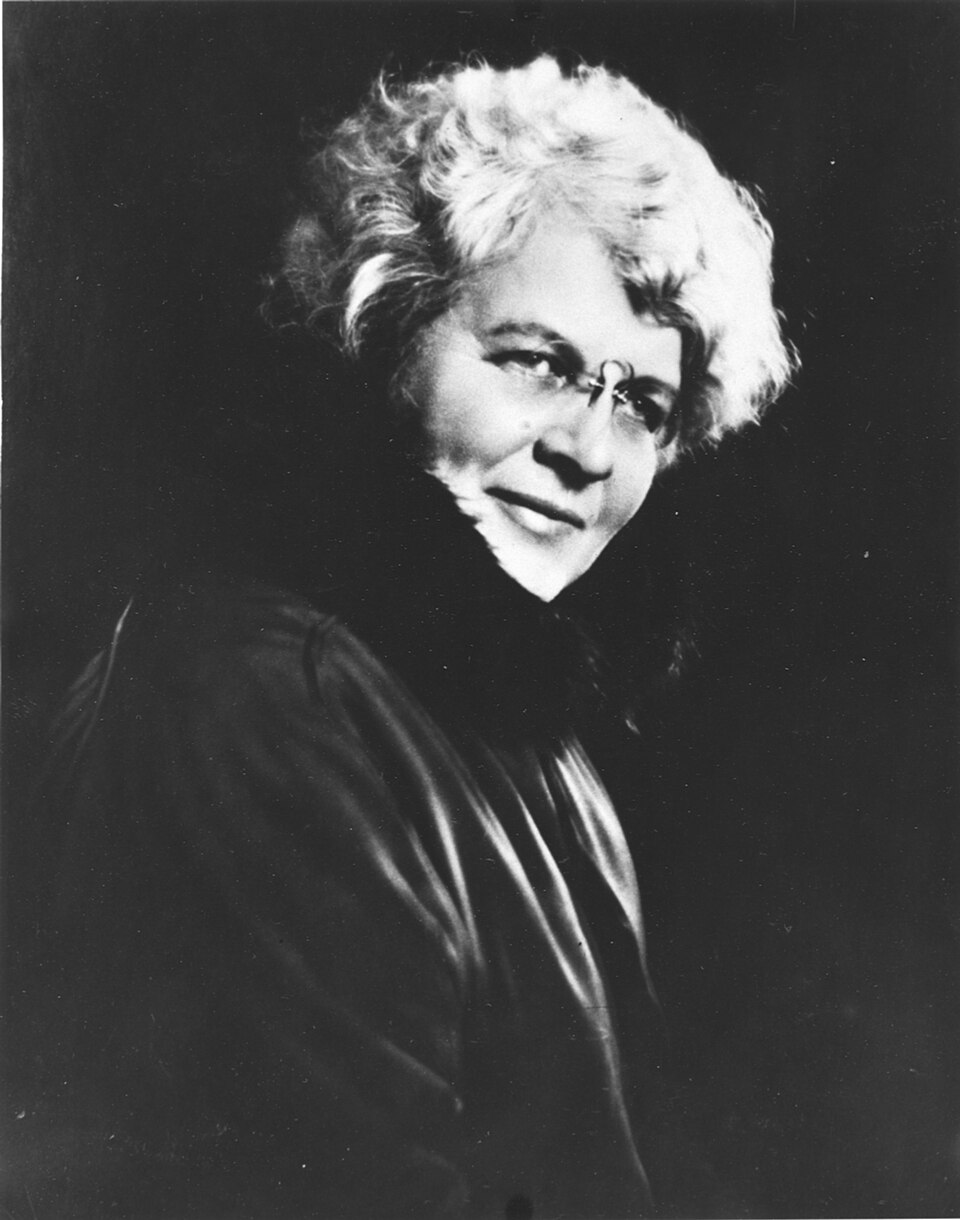
—Were there great ladies who encouraged you?
Oh yes, and one of them touched me deeply. Her name was Susan B. Anthony, a figure of suffragism, that great movement demanding the right to vote for women. In my time, imagine: women didn't even have the right to drop a ballot into the urn! That right only came in 1920, in our country. Susan said of me that I was the ideal businesswoman she had dreamed of fifty years earlier. Hearing that from such a lady, my child, warms your heart for years. We were not alone: we formed a chain, each pulling the other upward.
We formed a chain, each pulling the other upward.
—Why did you want to build houses like cars?
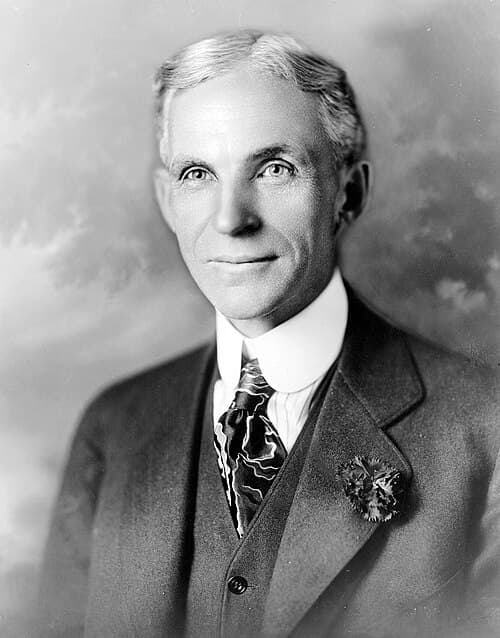
Because I had seen something extraordinary! Henry Ford moved his automobiles along a big chain, each worker adding a part, over and over. That's what we call mass production: making many identical objects quickly, cheaply. And I thought: why not houses? So, in my Concrest subdivision in East Rochester, I had six-room concrete houses poured. Solid, fireproof, and inexpensive. Imagine modest families finally housed in something sturdy. A good idea doesn't belong to just one industry; you can make it travel.
A good idea doesn't belong to just one industry.
—What was it like to pour a concrete house? What did it smell like?
Ah, it smelled of wet cement and sand dust, a sort of gray, fresh smell. Concrete is a mix of cement, sand, gravel, and water. You pour it still soft into a formwork — a big wooden or metal mold — and wait for it to harden. Imagine filling a giant cake mold, but with entire walls inside! When you removed the formwork, the house appeared, hard as stone. The best part? This concrete didn't burn. In my time, so many houses went up in flames. Offering walls that don't burn meant offering peace of mind.
Offering walls that don't burn meant offering peace of mind.
—Is it true that you came to rebuild a village in France?
It's true, and I'm very proud of it. After the Great War, many French villages had been destroyed by fighting. There was one, Septmonts, in the Aisne, near Soissons, almost in ruins. I decided to invest and help rebuild it with my concrete techniques. Imagine: the same methods I had developed back in East Rochester, crossing the ocean to raise French houses. It seemed right to me. When you've learned to build fast and solid, you don't keep that knowledge to yourself. You go where roofs have fallen, and you help put them back up.
You don't keep your knowledge to yourself: you go where roofs have fallen.
—If people still talk about you today, what would make you most proud?
What a lovely question, my child. What touches me most is that my fortune served to educate other young people. At my death in 1933, I had set aside money. Later, they gave my name to an engineering school: the Kate Gleason College of Engineering. Imagine girls and boys, like you, learning to design machines in a house that bears my name. I who never got my degree! Isn't it amusing how life comes full circle? What you pass on to children, you see, is the only wealth that never wears out.
What you pass on to children is the only wealth that never wears out.

This imaginary interview was generated by artificial intelligence from sources documented in Kate Gleason's profile. It dramatises what the figure might have said based on what we know about them, but does not constitute attested historical testimony. For primary sources and factual documentation, refer to the full profile.