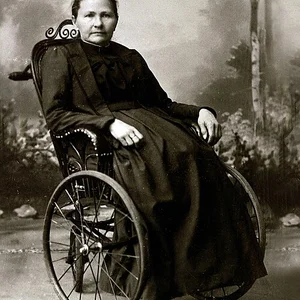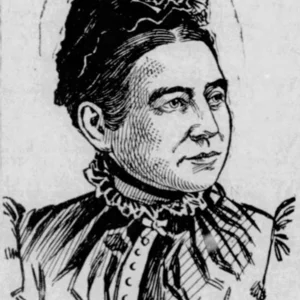

Banker brothers of Bordeaux origin and disciples of Saint-Simonianism, they financed the first French railway (Paris–Saint-Germain, 1837) and founded the Crédit Mobilier (1852), an innovative investment bank that rivaled the Rothschilds under the Second Empire.
Pereire Brothers (Émile and Isaac)
Émile Pereire (1800–1875) and Isaac Pereire (1806–1880)
10 min read
Frequently asked questions
Key Facts
- 1837: inauguration of the Paris–Saint-Germain line, the first steam passenger railway in France, financed by the Pereires
- 1852: founding of the Crédit Mobilier, France's first modern investment bank, with the backing of Napoleon III
- 1850s–1860s: financing of railway lines in France, Spain, Austria, and Russia
- 1867: collapse of the Crédit Mobilier following a financial crisis and a counter-offensive by the Rothschilds
- Their name lives on in the Pereire station on Paris Métro Line 3 (opened in 1911)
Works & Achievements
France's first steam-powered passenger railway, inaugurated on August 26, 1837 after years of financial and technical difficulties. It demonstrated the economic viability of rail travel in France and paved the way for a national rail network.
An innovative investment bank created under Napoleon III, and the first institution to raise large amounts of popular capital to finance major industrial enterprises. It foreshadowed the modern merchant bank and inspired similar institutions across Europe.
A shipping company founded by the Pereires that connected France to North America by steamship. It became one of the great maritime companies of the 19th century and remained active under the name French Line into the 20th century.
An extensive network of railway lines across southern France financed by the Crédit Mobilier, connecting Bordeaux, Toulouse, Marseille, and the Spanish border. This network had a lasting impact on the economy of southwestern France.
A Parisian palace hotel financed by the Pereires and the first modern luxury hotel in Paris. It embodied the marriage of financial capitalism and Haussmann's urban development at the heart of the Second Empire.
A theoretical work in which Isaac Pereire sets out his Saint-Simonian vision of economics and credit. The first programmatic text explaining how investment banks can finance national industrial development.
Anecdotes
On August 26, 1837, Émile and Isaac Pereire inaugurated France's first railway line, Paris–Saint-Germain. Doctors had claimed that the locomotive's speed would drive passengers mad, and local residents feared the smoke would kill their poultry. Yet within the very first week, thousands of Parisians flocked to the Gare Saint-Lazare, and the line turned a profit almost immediately.
Fervent disciples of the philosopher Henri de Saint-Simon, the Pereire brothers attended Saint-Simonian gatherings in Paris in their youth. This doctrine, which advocated organizing the economy through bankers and engineers in the service of industry, shaped their entire lives: each of their great enterprises — railways, the Crédit Mobilier, the Compagnie Générale Transatlantique — was presented as social progress just as much as a source of profit.
The rivalry between the Pereires and the banker James de Rothschild was legendary under the Second Empire. When they founded the Crédit Mobilier in 1852, Rothschild fumed and branded them “dangerous sectarians,” before mounting a financial counteroffensive to torpedo their railway projects. This war of bankers, watched across Europe, favored the Pereires for fifteen years — until the collapse of the Crédit Mobilier in 1867 finally proved their rival right.
Napoleon III was a decisive ally of the Pereires: convinced that major transport and credit enterprises would transform France, he smoothed the path for their railway concessions and approved the creation of the Crédit Mobilier. In return, the brothers helped finance part of the modernization of the Grands Boulevards and contributed to the Haussmann-era real estate boom. This imperial backing proved double-edged: when the Empire began to falter after 1866, the Pereires lost their political support.
Following the resounding bankruptcy of the Crédit Mobilier in 1867–1868, which ruined many small investors, Émile Pereire refused to evade his responsibilities. He wrote a lengthy public defense explaining his financial decisions and arguing for credit reform. Despite the debacle, the brothers retained a personal fortune and remained active in their other ventures, notably the Compagnie Générale Transatlantique, which they had founded in 1855.
Primary Sources
The Company's purpose is to discount, purchase and sell all public securities and transferable instruments, to underwrite public funds, shares and bonds, to issue redeemable term bonds, and generally to participate in all public and private credit operations.
Industry is the sole source of all wealth; bankers and men of credit are the natural organizers of society's productive forces. Their mission is to put capital at the service of labor, not to sterilize wealth in strongboxes.
Passenger traffic has exceeded all expectations: more than 400,000 people traveled our line in the first four months of operation. Revenues comfortably cover operating costs, and we can state with confidence that the steam railway is destined to transform communications throughout France.
France cannot afford to fall behind England and Belgium on the path of railways. Every year of delay costs our commerce and industry millions that our rivals carry away. The State must choose: either build these lines itself, or allow private initiative to build them under its supervision.
Gentlemen, the 1856 financial year has been most satisfactory. Our stakes in the major railway, gas, and navigation enterprises have produced the results we anticipated. The dividend we are proposing bears witness to the vitality of the crédit mobilier principle as applied to the financing of national industry.
Key Places
Birthplace of the Pereire brothers, from a Sephardic Jewish family of Portuguese origin settled in the Gironde. They left Bordeaux in their youth to move to Paris and pursue careers in Saint-Simonian finance.
Departure point of the Paris–Saint-Germain line inaugurated in 1837, Paris's first railway terminus. It was here that the Pereire brothers brought their dream of a transport revolution in France to life.
Housed in a private mansion in the 8th arrondissement, the Crédit Mobilier was the financial heart of the Pereire empire during the Second Empire. This was where the major operations financing European railways were decided.
Terminus of France's first railway line (1837), financed by the Pereires. This royal town, previously reachable only by stagecoach, became France's first railway destination.
A vast country estate purchased by Émile Pereire at the height of his success. This lavish property with its English-style parkland symbolizes the social rise of a Jewish family from Bordeaux to the pinnacle of French high finance.
The temple of Parisian finance where Crédit Mobilier shares were traded and speculated upon. The Pereires faced off against their Rothschild rivals here in memorable stock-market battles followed across all of Europe.
Typical Objects

The Pereire brothers brought the first locomotives from England for the Paris–Saint-Germain line. These steam engines, symbols of industrial progress, embodied their Saint-Simonian faith in technology as a driver of social improvement.

These securities, sold at 500 francs apiece, allowed private individuals to invest in major industrial enterprises. In doing so, the Pereires invented a new relationship between finance and the middle classes, foreshadowing the democratization of share ownership.

France's first railway ticket, it gave tangible form to the transport revolution launched by the Pereires. A Parisian could now reach Saint-Germain in under thirty minutes — a journey that had previously taken several hours by stagecoach.

A journal to which Émile and Isaac Pereire contributed in the 1830s, spreading Saint-Simonian ideas about the role of bankers and engineers in industrial society. It was the intellectual vehicle for their economic vision.

Printed documents distributed to the public to raise funds for railways or the Crédit Mobilier. The Pereires were among the first to use these techniques on a large scale to attract capital from ordinary savers.

The characteristic dress of the great bankers and businessmen of the Second Empire, worn by the Pereires at stock exchange appearances and shareholders' general meetings, marking their place within the Parisian financial elite.

The Crédit Mobilier financed part of the sweeping urban renewal works carried out by Haussmann under Napoleon III. These plans give physical form to the alliance between Pereire finance and imperial urbanism that transformed Paris between 1853 and 1870.
School Curriculum
Vocabulary & Tags
Key Vocabulary
Tags
Daily Life
Morning
The Pereire brothers start their day early, combing through the financial press — Le Journal des débats, Le Moniteur universel — before arriving at their Parisian offices. Émile, the more outgoing of the two, receives collaborators and petitioners from 8 o'clock onward; Isaac, more deliberate by nature, begins by studying stock exchange rates and his managers' reports. Strategic decisions are often made during these intense working mornings.
Afternoon
Afternoons are devoted to business meetings, visits to railway construction sites, or shareholders' assemblies. Under the Second Empire, the Pereire brothers frequented government ministries, negotiating concessions with prefects and ministers of public works. Regular appointments at the Paris Bourse punctuate their days, where their agents monitor share prices for the Crédit Mobilier and the various railway companies.
Evening
Evenings are often social occasions: the Pereires move through the salons of the upper bourgeoisie and the financial aristocracy of the Second Empire. They entertain engineers, politicians, and European businessmen at their private mansions. Conversations weave together Saint-Simonian philosophy, industrial projects, and financial strategies over a richly set table.
Food
At their level of wealth, the Pereire brothers dine in the manner of the great Parisian bourgeoisie of the Second Empire: elaborate meals of roasted meats, game, fish, and fine desserts, served by household staff. These meals are as much occasions for socializing as for negotiation. Coming from a practicing Sephardic family, they in all likelihood observed certain Jewish dietary laws in their home.
Clothing
Émile and Isaac Pereire dress according to the codes of the upper business bourgeoisie of the Second Empire: dark or black frock coat, waistcoat, a high-knotted cravat, and a top hat. Their portraits show well-groomed men without excessive ostentation, projecting the serious and respectable image they wished to lend their financial operations. For major railway inaugurations or imperial audiences, their attire becomes more formal.
Housing
At the height of their success, Émile Pereire owns a private mansion in the Madeleine district of Paris as well as the Château d'Armainvilliers in Seine-et-Marne, a vast country estate with grounds and outbuildings. Isaac likewise lives in a prosperous neighborhood on the Right Bank. These grand residences, maintained by a large household staff, are outward signs of the spectacular social rise of a family of Sephardic immigrants from Bordeaux.
Historical Timeline
Period Vocabulary
Liens externes & ressources
Références
Œuvres
Ligne de chemin de fer Paris–Saint-Germain
1837
Fondation de la Société Générale du Crédit Mobilier
1852
Compagnie Générale Transatlantique (CGT)
1855
Réseau ferroviaire du Midi
1852-1865
Grand Hôtel de Paris (boulevard des Capucines)
1862
Isaac Pereire, Leçons sur l'industrie et les finances
1832