Kids interview Kenzaburō Ōe
by Charactorium · Kenzaburō Ōe (1935 — 2023) · Literature · 5 min read
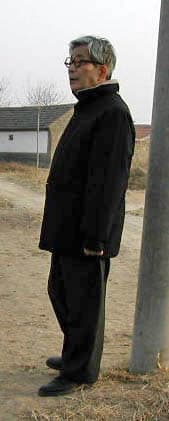
Two 12-year-old students, on a school trip, sat down in front of an old man with big round glasses. They brought their notebooks and a thousand questions. Kenzaburō Ōe smiles at them: it touches him that children have come to listen.
—How old were you when you started writing, and what were you reading?
You know, my child, I was still a student at the University of Tokyo, in Hongō. I was studying French literature. I had learned French on purpose, to read a philosopher I was passionate about: Sartre. Imagine a shy young man, hunched over his books, constantly crossing things out. At 23, in 1958, I received a major prize for a short story. I was so young that people couldn't believe it! But my real treasures were my notebooks and the pages of Rabelais and Sartre that I annotated everywhere. For me, reading was already a little bit like writing.
I learned French just to read the books I loved.
—Is it true you grew up in a tiny village?
Yes! I was born in 1935 in a forest village on Shikoku, an island in Japan. Imagine mountains covered in trees, very little noise, and grandmothers telling old legends in the evening. In my day, the radio was our window to the world. As a child, that's how I heard the war was over. I never forgot those legends from my village: much later, I put them into my novels. You can become a writer and still remain, deep down, a little boy from the forest.
You can become a writer and still remain, deep down, a child of the forest.
—What changed in your life when your son was born?
Everything, my child. In 1963, my son Hikari was born with a severe skull malformation. The doctors warned me: the operation would save him, but he would remain severely disabled. I was afraid, I doubted. Imagine a young father facing a tiny baby, forced to decide his life. I chose to have him operated on. And that day, without knowing it, I changed my entire writing. From that struggle came my most famous book, A Personal Matter, in 1964. My hero realizes he cannot flee forever: accepting this fragile child is finally becoming a man.
Accepting my fragile child was how I became a father.
—Were you afraid of being a bad dad?
Yes, very afraid. You know, at first, you want to run away from what hurts you. My character in A Personal Matter wants to flee too. But he understands one thing: you don't become yourself by turning your back, you become yourself by staying. I decided to stay close to Hikari. It wasn't easy every day. But imagine: every morning, that little boy taught me patience, to love unconditionally. A fragile child doesn't make life smaller. It makes it more real.
You don't become yourself by running away, but by staying.
—What did Hikari become when he grew up?
Ah, that's the most beautiful surprise of my life! Hikari remained nearly blind and unable to speak for a long time. We thought he would never say anything. And then, one day, he started listening to birdsong, fascinated. Then music. Imagine our house in the evening, filled with the melodies he invented. He became a composer, he even released records in Japan! For me, his music said what words couldn't say. A boy we thought was mute finally spoke — but through sounds.
My son we thought was mute ended up speaking: through music.
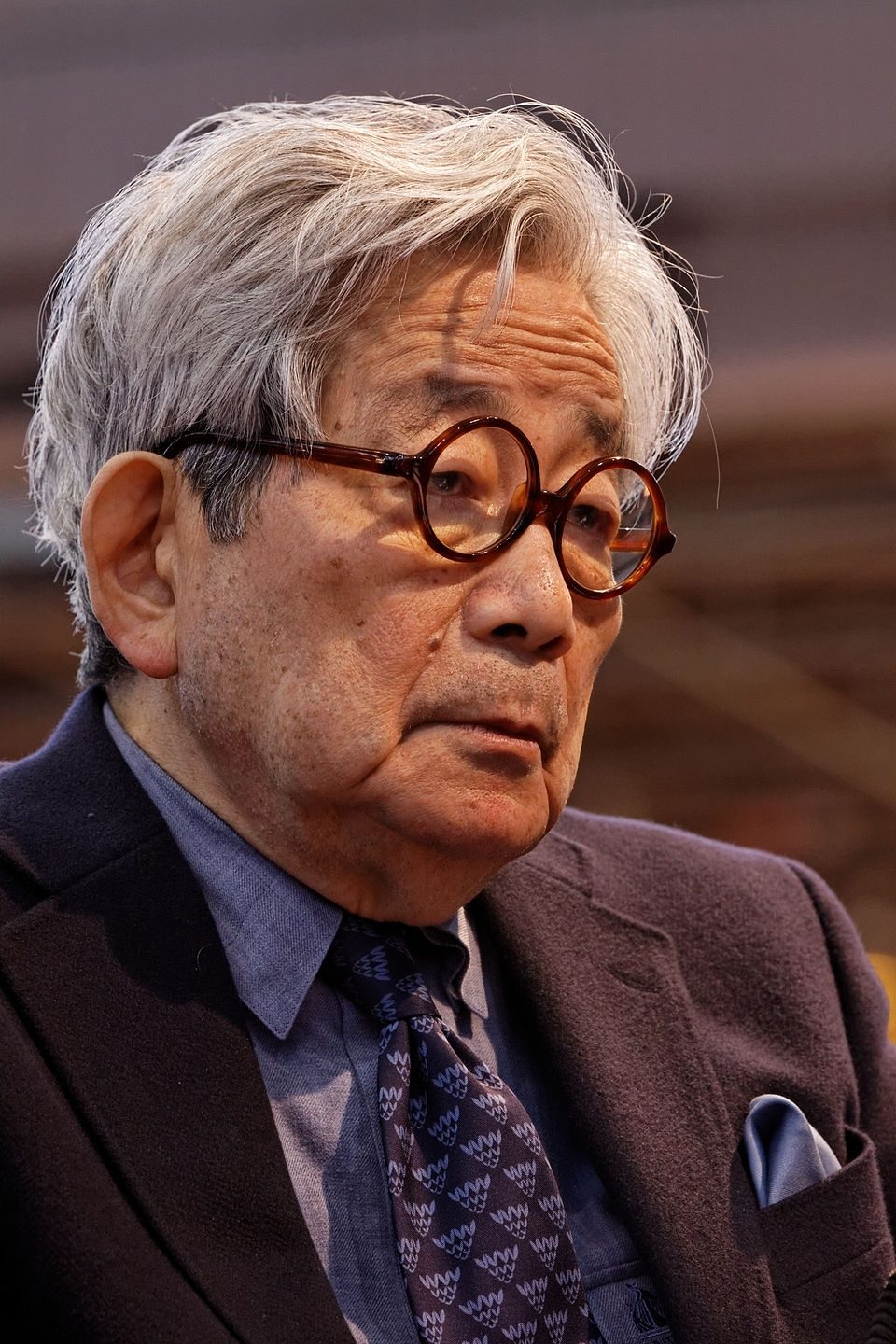
—What were evenings like in your house?
They were gentle, you know. I spent the morning writing, crossing out in my notebooks, and the afternoon reading. But in the evening, everything revolved around Hikari and his music. His scores were scattered all over the house. Imagine a father listening to his son compose, sitting close to him. That bond was the heart of my life. I even drew a tender book from it, A Quiet Life, in 1990. A simple family, around a different child. Happiness doesn't have to be loud to be immense.
Happiness doesn't have to be loud to be immense.
—Why did you go to meet the atomic bomb survivors?
Because I wanted to understand, my child. In 1945, when I was 10, two atomic bombs destroyed Hiroshima and Nagasaki. Years later, I went there to meet the survivors. They are called hibakusha — it means 'people affected by the bomb.' Imagine people who lost everything, burned, sick, and yet refused to despair. They kept their dignity. I wrote what I saw in my Hiroshima Notes in 1965. For me, those survivors were the true sages of our time.
The survivors of Hiroshima kept their dignity: they were the true sages.
—Did you keep defending that even when you were old?
All my life, yes. The word genbaku in Japanese means 'atomic bomb.' That fear never left me. So when a major nuclear disaster struck Fukushima in 2011, I was already an old man. But I took to the streets. I signed petitions, I protested against nuclear power. Imagine a white-haired grandfather still walking with the young. You don't defend peace once and then stop. You defend it every day, as long as you breathe. It's a fight that never takes a holiday.
You don't defend peace once: you defend it every day.
—Is it true you refused an award from the Emperor?
It's true. In 1994, the same year as my Nobel prize, I was offered the Order of Culture, the highest artistic distinction in Japan. But it is awarded by the Emperor — he is called the Tennō. And I believe that no person should be placed above the people. So I said no, politely but firmly. Imagine the surprise! Refusing such an honor at that time was very rare. But I am a pacifist, and I hold to the article of our Constitution that renounces war. You cannot betray what you believe in, even for a medal.
No person should be placed above the people.
—What does it mean to be a pacifist, for you?
It means refusing war, my child, with all your heart. After 1945, Japan gave itself a new Constitution with a very beautiful text, Article 9: the country renounced war. I defended that text all my life. Why? Because I had seen what war does to children, in my early novels, and what the bomb had done to Hiroshima. Imagine a world where you always choose words over weapons. It's hard, but it's the only one worth living. A writer, for his part, fights with words.
A writer does not fight with weapons, but with words.
—In Stockholm, for your big speech, did you play a trick?
A little mischief, yes! In 1994, I received the Nobel prize in Stockholm. Before me, only one Japanese writer had received it: Kawabata, in 1968. His speech was called 'Japan, the Beautiful, and Myself.' So, on purpose, I called mine 'Japan, the Ambiguous, and Myself.' Almost the same title! But he spoke of ancient beauty, the Japan of prints. I wanted to speak of the wounds and contradictions of my modern country. Imagine two brothers looking at the same house: one sees the pretty flowers, the other sees the cracks. I hoped my books would help heal people.
One saw the beauty of Japan; I wanted to show its wounds.
This imaginary interview was generated by artificial intelligence from sources documented in Kenzaburō Ōe's profile. It dramatises what the figure might have said based on what we know about them, but does not constitute attested historical testimony. For primary sources and factual documentation, refer to the full profile.