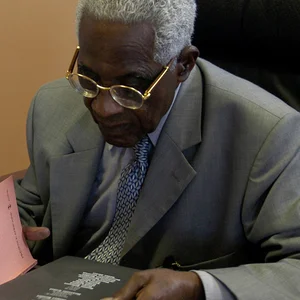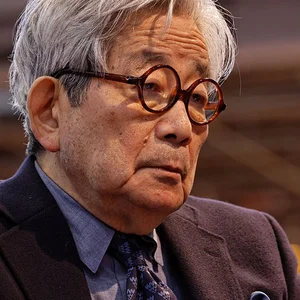

Japanese writer born in 1935, a major figure in post-war Japanese literature. His work, deeply shaped by the birth of his disabled son and by the memory of Hiroshima, earned him the Nobel Prize in Literature in 1994.
Kenzaburō Ōe(1935 — 2023)
Kenzaburō Ōe
Japon, empire du Japon
7 min read
Frequently asked questions
Key Facts
- Born on January 31, 1935, in the village of Ōse, on the island of Shikoku (Japan)
- Published “A Personal Matter” (Kojinteki na taiken) in 1964, inspired by the birth of his son Hikari, who was born with a disability
- Published “Hiroshima Notes” (Hiroshima Noto) in 1965, a testimony about the survivors of the atomic bomb
- Received the Nobel Prize in Literature in 1994
- Died on March 3, 2023, in Tokyo
Works & Achievements
A short story that won him the Akutagawa Prize at 23; it reveals a precocious talent and an unflinching look at war seen through children's eyes.
His first novel, about a group of reform-school children abandoned in a wartime village; a powerful story of exclusion and cruelty.
A novel born from the birth of his disabled son; it tells of a father's struggle to accept and love his child. His most famous book.
A collection of investigations and reflections on the survivors of the atomic bomb; a major text of nuclear remembrance.
An ambitious novel linking the history of a village, an old uprising, and the crisis of two brothers; considered a masterpiece.
A committed essay on Okinawa's painful history during and after the war, which would spark fierce controversy.
A novel blending village myths and family memory, in which Ōe revisits the legends of his native Shikoku.
A story centered on the life of a family much like his own, revolving around a disabled son, full of tenderness and gravity.
Anecdotes
At just 23 years old, in 1958, Ōe received the prestigious Akutagawa Prize for his short story "Prize Stock
which tells of the encounter between the children of a Japanese village and a Black American airman shot down during the war. This prize made him a rising star of Japanese literature while he was still a student.
In 1963, his son Hikari was born with a severe skull malformation. Doctors warned that the operation that would save him would likely leave him with serious disabilities. Ōe chose to have him operated on anyway, and this event transformed his entire body of work: from it he would draw his most famous novel
A Personal Matter.
His son Hikari, long unable to speak and nearly blind, one day revealed himself to be fascinated by birdsong and then by music. Having become a composer, he released albums in Japan. For Ōe, his son's music was a way of "saying" what words could not express.
In 1994, the very year of his Nobel Prize, Ōe declined the Order of Culture, Japan's highest artistic distinction, because it is bestowed by the Emperor. A committed pacifist, he declared that he recognized no authority above democracy and the people.
For the title of his Nobel lecture
Japan, the Ambiguous, and Myself
Ōe deliberately played on the one his elder Yasunari Kawabata had chosen in 1968
Japan, the Beautiful, and Myself." Where Kawabata celebrated traditional beauty, Ōe preferred to speak of the contradictions and wounds of modern Japan.
Primary Sources
The title of my lecture echoes that of Yasunari Kawabata. As a writer, I hope that my work can help to heal and reconcile the people wounded by our century.
The people of Hiroshima, despite the horror they lived through, refuse despair and preserve their dignity as human beings. They are the true moralists of our time.
Bird realizes that he cannot run away forever: to take responsibility for the life of this fragile child is also to become, at last, himself — a man and a father.
I recognize no authority, no value, that would place itself above democracy; this is why I cannot accept a distinction awarded by the Emperor.
Key Places
Forest village on the island of Shikoku where Ōe was born in 1935. Its landscapes and village legends would inspire many of his novels.
Ōe studied French literature here and discovered Sartre. It was here that he began to write and to make a name for himself.
The writer lived and worked for most of his life in the Japanese capital, where he died in 2023.
Ōe traveled here in the 1960s to meet survivors of the atomic bomb, which gave rise to “Hiroshima Notes.”
His travels through the Okinawa archipelago, scarred by war and the American presence, fed into his “Okinawa Notes.”
Ōe received the Nobel Prize in Literature here in December 1994 and delivered his famous lecture “Japan, the Ambiguous, and Myself.”
Typical Objects
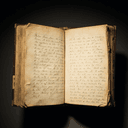
Ōe wrote his novels by hand, endlessly crossing out and reworking his drafts in notebooks. For him, writing was a long process of patient rewriting.
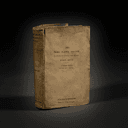
As a student of French literature, Ōe learned French in order to read Jean-Paul Sartre and Rabelais. These books shaped his thinking and his style.
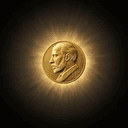
Awarded in Stockholm in 1994, this gold medal honors his entire body of work on the international stage. It is one of the highest literary distinctions in the world.
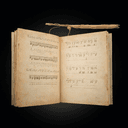
The compositions of his son Hikari, who became a musician despite his disability, held a central place in the family home. They inspired several of the writer's texts.
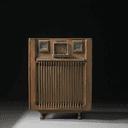
In post-war Japan, the radio broadcast news of the world and of reconstruction. As a child, Ōe heard through it the announcement of the country's surrender.
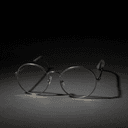
The round, thick glasses were part of the writer's familiar silhouette. They evoke the image of the intellectual and avid reader that he was.
School Curriculum
Vocabulary & Tags
Key Vocabulary
Daily Life
Morning
Ōe devoted his mornings to writing, with great discipline. Seated at his desk, he would tirelessly reread and cross out his handwritten drafts, convinced that a good text is born from rewriting.
Afternoon
The afternoon was often devoted to reading, in both Japanese and French, and to preparing his upcoming novels. An avid reader, he annotated the works of Sartre, Rabelais, Dante, and Blake that nourished his thinking.
Evening
The evenings revolved around family life and the music of his son Hikari, whose compositions echoed throughout the house. This daily bond with his son was at the heart of his existence and his work.
Food
Like most Japanese of his generation, Ōe ate a cuisine based on rice, fish, vegetables, miso soup, and green tea. The postwar years had seen severe shortages, and his rural childhood was marked by simple food.
Clothing
In everyday life, he wore modern Western clothing — trousers, shirt, jacket — like the Japanese intellectual elite of the postwar era. His round, thick glasses became a hallmark of his appearance.
Housing
Ōe lived in a house in the suburbs of Tokyo, blending modern comfort with the Japanese art of living. It was there, surrounded by books and Hikari's music, that he wrote the bulk of his work.
Historical Timeline
Period Vocabulary
Liens externes & ressources
Références
Œuvres
Gibier d'élevage (飼育)
1958
Arrachez les bourgeons, tirez sur les enfants (芽むしり仔撃ち)
1958
Une affaire personnelle (個人的な体験)
1964
Notes de Hiroshima (ヒロシマ・ノート)
1965
Le Jeu du siècle (万延元年のフットボール)
1967
Notes d'Okinawa (沖縄ノート)
1970
M/T et l'histoire des merveilles de la forêt
1986