Imaginary interview with Kenzaburō Ōe
by Charactorium · Kenzaburō Ōe (1935 — 2023) · Literature · 6 min read
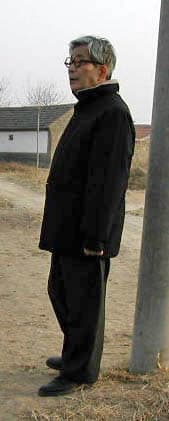
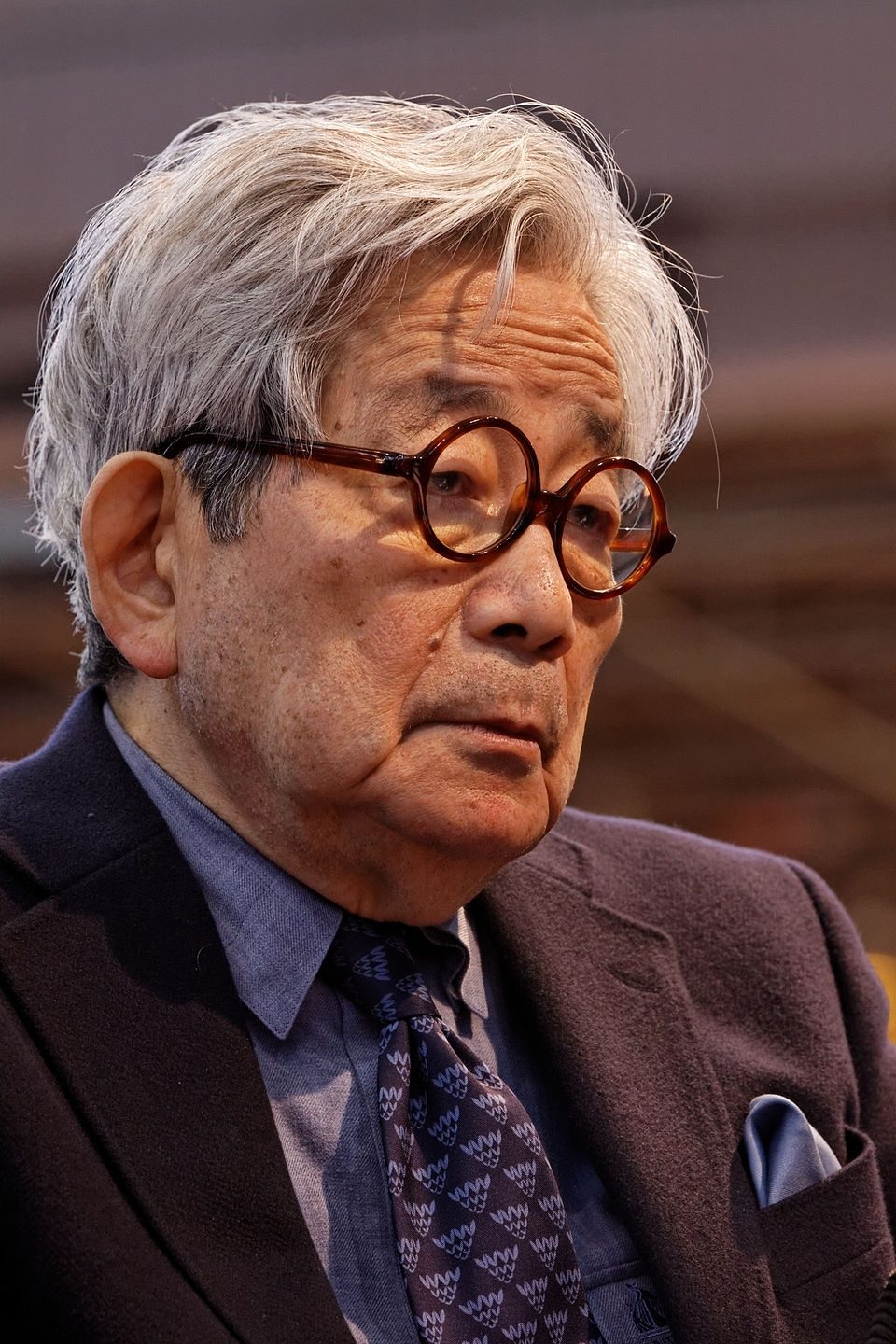
A late autumn afternoon, in a house in the Tokyo suburbs where books pile up to the ceiling and where, somewhere in the back, a score waits on a piano. Kenzaburō Ōe receives without a tie, round glasses perched on his nose, a heavily corrected notebook within reach. He speaks slowly, as if rewriting each sentence aloud.
—How did a child born in a forest village in Shikoku become a writer?
I was born in 1935 in Ōse, a hamlet lost in the forests of the island of Shikoku, a place where grandmothers still told tales of ancient uprisings and valley spirits as if they walked among us. I never left those legends behind; they return in M/T and the Marvels of the Forest, where I turn my village into a whole world. Then Tokyo swept me away: at university, on the Hongō campus, I learned French solely to read Sartre and Rabelais in the original. It was dizzying. I had grown up between forest myths and discovered that man defines himself by his choices. Between those two worlds, the forest and Sartre, I found my language.
Between the myths of the forest and Sartre, I found my language.
—They say you wrote by hand, tirelessly. What did rewriting mean to you?
My mornings were all given to writing, in an almost monastic discipline. I filled notebooks with drafts that I crossed out, took up again, struck through, until the sentence stopped lying. I never believed in genius that gushes out in one go; for me, a text worthy of the name is born of patience, of revision, of slow sedimentation. In the afternoon, I read and annotated Dante, Blake, Rabelais — those books that nourished the next day's page. Writing was rewriting — correcting the man I had been the day before. My notebooks looked less like manuscripts than battlefields, and it was precisely in those crossings-out that I felt alive, honest, finally exact.
Writing was rewriting — correcting the man I had been the day before.
—Do you remember the day your son Hikari was born?
1963. The doctors spoke in low voices of a skull malformation, of an operation that might save him but would leave him severely disabled. I was offered, at bottom, the temptation of flight — let things be, look away. I chose the operation, and that choice remade me as much as it saved him. From that night came A Personal Matter, where my character Bird understands that taking on the life of this fragile child is finally to become himself. For a long time I could only write around that wound. People sometimes ask if it was a burden: no. Hikari is the center around which my entire work eventually turned.
That choice remade me as much as it saved him.
—What happened when this child, nearly blind and without speech, began to listen to the birdsong?
It was the silent miracle of my life. Hikari lived long confined, nearly blind, unable to utter a word — then one day he turned to the birdsong as if to a language finally legible. From that came the music. He became a composer; his scores occupied the heart of our home, and in the evening our lives revolved around what he made resonate. I understood that his music said what words, my poor crossed-out words, could not say. I drew from it A Quiet Life, that story of a family held together by a different son. He taught me that expression does not pass only through language — sometimes it passes through a sustained note.
His music said what my poor crossed-out words could not say.
—What did you go to Hiroshima to find in the early 1960s?
I went there to listen, not to judge. I thought I would find despair, and I found men standing upright. The hibakusha, those survivors of the bomb, bore in their flesh the horror of the genbaku, and yet they refused to be reduced to misfortune; they kept a dignity I had encountered nowhere else. I noted their faces, their silences, their angers, and that became the Hiroshima Notes. For me, these people are the true moralists of our time — not the philosophers in their chairs, but those who, having lost everything, continue to choose dignity over despair. Writing that book was learning to measure my own cowardice as a man spared.
I thought I would find despair, and I found men standing upright.
—How did the memory of nuclear weapons shape your entire writing?
I was ten in 1945, at an age when you still believe adults know what they are doing, when the radio announced the surrender. Then, in 1954, a fishing boat came back irradiated from an American test at Bikini, and fear rose again across the country. I grew up in a Japan that lived with the shadow of the genbaku over it, in that sengo, that postwar period when we rebuilt houses without knowing how to rebuild souls. My entire work is traversed by this question: how does a man remain human after the inhuman? The Hiroshima Notes were not a topical book but the core of my conscience. Nuclear weapons were never a subject for me; they were the air I breathed.
We rebuilt houses without knowing how to rebuild souls.
—The year of your Nobel Prize, you refused the Order of Culture. Why that gesture?
In 1994, I was offered the Order of Culture, the highest artistic distinction in the country — and I refused it, because it is awarded by the Emperor. I recognize no authority, no value that would place itself above democracy; that is why I could not accept a medal from the Tennō. Understand me: it was not pride. I grew up in a Japan where the Emperor had been made a god in whose name children died. After 1945, he lost that divine status, and I spent my life defending Article 9 of our Constitution, the one by which the country renounces war. Accepting that distinction would have betrayed all that. You can love your country and refuse its idols.
You can love your country and refuse its idols.
—How do you explain this visceral attachment to pacifism and Article 9?
Because I saw it born when I was twelve. The Constitution of 1947 came into force in a country on its knees, still under American occupation, and its article renouncing war seemed to me the only beautiful thing to come out of so many ruins. I grew up with that text as others grow up with a prayer. Later, in 1960, when immense crowds protested the security treaty with the United States, that Anpo movement, I was with them in spirit if not always on the street. A writer has no army; he has only sentences and his signature at the bottom of petitions. But I believe one always writes, also, to keep the promise made to the child one once was.
I grew up with that text as others grow up with a prayer.
—In Stockholm, your lecture almost answered Kawabata's. What did you mean by that play on titles?
When I stepped up to the podium in Stockholm in December 1994, I titled my lecture Japan, the Ambiguous, and Myself. It was a nod — a serious one — to the lecture of my elder Yasunari Kawabata, the first Japanese laureate in 1968, who had chosen Japan, the Beautiful, and Myself. Where he celebrated traditional beauty, gardens, snow, woodblock prints, I wanted to speak of the contradictions and wounds of modern Japan, of this country torn between the West it had imitated and the East it had renounced. The word ambiguity is not a reproach: it is an admission. I said I hoped my work would contribute to healing and reconciling people wounded by our century. Beauty alone was no longer enough.
The word ambiguity is not a reproach: it is an admission.
—As the second Japanese writer to receive this prize, did you feel like Kawabata's heir or in rupture with him?
Both, and that is precisely my ambiguity. Kawabata was a master of restraint, of fragile beauty; I, trained on the Hongō campus by Sartre and Rabelais, came from another slope, that of commitment, of the body, sometimes of the cry. Receiving the Nobel in 1994, twenty-six years after him, was not sitting on his throne but recognizing that between us Japan had changed its face. He wrote the snow; I wrote the hibakusha, my disabled son, the revolts of my Shikoku villages. One can venerate an elder and take the opposite road. I wanted, in my own way, to extend his sentence where he had left it hanging, and to give it a gravity he had not sought.
He wrote the snow; I wrote the hibakusha.
—If you had to name the thread linking the child of Shikoku, the father of Hikari, and the man of Stockholm, what would it be?
The conviction that writing is refusing that a being be abandoned. As a child in Ōse, I listened to the legends of those the village had rejected; my first novel, Nip the Buds, Shoot the Kids, already spoke of children placed and left behind. Then there was Hikari, whom I was urged not to save. Then the hibakusha, whom people wished to forget. Always the same question: what to do with what one would rather not see? My crossed-out notebooks, my trips to Hiroshima, my refusal of the imperial medal — all proceed from a single refusal. A writer, I believe, is not there to console; he is there to prevent people from looking away. That is the only loyalty I know in myself.
A writer is not there to console; he is there to prevent people from looking away.
This imaginary interview was generated by artificial intelligence from sources documented in Kenzaburō Ōe's profile. It dramatises what the figure might have said based on what we know about them, but does not constitute attested historical testimony. For primary sources and factual documentation, refer to the full profile.