Kids interview Kiya
by Charactorium · Kiya (1400 av. J.-C. — 1400 av. J.-C.) · Politics · Spirituality · Visual Arts · 5 min read
Two young visitors, twelve years old, arrive for a school field trip, notebook in hand. Before them, the shadow of a forgotten queen of Egypt takes shape under the sun. Kiya greets them with a smile, ready to tell them about her vanished world.
—What's your real name, and why were you called the 'Greatly Beloved'?
You know, my child, my name was Kiya. A short name, a bit foreign to Egyptian ears. But I was given a title that no one had ever borne: wrt hswt, 'the Greatly Beloved.' Imagine a court full of princesses, and a single word reserved for you alone. The great queen was called 'Great Royal Wife' — that was Nefertiti. I was neither quite that, nor a mere palace servant. I was in between, in a place all my own. When Pharaoh Akhenaten laid his eyes on me, that title said I was dear to his heart. It was rare. It was precious. And it never existed again after me.
A single word was reserved for me, for me alone in all of Egypt.
—Where did you come from originally? Were you born in Egypt?
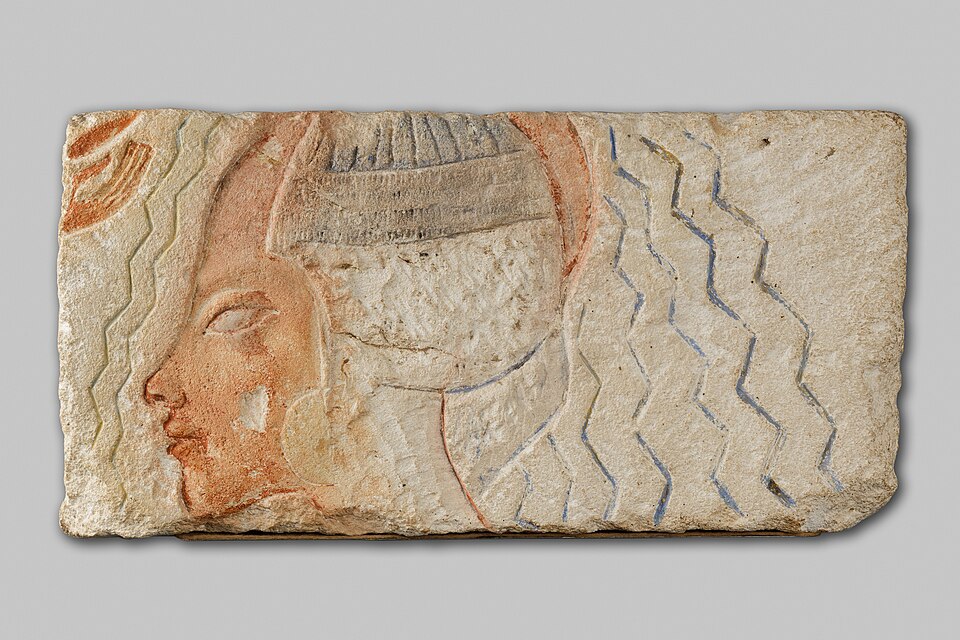
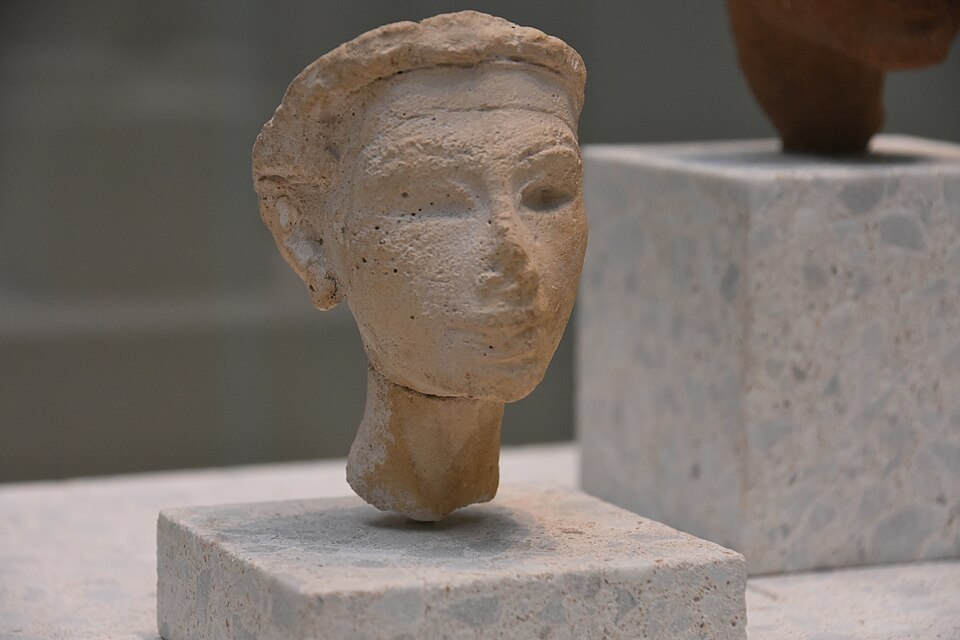
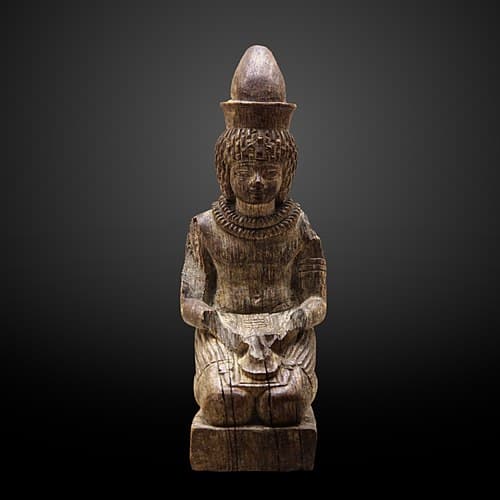
Ah, that is my greatest mystery. Some think I came from very far away, from a kingdom called Mitanni, toward the eastern lands. Imagine a long caravan crossing the desert for weeks: a young girl sent to a foreign king to seal peace between two peoples. She was called Tadukhipa, daughter of King Tushratta. Perhaps 'Kiya' is just her name transformed for Egyptian mouths. Look at my wig, with its long tight curls: it didn't look like those of the other women at court. I say 'perhaps,' because even I leave you guessing. A queen can keep a secret, you know.
A queen can keep a secret, even for eternity.
—Must have been scary to arrive all alone at a king you didn't know?
Oh yes. Imagine leaving your home, your language, the smell of your mother's cooking, for a country where everything is different. At the court of Akhenaten, they prayed to only one god: Aten, the sun disk. Back home, the gods were many. I had to relearn everything. Kings wrote letters on clay tablets, speaking of me as a gift between the powerful, and even of promised gold statues! I was traded like a treasure. But a treasure has a heart, my child. I was cold at night, far from my people. Then, little by little, this palace of sand became my home.
I was traded like a treasure, but a treasure has a heart.
—Is it true you had a temple just for yourself?
Yes! And you can hardly imagine how extraordinary that was. It was called the bit-shades, the 'house of the sun's shadow.' A temple to pray to Aten, just for me. Usually, only the great queen was entitled to such a place. Not a secondary wife like me. Imagine a court of white stone, open to the sky, where the sun's rays descend in long lines ending in small hands holding the sign of life, the ankh. In the morning, I would place bread, flowers, fruits there. That the pharaoh gave me such a place shouted to the whole world: this woman matters to me. It was my most beautiful gift.
A temple just for me: it shouted to the world that I mattered.
—What did it smell like and look like, a day at the palace for you?
Morning smelled of clean linen and incense. Servants helped me into a white linen dress, so fine it let the light through. Around my neck, a broad collar of blue and gold beads, the usekh. I prayed facing the rising sun, in my chapel. In the afternoon, I walked in the gardens of the Great Palace of Akhetaten, along pools filled with Nile water, with painted fish on the floors. In the evening, we gathered for banquets: musicians shook the sistrum, a small sacred rattle that tinkles, and a scribe sang hymns to the sun. Imagine a street with no machine noise — just voices, water, and the desert wind.
A dress so fine it let the sunlight through.
—Did you have children? They say you might have been the mother of a famous pharaoh.
That is a question that touches my heart, my child. On the walls of a royal tomb at Amarna, I am shown holding a little royal child in my arms. A mother, yes. And some whisper that little one was Tutankhaten — whom you may know as Tutankhamun, the young king with the golden mask. Imagine: holding in your arms a child who would become pharaoh of Egypt! I say 'perhaps,' because the stones have worn away and the names erased. But when a mother holds her child, she thinks not of crowns. She thinks of his little hand in hers. That, no stone can take from me.
A mother thinks not of crowns, but of the little hand in hers.
—Why was your name erased everywhere? What did you do wrong?
Ah, that is the saddest part. One day, I vanished from the walls. My face, my name: scraped away, hammered out, replaced by those of the royal princesses, especially Meritaten. Scholars call it damnatio memoriae — old words meaning 'they erase your memory.' Imagine your first name being rubbed out from all your notebooks, all your photos, as if you had never existed. Why? I cannot tell you for sure. Perhaps disgrace, perhaps my death, perhaps fear of my too-great place. They wanted to silence me forever. And yet, you see, you are here today speaking my name. So they failed.
They scraped my name everywhere — and yet, you still speak it.
—How did scholars find you again, then, if everything was erased?
Thanks to little stones, believe it or not! They built Aten's temples with blocks of limestone all the same size, called talatat. When the city was abandoned, they were reused elsewhere, at Hermopolis, like old bricks. Centuries later, scholars found them, reassembled them like a giant puzzle, and my name reappeared! And then there are my funerary jars — the ones that held my organs after death — found in 1907 in a hidden tomb, KV55. My cartouches were half erased. Imagine detectives poring over old stones, patient for years. That is how they gave me back my face.
They found me by reassembling old stones, like a giant puzzle.
—Were you jealous of Nefertiti? Did you two talk?
You ask a question of the heart. Nefertiti was the great queen, the one whose name shone brightest in the kingdom of Aten. I had my own title, the 'Greatly Beloved.' We did not occupy the same place. Imagine two flowers in the same garden: one tall and radiant, the other more discreet but with a scent all its own. I do not know if we were friends — stones do not tell of hearts, only titles and prayers. But in a palace, you learn quickly that true wealth is not being first. It is being truly loved. And that word, 'beloved,' was in my title.
True wealth is not being first, but being truly loved.
—If we could keep one memory of you today, what would be the most important?
That you remember they tried to erase me, and it didn't work. They scraped my name, reused my jars, gave my face to others. They wanted me to become wind. But little stones, the talatat of Hermopolis, and four jars in tomb KV55 kept the trace of Kiya. Imagine a candle blown out, but one ember still glows in the dark. That is me, that ember. So when you go home, tell my story. Say that there was, under the sun of Egypt, a woman with a unique title, the 'Greatly Beloved.' As long as a child speaks my name, I am not quite dead.
As long as a child speaks my name, I am not quite dead.
Read further

This imaginary interview was generated by artificial intelligence from sources documented in Kiya's profile. It dramatises what the figure might have said based on what we know about them, but does not constitute attested historical testimony. For primary sources and factual documentation, refer to the full profile.