Imaginary interview with Lakshmi
by Charactorium · Lakshmi · Mythology · Spirituality · 6 min read
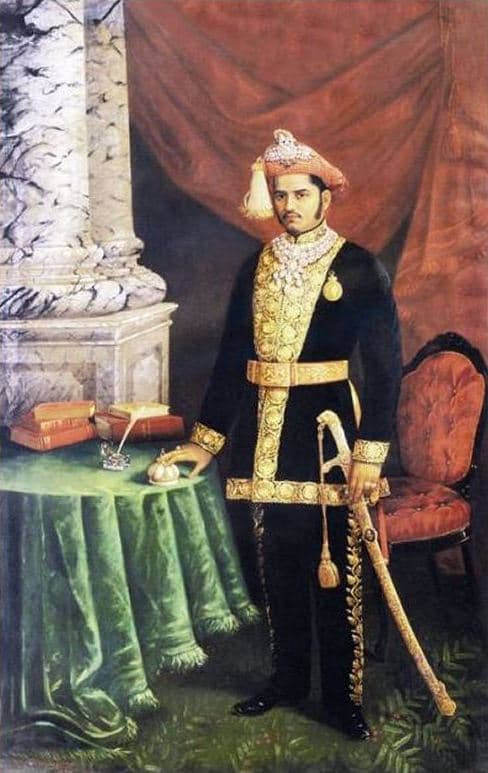
The meeting takes place at the hour when dawn glides over the waters, somewhere between the palace of Vaikuntha and a freshly washed village threshold. Seated on a lotus that floats without getting wet, dressed in red and gold, Lakshmi agrees to speak — not as a distant goddess, but as one who travels every night from door to door. Her voice has the sweetness of poured milk.
—Do you remember the moment of your coming into the world?
I was born from violence and hope mingled. Gods and demons had seized the mountain as a churning rod and the serpent as a rope, and they were whipping the primordial ocean to extract the nectar of immortality. From that churning — which you call Samudra Manthan — I emerged, not from darkness but from the clearest foam, dressed in white, a lotus already open in my hand. Before the entire assembly of gods, I looked, and I chose Vishnu as my husband. People always think fortune falls from the sky: I rose from the most troubled waters. That is why I fear neither mud nor the chaos of beginnings — I came out of it.
People always think fortune falls from the sky: I rose from the most troubled waters.
—Why does the lotus accompany you everywhere, even in your birth?
Because the lotus says everything about me without a word. It plunges its roots into the thickest mud and emerges immaculate, without a single stain clinging to it. When I emerged from the churned ocean, it was on this flower that I settled, and since then the sculptors of Bharhut and Sanchi have carved me thus, a flower in each hand. Men want a prosperity that never soils its hands; the lotus teaches them the opposite. The wealth that matters is that which goes through the mud and keeps nothing of it. That is what I hold, between my fingers, every time a devotee lifts their eyes to me.
The wealth that matters is that which goes through the mud and keeps nothing of it.
—How do you explain that two white elephants flank you in your oldest images?
Elephants are rain made beast. In the form called Gaja Lakshmi, they raise their trunks and pour over me an endless water — for without rain, there is no rice, no kingdom, no offering. The elephant is royal power and the fertility of clouds combined in a single shape. The stone carvers understood this before the theologians: from the gateways of Bharhut, I was shown thus, bathed by these two guardians. When a king wanted to say that heaven blessed his land, he had me carved between elephants. Prosperity, you see, is not decreed: it pours down.
Elephants are rain made beast.
—What would you say about your mount, the owl, so strange for a goddess of light?
People are always surprised: I who give gold and brightness, I ride the uluka, the owl that sees only at night and bumps into things by day. This is not a mistake, it is a warning that I carry beneath me. Wealth often makes its recipient blind: they no longer see the poor at their door, nor the measure of things. My owl reminds my devotees that my gifts, misused, darken instead of illuminate. With my right hand I pour a rain of coins — the gesture of giving, the Varada mudra — but I mount the bird of darkness so that one never forgets the other face of what I bring. Wisdom must hold the purse.
Wealth often makes its recipient blind.
—Every autumn, millions of homes light up for you. What do you seek when you enter them?
The night of Diwali is the darkest of the year, and that is precisely when I am awaited. Families line up their little clay lamps — the diyas — on thresholds and ledges, not to decorate, but so that I may find my way in the dark. Then I travel from house to house. And I do not enter everywhere: I seek the clean, lit home, with its door open, where a kolam of rice powder has been traced on the ground to tell me “here, you are welcome.” What I come to check is not the wealth already there — it is the care, the order, the hospitality. The light lit for me is first a light lit for oneself.
The light lit for me is first a light lit for oneself.
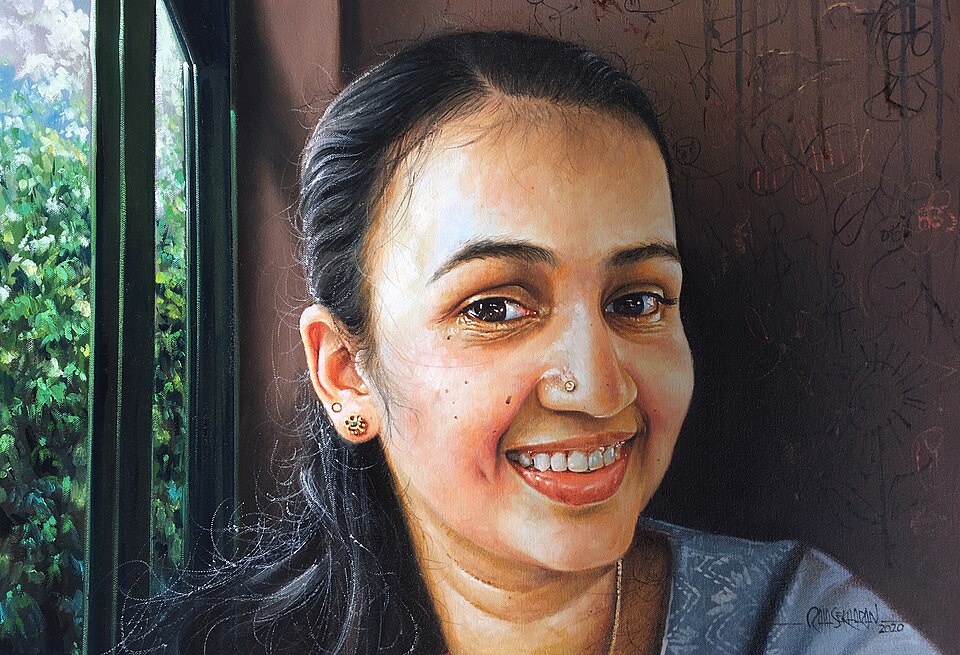
—Do those drawings traced at the threshold of houses, the kolam, really matter to you?
More than one might think. Before dawn, women bend down and let rice powder flow between their fingers, drawing lotuses and spirals on the earth of the threshold — the kolam, the rangoli. This is not an ornament: it is a language addressed to me. It says that the house has been washed, that the day begins in purity, that the door is not closed to grace. I love that hour when the household recites the Shri Sukta and weaves garlands of fresh flowers for my image. The very rice of the drawing will feed ants and birds: thus abundance begins before I enter, through a gift to the smallest. Those are the houses where I linger.
The rice of the drawing will feed the ants: abundance begins before I enter.
—It is said that you have, several times, left the world of the gods. What makes you leave?
Pride drives me away, and neglect. More than once I deserted the abode of the gods when they ceased to honor me with purity, when they thought I was owed to them. And as soon as I left, drought rose, granaries emptied, misery settled where I had reigned. For I am not a possession one owns: I am a presence one merits every day. The Mahabharata says it in my place — I dwell in pure hearts, in the fresh flower, in the generous cow, in the just king and the house where harmony reigns. Where I am forgotten, I absent myself. This is not cruelty: it is my nature. Prosperity does not cling to those who take it for granted.
I am not a possession one owns: I am a presence one merits every day.
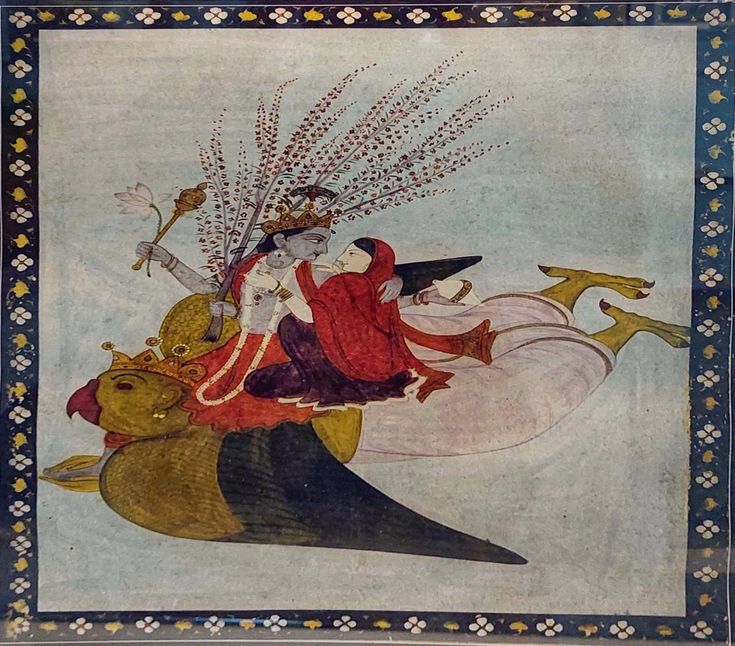
—Should we imagine you as a submissive wife, at Vishnu's side?
Submissive? Look at the temple of Kolhapur, where I am worshipped as Mahalakshmi. There I sit alone, without Vishnu beside me, asserting a power that belongs only to me. Faithful I am; dependent, no. I chose my husband freely, emerging from the waters before all the gods — and I can just as freely withdraw when harmony is broken. I am sometimes invoked in eight forms, the Ashta Lakshmi: wealth, courage, victory, knowledge, abundance of grain, progeny… None of these powers is an ornament hanging on another's arm. I nourish, I sustain, I leave if I am betrayed. That is a wife who holds her own lamp.
Faithful I am; dependent, no.
—Southern devotees pray to you as an intercessor. What does this role with Vishnu consist of?
Men fear the justice of my husband, and they are right to fear it. So they come to me first. The masters of Sri Vaishnavism, in the lineage of Ramanuja, have called this the Purushakara: I stand between the devotee and Vishnu, and I plead. I am the one who softens, who recalls human fault and implores grace. At Srirangam, on its island surrounded by waters, I am called Ranganayaki beside the reclining Vishnu; at Tirupati, I am Padmavati, and crowds climb the hill so that I may carry their prayer higher. I am inseparable from him as light is from the sun — but it is through me that his light becomes gentle for those who, otherwise, would be burned.
I stand between the devotee and Vishnu, and I plead.
—After so many centuries and lands traversed, how far has your presence spread?
I have never stopped traveling. From India, I was carried across the seas to Bali, where I am venerated as goddess of the earth and rice fields, patron of fertility by the water's edge. There as here, I remain she who makes the grain rise and fills the golden pot, the Kalasha, which is filled with sacred water and coins in my rituals. Whether the soil is that of Tamil Nadu or a distant island, my demand is the same: a pure home, a generous hand, a heart that does not consider itself owner of its luck. Kingdoms change, languages change, offerings change a little — but prosperity, everywhere, demands the same virtues. I am not of a single country. I am of every threshold that opens.
I am not of a single country. I am of every threshold that opens.
Read further
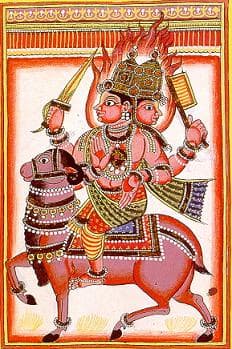
This imaginary interview was generated by artificial intelligence from sources documented in Lakshmi's profile. It dramatises what the figure might have said based on what we know about them, but does not constitute attested historical testimony. For primary sources and factual documentation, refer to the full profile.