Imaginary dialogue between Vishnu Bhatt Godse and Lakshmi Bai
by Charactorium · Lakshmi Bai (1828 — 1858) · Military · 5 min read
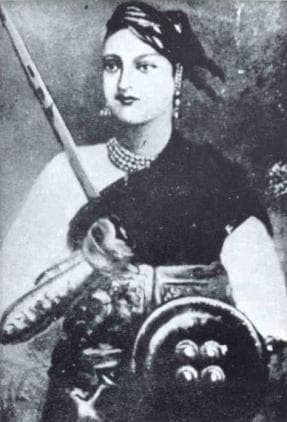
It is under a rough canvas tent, in the insurgent camp of Kalpi, that Vishnu Bhatt Godse finds the Rani at the end of spring 1858. Outside, the roar of the Yamuna River mingles with orders shouted to weary horsemen. The Marathi priest, witness to the siege of Jhansi from which he fled like so many others, has known the Rani since those weeks of powder and ash when he saw her direct the defense. He sits down on the mat, his notebook on his knees, having come to gather — before everything scatters — the account of the one whose sword he saw glint on the ramparts.
—Rani, before arms, there was ink. Why did you first write to Lord Dalhousie rather than immediately raise the sword against annexation?
Because the law was on my side, and I believed he could hear it. When my husband the raja Gangadhar Rao passed away in 1853, we had adopted Damodar Rao according to Hindu law — a legitimate son in the eyes of our gods and our customs. I wrote, I protested, I reminded them that this Doctrine of Lapse had no foundation among us. They answered with surveyors and registers. You who have seen the palace, you know I did not rush to battle out of a taste for blood: I came to it because all other doors were closed to me. The pen first, the talwar afterward — but both said the same thing.
The pen first, the talwar afterward — but both said the same thing.
—In the camp they repeat those words you are said to have cried: “Main apni Jhansi nahi dungi.” Were they anger, or a deliberate oath?
Both, and they do not contradict each other. I will not surrender my Jhansi — this is not the cry of a wounded woman; it is the refusal of a sovereign to sign her own disappearance. A queen who abandons her land abandons not only walls: she delivers her peasants, her temples, her sepoys, the child entrusted to her. Understand me well, Godse, you who note everything: they offered me a pension to keep quiet and leave the fort. I could have lived rich and forgotten. I preferred to remain poor with honor intact. Those words, I thought them long before I spoke them. They only rose to my lips on the day when I had to choose.
—I knew you as a widow, in a white sari, secluded according to custom. How does one go from that mourning to the rider's turban without the heart breaking?
Do you really think they are so far apart? As a child, in Varanasi, they called me Manu and I learned horse riding and wrestling alongside the sons of Nana Sahib, while other girls stayed in the zenana. The white sari of the widow I wore with respect — but mourning did not order me to die alive behind a veil. The day Jhansi was threatened, I took off the garment of seclusion for the cuirass, and that was not a betrayal of my widowhood: it was its continuation. A woman who defends the land of her deceased husband honors his memory better than by weeping. They said I broke the codes. I say I served a higher one.
Mourning did not order me to die alive behind a veil.
—During those months, you did not only fight: you governed. How does one hold a kingdom in revolt when the enemy tightens his grip every day?
One rises before dawn and does not stop until night. Mornings with arms and prayers, afternoons at the durbar, judging disputes, levying taxes, listening to petitions from frightened peasants. A frightened people first want to know that someone is watching. I maintained order, paid the soldiers, repaired the walls, organized supplies — for an army without grain cannot hold a siege. You saw, Godse, that nothing was left to chance in Jhansi. Governing in wartime is being both the mother who reassures and the general who decides. I learned that a crown never weighs as heavily as when one must defend it with weapons in hand.
—I was in the city when General Hugh Rose took it, in April 1858. You escaped from the fort in the dead of night. Tell me about that escape.
The night was our only ally. The fort was surrounded, the breaches were opening, and staying meant delivering Damodar to the British. I tied the child on my back, tightened the girth of Badal, my horse, and we left the place by where no one expected us. They already say I jumped from the walls — let people have their stories, they need height for their courage. What I know is that we rode for hours, pursued, without looking back, until we reached Tatya Tope at Kalpi. The weight of my son against my back, I still feel it. You saw me defend Jhansi; know that leaving it was harder than keeping it.
They already say I jumped from the walls; people need height for their courage.
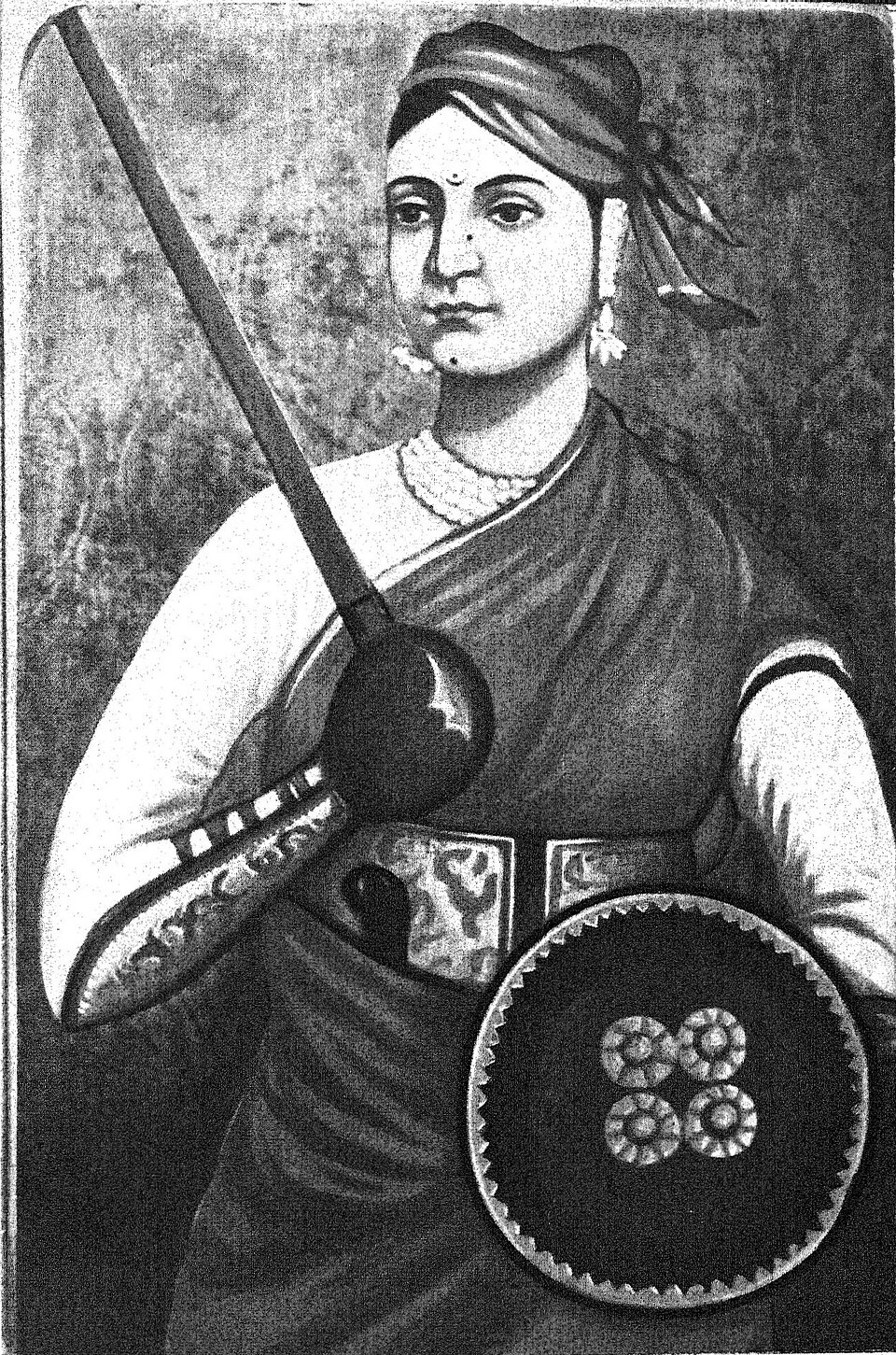
—That child tied on your back, at a gallop, under bullets — what does a mother and a queen feel in the same body, at that moment?
A single fear, and it was not for myself. A queen can accept to fall: that is the price of the throne. But that child had asked nothing of me. At every detonation, I thought only of covering him with my back, of putting him before Jhansi, before my own life. It is strange, Godse: on the ramparts, I was fearless, sword in hand, almost light. In that flight, burdened with him, I knew true terror — that of love. The sovereign commands her fears; the mother obeys them. That night, both rode together on the same horse, and I could not tell you which held the reins.
The sovereign commands her fears; the mother obeys them.
—Here at Kalpi you serve alongside Tatya Tope and Nana Sahib. A queen under the orders of a council of chiefs — how do you experience this position?
I do not serve, I fight with them — the nuance matters. We learned, at our expense, that isolated kingdoms fall one after another like grains under the millstone. Alone, Jhansi resisted for weeks; but together, perhaps we will hold a cause. Tatya Tope knows maneuvers, Nana Sahib carries a name that rallies; I bring what I know how to do, hold a position and inspire men. My queenly pride, I left it at the fort of Jhansi. What matters now is that the British find raised fists everywhere. If we want Gwalior, we must strike quickly, before they shut us in walls again.

—It is reported that Rose himself judges you the most formidable of the rebel leaders. What does the praise of such an enemy do to you?
He does not flatter me, he excuses himself to his masters for having found me so hard to defeat. A general who struggles to take a city readily accuses the adversary's valor — that is better than admitting his own slowness. But I will not scorn this admission. If he speaks truly, it is because my soldiers held, my walls spoke, Jhansi did not fall from weakness but under numbers. You see, Godse, I do not fight so that an Englishman praises my courage; I fight so that my people have no shame. Let the enemy fear me, so be it. That my people respect me — that is my only reward.
I do not fight so that an Englishman praises my courage; I fight so that my people have no shame.
—In the camp, soldiers share your ration and you sleep under the same canvas as them. Why does a Rani renounce the splendors of her court like this?
Because you cannot ask men to die for a queen they have never seen eat their bread. In Jhansi, the court had its music and poetry readings in the evening; I loved that, I do not deny it. But on campaign, luxury is an insult to those who have only dust for a bed. When I share their dal and their fatigue, they no longer serve a distant sovereign: they defend one of their own. My armor is no heavier than theirs, my hunger no sweeter. Believe me, Godse, a chief who eats apart commands mercenaries; a chief who shares the ashes commands brothers. That is what a soldier's ration is worth.
A chief who eats apart commands mercenaries; a chief who shares the ashes commands brothers.
—You who write what you have seen so that it is remembered — what would you want your account to retain of the Rani of Jhansi?
Not the horse's leap, not the walls, not the legends that will grow without me. Write rather that a woman, from whom everything was taken in the name of a foreign law, chose to answer standing rather than on her knees. Write that she first pleaded, then governed, then fought, in that order, and that at no moment did she forget the child or the people entrusted to her care. If I fall tomorrow — and no rider knows his tomorrow — I do not want to be mourned as a victim. Simply say that the land of Jhansi had a queen who did not surrender it. The rest, leave to the poets and to time.
A woman from whom everything was taken chose to answer standing rather than on her knees.
This imaginary interview was generated by artificial intelligence from sources documented in Lakshmi Bai's profile. It dramatises what the figure might have said based on what we know about them, but does not constitute attested historical testimony. For primary sources and factual documentation, refer to the full profile.