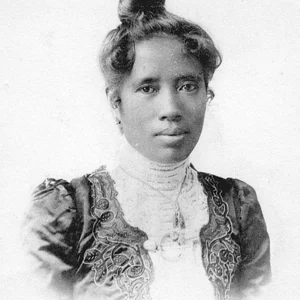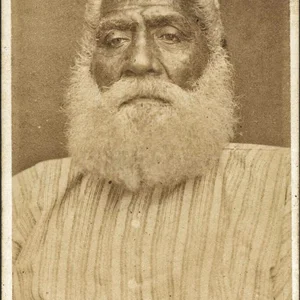

Queen Mother of Ejisu in the Ashanti Empire, Yaa Asantewaa is the emblematic figure of African resistance to British colonization. In 1900, she led the War of the Golden Stool against the British, who demanded the surrender of the Ashanti's sacred seat of power. Captured, she was exiled to the Seychelles, where she died in 1921.
Yaa Asantewaa(1832 — 1921)
Yaa Asantewaa
Côte-de-l’Or
7 min read
Frequently asked questions
Famous Quotes
« If you men of Ashanti will not go forward, then we will. We, the women, will fight until the last of us falls.»
Key Facts
- Around 1832: born in Besease, in the Ashanti kingdom (present-day Ghana)
- 1896: the British exile Ashanti King Prempeh I to the Seychelles, destabilizing the kingdom
- 1900: Yaa Asantewaa leads the War of the Golden Stool following the Kumasi speech, rallying Ashanti warriors against the British demand to surrender the sacred Golden Stool
- 1900: captured after several months of resistance, she is exiled to the Seychelles along with other Ashanti chiefs
- 1921: dies in exile in the Seychelles; her remains are repatriated to Ghana in 2002
Works & Achievements
A major armed uprising against British colonial rule in Ashanti (present-day Ghana). Led by Yaa Asantewaa at over 70 years of age, this rebellion mobilized Ashanti forces and stands as one of the last great anti-colonial resistances in West Africa.
Yaa Asantewaa's historic speech rallying Ashanti chiefs to take up arms, declaring that she was not afraid to die for freedom. This call became emblematic of the African anti-colonial struggle.
A political and military mobilization effort aimed at restoring the independence and unity of the Ashanti kingdom in the face of fragmentation caused by British colonial presence.
The exercise of political and military power as an elderly woman in a warrior society, influencing strategic decisions and inspiring women's participation in the anti-colonial resistance.
Anecdotes
In March 1900, British Governor Frederick Hodgson summoned the Ashanti chiefs and demanded that they hand over the Golden Stool, the sacred symbol of the Ashanti people's soul. Faced with the chiefs' hesitation, Yaa Asantewaa rose and declared: 'If you, the men of Ashanti, will not go forward, then we, the women, will.' This legendary speech sparked the war.
Yaa Asantewaa was appointed commander-in-chief of the Ashanti armies during the War of the Golden Stool in 1900 — an extremely rare distinction for a woman in African military history. She personally oversaw siege tactics against the British fort at Kumasi for several weeks.
The Golden Stool (Sika Dwa Kofi) was never surrendered to the British. According to Ashanti tradition, this sacred stool contains the spirit of the entire nation. The Ashanti hid it so effectively that the colonizers never found it, despite their relentless searches.
Captured by the British in 1900, Yaa Asantewaa was exiled to the Seychelles along with other Ashanti leaders, including King Prempeh I. She died in exile in 1921, never seeing her homeland again. Her remains were repatriated to Ghana in 2002 during a national ceremony organized by the Ghanaian government.
Yaa Asantewaa was the queen mother of Ejisu, a major political and spiritual role in Ashanti matrilineal society. It was she who had enthroned her grandson as chief of Ejisu. Her position gave her considerable moral authority, which explains why warriors and chiefs alike heeded her words.
Primary Sources
Yaa Asantewaa, the queen mother of the Asante people, urged warriors to take up arms again for the freedom and independence of our nation in the face of British oppression. Her speech galvanized the entire Asante confederation.
An elderly woman, renowned for her wisdom and authority, declared to the assembled Asante chiefs: 'If you, men of Ashanti, will not go forward, then we will. I shall call upon my fellow women. We will fight the white men. We will fight till the last of us falls in the battlefields.'
Queen Mother Yaa Asantewaa established herself as the leader of the Asante resistance. Her political and military influence extended across all territories of the confederation.
Yaa Asantewaa reminded the Asante warriors that their ancestors had fought for their dignity. She urged the young men not to accept submission to the white colonizers.
Key Places
Birthplace of Yaa Asantewaa in 1832. This town in the Ashanti territory is the starting point of her life and political influence in the region.
Capital of the Ashanti Empire and major political center where Yaa Asantewaa wielded her influence as queen mother. It was from here that she rallied resistance against British domination.
Geographic area of present-day Ghana where Yaa Asantewaa led the 1900–1901 revolt against the British, known as the War of the Golden Stool.
Place of exile for Yaa Asantewaa following the defeat of the Ashanti revolt. She was imprisoned there by British authorities until her death in 1921.
Liens externes & ressources
Références
Œuvres
Guerre de l'Or (Yaa Asantewaa War)
1900-1901
Appel à la révolte
1900
Restauration de l'Asante
1900-1901
Leadership féminin en contexte militaire
1900-1921