Imaginary dialogue between Le roi Arthur (Artu) and Lancelot du Lac
by Charactorium · Lancelot du Lac · Mythology · 6 min read
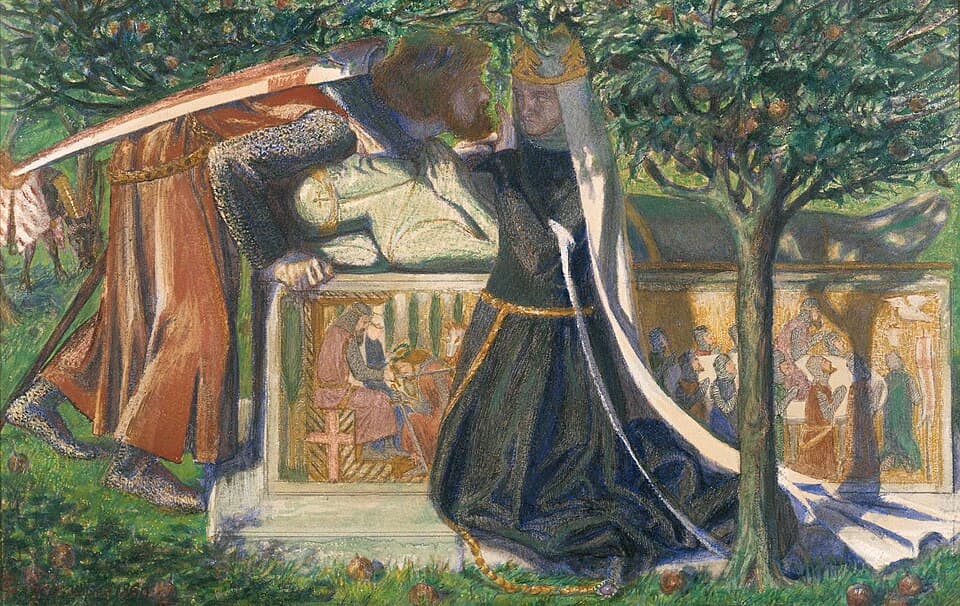
It is in the great hall of Camelot, one evening when the torches cast their flickering light on the Round Table, now half empty, that King Arthur comes to sit near Lancelot. The seats of dead or departed companions leave shadows between them. They have known each other since the day when that unknown knight, coming from nowhere, surpassed all others in arms; since then, friendship and wound mingle in the king's gaze. Arthur has not come to judge: he wants to understand, one last time, the man he has loved most and who has betrayed him most.
—Lancelot, on the day you arrived at my court, no one knew where you came from. They said you were raised under the waters. Tell me the truth of your childhood.
My king, I do not know my mother's face as other children do. My father, King Ban of Bénoïc, died of grief when his kingdom fell, and then a lady took me. They call her the Lady of the Lake. She carried me under the waters of her domain and there, in her palace, she fed me and taught me all that is needed to be a good knight — arms, the horse, service. So I came to you neither from a lineage I could name nor from a land I could show. I came from a place that men do not see. That is why, when you knighted me, I wept: you gave me a house of flesh where I had only a fairy nurse.
I came from a place that men do not see.
—You were long the best of my knights, the one no one could unhorse. What were you really seeking in all those feats, my friend?
You gave me a place at the Round Table, that table without head or precedence where each was equal to the other, and there I wanted to be first — not to outshine you, but to serve you better than anyone. Every tournament, every enemy struck down, I laid it like a gift before your seat. Prowess, you see, is nothing if it does not serve a lord one loves. My sword, my warhorse, my blazoned shield, I wanted them wholly for you and your kingdom. They called me the most feared of your warriors; I felt great only in defending what you had built. That, my king, is the bitter irony: I was your best arm before being your worst wound.
Prowess is nothing if it does not serve a lord one loves.
—I was told that one day you rode in the criminals' cart, you, the proudest of my knights. How could you consent to such shame?
You touch where the flesh still burns. The queen had been abducted by Méléagant, and a dwarf told me that to follow her trail I had to ride in a cart — that chariot of infamy where thieves and perjurers are dragged to the pillory. A knight who mounts it dishonors himself in everyone's eyes. I hesitated, my king — two steps, the time of two steps only — then I got in. I preferred to lose my honor rather than lose her trail. I know what that hesitation cost me: to love without reserve would have meant not hesitating at all. That is what I have never been able to do halfway: when love commands, a knight's honor becomes a burden thrown into the ditch. You already see, I think, where that path led me.
I preferred to lose my honor rather than lose her trail.
—When my knights set out on the quest for the Holy Grail, they said you were the most worthy. Why, of all men, could you not bear its sight?
Because the Grail is not won by the lance, my king. All my life I had believed that prowess in arms opened all doors; before the sacred vessel, my victories counted for nothing. I approached, and a brightness threw me to the ground; my carnal sin — you know which — had taken from me the sight of what pure hearts beheld. I remained at the threshold like a beggar. And it was Galahad, the child born of me but without my fault, who completed what his father could not. There is no harder lesson for a man than to see his own son succeed where his stain stops him. I was the best knight in the world, and heaven showed me that was not enough to deserve God.
Heaven showed me that the best knight in the world is not enough to deserve God.
—Let us speak then of that fault, Lancelot. Do you remember the day when I reproached you for having betrayed your faith, your oaths, and the loyalty you had promised me?
I remember it, Arthur, and those words never leave me. You were right in every point: I had sworn, and I had lied by my deeds. Queen Guinevere... I will not plead before you that I did not love her, for you know it better than anyone. I loved her as one should love only God, and that love, which made me great in combat, made me a traitor at home. When I snatched her from the pyre and took her to Joyous Gard, I thought I was saving her; I was digging your ruin and mine. You had given me your friendship, your table, your kingdom — and I took from you the one thing I should have respected above all. There is no prowess that redeems that. I carry your pain as much as my own.
I loved her as one should love only God.
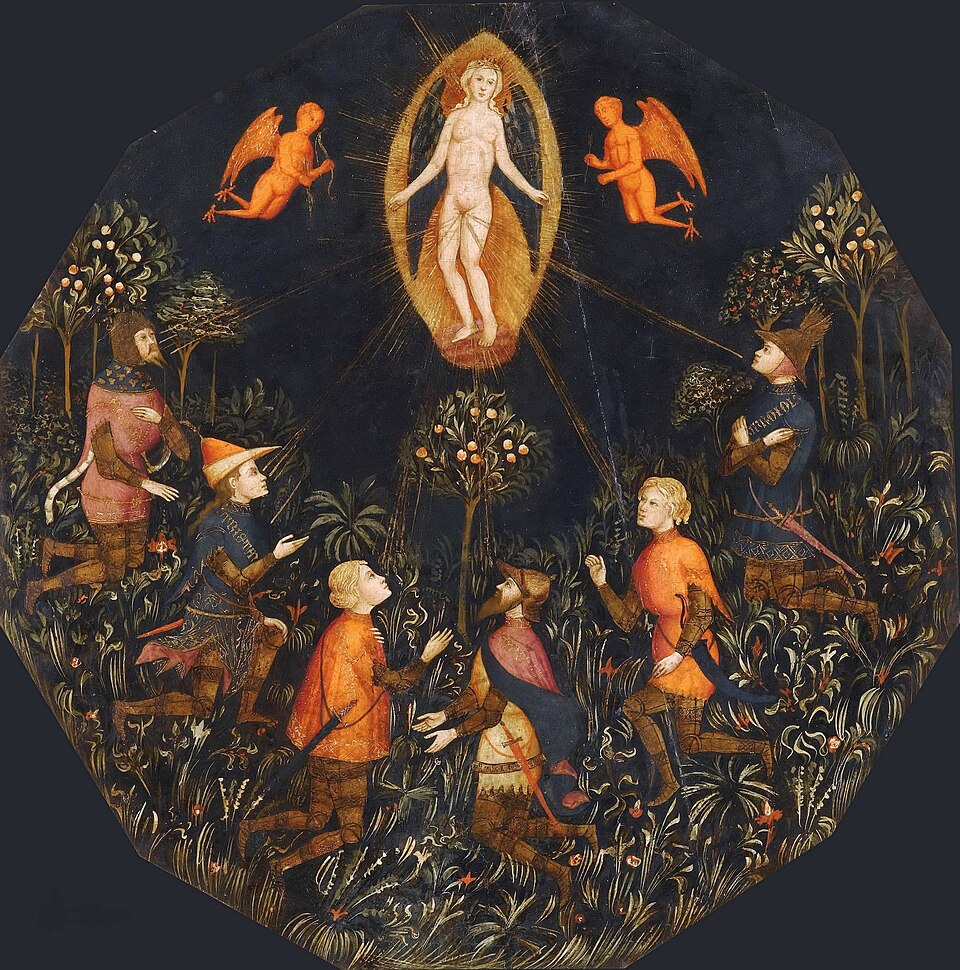
—At Joyous Gard, behind those walls that no one could breach, were you happy? Answer me without evasion, as to the friend I once was.
Happy? The word does not fit, my king. I had made that castle the most impregnable of fortresses, and there I held what my heart desired. But every stone of those walls separated me from you. I looked toward Camelot and I knew that my joy was built on your pain. A refuge that betrays you is no refuge; it is a prison more beautiful than others. At night, I listened to the wind on the ramparts and almost expected your banners to appear on the horizon, for then at least the lie would end. One thinks forbidden love gives stolen happiness; it gives above all the fear of losing you, my lord, along with her. I had everything, and I had only shame under a gilded roof.
A refuge that betrays you is no refuge; it is a prison more beautiful than others.
—That Lady of the Lake who raised you, did she leave you something of her art? They speak of a ring, of powers not of our world.
She left me a ring, yes, whose virtue was to undo enchantments and show me the true beneath the false. More than once it saved me from illusions cast by fairies or sorcerers. But understand, my king: this gift gave me no power over men or battles. There, I had only my arm and the courage you know. The Lady's legacy is above all that I came into the world of knights through a door that others did not cross — through water, through faerie, through a mother who was not my mother. That marked me with a strangeness I never lost. Even at your table, even laughing with the companions, a part of me remained under the waters of the lake.
A part of me remained under the waters of the lake.
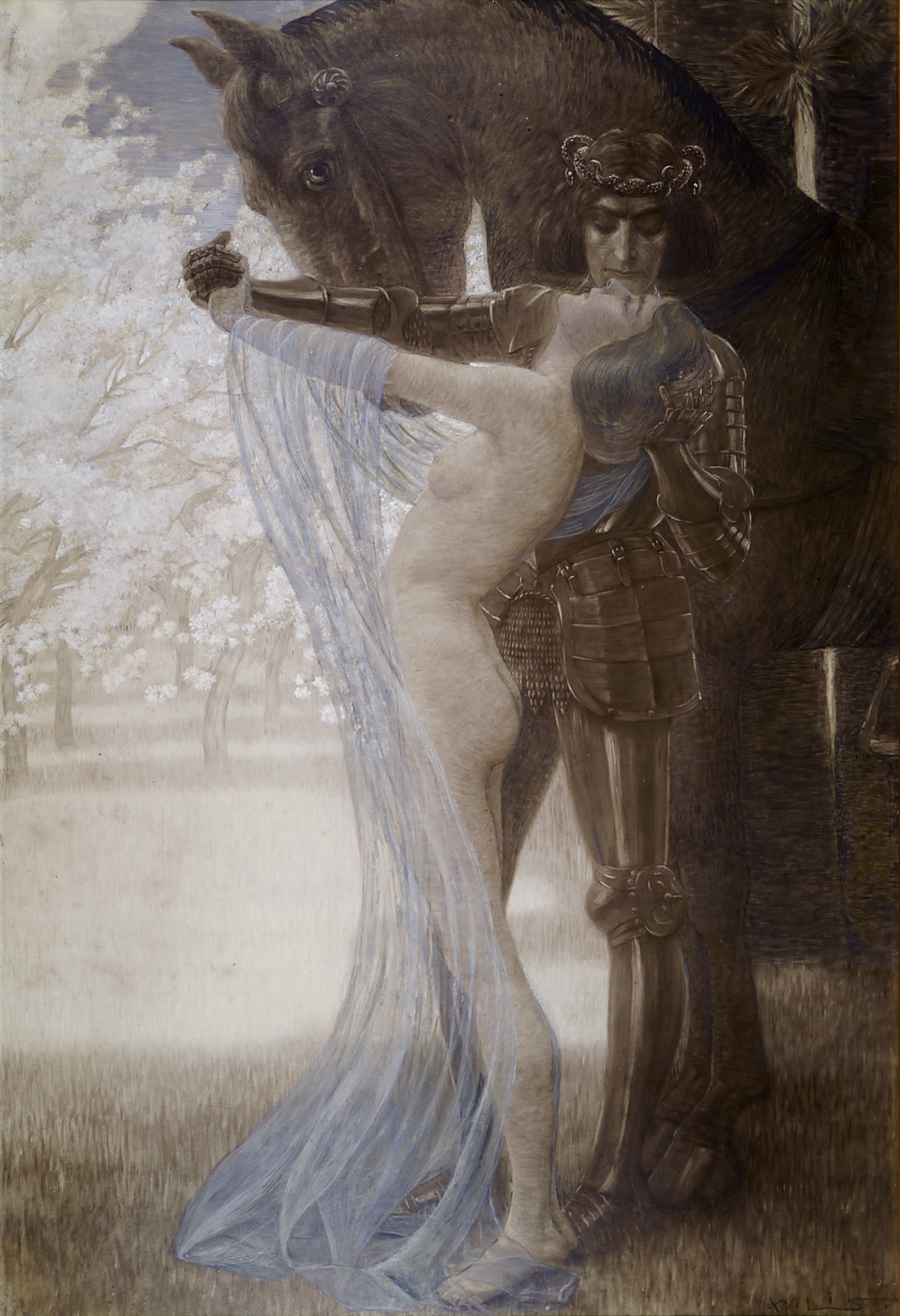
—You fought Mordred and so many enemies to defend my kingdom. Of all your weapons, which seemed the noblest to you?
My sword, no doubt — not for its edge, but for what it meant. A knight is not the blade he carries; he is the oath he swears when he girds it on. Chivalry, my king, is not knowing how to strike: it is protecting the weak, keeping one's word, defending one's lord unto death. I struck down invaders, repelled the threats that gnawed at your kingdom from within, and as long as my arm served that law, I stood straight. That is the bitter lesson of my life: I kept without fail the code of arms and broke that of the heart. One can be the most perfect of knights in battle and the most perjured of men at home. The same hand that defended your crown was the one that tore away your peace. That is what no sword can wash away.
A knight is not the blade he carries; he is the oath he swears when he girds it on.
—When you saw your son Galahad sit at the Siege Perilous and accomplish the quest, what did you feel, you who were excluded from it?
A pride that tore me apart, my king. Galahad was the part of me that remained pure, the child untouched by my fault. Seeing him succeed was seeing what I could have been if I had not loved where I should not. I could not resent him — how can one resent the light? — but his success was my judgment made visible. Heaven did not need to condemn me with words: it sufficed to show me my son. I understood then that certain doors open not by force or late repentance, but only to a heart that never faltered. Mine had faltered. I returned to the combats of men, for that was the only holiness left to me.
Heaven did not need to condemn me: it sufficed to show me my son.
—One last thing, Lancelot. If the cart of shame were to appear before you again, today, would you climb into it once more?
You ask the only question to which I do not know how to lie, Arthur. If I said no, I would betray what I am; if I said yes, I wound you again. And yet — yes, I would climb in. Not because shame does not weigh on me, but because I have never been able to measure love by the yardstick of my honor. That is my greatness and my curse: I go to the end of what I carry, even into the ditch. Other knights hesitate and remain whole; I chose, and I broke myself. You gave me a table of equals, a kingdom, your kingly friendship. I gave you a man incapable of half-measures. Forgive me for not having known how to be lukewarm: that is the one thing, perhaps, that the Lady of the Lake did not teach me.
I have never been able to measure love by the yardstick of my honor.
Read further
This imaginary interview was generated by artificial intelligence from sources documented in Lancelot du Lac's profile. It dramatises what the figure might have said based on what we know about them, but does not constitute attested historical testimony. For primary sources and factual documentation, refer to the full profile.