Imaginary interview with Lancelot du Lac
by Charactorium · Lancelot du Lac · Mythology · 6 min read
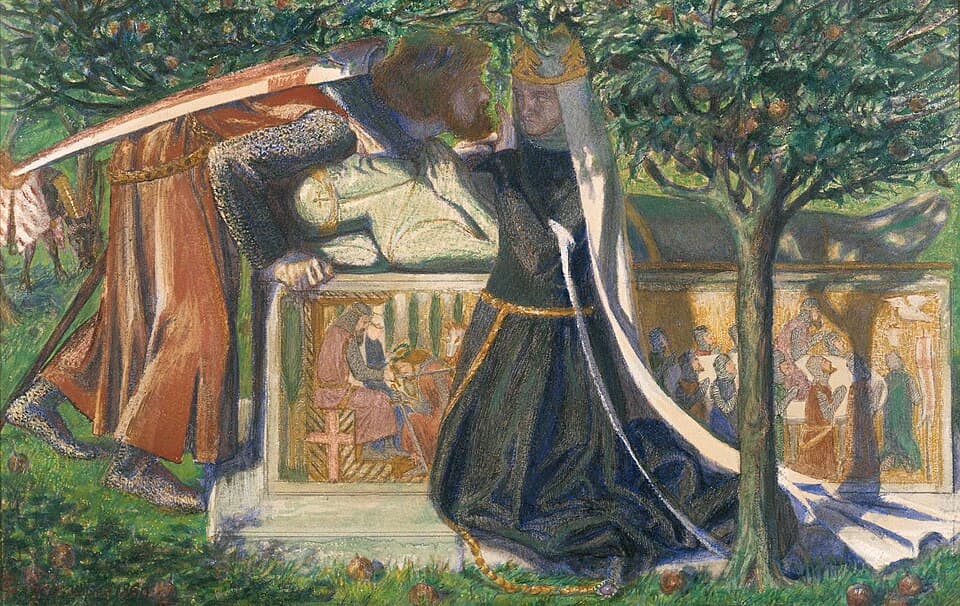
Dusk falls on the ramparts of Joyous Gard, and in the great deserted hall a knight still keeps watch, his helmet set by the hearth. He agrees to speak in a low voice, as one confesses a fault too long kept silent. This is Lancelot of the Lake, the best of Arthur's knights, and the most unhappy.
—You are called Lancelot of the Lake. Where does this strange name come from, which seems to bind you to water rather than to land?
My father was Ban of Benoïc, a deposed king who died of grief before my child's eyes. I had no time to weep: a lady emerged from the waters and carried me under the surface of the lake, into a palace no mortal sees. It is she, the Lady of the Lake, who raised me and taught me all weapons and all that was needed to become a good knight. I owe my calling neither to a father nor to a lord, but to a fairy. That is why I bear not the name of a fief but that of a wave. When they think me the most earthly of warriors, they forget that I grew up where men do not breathe.
I owe my calling neither to a father nor to a lord, but to a fairy.
—What remains of that childhood beneath the waters, now that you live among armed men?
A ring she slipped onto my finger before sending me back into the world. It breaks enchantments, they say, and reveals what is only illusion. But what she truly left me is deeper: the certainty that I am not quite one of you. The other knights of the Round Table have a mother who prays for them, a steeple where their name is known. I come from a place with no Christian name, on the edge of this world and the other. When I fight, a part of me remembers the green silence under the water. That has given me my arm — the best in the kingdom, it seems — but perhaps it has also made me unfit for the peace of ordinary men.
—Do you remember the day you climbed onto that cart that people still speak of with embarrassment at court?
How could I forget it. Méléagant, son of King Baudemagus, had taken Queen Guinevere captive, and I was pursuing him, my horse already dead under me. A dwarf was driving a cart — and you must know what a cart was in those days: they exposed thieves and traitors on it, like the pillory today. To climb onto it, for a knight, was to doom oneself to infamy for the rest of his days. I hesitated two steps. Only two steps. Then I climbed on. They called it my shame. I called it my vow: there is no humiliation too low for one who seeks his lady. Those two steps of hesitation I still reproach myself for more than the climb.
There is no humiliation too low for one who seeks his lady.
—How does a man who is considered the best knight in the world accept to sacrifice his honor thus?
You speak of honor as a treasure kept in a chest. But a knight's honor is worth only what he devotes it to. What use is an untarnished name, deeds sung by troubadours, a sword feared by all, if I leave my lady in the hands of a kidnapper to preserve the opinion of onlookers? True courtesy is not the politeness of banquets: it is total surrender, even to the point of becoming despicable. I wore the brightest plate armor in the kingdom and I accepted being spat upon from the roadside. That day I understood that my honor was no longer mine: it belonged to the one I served.
—Let's talk about her, then. How was this passion for the queen born, which has so marked the stories?
It was not born, it always was. I came to Camelot as a young knight, and as soon as I saw Queen Guinevere at the king's table, I knew I would serve two sovereigns at once — Arthur with my sword, her with all the rest. That is something chivalry had not foreseen in its codes: to love the wife of the lord to whom one has sworn fealty. For a long time I wanted to believe that serving one and loving the other could coexist in the same heart. When I snatched her from the stake to which she had been condemned, I felt my arm surer than ever — and that, perhaps, was when I should have understood that my strength no longer served the kingdom, but my fault.
I would serve two sovereigns at once — Arthur with my sword, her with all the rest.
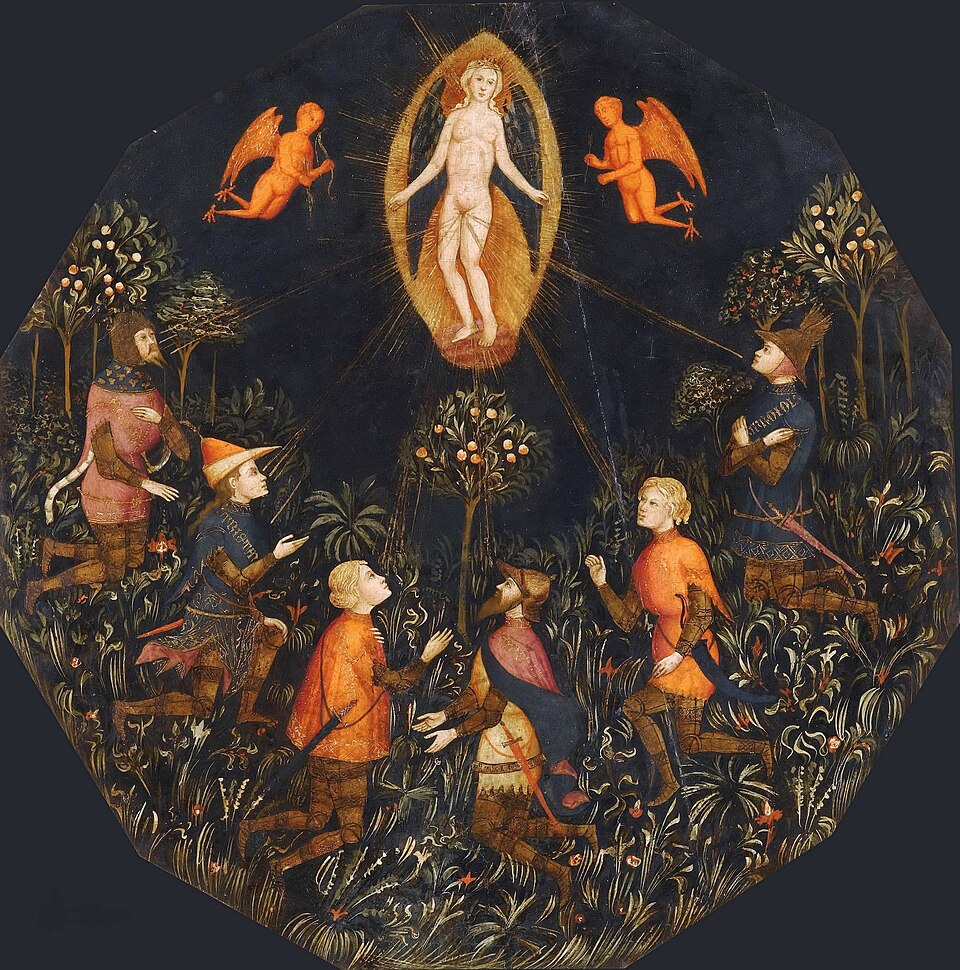
—This castle of Joyous Gard where we speak now, what did it represent for the two of you?
A refuge, and a lie. I took this fortress, made it impregnable, and turned it into the only place in the world where we could be together without the eyes of the court. Joyous Gard — the name says enough about what I hoped to find there. But a joy that must barricade itself behind walls and moats is no longer quite a joy: it is a siege one wages against oneself. Every tower I had built against enemies from without also raised a rampart between me and the oath I had sworn to my king. I thought I was protecting myself; I was digging my own fall. The finest stones I ever assembled are those of a prison I had chosen for myself.
—King Arthur eventually learned everything. What remains for you of that man whom you both served and betrayed?
Everything. Everything remains. The day he looked me in the face, he was weeping — a king, before his men — and he told me I had betrayed my faith, my oaths, and the loyalty I had promised him. I could not answer a word. He was right, word for word. I would have preferred him to challenge me sword in hand, so that anger might give me an enemy to fight. But his tears left me without an opponent, alone with my fault. Mordred took advantage of our divisions to hasten the ruin of the whole edifice. They will say it was I who brought down the kingdom. I will not defend myself: the greatest arm of the kingdom was also the wedge that split it.
The greatest arm of the kingdom was also the wedge that split it.
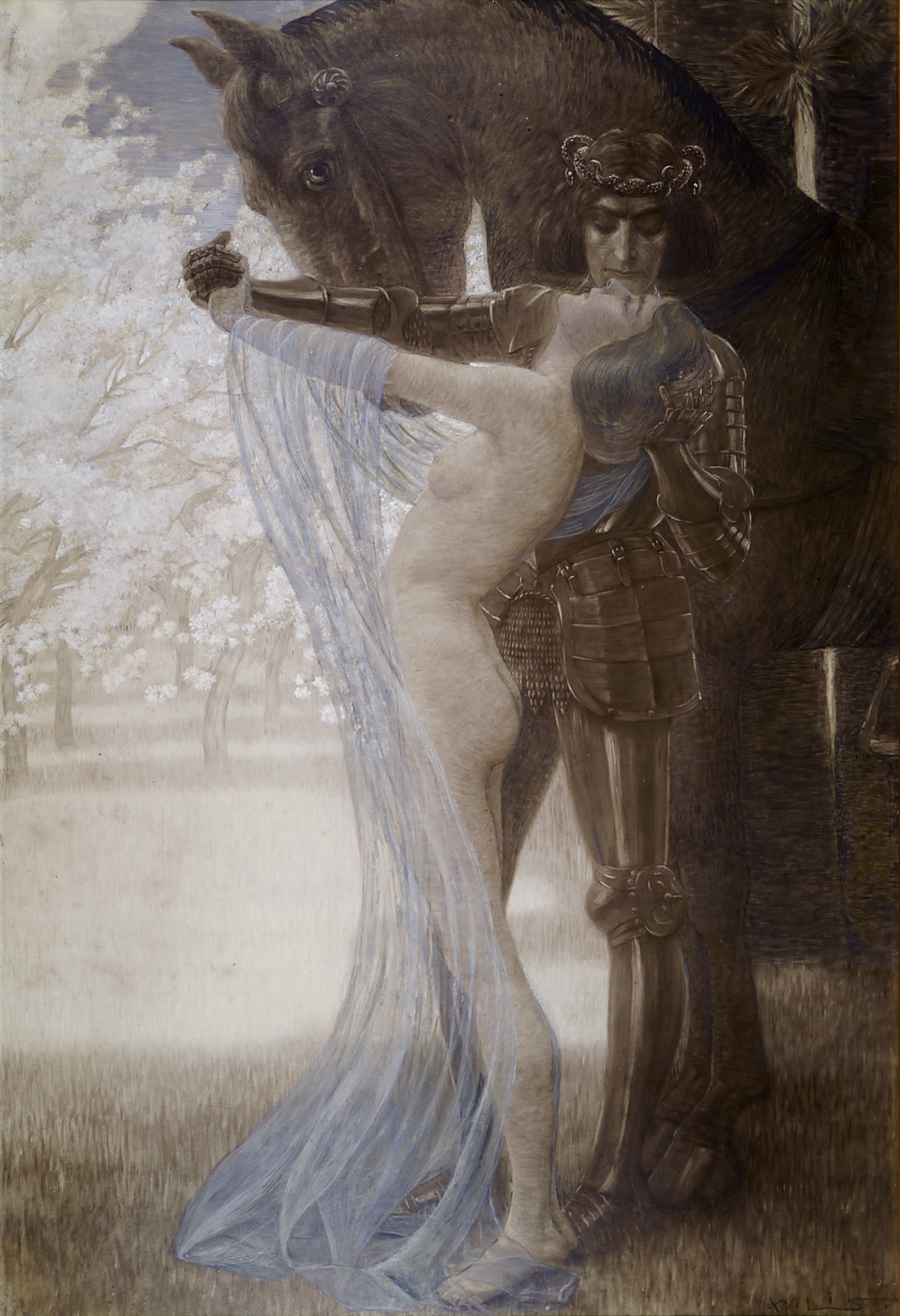
—You took part in the quest for the Holy Grail. How do you live with the fact that you, the best, could not attain it?
It is the hardest lesson of my life. All my life, I was told: Lancelot first with the lance, first with the sword, first in everything. And here was a quest where my arm counted for nothing. The Quest of the Holy Grail demanded not strength but purity, and I, through my sin of the flesh, had lost even the sight of the Grail while others attained it. Imagine the most accomplished man in the world struck blind before the only thing that matters. I approached the sacred close enough to feel its light, yet too sullied to gaze upon it. No tournament wound ever cost me as much as that failure, which did not bleed.
I approached the sacred close enough to feel its light, yet too sullied to gaze upon it.
—They say it was your own son who accomplished what you could not. What does a father feel about that?
Galahad. My son, born without the fault that gnaws at me, went where I stopped. It is a joy and a torment mingled that no troubadour can sing. A father dreams of passing on his craft; I passed on what I did not have — innocence. He sat where I had the right only to kneel. I believe the Lady of the Lake, in raising me beneath the waters to make me the perfect knight of men, never foresaw that there existed a higher chivalry, wholly spiritual, where my perfection weighed nothing. Galahad showed me the door I had closed myself. I loved him for that, and I envied him, which is the ugliest feeling a father can bear.
—At the end of all this, if people are to remember you in a century, what would you want them to remember?
I do not know if they will read me so far — but if some clerk should set down my story in one of those long prose books they now copy, let him not make it only the tale of an invincible arm. The greatest warrior of King Arthur's realm, raised by a fairy, victor in every tournament: that is what they readily engrave. But the essential lies elsewhere. Let them remember instead that a man can be the best at everything and miss the one thing that saves; that one can save the queen from the stake and lose the kingdom with the same gesture. I am not the model of the perfect knight. I am the warning that the perfection of arms does not cleanse the heart.
A man can be the best at everything and miss the one thing that saves.
Read further
This imaginary interview was generated by artificial intelligence from sources documented in Lancelot du Lac's profile. It dramatises what the figure might have said based on what we know about them, but does not constitute attested historical testimony. For primary sources and factual documentation, refer to the full profile.