Imaginary interview with Lata Mangeshkar
by Charactorium · Lata Mangeshkar (1929 — 2022) · Music · Culture · Performing Arts · 6 min read
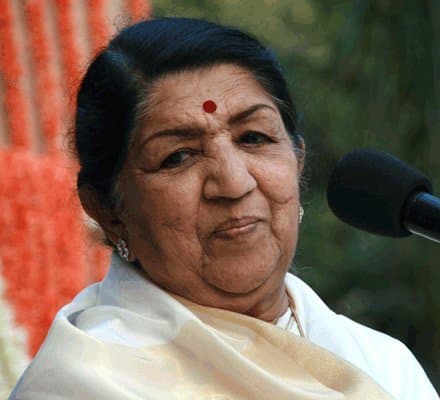
Mumbai, Peddar Road neighborhood, at the end of a monsoon afternoon. In an apartment of almost monastic simplicity, a woman in a white sari receives us, a cup of warm milk beside her and a silent tanpura in the corner. Over eighty years old, the Nightingale of India speaks softly, as if every sentence must first pass the test of the inner ear.
—How does a thirteen-year-old child suddenly find herself supporting an entire family?
When my father died, in 1942, the house closed like a theater after the final curtain. I was the eldest; behind me, my mother and four younger siblings who were hungry now, not in ten years. As a child, I used to slip backstage to listen to him rehearse the sangeet-natak — I thought music was a game. Suddenly, it became a livelihood. I looked for roles, small appearances, whatever the nascent Hindi cinema would give a skinny girl. I hated showing myself on screen, but I sang, and my voice could provide. You grow up very quickly when you realize the silence of the house depends on you.
You grow up very quickly when you realize the silence of the house depends on you.
—It is said that a producer sent you away, judging your voice impossible. What happened?
It was around 1945, in Bombay. An important man listened to me for a few seconds and decided: too thin, too nasal, unusable for cinema. You don't argue with such a verdict when you're sixteen and have a family to support; you go home and work. I went back to riyaz, those morning exercises that Hindustani classical music masters impose until exhaustion, at the hour when the voice is still fresh. For years. Much later, that same producer asked to meet me. I declined, politely — not out of rancor, but because I had nothing left to prove to him. India had answered for me.
You don't argue with such a verdict; you go home and work.
—What, in your view, was your true birth as a singer in the public eye?
Aayega Aanewala, for the film Mahal, in 1949. On screen, it was Madhubala's face; in the theater, my voice floated, disembodied, coming from nowhere. Playback works like this: we record in the studio, the actress then lip-syncs, and the viewer never sees who is actually singing. That song did something strange — people demanded the name of the voice, not just the face. For a woman who refused to appear, it was a sweet revenge: I had been told my timbre would never pass, and now the whole country was looking for whom it belonged to.
—What did a typical recording day in Bombay look like during your glory years?
I would wake before dawn for riyaz, starting with the morning ragas — each raga has its hour; the dawn one is not the color of the evening one. In the afternoon, I headed to the studios, where handwritten scores from composers like S.D. Burman or Shankar-Jaikishan awaited. I would read, memorize, and often two or three takes were enough. They thought I was fast; in truth, speed was only the deposit of all those mornings spent on the tanpura, disciplining the breath. At a time when the industry released over three hundred films a year, I could record several songs in the same week without ever feeling I was repeating myself — because each rasa, each emotional flavor, demanded a different color of voice.
Speed was only the deposit of all those mornings spent disciplining the breath.
—You sang in about thirty languages, many of which you did not speak. How is that possible?
I am often asked that, with a hint of disbelief. The truth is humble: I had the lyrics written in a transcription I could read, then I pestered composers and lyricists until I understood the meaning of every word, every breath. A voice that does not understand what it says sounds false, in any language. Indian classical music had given me the essential tool: the ear. The rest is riyaz transposed to vocabulary. I sang ghazals in Urdu, that form from Persia built on nostalgic couplets, with the same care as a Marathi song from my childhood. Feeling, after all, needs no passport.
A voice that does not understand what it says sounds false, in any language.
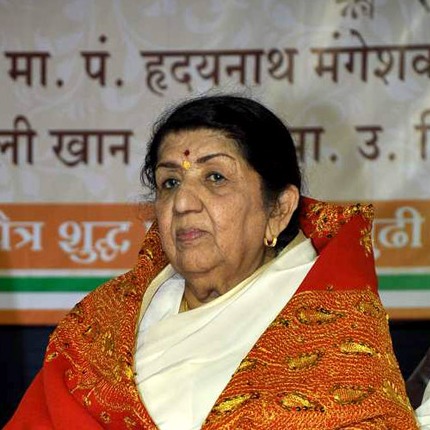
—On January 26, 1963, you made a Prime Minister cry. Do you remember that moment?
The 1962 war with China had left India wounded; our soldiers had fallen in the Himalayan snows, and the country bore that grief like a stone. C. Ramchandra had composed a melody, Kavi Pradeep had written the words: Ae Mere Watan Ke Logon. I sang it at Republic Day, and Nehru, in the audience, could not hold back his tears. It was said I aimed for his heart. That is false. As I later said on the radio, I was thinking of each of those anonymous heroes who died in the frozen mountains, not of a leader's gaze. A song that seeks to move the powerful always fails; one that honors the invisible sometimes becomes a monument.
A song that seeks to move the powerful always fails.
—What does it mean to you that a song, like that one, becomes a kind of national treasure?
It is both dizzying and terrifying. That melody has not belonged to me for a long time; it belongs to the families who lost a son, to schoolchildren who sing it, to a whole people who recognize themselves in it. I was only the throat through which a collective grief found its form. In India, the voice holds a special place — we believe that the right sound, the right raga, can summon rain or soothe pain. When I sang for the fallen soldiers, I was not expressing my own emotion; I was trying to hold, without breaking, the grief of millions of people. That is the heaviest burden a song can carry, and I understood it only in hindsight.
—Why that white sari, almost always the same, when the actresses you sang for shone in a thousand colors?
White, in our culture, signifies purity and devotion. I chose to wear almost nothing else, not out of ostentatious austerity, but because I wanted people to listen and not to look. I lent my voice to women covered in jewels and dazzling silks — it was their job to shine on screen, it was mine to disappear behind the sound. A white cotton sari, a few visits to the Siddhi Vinayak temple, an evening puja: that kept me centered. As I once told a journalist, my father taught me that “music is a prayer.” You don't pray dressed as a peacock. The garment had to fade so that the voice could rightfully shine.
You don't pray dressed as a peacock.
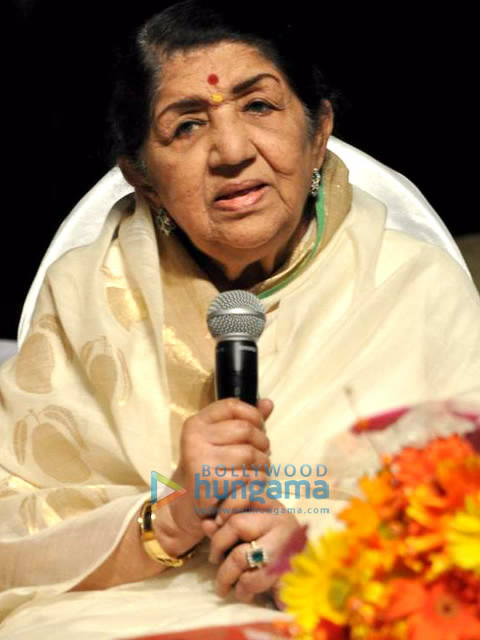
—What place does faith hold in a life so entirely devoted to work?
It is the backbone, not the ornament. I remained a strict vegetarian, I ate lightly especially before recording — porridge, cooked vegetables, warm milk with honey — because the throat is a fragile instrument that excess spices can veil. In the evening, the puja at home, in our modest apartment on Peddar Road, closed the day like a final chord. I never married; my family and music filled that space. People imagine a star's existence; it was rather that of a practitioner. A music master and a devotee ultimately lead the same life: wake before dawn, practice, silence, begin again. The stage was for me only an extension of the temple.
—In 1974, the Guinness Book crowned you the world's most recorded artist. What does such a record inspire in you?
A certain discomfort, to be honest. They spoke of thirty thousand, fifty thousand songs — I don't know, I never kept a tally. You don't count your prayers. That number belongs to archivists and record companies, to catalogs like that of Saregama which keeps track of everything others have numbered for me. I remember melodies, not totals. The real vertigo is not in the quantity; it is in thinking that a transistor radio, in a village I will never visit, may have brought my voice into homes of people I will never see. That is the only record that moves me: not how many songs, but how many homes.
You don't count your prayers.
—After more than seventy years of career, how do you regard what your voice has become for India?
With a distance that surprises even me. In 2001, India awarded me the Bharat Ratna, its “jewel,” the highest civilian honor — a film singer among scholars and heads of state. That day, I thought of the thirteen-year-old girl judged too nasal. A career is not a straight line you draw; it is a long puja whose shape you only see at the end. I never considered singing a job: each recording was a new life, a story to tell with the breath. If anything is to be remembered, let it not be the awards, but the fact that a voice, disciplined every morning since childhood, could keep company with an entire people.
A career is a long prayer whose shape you only see at the end.
This imaginary interview was generated by artificial intelligence from sources documented in Lata Mangeshkar's profile. It dramatises what the figure might have said based on what we know about them, but does not constitute attested historical testimony. For primary sources and factual documentation, refer to the full profile.