Imaginary interview with Leonora Carrington
by Charactorium · Leonora Carrington (1917 — 2011) · Visual Arts · Literature · 6 min read
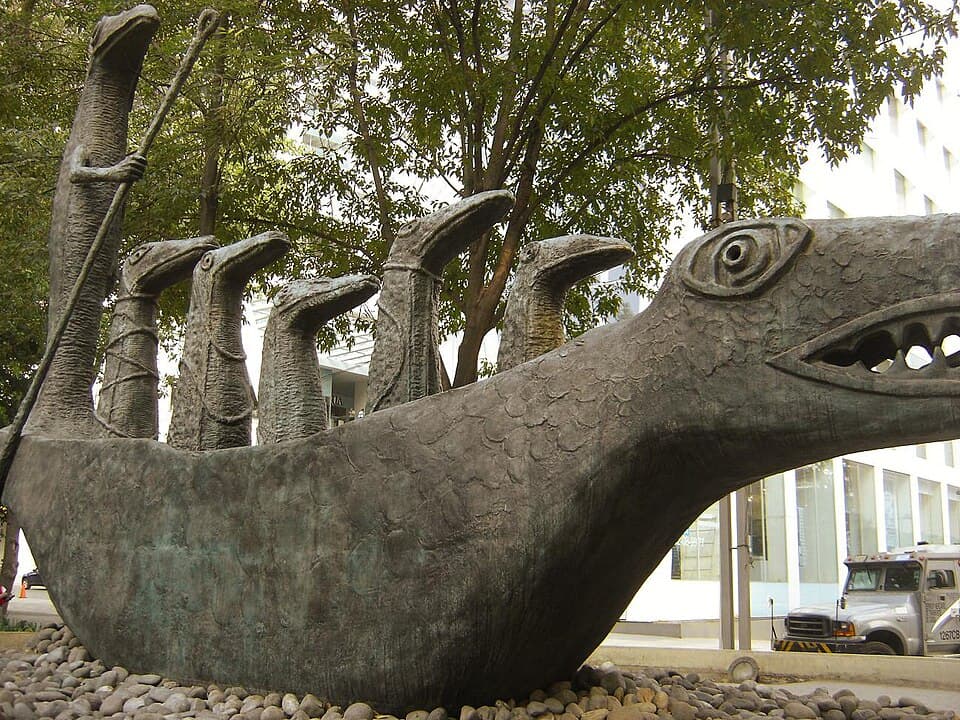
Mexico City, Roma neighborhood, an afternoon in the late 2000s. In a low house where cats slip between unfinished canvases and bronze sculptures, Leonora Carrington receives, a cup of tea in hand, her eyes bright beneath white hair. Around her still float the hybrid creatures of a century of painted dreams.
—How did this self-portrait come about, where you depict yourself between a hyena and a white horse?
I must have been twenty, barely out of the manor in Lancashire where they thought I was made for balls. I wanted to paint myself not as they wanted me, but as I felt: seated, tense, with a hyena at my feet — that despised beast that laughs and refuses to obey — and, through the window, a white horse leaping out of the frame. The horse has always followed me; it is my double, my part of flight. Painting that Self-Portrait called At the Inn of the Dawn Horse was signing a declaration: I would be neither the proper wife nor the docile debutante. I belonged to that inner menagerie, and to no one else.
The horse has always followed me; it is my double, my part of flight.
—Why do these beasts keep reappearing in your painting, even in bronze?
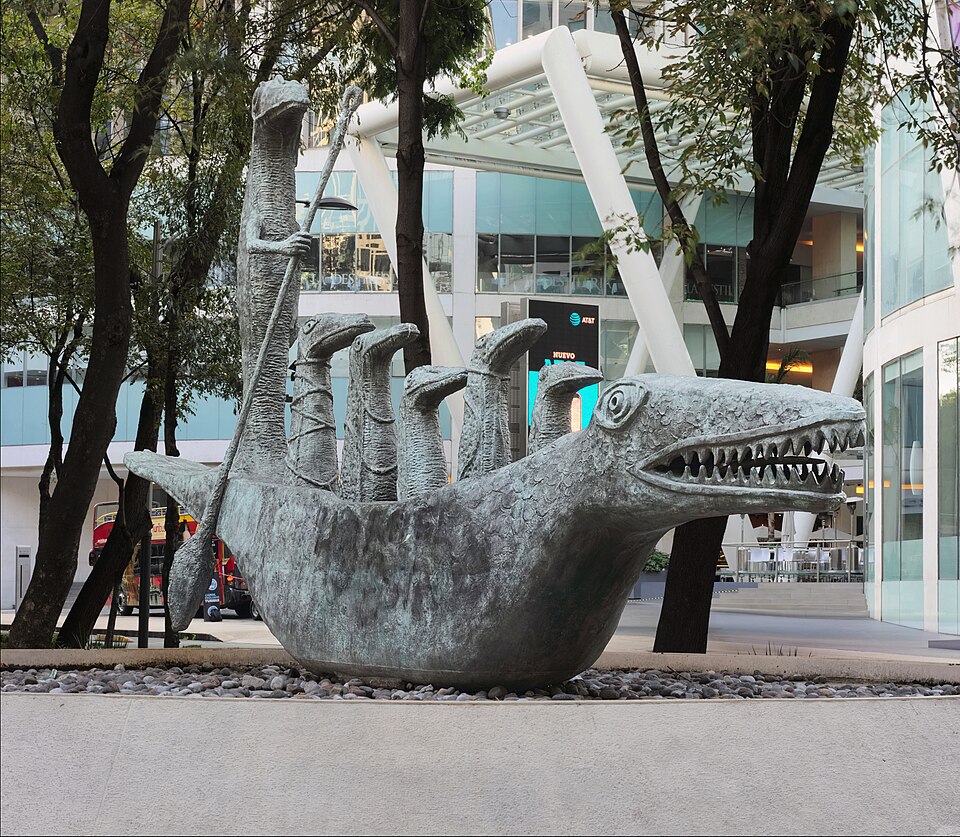
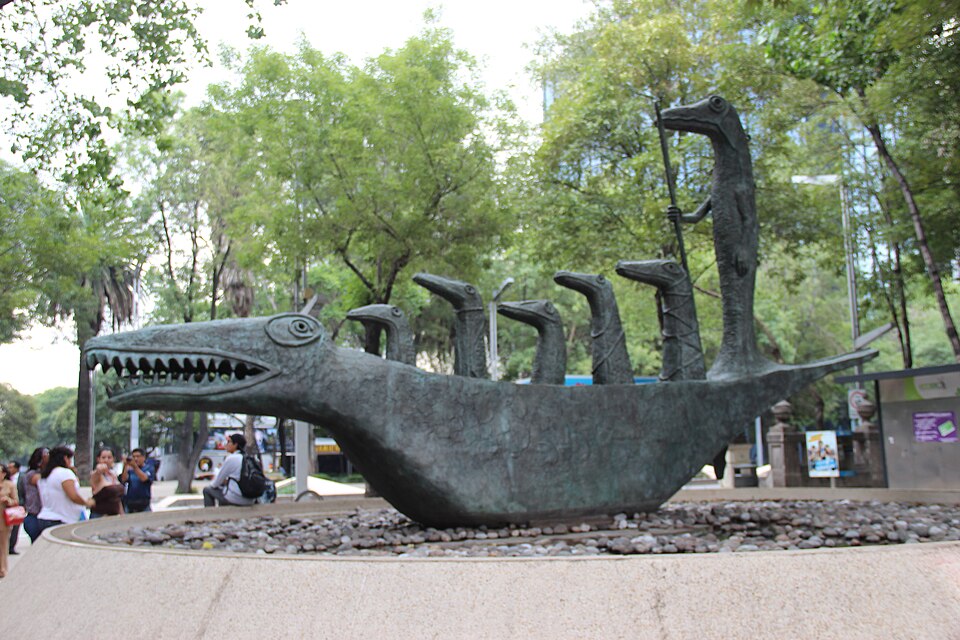
Because I never believed in the boundary drawn between human and animal. In my childhood, my Irish nurse filled the nights with Celtic legends where one turned into a doe or a raven without finding it strange. That metamorphosis, I kept it. My canvases, then my bronze sculptures on the Paseo de la Reforma, are a bestiary: horses, hyenas, half-woman half-bird beings. They are not allegories to be deciphered like a school assignment. They are presences. When I give a being a hybrid body, I give it back a freedom that reason has confiscated. The animal, in my work, is never decoration: it is a state of the soul that refuses to stay in its place.
The animal, in my work, is never decoration: it is a state of the soul that refuses to stay in its place.
—What happened inside you after Max Ernst's arrest in 1940?
The world unraveled all at once. Max had been taken away as an enemy alien, and our house in Saint-Martin-d'Ardèche, which we had covered with frescoes and sculptures, emptied of its meaning. I fled to Spain, and there, in Santander, they locked me up. I will not speak lightly of that asylum: they gave me treatments I dare not name, and I crossed regions of the mind from which one does not return unscathed. What saved me was not medicine, but later deciding to face that abyss rather than flee it. Madness is not the opposite of lucidity; sometimes it is its most naked form.
Madness is not the opposite of lucidity; sometimes it is its most naked form.
—Yet you chose to tell the story of that internment in a book. Why revisit such a wound?
Because staying silent would have let horror win twice. I wrote Down Below in 1943, and it appeared in the magazine VVV, in New York, carried by the surrealists in exile. I said it very simply in those pages: I had to relive this experience, because in doing so I believed I could be useful to others as much as to myself. There are so few testimonies that describe madness from within, without the doctor's voice overlaying it. I wanted the one who suffers to have, for once, the last word. That account is not complacent; it is a report, almost a map, drawn by someone who went down and came back up.
I wanted the one who suffers to have, for once, the last word.
—How would you describe your friendship with the painter Remedios Varo in Mexico?
Remedios was the sister that life had forgotten to give me. We were two exiles, she Spanish, I English, washed up in Mexico City by the accidents of war, and we recognized in each other the same hunger. We spent hours talking about alchemy, the Kabbalah, recipes half-magical half-culinary, exchanging visions as others exchange gossip. Our canvases began to respond to each other: the same grave creatures, the same interiors where something secret is accomplished. Esotericism was not a parlor game for us; it was a way of taking the world seriously other than through newspapers. Without her, my Mexico would have been an exile; with her, it became a shared studio.
We recognized in each other the same hunger.
—What place did alchemy and esotericism hold in your daily work?
In the evening, in my house on Calle Chihuahua, I read works on alchemy, Celtic mythology, the Kabbalah, as others read the newspaper. They are not ornaments I later stuck onto my paintings; they were the framework of my thought. I have always painted in tempera, that technique of the old masters where you bind pigment with egg yolk, with a monk's patience. There is a deep kinship there: the alchemist sought to transform matter, and the painter does the same, egg after egg, layer after layer. My canvases are full of symbols to decipher, yes, but I never conceived them as closed riddles: rather as doors that each person opens with their own key.
The alchemist sought to transform matter; the painter does the same, egg after egg.
—You often speak of cooking as an art. What did you find in your kitchen?
A little domestic alchemy, within my hands' reach. In front of the cauldron, you take raw materials and draw from them, by fire and time, something that did not exist: is that not exactly the alchemist's dream? I prepared sometimes strange dishes that made my friends laugh or recoil, but I saw it as a ritual as much as a meal. Tea, especially, remained my English loyalty, a vestige of Lancashire from my childhood that I carried all the way to Mexico, where it mingled with the spicy flavors of here. Women have long been locked in kitchens as in a prison; I decided to set up my laboratory there.
Women have long been locked in kitchens; I set up my laboratory there.
—Where did you get the idea for The Hearing Trumpet, that novel about an old lady and a forgotten object?
From the idea that people think old women are deaf to the world, when perhaps they hear better than anyone. My heroine, Marian, receives from her friend Carmella a hearing trumpet — that trumpet of another age held to the ear — and then, thanks to it, she overhears everything the household would like to hide from her. I loved making that poor instrument a magical organ: not to amplify noises, but to capture the marvelous that the polite deafness of common sense makes us miss. The novel then slides into a perfectly mad retirement home, where the world turns upside down. I wrote an old woman because I knew I would become one, and I wanted it to be an adventure, not an end.
People think old women are deaf to the world; they may hear better than anyone.
—Why entrust your freest stories to aged or rebellious heroines?
Because they are the ones no longer listened to, and who therefore have nothing left to lose. From my early tales, collected in The House of Fear, which Max Ernst prefaced in 1938, my figures were girls who talk to horses and refuse to obey. With age, my heroines have acquired wrinkles, but kept that insolence. Society expects an old lady to be discreet; I give her a magic trumpet and launch her into an insurrection. There is a freedom there that only the margin allows: when you cease to be desirable or proper in the eyes of the world, you finally become entirely yourself. That is the sovereignty I wanted to paint and write.
When you cease to be proper in the eyes of the world, you finally become entirely yourself.
—At the end of such a long life, how do you see this Mexico that welcomed you?
As a land that gave me back to myself. I arrived in 1942, almost by trickery, thanks to a marriage of convenience with the diplomat Renato Leduc, and I thought I was only stopping over. I stayed sixty years. This country did not mock my creatures; it had its own, Mayan, mysterious, and it asked me for a large mural, El Mundo Mágico de los Mayas, for its National Museum of Anthropology. Here, the boundary between the living, the dead, and the gods has always been porous — exactly my climate. Europe had given me Surrealism and exile; Mexico City gave me a house, cats, a friend, a studio, and time to paint to the end. One cannot ask more of a life.
Europe gave me Surrealism and exile; Mexico City gave me a house and time to paint to the end.

This imaginary interview was generated by artificial intelligence from sources documented in Leonora Carrington's profile. It dramatises what the figure might have said based on what we know about them, but does not constitute attested historical testimony. For primary sources and factual documentation, refer to the full profile.