Imaginary interview with Lillian Hellman
by Charactorium · Lillian Hellman (1905 — 1984) · Literature · Performing Arts · Politics · 6 min read
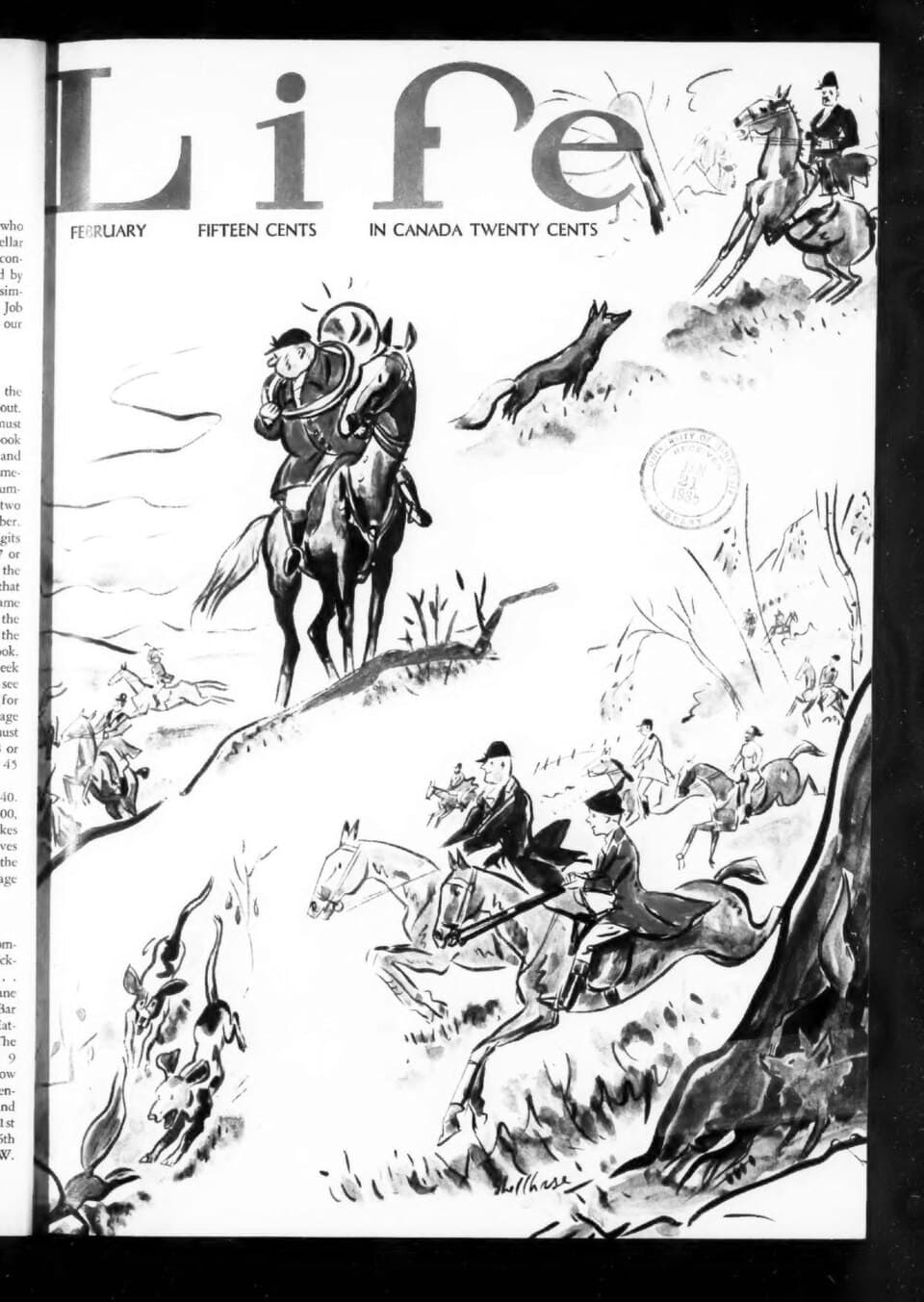
Manhattan, an evening in the late 1970s. In an Upper East Side apartment where cigarette smoke and the smell of simmering gumbo hang in the air, Lillian Hellman receives us, a glass of bourbon within reach. She speaks softly, with the slowness of the South and the hardness of someone who has learned to yield nothing.
—People often forget you're not a New York girl. Where are you really from?
I was born in New Orleans, in June 1905, and the South has never left me, even after forty years in Manhattan. They think I'm a Broadway woman; in truth I'm a woman of gumbo and columned galleries, raised among boarding houses run by my aunts. That's where I learned to listen to people lie gracefully, to see money corrupt family under exquisite manners. All that sticky heat, those hierarchies, those table silences, I later put into The Little Foxes. Even today, when I entertain here, I cook Creole and serve bourbon, because a long table where you talk until night is the only church I know.
A long table where you talk until night is the only church I know.
—Your first play, in 1934, caused a scandal. Do you remember it?
The Children's Hour — two schoolteachers destroyed by a child's lie, an accusation of sapphism thrown like a match. It was banned in Boston, banned in London, and yet it ran for nearly seven hundred consecutive nights on Broadway. At twenty-nine, I discovered that an entire audience could hold its breath over a secret no one dared name. What interested me was not the question of what those women were; it was the terrifying speed with which a reputation turns to ash. Dashiell Hammett read my pages at night and told me, without tenderness, where they rang false. I rewrote, rewrote, until the slander stood alone on stage.
I discovered that an entire audience could hold its breath over a secret no one dared name.
—How do you go from the slander of The Little Foxes to denouncing money?
The Little Foxes, in 1939, is about the Hubbards, a Southern family that devours itself for a few shares. I grew up among people like that, relatives who counted silver spoons while kissing each other. Greed, you see, doesn't need to shout; it smiles, it offers tea, and meanwhile it takes your land. Wyler brought it to the screen with Bette Davis, that icy face who lets a husband die on the stairs without moving. I would spend weeks on a single act, dozens of typewritten versions crossed out, because a line that sounds too good always lies a little. Southern capitalism — I didn't invent it; I simply listened to it at the dinner table.
Greed doesn't need to shout; it smiles, it offers tea, and meanwhile it takes your land.
—Before the war, you went to Spain. What were you looking for there?
In 1937, I went to Madrid, under shellfire, on the side of the Republicans. You can't understand our generation if you forget that fascism, for us, was not a newspaper abstraction: it was gutted houses and children running through rubble. Antifascism was the air we breathed, in those left-wing circles called the Popular Front, where communists, socialists, and liberals dined together before tearing each other apart. From that journey came, a few years later, Watch on the Rhine: a German resistance fighter taking refuge in America, to tell my comfortable country that decency has a price and that soon it would have to be paid. The play won the New York Drama Critics' Circle Award a few months before Pearl Harbor. We were late, as always.
Fascism, for us, was not a newspaper abstraction: it was gutted houses.
—What did you want the American public to feel when they saw Watch on the Rhine?
A little shame, and courage, if possible. In 1941, America still believed itself protected by its two oceans. I wanted to put on stage a man who had already lost everything in Europe and who reminded us, in the comfort of a Washington living room, that those who believe in decency must stick to it even before those who have abandoned it. It wasn't propaganda — I hated when people said that — it was a warning. Nazism wasn't waiting for us to be ready. The play packed theaters, it was filmed two years later, and for once I felt that theater served something greater than a successful evening.
Those who believe in decency must stick to it even before those who have abandoned it.
—Do you remember the day you were summoned before the committee?
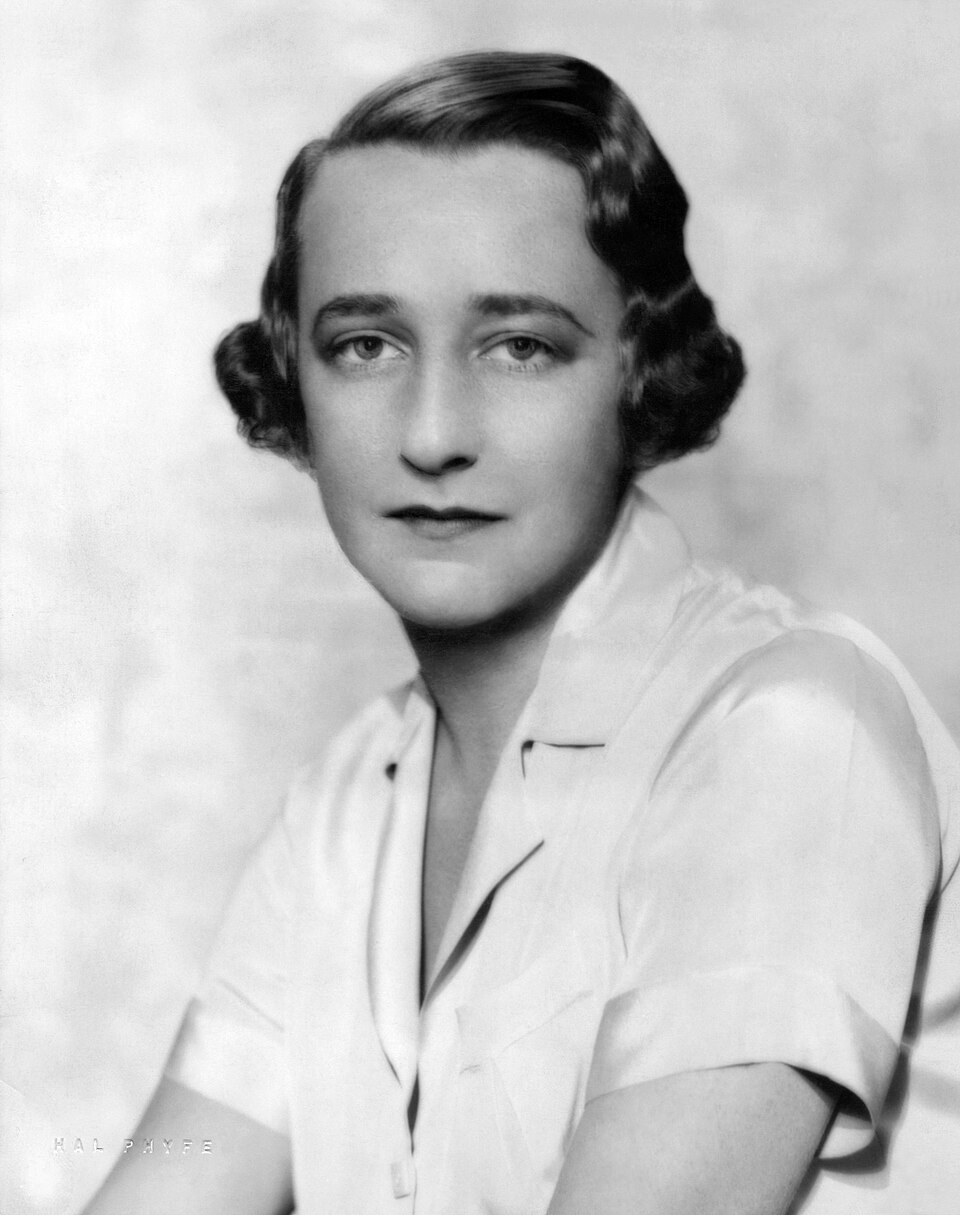
May 1952. The HUAC wanted names — that's always what they wanted, names, informing turned into civic duty. I received the summons, that official Congressional paper that chills your hands, and I wrote to them before appearing at the Capitol. I told them I would talk about myself as much as they wanted, but I would not deliver anyone. “I cannot and will not cut my conscience to fit this year’s fashions.” They answered with silence, then with the blacklist. But I slept that night, which was no small thing.
I cannot and will not cut my conscience to fit this year's fashions.
—Why not simply invoke your rights and remain silent, like so many others?
Because the Fifth Amendment, that right not to testify against oneself, had become a trap: invoking it, in the public eye, was an admission. I proposed something else, a deal they didn't expect — I answer for myself, entirely, but I don't betray my friends. It was more dangerous, because it deprived them of their theater of fear. Years later, I told all this in Scoundrel Time, and I was accused of casting myself in a good light. Perhaps. But I remember above all never having felt, before that year, so alone in the world. Around me, suddenly, people I thought were solid began not to recognize me on the street.
I don't remember ever having felt, before that year, so alone in the world.
—That period cost you dearly, including materially. What did you lose?
Hollywood closed its doors to me from 1951 — no more well-paid screenwriter for Goldwyn's studios. And then there was Hammett, my partner since 1930, who was thrown in prison for five months because he too wouldn't name names. I supported him to the end, until his death in 1961, while I myself was on the blacklist. To pay the lawyers, I had to sell my farm Hardscrabble, in Pleasantville, where I gardened and cooked, the only place I ever had my hands in the earth. They call that a transaction. I called it spoliation, and I never quite recovered.
They call that a transaction. I called it spoliation.
—What did Dashiell Hammett represent in your work, beyond love?
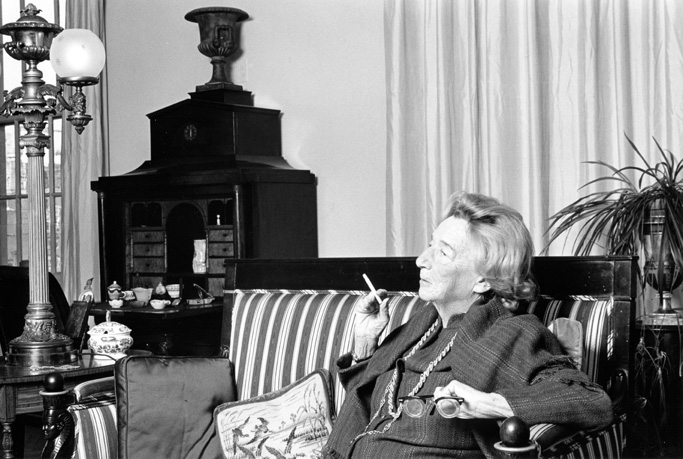
Dash was the most ruthless reader I ever knew. The man who invented Sam Spade read my drafts at night and crossed out my beautiful phrases without mercy, telling me that the truth of a scene cannot be disguised. We never lived entirely together nor entirely apart — thirty years like that, between the farm, the Upper East Side apartment, and quarrels. When they broke him, that proud man who asked for nothing, I kept paying his hospital bills even ruined, because you don't abandon the one who taught you not to lie on the page. My loyalty to him, I believe, was worth all my plays.
You don't abandon the one who taught you not to lie on the page.
—What does a day of Lillian Hellman look like, when she's not facing Congress?
I get up late, rarely before ten, with very strong coffee and a stack of newspapers — the New York Times first, to know what foolishness the world is capable of this morning. In the afternoon, I write, and I write badly, and I start over, a cigarette always lit near the typewriter. In the evening, I like my table to be full: actors, writers, journalists, bourbon, a simmering gumbo, political arguments that go on until midnight. I discovered late in life that I could tell all this differently, in my memoirs — An Unfinished Woman — and I was given a prize for finally speaking of my childhood and travels. An unfinished woman: that's still the most honest title I've found.
The New York Times first, to know what foolishness the world is capable of this morning.
—In hindsight, what would you say to those who one day might be tempted to give in to fear?
That fear is a country where you can live a long time without ever being happy. I've seen talented men name their friends before the HUAC to get a contract back, and the contract never washed away the look they met in the mirror. I don't claim to have been courageous by nature — I even called myself apolitical, uncomfortable in all groups. But there comes a moment when giving in costs more than resisting, when cutting your conscience to this year's fashions leaves you smaller than you were. If I am to be remembered in a century, let it be for that, and not for my lines: I refused to make a year worse than it already was.
Fear is a country where you can live a long time without ever being happy.
This imaginary interview was generated by artificial intelligence from sources documented in Lillian Hellman's profile. It dramatises what the figure might have said based on what we know about them, but does not constitute attested historical testimony. For primary sources and factual documentation, refer to the full profile.