Imaginary interview with Loïe Fuller
by Charactorium · Loïe Fuller (1862 — 1928) · Performing Arts · Visual Arts · 6 min read
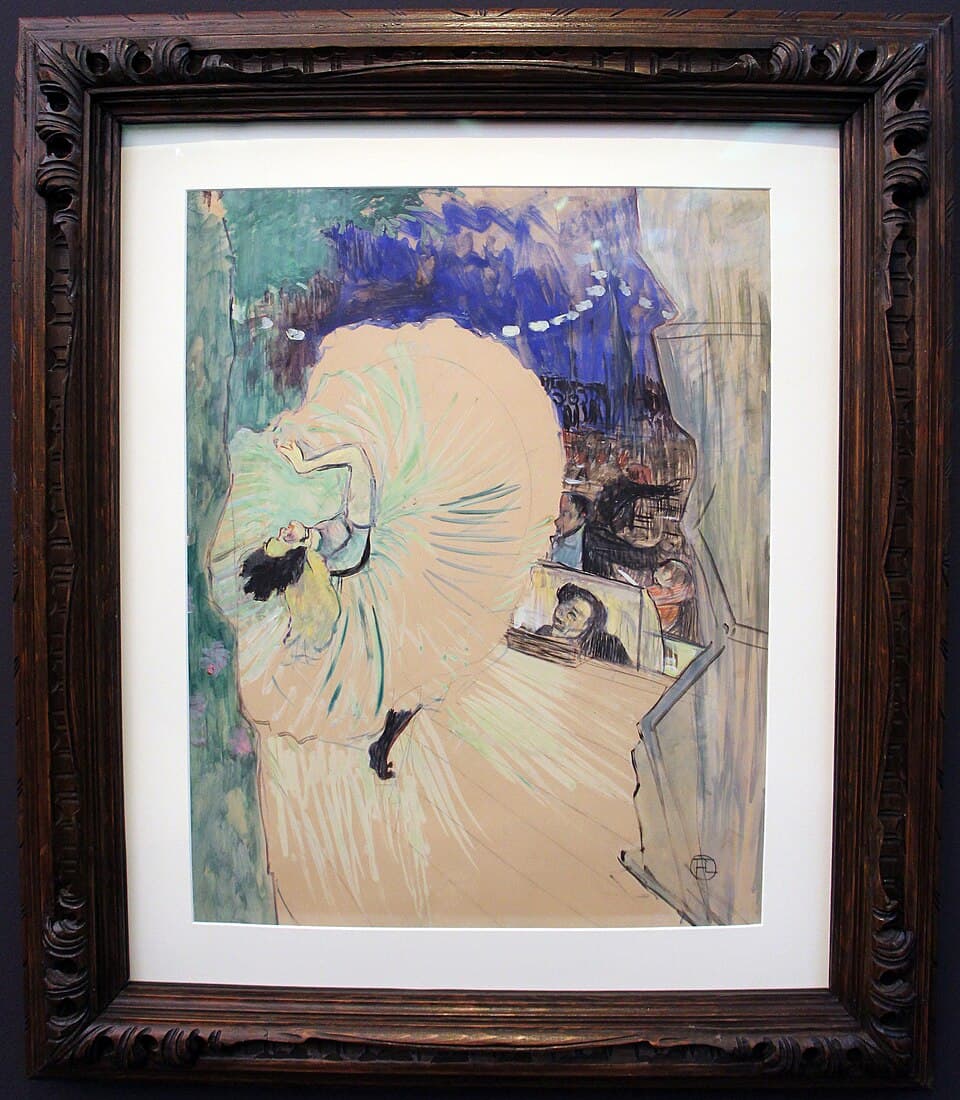
Paris, a winter evening in 1908, in a workshop in the neighborhood where meters of folded silk and the smell of warm gelatin from projectors linger. Loïe Fuller receives between two rehearsals, a sleeve still dusted with dye. She speaks quickly, her hands drawing invisible waves in the air.
—How was your serpentine dance really born?
By accident, and I say it without shame: the most beautiful things often happen when you aren't looking for them. It was in New York, around 1891, a rehearsal of no importance. I had been given an Indian silk skirt far too large for me, ridiculous, a borrowed garment. I raised my arms so as not to get lost in it, and suddenly, under the lamps, the fabric came alive, undulating like water, like a slow flame. I wasn't dancing — I was responding. The silk responded to my body, and I responded to the light. It was only when I caught sight of the faces of the people in the hall that I understood a world had just opened. I folded that skirt as one keeps a precious secret. La Danse Serpentine was never an invention of the mind: it was a revelation of the hands.
I wasn't dancing — I was responding. The silk responded to my body, and I responded to the light.
—What led you from veils to all that machinery of rods and projectors?
A dancer has two arms; that's little to paint the sky. So I concealed in my skirts long rods of bamboo and aluminum that I hold in my hands — my arms extended by a meter, capable of launching the silk into spirals that no body alone could produce. But material is nothing without light. I learned to design my own arc projectors, to slide tinted glass plates in front of them to bathe the veils in moving colors. I filed patents in the United States for these costumes, these devices — not out of greed, but because I was being copied from London to Berlin without shame. Electric light is my true brush, silk my canvas; what I seek to capture is movement itself, made visible.
A dancer has two arms; that's little to paint the sky.
—Why were you so determined to legally protect a dance, such a fleeting thing?
Because the fleeting is stolen faster than the durable. I spent nights dyeing my silks with recipes I guard jealously, adjusting the angle of a beam to the nearest degree — and the very next day, a music-hall imitator would be performing my Danse du Feu with three rags and a lamp. I filed lawsuits, often, and often lost: the courts did not recognize that a choreography could belong to anyone. A gesture, they said, is nobody's property. My patents at least protected the mechanics — the rods, the glasses, the projections. I fought for an idea that my era poorly understood: that a work of the body is worth that of the pen, and deserves a name, its own.
The fleeting is stolen faster than the durable.
—They say your curiosity led you to Marie Curie's laboratory. What were you looking for there?
Light that would no longer need wire or current. I had heard of those phosphorescent salts that glow alone in the dark, and of those new elements, radium, which Pierre and Marie Curie had just wrested from matter. I dreamed of costumes that would radiate by themselves on a stage plunged into total darkness — imagine a silhouette of pure clarity, with no visible source. I knocked at their door, discussed with them the properties of these powders. And then I gave up, cautiously: that fire bit the hand that carried it. I kept my gelatins and my glass plates, wiser. But I touched this truth: art and science sometimes look through the same window.
Art and science sometimes look through the same window.
—What attracts you so much to scientists and engineers, you a dancer?
People think I am a woman of veils and vertigo; they forget that I am above all a relentless tinkerer. My afternoons are spent less dancing than rehearsing with my technicians, trying a hundred combinations of colored glass until red becomes ember and blue becomes night. I receive chemists as others receive poets. My Danse du Feu — where I seem to burn in the middle of flames on a glass panel lit from below — is not magic, it's calculation, a plumbing of light. Scientists talk to me about waves and spectra; I show them what those words give when set to dance. We seek the same thing: to reveal the invisible.
My Danse du Feu is not magic, it's a plumbing of light.
—What happens in your dressing room once the curtain falls?
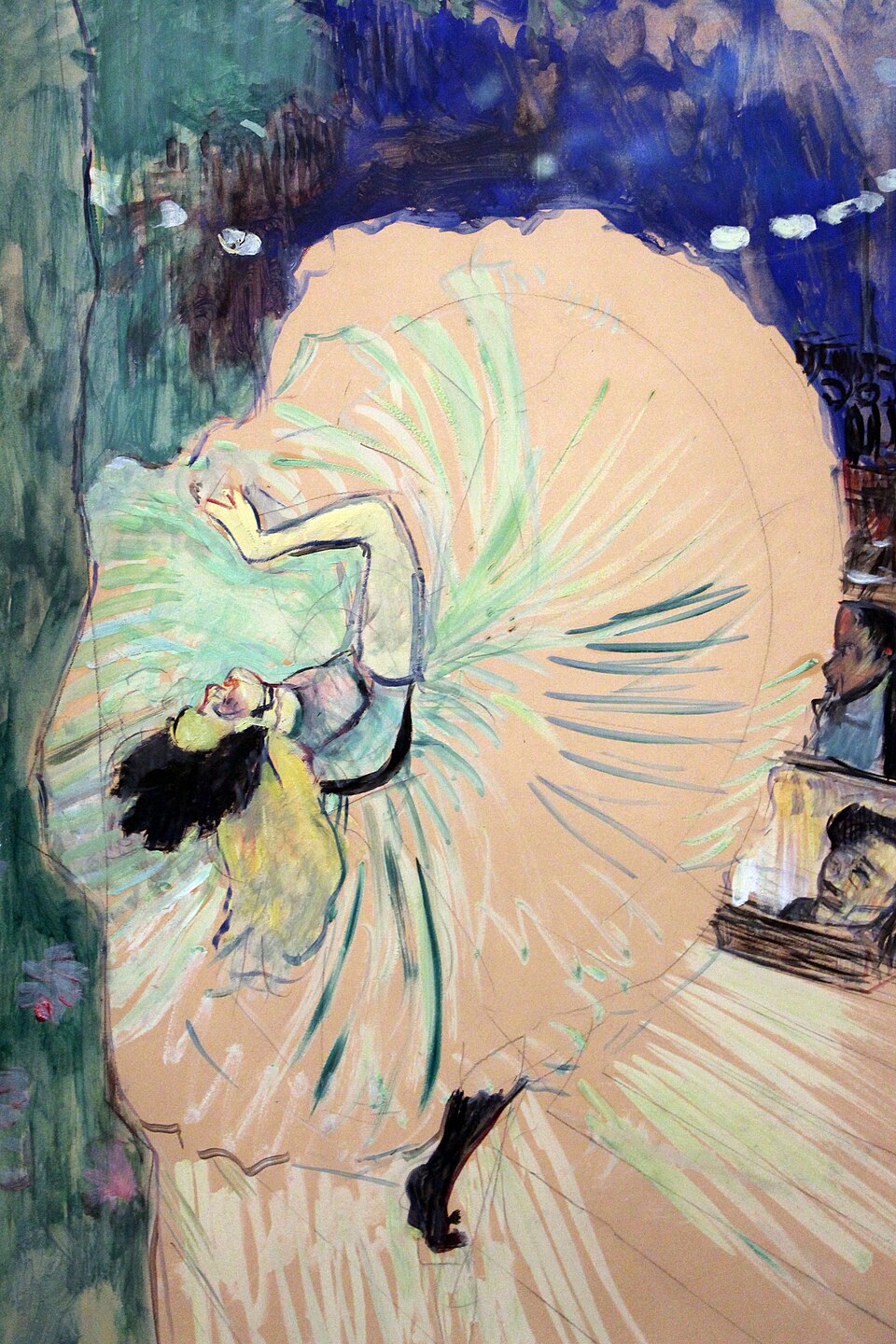
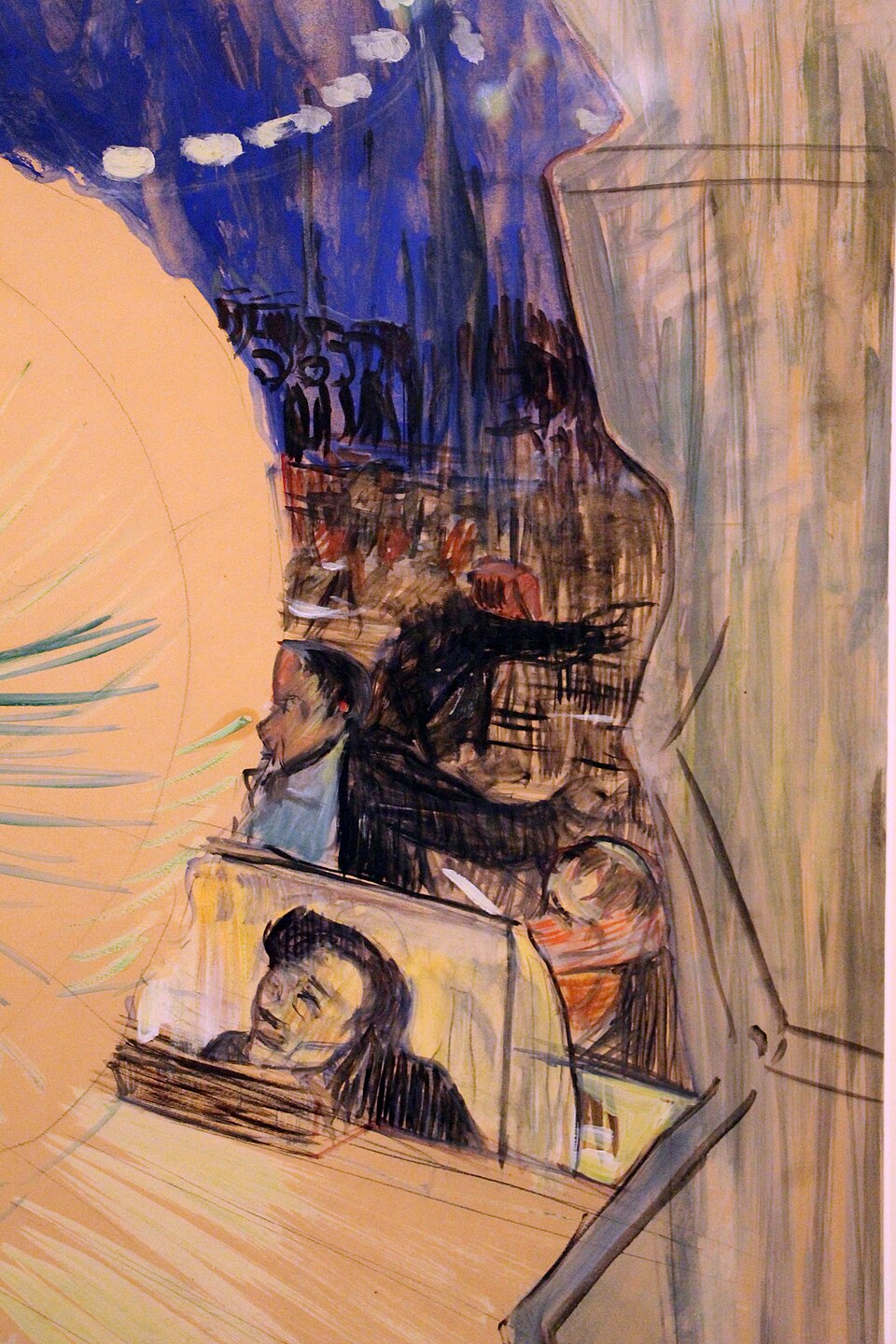
It turns into a salon, almost despite myself. No sooner have I put down my rods than there's a knock: journalists, engineers, and above all my artist friends. Rodin came so many times, pencil in hand, trying to capture on paper silhouettes that exist only for a second; he once told me that I was at once woman, butterfly, and flame, and the phrase has stayed with me. Toulouse-Lautrec, for his part, drew from my veils a whole series of lithographs with undulating colors that, they say, have become emblems of our Art Nouveau. I listen to them, I laugh, I discuss dyes and patents until all hours. On those evenings, I understand that my dance doesn't stop at the stage: it passes into their hands, and from there into the century.
He told me I was at once woman, butterfly, and flame, and the phrase has stayed with me.
—Why did so many painters and sculptors become passionate about you, rather than another dancer?
Because I offered them not a body to copy, but a form to pursue — and nothing excites an artist more than what eludes him. A classical dancer freezes in a pose; I am never the same silhouette twice. Under my projectors at the Folies Bergère, the silk becomes corolla, spiral, wave, butterfly, all in one breath. Rodin blackened pages to capture what slipped through his fingers. We were all, in those years, drunk on the same thing: lines that undulate, curves borrowed from nature, that aesthetic of Art Nouveau found from metro grilles to posters. My dance was its living, breathing version. I was, without having intended it, their model in motion.
I offered them not a body to copy, but a form to pursue.
—The 1900 Universal Exposition gave you a rare honor. What did it represent for you?
A theater in my name, on the very site of the Paris Universal Exposition, designed by architect Henri Sauvage in that style of vegetal curves I love so much. Do you realize what that means? The little girl from Illinois, who arrived penniless, has her own stage when the whole world parades through Paris. Millions of visitors came to sit in the dark to see my veils blaze with colors. I believe that was the peak — the moment when electric modernity, my dear fairy light, and my art became one. Every evening, adjusting my projectors before going on, I told myself that no palace could have filled me more than this box of wood and glass filled with amazed strangers.
The little girl from Illinois has her own stage when the whole world parades through Paris.
—You opened your stage to the very young Isadora Duncan. What did you see in her?
I saw a flame different from my own, and I refused to be one of those who extinguish what they cannot possess. Isadora danced barefoot, without my veils or machines, with only her own momentum as decor — the exact opposite of my light scenography. Another would have seen a rival; I saw a sister in revolt against the corseted ballet of our grandmothers. I took her under my wing around 1900, presented her on my stage, helped her open the doors of Europe. Perhaps one day they will say that we, each in our own way, gave birth to what will be called modern dance. The light I lit, I never feared to share: it only shines brighter.
The light I lit, I never feared to share: it only shines brighter.
—If you had to entrust to those who will read you one day what the heart of your art was, what would you say?
That I never sought to show a moving body, but movement itself — a thought one could see, an emotion made visible in the darkness. All my life, from that too-large skirt in New York to my theater in 1900, I pursued only one thing: to marry silk, electricity, and science to paint the impalpable. I wrote my memoirs this very year, Quinze ans de ma vie, not out of vanity, but so that people know that a dancer can also be an inventor, a researcher, a woman who files patents. If I am read a century from now, I would like this to be remembered: the most fleeting gesture can open a door that, once opened, never closes.
The most fleeting gesture can open a door that, once opened, never closes.
This imaginary interview was generated by artificial intelligence from sources documented in Loïe Fuller's profile. It dramatises what the figure might have said based on what we know about them, but does not constitute attested historical testimony. For primary sources and factual documentation, refer to the full profile.