Imaginary interview with Lucy Stone
by Charactorium · Lucy Stone (1818 — 1893) · Politics · Society · 4 min read

Boston, a winter morning in 1885. In the cramped offices of the Woman's Journal, amid piles of printer's proofs and stacks of letters, a sixty-seven-year-old woman sets down her pen. Her voice is soft, almost frail, but each sentence lands with the poise of an orator who has held entire halls spellbound for forty years.
—What really happened on your wedding day in 1855?
On May 1, 1855, in a farmhouse in Massachusetts, I married Henry Blackwell, but I did not marry his name. Before the vows, we read aloud, before the witnesses, a text we had written together. In it, we stated that we considered the laws of marriage to deny a woman recognition as a rational and responsible being, and that we protested against them in the name of justice and humanity. Understand me: under coverture, a wife legally ceased to exist, absorbed into her husband's person. I remained Lucy Stone because a name is a person, and I refused to be erased by a stroke of the minister's pen.
A name is a person, and I refused to be erased by a stroke of the pen.
—You lent your name to a whole movement of women. How do you feel about that?
They are called Lucy Stoners, those women who, upon marrying, keep the name they received at birth. The word amuses and touches me, for it denotes a tiny gesture that contains everything else. Henry and I never claimed that keeping one's name solved the question of voting rights or property. But in an America where English law made a wife a perpetual ward, refusing to abandon your name was to affirm, at the breakfast table, that you remained a whole being. The small acts of everyday defiance prepare the great victories of the assemblies.
The small acts of everyday defiance prepare the great victories of the assemblies.
—How did a farmer's daughter from Massachusetts become the first college graduate in her state?
Penny by penny. I taught for years in village schools, saving every coin, to pay for my studies at Oberlin College in Ohio, the only institution that then admitted women and people of color to its benches. In 1847, I graduated, the first woman from Massachusetts to earn a university degree. Back home in West Brookfield, my father thought it natural to educate his sons and leave his daughters to milking and sewing. I had seen that injustice under our own roof very young, and I decided it would not be my fate.
—It is said that Oberlin forbade you from reading your own graduation speech. Why?
The irony is almost perfect. That institution which had opened its doors to me, more liberal than any other, deemed it improper for a woman to step up to the lectern and read her own text at the commencement ceremony. I was asked to write my speech and have a man read it. I refused: I would not celebrate education by allowing myself to be silenced at the very moment I received it. That, I believe, is when I became an orator—the day I was forbidden to speak. I have not stopped since.
The day I was forbidden to speak is the day I became an orator.
—Why did you let the authorities seize and sell your furniture rather than pay your taxes?
Because our grandfathers made a revolution on this principle: no taxation without representation. Yet I was being taxed on my property while being denied the right to cast a single ballot. So I refused to pay. The collectors came, they took my furniture and auctioned it off to recover the sum, year after year. Let them take my chairs and my table; they will not take my argument. If the words of 1776 hold for a farmer, they hold for his wife.
Let them take my chairs and my table; they will not take my argument.
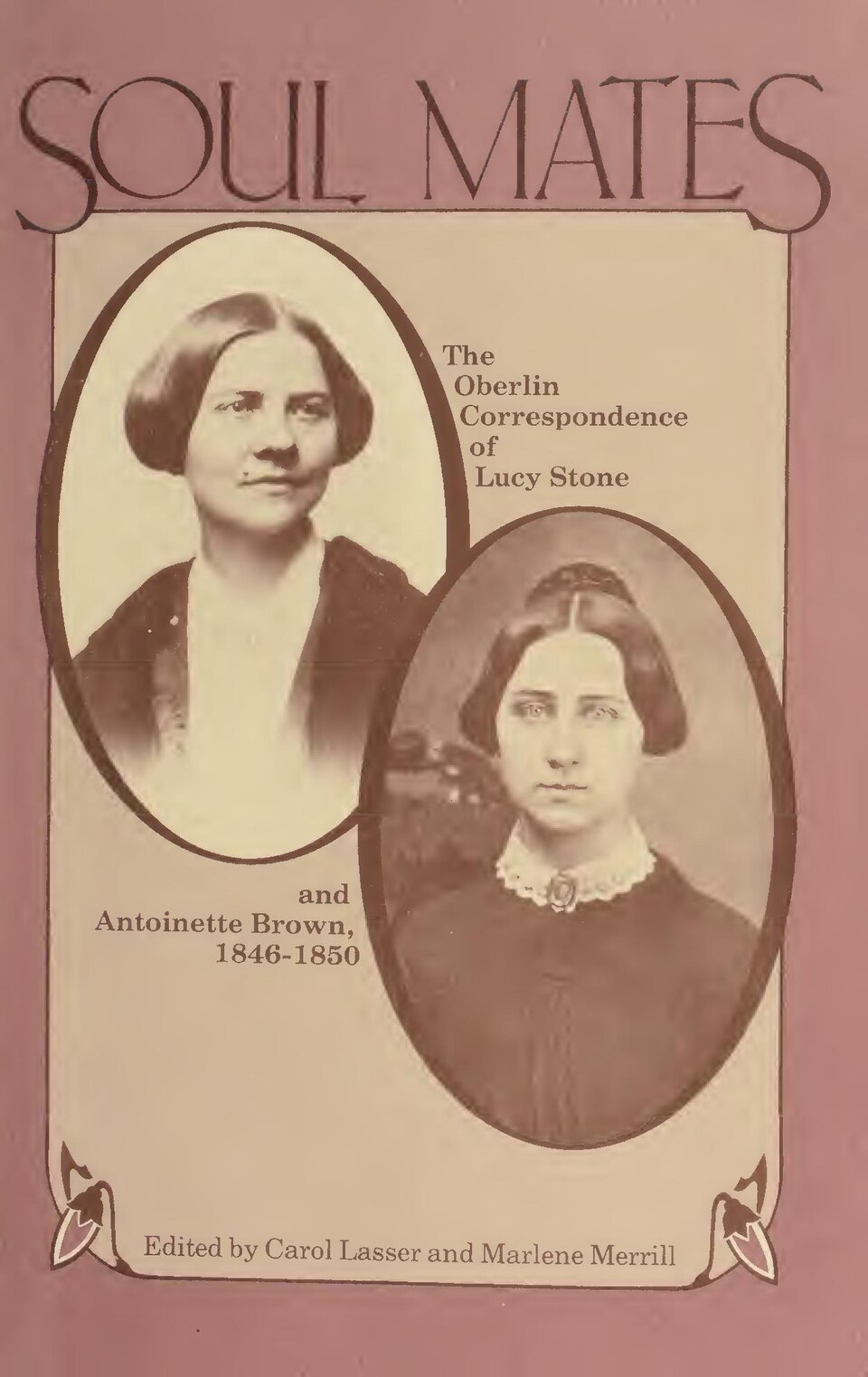
—You were one of the highest-paid orators in America. How would you describe those years on the road?
The lyceum circuit was my true university in return. From 1847 into the seventies, I crisscrossed the country by train, in freezing cars, to speak about the abolition of slavery and women's rights, one town chasing the next. In the evening, in a community hall or a church, I had to hold an often hostile audience for two or three hours, with no support but a lectern and my own conviction. People paid to hear me, and that money funded many battles. A voice that carries is worth a thousand silent petitions.
A voice that carries is worth a thousand silent petitions.
—In 1870, you founded a newspaper. Why add the pen to the voice?
Because the voice fades when the hall empties, but ink remains. In 1870, in Boston, Henry and I founded The Woman's Journal, a weekly devoted to the interests of women—their industrial, legal, and political education—and above all to their right to suffrage, which we believed belonged to them as fully as to any man. My mornings now begin at the newsroom, pen and inkwell before me, proofreading and answering mail. A movement without a newspaper is an army without messengers: it wins a battle and loses the memory of its cause.
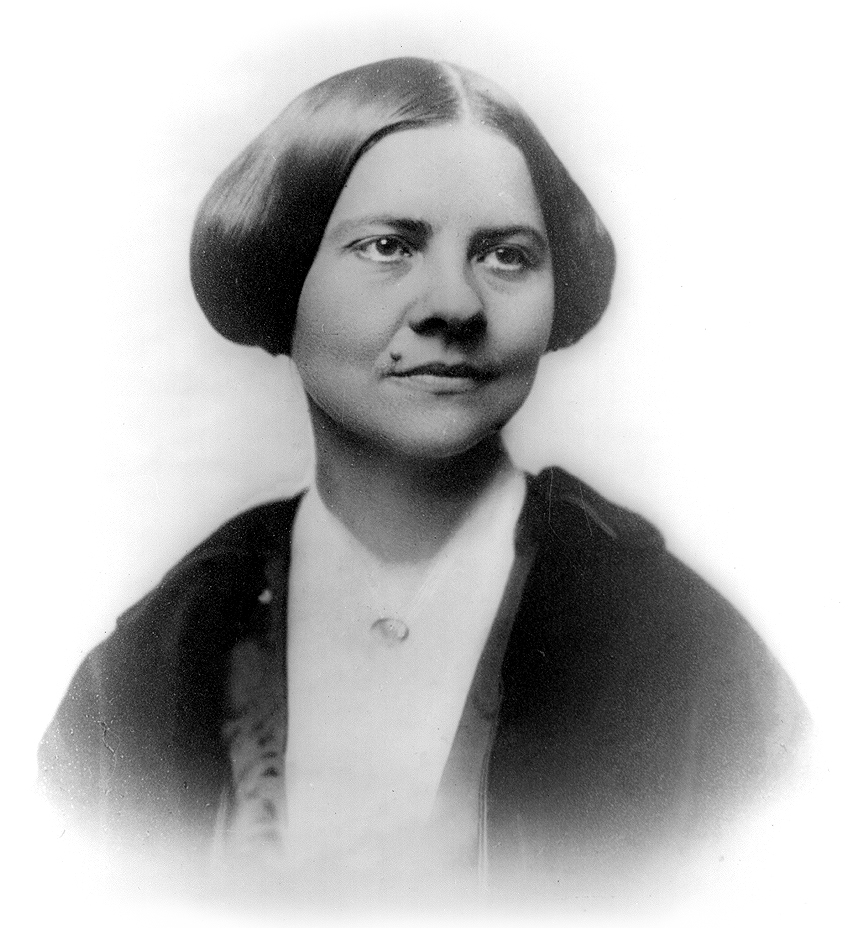
—What broke between you and Susan B. Anthony in 1869?
The 15th Amendment. It granted the ballot to freed black men, but not to women. Susan B. Anthony and Elizabeth Cady Stanton refused it as long as it ignored us; I, the abolitionist, could not bear to block the path to freedom for four million former slaves because my turn had not come. I supported the amendment, and that disagreement split us apart. That same year, I founded the American Woman Suffrage Association. Two rival organizations, where there should have been only one fight: it is the heaviest wound of my activist life.
I could not block the path to freedom for four million freedmen because my turn had not come.
—Your association advocated a state-by-state strategy. Why that patience?
Because America is a mosaic, and you do not overturn a nation by a single decree from Washington. With the AWSA, we chose to go from legislature to legislature, from Kansas to Colorado, winning municipal or school suffrage where possible, patiently, as one clears a field clod by clod. Some saw it as timidity; I saw it as realism. Each state won becomes an example for the next. Justice is no less just because it advances step by step; it is only more certain not to retreat.
—After twenty years of division, the two camps reunited in 1890. How did you feel?
Relief tinged with reserve. In 1890, the American and the National merged their ranks into the NAWSA, and I took part despite all that still separated me from Anthony. Twenty years wasted squabbling, while the adversary never divided. I know I will not see victory in my lifetime; but the Woman's Journal will continue to appear, and other women will hold the pen I lay down. I once said I would speak about the condition of women as long as I had a voice. It remains for me to bequeath them mine.
I will speak about the condition of women as long as I have a voice.
Read further
This imaginary interview was generated by artificial intelligence from sources documented in Lucy Stone's profile. It dramatises what the figure might have said based on what we know about them, but does not constitute attested historical testimony. For primary sources and factual documentation, refer to the full profile.