Imaginary dialogue between Fronton (Marcus Cornelius Fronto) and Marcus Aurelius
by Charactorium · Marcus Aurelius (121 — 180) · Philosophy · Politics · 6 min read

It is in the gardens of the Palatine, one evening in 168 AD, that the elderly Fronto meets his former pupil, now master of the world. The Antonine Plague still prowls Rome, and in the distance bodies are burned, their smoke rising above the rooftops. Between these two men lie nearly thirty years of exchanged letters, rhetoric lessons given to a serious adolescent, and unwavering affection. The rhetorician, weakened, comes one last time to question the one he taught to express what he feels with true words — and whom he now sees preferring philosophy.
—My dear Marcus, I am told that every night you blacken tablets that no one will read. Remember: I taught you to write for others. For whom do you write, you alone?
For no one, my master, and therein lies all the value. You taught me the art of reaching an audience; but these lines I address to myself alone, as a physician prescribes his own remedy. Before dawn, when the palace still sleeps, I urge myself not to yield to laziness, to bear with fools, not to think myself above others because I am called Augustus. These are not fine periods you would approve: they are reminders, prods. If these tablets ever survived, one would find in them neither glory nor system — only a man correcting himself each morning. You wanted to make me an orator; Stoicism has made me my own pupil.
You wanted to make me an orator; Stoicism has made me my own pupil.
—You used to write to me in Latin that I corrected with love. Why now entrust your thoughts to Greek, the language of Epictetus, rather than that of your homeland?
Do not take it as a betrayal, Fronto. Latin is the language of the forum, of law, of command — which you taught me to wield. But Greek is the language where philosophy breathes. When I want to name the logos, that reason which governs the cosmos, or apatheia, which is not coldness but mastery of the passions that trouble us, no Latin word carries the same weight. I write in Greek as one returns home: to think without witness. Epictetus, who was a slave and lame, taught me more about freedom than many senators draped in purple. I read his lessons in the evening, and I try, clumsily, to transcribe them into rules for my own conduct.
I write in Greek as one returns home: to think without witness.
—It is whispered that you will soon leave for the Danube, against the Germans. Will you truly take your tablets and lamp into a legionary camp?
I will take them, yes — the oil lamp, the lucerna, and my wax tablets, my humble pugillares. Do you think a camp is less conducive to meditation than a palace? Quite the opposite. By day, I will hold war councils, inspect troops, judge disputes under the tent of the praetorium. But when night falls, when the camp is silent and only sentinels keep watch, I will return to myself. Perhaps there, faced with the brevity of life that a battle makes so evident, I will think most clearly. The imperator commands legions; the man, however, has only the night and his conscience. I want to be both without one devouring the other.
The imperator commands legions; the man, however, has only the night and his conscience.
—This plague brought from the East ravages Rome even in your own gardens. You who preach serenity, how do you stand before so many dead?
Badly, some days, Fronto — I will not lie to you, of all people. The scourge returned with my brother Lucius's legions, and it does not relent. I had to organize public funerals, have bodies burned right where we speak, in the imperial gardens, so that the contagion would not spread further. The army's ranks thin as those of the Germans fill; I have had to arm even gladiators to garrison the frontiers. Philosophy does not spare me pain: it only teaches me not to add complaint to it. What depends on me, I do; what the gods decide, I accept. The rest is useless agitation.
Philosophy does not spare me pain: it only teaches me not to add complaint to it.
—For the first time in centuries, barbarians cross the limes and threaten Italy. Is this not a heavy burden for a mind that does not love war?
I do not love war, it is true, and I do not hide it. But duty does not consult our tastes. The limes of the Danube — that line of forts, palisades, and roads that holds the North — gives way under the pressure of Germanic peoples, and Italy trembles as it has not trembled in living memory. What would my wisdom be worth if I left my provinces to be pillaged to preserve my studious peace? The Stoic is not the one who withdraws from the world, but the one who serves where fate has placed him. The gods made me emperor in a time of trials; I will bear the armor and the paludamentum as long as necessary, even far from Rome, even to my last day of campaign.
The Stoic is not the one who withdraws from the world, but the one who serves where fate has placed him.
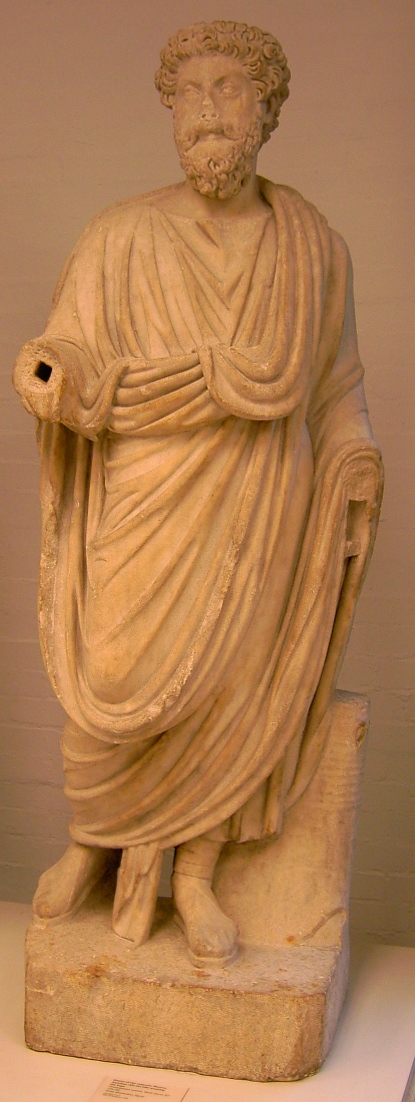
—You wanted to share the throne with your brother Lucius Verus, something unprecedented in Rome. He is said to be less serious than you; why did you bind yourself to him?
Because my adoptive father, Antoninus, raised us both, and it would have seemed unjust to me to keep alone what was promised to us together. Upon Antoninus's death in 161, I therefore associated Lucius with power — the first co-emperorship Rome had known. His taste for pleasures is reproached to me; but each bears his nature, and it is not in my power to remake it. My duty is not to judge him before the crowd, but to support my brother and to make up by my labor for what he lacks in gravity. You taught me, Fronto, that a man is judged by his loyalty more than by his talents. I will therefore always defend him in public, whatever I may think in private.
—Your clemency is praised even toward your enemies. But does a prince too gentle not invite revolt? What do you gain by forgiving and protecting slaves and orphans?
I gain nothing that I can count, Fronto, and that is why I hold to it. If a man rose against me, my first impulse would be to seek what led him astray, not to destroy him; for he who harms me does so from ignorance of good, and one no more deserves to hate an ignorant man than to hate a sick man. As for the laws I am working to enact — limiting the arbitrary power of masters over their slaves, protecting the orphan and the weak — they are merely my philosophy translated into actions. What use would it be to meditate on philanthropia, the love of mankind, if it did not descend into the courts? A virtue that stays in books is only an ornament, and you taught me enough to distrust ornaments.
A virtue that stays in books is only an ornament.
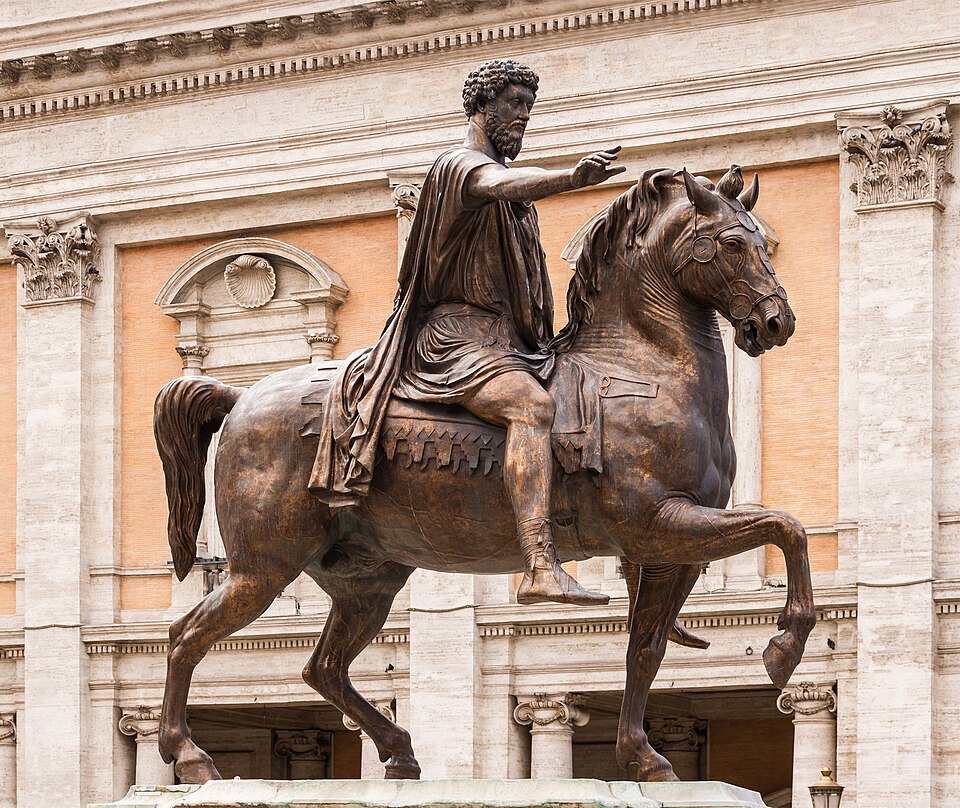
—I remember the adolescent whom Hadrian nicknamed Verissimus, 'truer than gold', and whom he had designated heir at seventeen. Did you ever want this burden?
Want it? No, Fronto — who would knowingly want such a weight? I was that serious young man whose letters you corrected, happier in study than at court. Hadrian, who prided himself on reading souls, fixed his gaze on me and decided my entire life. I am said to be honored by that nickname; I see in it above all a burden: to be truer than gold is never to have the right to lie, either to others or to oneself. I did not choose the empire; I received it as one receives a guard post that cannot be deserted. And if I rise before dawn to examine myself, it is perhaps to remain worthy of the name an old emperor gave me when I did not yet understand what he was imposing on me.
To be truer than gold is never to have the right to lie, either to others or to oneself.
—Hadrian, for his part, chose his successor by adoption, setting aside his own blood for merit. You who have sons, will you follow this rule of good princes, or your fatherly tenderness?
You touch there, my master, on what troubles me most, and I will not answer you as an orator. The emperors who preceded me — those who may one day be called the best — all adopted the most worthy, not the closest. This is great wisdom, for blood guarantees neither virtue nor reason. But I have children, and a father's heart that pleads for them. I would like to believe that one can train a son as one trains a pupil, through discipline and example, until he becomes worthy. Will I be able to? I do not know. I only know that a prince who chooses by tenderness rather than merit betrays the state he serves. May the gods grant me not to fail in that regard.
—Before I go, tell me, Marcus: do you regret the eloquence I taught you and that philosophy made you abandon?
No regret of you, Fronto — never. I owe you the ability to express what I feel with true words, and without that art, my meditations would be nothing but confusion. But philosophy has taught me since that words must serve truth, not ornament, and that is yet another lesson you had sown in me without knowing it. Eloquence can persuade a crowd; it cannot console a man who keeps watch alone by lamplight, thinking he may die far from his own. For that, something else is needed. You gave me the tool; I sought elsewhere what to use it for. So do not think you have faded from my life: every time I find the right word to call myself to order, it is your voice, my old master, that I hear behind my own.
Words must serve truth, not ornament.
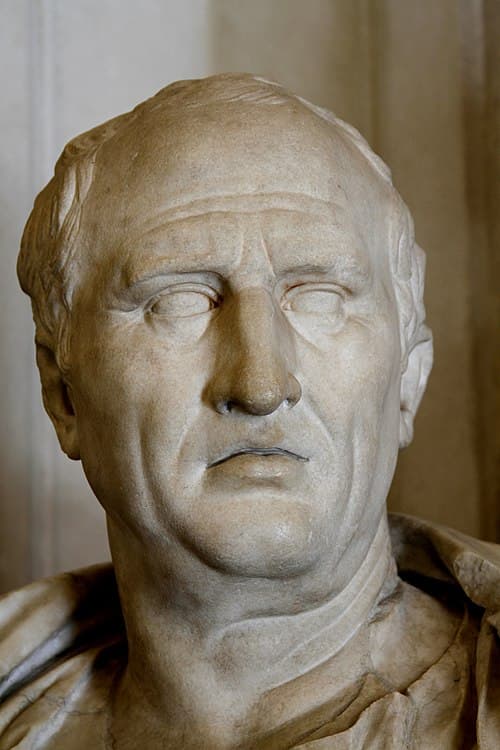
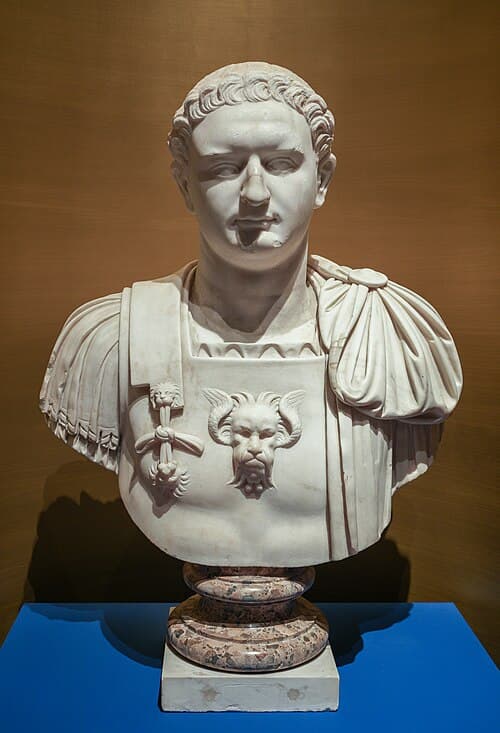

This imaginary interview was generated by artificial intelligence from sources documented in Marcus Aurelius's profile. It dramatises what the figure might have said based on what we know about them, but does not constitute attested historical testimony. For primary sources and factual documentation, refer to the full profile.