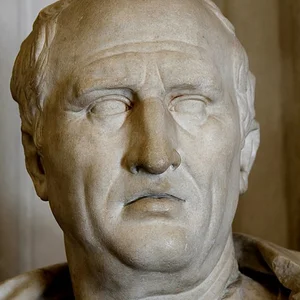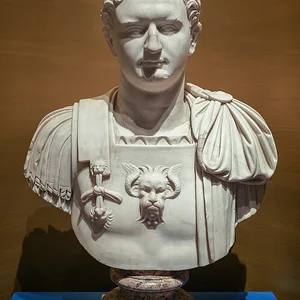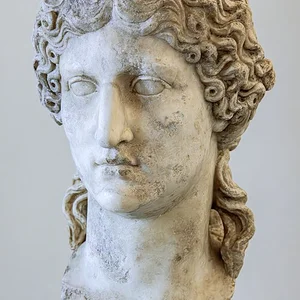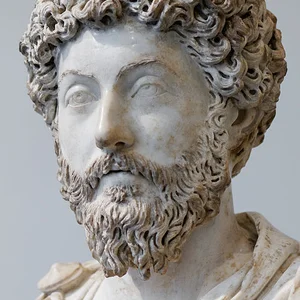

Roman Emperor from 161 to 180 and Stoic philosopher. Author of Meditations, personal reflections on wisdom and virtue. Represents the ideal of the philosopher-emperor in ancient Rome.
Marcus Aurelius(121 — 180)
Marcus Aurelius
Rome antique
7 min read
Frequently asked questions
Famous Quotes
« You have power over your mind, not outside events. Realize this, and you will find strength.»
« Nothing happens to anybody which he is not fitted by nature to bear.»
« Accept the things to which fate binds you, and love the people with whom fate brings you together.»
Key Facts
- 161: Accession to the imperial throne after adoption by Antoninus Pius
- 165–166: Parthian Wars and epidemic threat (Antonine Plague)
- 169–180: Military campaigns against the barbarian peoples of the Danube
- 170–180: Writing of the Meditations, a collection of personal philosophical reflections
- 180: Death in Vindobona during the Germanic campaign
Works & Achievements
Personal philosophical journal written in Greek, divided into twelve books. Considered the spiritual testament of Roman Stoicism and one of the great texts of universal moral philosophy.
Marcus Aurelius enacted laws limiting the arbitrary power of masters over their slaves and strengthened the protection of orphans and vulnerable persons, applying his Stoic principles to legislation.
Imperial creation and funding of four permanent chairs of philosophy (Platonic, Aristotelian, Stoic, Epicurean), institutionalizing philosophical education throughout the Empire.
Series of military victories against Germanic peoples who had crossed the Danube. Marcus Aurelius stabilized the northern border of the Empire, although his son Commodus later abandoned these conquered territories.
Monument erected in Rome after his death, 30 meters tall, whose bas-reliefs depict his wars against the Germanic peoples. A major artistic and historical testimony of the Antonine era.
Anecdotes
Marcus Aurelius was designated heir to the empire by Emperor Hadrian when he was only seventeen years old. Hadrian, renowned as an excellent judge of men, reportedly said of him that he was 'more genuine than gold.' This premature choice would shape the entire life of the future philosopher-emperor.
Despite his immense power, Marcus Aurelius continued throughout his life to rise before dawn to study and meditate, as he had learned from his Stoic teachers. His Meditations, written in Greek, were never intended to be published: they were a private journal of personal moral discipline.
In 166, a terrible epidemic — most likely smallpox — devastated the Roman Empire following the return of the eastern legions. Marcus Aurelius organized public funerals, had bodies burned in his own imperial gardens to prevent contagion, and requisitioned gladiators to defend the borders that were short of soldiers.
Marcus Aurelius willingly shared imperial power with his adoptive brother Lucius Verus from 161 to 169, thereby establishing a precedent for co-rulership. Although Lucius was reputed to be less serious and more given to pleasure, Marcus Aurelius always publicly defended his co-emperor, embodying his Stoic conception of duty.
During the wars against the Marcomanni on the Danube, Marcus Aurelius wrote some of his Meditations in his campaign tent, between battles. The image of this man who commanded the Roman legions by day and philosophized on the brevity of life by night has become one of the most striking symbols of Antiquity.
Primary Sources
Begin with yourself: examine yourself, question yourself, and if you find that you are mistaken about something, correct yourself. That is the only way to progress toward virtue.
Are you wasting your time thinking about what others do? Return to yourself: seek within yourself the rule of your conduct, not in the opinion of men.
He was of such modesty that he changed nothing in his habits after becoming emperor, neither in his household, nor in his furnishings, nor in his table.
I thank you, my teacher, for having taught me to express what I feel with true words. But philosophy now teaches me that words must serve truth, not ornamentation.
Key Places
Main residence of the Roman emperors. Marcus Aurelius grew up there, received his philosophical education there, and carried out his imperial duties.
Legionary camp on the Danube where Marcus Aurelius died in 180 AD during a campaign against the Germanic tribes.
Marcus Aurelius's headquarters during the Marcomannic Wars, where he wrote part of his Meditations. A major archaeological site today.
The city where Marcus Aurelius founded in 176 state-funded chairs of philosophy, recognising Athens as the intellectual cradle of the Empire.
Monument erected after his death to commemorate his victories over the Marcomanni. Its spiral bas-reliefs depict the battles and military life of his reign.
Typical Objects

Small wax-coated tablets used for handwriting. Marcus Aurelius used them to jot down his personal philosophical reflections, which today constitute the Meditations.

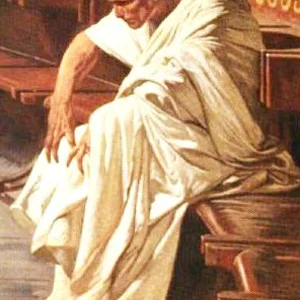
The toga praetexta (bordered with purple) was the official garment of Roman magistrates, while the paludamentum was the red military cloak of the imperator. Marcus Aurelius wore both depending on the circumstances, illustrating his dual role as philosopher and military commander.

The famous bronze equestrian statue of Marcus Aurelius, preserved on the Capitoline Hill in Rome, is one of the few surviving ancient equestrian statues. It was protected during the Middle Ages because it was mistaken for Constantine I.

The primary writing medium of Roman Antiquity, used to copy and circulate philosophical texts. Marcus Aurelius diligently read the Stoic works of Epictetus and Zeno of Citium.

Symbols of the Roman imperator, Marcus Aurelius bore these military attributes despite his personal aversion to war, faithful to his Stoic duty to serve the State.

Used to study and write at night in the military camps on the Danube. Marcus Aurelius devoted the nighttime hours to philosophy after the demands of command.
School Curriculum
Vocabulary & Tags
Key Vocabulary
Tags
Daily Life
Morning
Marcus Aurelius rose before dawn, a Stoic habit he mentions in his Meditations. He devoted the early hours of the day to meditation and personal writing, exhorting himself not to yield to laziness. He would then receive his advisors and begin the imperial audiences.
Afternoon
Afternoons were occupied by affairs of state: judgments at the imperial court, receiving ambassadors, reading reports from provincial governors. On military campaign along the Danube, these hours were devoted to war councils and troop inspections.
Evening
Evenings allowed Marcus Aurelius to return to his philosophical readings, particularly the works of Epictetus, who influenced him deeply. He took his meals simply, without the excesses of imperial banquets, preferring Stoic frugality to ostentation.
Food
Marcus Aurelius led a frugal life in keeping with Stoic principles. He ate little, favoring bread, vegetables, olive oil, and wine diluted with water. He avoided the lavish banquets that characterized other imperial reigns, though he was required to attend them for ceremonial obligations.
Clothing
In the city, he wore the toga praetexta (bordered with purple) as a mark of his imperial dignity. At court, he donned the tunic and purple cloak of the Augustus. On campaign, he wore the armor and red paludamentum of the imperator, symbol of supreme military command.
Housing
In Rome, Marcus Aurelius resided in the imperial Palace on the Palatine Hill, a sumptuous architectural complex inherited from his predecessors. On campaign, he lived in a command tent (praetorium) within the legionary camp — spartan conditions he seemed to prefer over court life, judging by his writings.
Historical Timeline
Period Vocabulary
Visual Style
Esthétique de la Rome impériale antonine : sculptures réalistes en marbre blanc, tons ocres et pourpre impérial, lumière douce de lampe à huile sur les textes philosophiques.
Sound Ambience
Ambiance sonore mêlant la solennité d'un camp légionnaire sur le Danube et le silence studieux des heures nocturnes consacrées à la philosophie stoïcienne.
Liens externes & ressources
Références
Œuvres
Pensées pour moi-même (Ta eis heauton)
v. 161-180 apr. J.-C.
Réforme judiciaire et protection des esclaves
161-180 apr. J.-C.
Fondation des chaires de philosophie à Athènes
176 apr. J.-C.
Campagnes marcomaniques et traités du Danube
167-180 apr. J.-C.
Colonne de Marc Aurèle
v. 193 apr. J.-C.